Monday, 24 October 2011

Håkan Hagegård Papageno in Swedish


Håkan Hagegård sings Papageno in Swedish. How young and sweet he looks, but it's 1975 and he's only 30. This is from Ingmar Bergman's Magic Flute, an adaptation of Mozart made for Swedish TV. Maybe that's why it's "snowing" below.  It was screened in full on Saturday in Oxford as part of the Oxford Lieder Festival 2011. Hagegård was there to talk about the film, and also gave a keynote Masterclass. One of the important things about Oxford Lieder is the way experienced singers like Hagegård (and Wolfgang Holzmair, Sir Thomas Allen, Dame Felicity Lott, Dame Felicity Palmer and others) share their skills with young performers. There's nothing like learning from someone with real platform background. Masterclass participants are uniquely privileged. Plus, they get to listen in on all concerts, talks and events, and give their own recital on Wednesday 26th October.

I wish I'd been to the film and to the short course on singing in Swedish. Although German speakers can more or less make out what's being said, specific sounds are very different indeed. No hard gutterul "g"'s but the fluid, softer Swedish "g" that sounds like the English "y". Hence "Runebery" not "RuneberG". Probably many more useful tips. There was a Smörgåsbord too, hosted by the Swedish Embassy.

What a thrill it was for me was to be sitting near Hagegård during the 10pm concert on Saturday in New College ante chapel. Susana Andersson sang and Sholto Kynoch played a programme of Alfvén, Petersen-Berger and Stenhammer with 3 songs from Liszt to mark his 200th birthday. Also, another premiere of a new work, this time Albert Schnelzer's Requiem, which starts with a dramatic fugue on the piano. Piano-song mini-Requiems are very different from gargantuan, elaborate Requiems. Very good singing and playing - and this was Sholto's fifth recital. Such an enjoyable concert. More on Oxford Lieder HERE (Anna Larsson) and HERE and more to come.

Sunday, 23 October 2011

Anna Larsson Swedish Songs Oxford

It's ironic that Jean Sibelius is the best known composer of Swedish song. But Sweden ruled Finland and much of Scandinavia for many years, and Sibelius grew up speaking Swedish, not Finnish. That should indicate the richness of Swedish culture. This weekend of Swedish Song at the Oxford Lieder Festival 2011 should help  raise awareness of the glories of Swedish Song.

Daniel Grimley perceptively analysed the songs in the recital which followed. This is the kind of depth we need more of. Grimley knows his subject well (he wrote the book on Grieg, landscape and identity) and has perceptive things to say. Too often these days talks and notes are "filler" produced by people who have no idea what they're talking about. It's anti-learning. (I walked out of something at the South Bank recently, as did several others).

Anna Larsson and Matti Hirvonen chose an eclectic programme which started with Sånger vid havet (Songs by the Sea), by Gösta Nystroem (1890-1966). Sweden was neutral in 1944, but as Dr Grimley said, Swedish people weren't immune to the chaos around them. The "Song of the Sea" describes the ocean, sometimes windswept and turbulent, sometimes seemingly still in the moonlight, a thing of beauty which can turn menacing. Delicate diminuendos, sparkling figures that evoke images like light on water, or ocean spray. "Who are you who walk here, transient and fragile, who are you who trample the summer meadow?"  (Ute i skåre, Among the Rocks, Ebba Lindqvist). The landscape seems perfect, but behind it is unfocussed dread. Sonorous depths, especially in the piano part, evoking the power of nature, perhaps. In Havets visa (the sea's song) the poet Hjalmar Gullberg (1898-1961) briefly mentions the "voice which parts waters and makes light", but is even this haven completely safe? The last song, also Gullberg, ends "I await the moon, the friend in all misery, with him I can speak of the dead".

Anna Larsson was a wonderful Princess in the recent Puccini Suor Angelica (review HERE) and we're lucky she sings regularly in this country (twice at the 2011 Proms). Nystroem may be close to her heart, as she sang with great feeling. The cycle is a pinnacle of the Swedish mezzo repertoire. It's been recorded several times and there's also an orchestral version, though the piano version is more direct and intimate. The BIS recording (Birgit Finnilä) is probably best known, but there's also one by Nina Stemme from 2004 (she sounds very young). Larsson's mature enough that she can express the existential angst central to this wonderful cycle, with great depth. Because she's secure at the top and bottom, she sails the range smoothly. That upwards/downwards flow is itself part of the music for it reflects the movement of the seas.

Always pay attention to Oxford Lieder because here is where things happen.  Many new works, carefully chosen. Carin Bartosch Edström's Four Nocturnal Songs received its world premiere, and if the reception was anything to go by, it ought to be heard many times more. It's very distinctive. Firm ostinato on the right hand, rolling, circular figures on the left, creating brooding, internal tension. Matti Hirvonen is a leading exponent of Swedish piano music and a great song partner, who's worked with most Scandinavian singers from Elisabeth Söderström onwards. In this performance, you could hear why. The piano part in this cycle is dominant, and Hirvonen sculpts it firmly, for it's the foundation of the work, from which the voice emerges, as if in incantation.
 
Hearing Edström's Four Nocturnal Songs for the first time, one senses the originality of conception, even without a detailed reading of the words. The rumbling piano part suggests deep, primordial forces, over which the voices rise, as if from the still of the night. Indeed, the power of this cycle stems from its understated resolve. No need for histrionics in the voice part, for it's so well integrated with the steady rhythms in the piano, which rise and fall like breathing, with some quite magical quirky flurries.

The poems are by Edith
Södergran (1892-1923) a Swedish speaking Finn, like Sibelius, who lived in Russia, and the Karelia, which was later ethnic cleansed. It's significant. Södergran grew up in a time of war, revolution and chaos, In one poem, a star crashes into the poet's garden. "Don't go out in the grass with bare feet" she warns, "my yard is full of shards" (It sounds better in Swedish). Then "Don't get too close to your dreams, they are madness". The third song, Nattlig Madonna is, as Dr Grimley said, an anti- lulllaby.  While her child sleeps in the night, a mother hears an angel sing. O vad världen växte ut i alla vidder närden lille sov! I think it means that while the child sleeps, the world outside is changing. At the very end, Larsson's voice ascends steadily up the scale. Morgonen stiger röd ur oceanen (Morning rises red from the ocean). It's beautiful, yet unsettling. Gentle and non violent as it is, Carin Bartosch Edström's Four Nocturnal Songs is very moving and assured. Defintely worth hearing again. Edström may not be known In Britain, but she's very experienced - check her out on Google.

Larsson and Hilvornen followed with four relatively familiar songs by Ture Rangström, including Vingar i natten (Wings in the Night), made famous by Anne Sofie von Otter, and songs by Strauss and Mahler, of whom she's one of the better intrepreters. But the Nytsroem and  Edström cycles were by far the highlight of the evening. Larsson and Hirvonen are performing the same programme tonight in Amsterdam (except the Edstrom songs)

Lots moreon Oxford Lieder on this site,pleasesearch.You might also like a piece on Onerva, the Finnish poet and  a description of the seminal film Korkalen

Saturday, 22 October 2011

Jette Parker Young Artists Linbury Theatre

Without young artists, no art form will thrive or grow. The Royal Opera House's Jette Parker Young Artists scheme nurtures good things from young artists so that their performances attract thoughtful audiences. All members of the Royal Opera House Young Artists scheme are professionals, not students, and have extensive experience even before they come, as former Young Artist Simona Mihai put it, "to be polished like gemstones". Graduates of the scheme include Marina Poplavskaya, Jacques Imbrailo and Ekaterina Gubanova.

Most of the Young Artists are singers, but the scheme also covers other aspects of opera-making. The singers, director and conductors in the scheme created this special performance of Massenet Le Portrait de Manon and Berlioz Les Nuits d'été to demonstrate their skills.

Massenet composed Le Portrait de Manon in 1894 as a one-act sequel to Manon. It is an excellent choice, coming after the Royal Opera House productions of Manon and Cendrillon. Knowing the background is valuable, as Le Portrait de Manon is essentally an epilogue to Manon. However, this Young Artists production was good enough that it could stand on its own.

Des Grieux (Zhengzhong Zhou) has grown old and bitter, so trapped in his grief that he's irritated when his lively young nephew Jean (Hanna Hipp) falls in love and wants to marry. The set (Sophie Mosberger) is very well designed, emphasizing Des Grieux's isolation, despite the trappings of wealth. There's a long rumination, in which Des Grieux sings about his past. Zhengzhong Zhou worked two years in France, and sang Valentin in Gounod's Faust earlier this month, so although he's only 27, he characterized Des Grieux's personality with emotional depth. His makeup was so well done, he looked as mature as he sounded. Pablo Bemsch, as Tiberge, Des Grieux's friend, was also very convincing, extending our sympathy with the predicament. Des Grieux isn't being unreasonable when he opposes Jean's marriage : perhaps he doesn't want the young man to be hurt as he was.

Love and youth will triumph, after all, as this is opera. Hanna Hipp is one of this year's new members of the Young Artists scheme, but she impressed greatly even as a student several years ago at the Guildhall School of Music and Drama. Here she's a vivacious young scamp in trousers. Maybe Des Grieux is right, Jean's too young to be tied down. But Hipp and Aurore (Susana Gaspar) are spirited, and their confidence in their roles makes the resolution inevitable. Stunned by Aurore's appearance, dressed as Manon, Des Grieux remembers and relents. If Manon the opera is tragic, Le Portrait de Manon is an invigorating romp, and in this performance, deftly executed.

Berlioz's Les Nuits d'été is a song cycle, and even in the 1856 orchestral transcription heard here, doesn't transfer easily to the stage. In theory, there's no reason why not, and the undercurrent of dream unifies the group of songs. While the staging for Le Portrait de Manon was concise, enhancing, adding to meaning, the staging for Les Nuits d'été was clumsy. One bed might have sufficed. These songs express states of mind, not different characters.

Pablo Bensch had been interesting as Tiberge earlier, so I was looking forward to his Villanelle. Unfortunately orchestra and singer weren't properly aligned, the winds entering insensitively, throwing the vocal line off kilter. Fortunately, Bemsch was better supported in Au Cimitiere. Hanna Hipp and Susana Gaspar sang the other songs. The balance was good, making a case for mixed voices. Berlioz sanctioned this, but it's usually impractical in recital. Another good reason for paying attention to Young Artists Events, where repertoire is often approached in interesting ways.

Thursday, 20 October 2011

Rimsky-Korsakov The Golden Cockerel

The historic complete recording of Rimsky-Korsakov The Golden Cockerel (Le coq d'or) is available online for a week on BBC Radio 3
This is the famous 1985 recording from Bulgarian radio. It's so vivid that your imagination can create the scenes more gloriously than any "real" production constrained by practical concerns.

The main body of the opera is prefaced and followed by a short scene in which The Astrologer tells us what's about to happen. It feels like he's opening the lid of a lacquered box, so the contents spill out like amazing, fantastic jewels. You don't really need a libretto - everything's so sumptuous that words almost get in the way. The Astrologer should be a tenor altino, a tenor with an extremely high range that's almost falsetto. Tessitura to challenge reality. This is fairy tale in music, glorious illusion for its own sake.

The plot isn't realistic, either. King Dodon thinks the Queen of Shemaka is invading his land. The Astrologer has a Golden Cockerel that can speak. The King's sons attack the Queen but are smitten by her beauty, and are killed. Next, the King is smitten, too - who wouldn't be seduced by the Queen's arias? Trills and mellismas so fiendishly impossible that you're left gasping, how does she do it? Magic, of course. Then the lethal kick that's at the heart of every good fairy tale. The Astrologer wants the Queen as his reward for helping the King save his country  The king kills the Astrologer, but the Golden Cockerel kills the King. Magnificent fugue at the end of Act 3 (the end of the main opera) : a magic storm that chases the Kingdom away. Then the Astrologer returns, announcing that it was all fantasy. The lid on the gilded lacquer box is closed again.

This performance is fabulous, in the real meaning of the word. The conductor, Dimiter Manolov, shapes details like a jeweller crafting gems: tremulous strings, resonant but clean vibrato, swooping diminuendos that cut through the richness, reminding us that under the magic, there's something unnatural and even chilling.

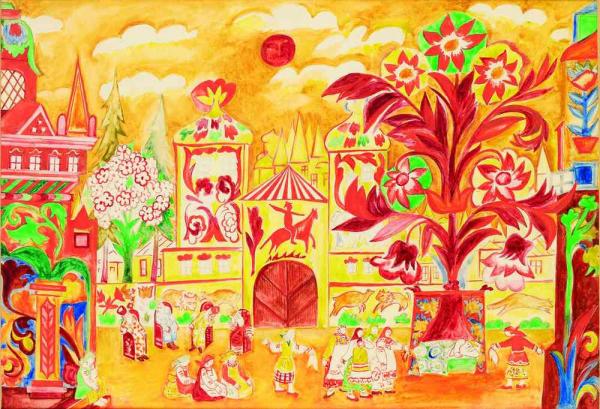
The Golden Cockerel is well known as Diaghilev's Le Coq d'Or where ballet was added to make the heady concoction even more potent. The picture above is one of Natalia Goncharova's designs for the Ballet Russe. She made equally splendid designs for each scene, even for backdrops and the opening curtain. How spectacular it must have been!  And then the 1914-18 war and the Russian Revolution. So maybe The Golden Cockerel is a last glimpse of a magnificent dream.

Overnight broadcasts like "Through the Night" are full of hidden treasures like this Golden Cockerel, and serve a purpose, especially for more eclectic (and discriminating) tastes.  Apparently they might be phased out as part of the BBC cuts. Already, there's no music on BBC Radio 3 after 10 pm. Technology has changed. Time slots are irrelevant in our 24/7 internet culture. So it's vital that we give "Through the Night" credit. Real enthusiasts don't switch off at 10 pm and go to bed. They're listening everywhere at different times. Please read more here about why we should be worrying about the long term implications of then BBC cuts.

Wednesday, 19 October 2011

Wagner's Dutchman has flown away - Der fliegende Holländer, Royal Opera House

When this production of Wagner Der fliegende Holländer premiered at the Royal Opera House in February 2009, Bryn Terfel was its raison d'être.  His absence was sorely felt, even by those who aren't usually seduced by his charms. In this revival, the draw was Jeffrey Tate's return to Covent Garden after nearly 20 years.

Minimal stagings can work when they highlight meaning and music. Tim Albery's production (designed by Michael Levine) is a blank canvas, which styles The Flying Dutchman rather than suggests much about who he is. No portrait of any kind in sight.  Instead, a toy boat. The boat itself is wonderfully staged, and it's a masterstroke to see real water on stage, lit so its reflection shines magically into the auditorium. But it doesn't convey the wildness of the open ocean, nor the turbulent psychic storm around which this opera predicates.


Perhaps Albery's interpretation is that the opera predicates on Senta and her frustratons,  the Dutchman being a projection of her fantasies.  Anja Kempe's Senta was extremely impressive in 2009. Then, she was a perfect foil to Terfel's solid, taciturn Dutchman. Kempe's energy created Senta as driven to extremes to escape what to her might have seemed mind numbing conformity. The Dutchman is her "get out of town" card,  rather than a cursed soul. It's a valid interpretation, given Albery's factory staging of the spinning scene, and marginal references to the haunted ship. It's a concept worth exploring, though rather too simplistic. Senta's not Tosca. Wildness is tricky to sing into this part, and occasionally Kempe relied more on forcefulness than finesse.  Nonetheless, she can do it well, and should settle further into the run.

Egils Silins was a late replacement for Falk Struckmann as The Dutchman. This was his Covent Garden debut, and possibly his highest profile performance to date. Although his voice isn't particularly distinctive, he's secure vocally and does seem to have a feel for the part. In a production where the singer has more to work with and is less exposed, he'd make a bigger impact. Part of this stems from Albery's approach, where the Dutchman is reduced to little more than Senta's dreams.  It takes an unusually powerful and charismatic singer to counterbalance these limitations.

Stephen Milling's Daland was forcefully secure, even too noble, given that the character has an unpleasant streak of venality, which would work well in Albery's concept, but wasn't developed. Still, it's enough that he sang well. Endrik Wottrich's Erik had problems with pitch and intonation, but was reasonably well acted. Clare Shearer's Mary was excellent - no fault of hers that the role here was a cipher.

The role of Steersman is much bigger, and critical to the plot, for the Steersman is guides the ship into the distance. Both Senta and the Steersman dream, but Senta can't think past the present. John Tessier has to sing suspended up a rope ladder, but hasn't quite the character to make the part as compelling as it might be.  But then many productions don't make enough of the role, and this production doesn't, either. It's odd, given Albery's interest in images of conformity, as the Steersman is part of the crew. As always, the Royal Opera House choruses sing and move perfectly. The vocal battle between the Dutchman's crew and Daland's crew isn't quite as horrific as it might be, but the Steuermann, laß die Wacht! refrain was sung with such jaunty zest that it left no doubt that these sailors and their families had no time for spooks and neurosis.

And so to Jeffrey Tate's long awaited return to London. Fortunately Albery did not stage the protracted Overture, so we could concentrate on the orchestra. Tate's pace was electric, injecting the malevolent atmosphere the staging tried so hard to suppress. The energy dissipated at other points, which was a kindness to the singers, who didn't have to compete, and to Albery's staging, which was so much at odds with the demonic, elemental fury in the music. When the Dutchman's crew descend back into the bowels of their ship, Tate lets the orchestra burst forth again. They're back on the ocean again, metaphorically defying storms and tribulations.

Please read the review which will appear shortly in Opera Today, and the review from 2009. .

Photos : copyright Mike Hoban, courtesy of the Royal Opera House, details embedded.

Tuesday, 18 October 2011

The Flying Dutchman - Ava Gardner?

Wagner Der fliegende Hollander starts tonight at the Royal Opera House. (Please see my review HERE) But here's another Flying Dutchman but not as we'd know it. The music isn't Richard Wagner but Alan Rawsthorne, a combination of lurid technicolor and stiff upper lipped Britishness.

What's more the Senta character is Ava Gardner, and she gets to sing the arias, too. Indeed, she plays the Dutchman as well, wandering through life unable to love, though her beauty drives men mad. "The measure of love is what one is prepared to give up for it". So a man throws his precious racing car over a cliff, another committs suicide. But she doesn't care.

This Flying Dutchman is set in sunny Spain, so the film can work in a long, implausible reference to Carmen and matadors. Spain is also warm enough that Ava gets to swim stark naked out to the mystrerious yacht in the bay. Onboard she meets The Dutchman, who paints portraits instead of being in one. He paints her! It's James Mason. Bizarrely, the Daland character is an archeaologist who's found a manuscript supposedly written by the real Flying Dutchman in the 17th century, who killed his wife (Ava) thinking she was unfaithful. Hence the curse.

Then the movie turns from Wagner to Carmen. Montalvo the matador is Ava/Senta/Carmen/Pandora's ex, so we get to watch a long drawn out scene in the bullring, where he gets killed, not Carmen. Montalvo had tried to kill the Dutchman, so he's Escamillo and Don José in one. Meanwhile Ava/Pandora/Senta realizes that she loves the Dutchman so much that she'll give up her life for him. She dumps the Erik character (the racing driver) she's about to marry and swims out to the yacht. That night, a demonic storm. Next morning, two bodies wash up on the beach.

Interestingly, this movie was made just before Ava Gardner became a major star. She was a Southern belle, but dusky enough to play exotic characters rather than the Bette Davis type. Rumour has it that Ava passed for white, but wasn't. Hooray again for people who break out of racial stereotypes!

Mixed Britannia BBC


This song makes me weep. It's so specific that it seems like it's about a real woman. She's half African, half Norwegian, went to Cambridge, acculturates white. But her feelings do not count.  She can "can never get away from the fact, if you're not white you're considered black". It's a calypso by Lord Kitchener, from around 1950 when mixed race was much less common than now. The man assumes the woman is acting superior because she doesn't fancy him. Years later when Lord Kitchener sang the song in Jamaica, he made it even more sexist, as if the woman was doing a crime for choosing not to sleep with him. At least calypso songs deal with race issues openly. But why should any woman, or any person, be defined by race?

Currently there are several programmes on the BBC about race issues. George Alagiah's Mixed Britannia must have taken ages to make because it's extremely well researched and outstandingly well made.They've uncovered completely new material, which has lain unnoticed in the archives and needs to be publiicized. Like the "Eugenics" movement which tried pseudo-scientific measurements of "mongrels" as mixed race people were called in those days. Someone must have realized where such things led, as they were quietly phased out after the Nuremberg race laws in Germany.

That didn't stop vindictive racism. As soon a WWII ended some bright spark had the notion of rounding up Chinese in Liverpool and shipping them back to China. The men were rounded up in the street, like animals,  and put on board a waiting ship. Many of the men werre long established UK residents, and had wives and families, but weren't allowed to make contact, or collect their belongings and papers. So hundreds of women and around 1000 children thought they'd been suddenly deserted, and never found out what happened..

If the men did make it back to China (they may have been dumped in India), the country was still in chaos, millions of refugees, destitute and homeless. Ironically many of these men would have worked for the British navy and merchant navy, where thousands of Chinese were enrolled, a huge proportion killed serving the British war effort.

Fortunately most normal people are sane. But racism is alive and well, for too many have vested interests in fuelling hate. The recent riots showed just how skewed assumptions really are.  Far Right white gangs attacked the police, immigrants gave their lives to defend their neighbourhoods, and  looters were most colours and classes. So programmes like Mixed Britannia are vitally important, to remind us that race is packaging, it isn't the person within. 

Please also see my posts on race issues, under labels like Africa, Chinese stereotypes, social issues etc. Watch the full movie Within Our Gates here too, the earliest known movie by a Black American that confronts things like lynching and exploitation. Also full download of Broken Blossoms, and a critique of Piccadilly, the Anna May Wong film much lauded by the BFI as progressive. The more I think about that film, the more offensive I think it is, but its appeal to Chinese outside Chinese culture is genuine, and needs to be analysed. You might also like this piece on Ghana Freedom, which mentions George Appiah, whose marriage to Stafford Cripps's daughter Peggy features in the second Mixed Britannia episode. Theirs wasn't the first high profile mixed marraige. My mole in FCO archives told me about the Govt of South Africa protesting mixed marriage in Britain, threatening to quit the Commonwealth. There are thousands of other stories waiting to be told. Like, a Colonial Police Officer held prisoner in a Japanese camp wants to marry. Under colonial rules he needs his commanding officers' approval.  They're all prisoners in the Japanese camp too but they forbid the marriage because the fiancee can't prove she has no mixed blood. Of course she can't. She's Eurasian. This is April 1945, right at the end of the war, but these colonials don't twig that the world's changed. Imagine what the Japanese thought. (and the irony still rankles with non whites today)

Monday, 17 October 2011

Faust embastillé par la mise en scène?

"Faust embastillé par la mise en scène?, so writes my friend Dodorock on his unique blog De chez toi.  Thanks to him, we can watch Gounod Faust straight from Paris, Opéra Bastille, (Philippe Jordan, Roberto Alagna) hours after the show on 11th October. and also read a selection of reviews. Controversial, huh? One critic wails that Gounod's been turned into grand Guignol. On the other hand Faust's predicament is the ultimate grand Guignol, for Méphisto is leading Faust into crazier things than he could ever imagine.

Watching the production live and on film are different experiences. This film, directed by François Roussillon is probably clearer, since the camera can pick up on tiny telling details you could easily miss on a big stage. The set (Johann Engels) is panoramic for a good reason : it represents Faust's search for knowledge. Hence bookshelves straight to the top of the stage area, statues, telescopes, astrolabes, and a rhinoceros, like the one Louis XV kept at Versailles. The idea is that the universe is so full of exotic things, we can never stop searching. Faust has realized that he'll never take it all in, which is why he calls on Méphisto to restore the youth he hadn't appreciated when young. Central features: a gigantic crucifix and a glass dome under which a miniature green jungle thrives. A golden calf and huge skeleton. Such abundance, yet Faust knows something's missing. Like Einstein writing on a blackboard, he scrawls "Rien!" on the wall.

Méphisto arrives quietly. Paul Gay looks more than 2 metres tall, elegantly attired, sophisticated. A brief shot of a painting behind him, barely glimpsed, of the traditional Devil in red jumpsuit and pointy tail.  If the Devil, in real life, was so easy to spot, why follow? Why anyone needs to see him as fire spitting demon, I don't know, for the whole point is that mortals choose their own fate. Méphisto merely facilitates.

Remi Corazza sings Old Faust, who transforms into Roberto Alagna's Young Faust. On film, the switch is amazing, as it should be. It's a miracle, by the devil.  Alagna is surprisingly good, though he's more Italianate than Gallic, but that's no problem. Faust is an eternal archetype, German with Goethe, vaguely middle European in Marlowe. Alagna's physicality is superb. His Faust has erotic animal energy, with much moree individual personality than Grigolo at Covent Garden.(please see review HERE) Sex is the life force that motivates Marguerite, too, and Siebel and Marthe. 

At first, Inva Mula as Marguerite, moves like an automaton, singing the King of Thule song as if the slavish loyalty in the song was drilled into her. When she finds the jewel box, she's transforemed. While McVicar had Gheorghiu squeal with delight at fake gemstones, the Paris director, Jean-Louis Martinoty emphasizes Marguerite's inner awakening. Méphisto is with her as she takes off her robe. Mula and Alagna grope each other with  X rated realism. They sing the double duets with real relish, as if both are discovering Eros for the first time.  The film cuts to a shot of the glass dome with the jungle which was there all along side stage. A glimpse of Dürer's Adam and Eve flashes on screen, almost certainly missed live. I'm less convinced by the green light and foliage that now fill the stage but Martinoty is making a valid point. God or Devil, it's humans who make the choices.

The soldiers return from war as walking wounded, which give Gloria immortelle a poignant kick. Like Faust, Marguerite, and Siebel, they've bought into dreams.  From this point, illusions are shattered. Méphisto appears dressed as a red robed bishop, possibly on stilts, as he towers above all.  He tramples on the giant crucifix, which lowers like a drawbridge between Hell and Earth. "Marguerite, sois maudite!" intones Gay, with dark portent. The ancient goddesses rock baby pigs and owls, in a parody of Marguerite rocking her dead baby, and feast on a table that was once the Crucifix. A skeleton descends from the ceiling. "Quel etrange ornement" indeed.

Then crucifix becomes guillotine. On stage, this might have been clumsy. On film, we see the soldiers, townsfolk and sundry  personages parade in a mock religious procession - Gloire immortelle, now kinky and twisted. Then Siebel emerges, carrying Marguerite's head which gets put, not into a tumbril but into the kind of glass case with holy relics you see in hallowed sites.  She gets to Heaven though not quite in the usual way. Méphisto doesn't need to drag Faust  physically down to Hell. He merely points, and Faust meekly follows. What happens in Hades can't be much worse than damnation on earth. No wonder Fench critics weren't comfortable. But it's a valid realization of the plot.

Philippe Jordan conducts the orchestra of L'Opéra Bastille, with sardonic pungency. Definitely a whiff of sulphur here! In the love duets, the orchestra is specially verdant and romantic, but Jordan has a feel for the mad march that underlies the greater arc in the music. From the overture to the end, the pace is brisk, controlled but sharp. Mépghisto's music is particularly vivid. The staccato "footsteps" are deft, almost magical, matching Méphisto's sly, unhumorous  "Ha ! Ha ! Ha !"
 
Here is, thanks to Ddorock, the link to the broadcast  Lots more on Faust, Goethe and other Faust operas/movies on this site too, please explore.

Adriana Lecouvreur at the movies

The fabulous Royal Opera House Adriana Lecouvreur is on at the movies !  Click here for details of cinemas near you (international).  It was the best thing on last year and is, I think, a keeper. Read more about the production HERE and HERE.

Sunday, 16 October 2011

Schubert Part Songs, Oxford Lieder 2011

What might Schubertiades have been like? At the Oxford Lieder Festival, we probably come close. The atmosphere is intimate, many in the audience are old friends. Often, Schubert's audiences were the performers. In those days before recording or radio, people made their own music, at home or in genial company.  Part of being socially "accomplished" then meant learning the piano or guitar, and singing.

This year's Oxford Lieder Festival focuses on all the songs Schubert wrote in the last years of his life, so the programme on Saturday night was eclectic. In the first part: two Schlegel settings (Abendlied für die Entfernte D856, and Abendröte D690, and two Schulz settings, Im Walde D834 and Um  Mitternacht D852. :and a setting of Schubert's rakish friend Franz von Schober Schiffers Scheidlied D910, who is in the Moritz von Schwind drawing above (tho' I can't remember offhand which one he is). Singers Raphaela Papadakis, Victoria Simmonds, Nicky Spence and Mark Stone who sang an all-powerful Die Allmacht D852. Schubertiades tapered off as Schubert's friends married and/or went off to other pursuits, but von Schwind is recalling Schubert himself at the piano, sometimes joining in with the singing in his light tenor. Sholto Kynoch didn't sing, but his playing was particularly eloquent and graceful. That's why I kept thinking "Schubertiade", where the man at the piano is the one we should never overlook. For a change I could luxuriate and enjoy the piano part. All five joined together for Gebet D815, voices interweaving and alternating. It's not a very sophisticated song but when five performers are in harmony like this, it's a good experience.

What a pity that I was so tired I couldn't make the second half, because the offerings were even more unusual. Nun wer die Sehnsucht  kennt D877/1 in the version for two voices, two settings of Wilhelm von Schütz, better known as a dramatist, Lied der Delphine D857/1 and Lied des Florio D857/2, both of them songs of veiled flirtation, perfect for home performance where players could say in song what they dared not express directly. Der Hochzeitsbraten D930 is much more buffo, and often gets included in part song programmes because it's a hilarious skit, a mini-mini opera that lasts a few minutes but has major impact. Therese and Theobald aree getting married, so they go poaching to get supplies for their wedding feast. Kaspar, the gamekeeper (good part for a baritone who can act, as Stone does) catches them red handed. Theobald tries to bribe Kaspar, but Therese flirts with him, which is rather more effective. You can guess why this song, sung with gusto, is often a show stopper. Here, though, the concert ended with Der Tanz D826. This was an inspired choice, given that Oxford Lieder is focussing on Schubert's last years., It's a dance, but more danse macabre than peasant hi jinks:
Es redet und träumet die Jugend so viel,
Von Tanzen, Galoppen, Gelagen,
Auf einmal erreicht sie ein trügliches Ziel,
Da hört man sie seufzen und klagen.

Bald schmerzet der Hals, und bald schmerzet die Brust,
Verschwunden ist alle die himmlische Lust,
"Nur diesmal noch kehr' mir Gesundheit zurück!"
So flehet vom Himmel der hoffende Blick!

Jüngst wähnt' auch ein Fräulein mit trübem Gefühl,
Schon hätte ihr Stündlein geschlagen.
Doch stand noch das Rädchen der Parze nicht still,
Nun schöner die Freuden ihr tagen

Drum Freunde, erhebet den frohen Gesang,
Es lebe die teure Irene noch lang!
Sie denke zwar oft an das falsche Geschick,
Doch trübe sich nimmer ihr heiterer Blick.

(for translation, see Emily Ezust's wonderful Lieder and Song Texts page, link at right - an essential  resource for anyone interested in voical music.

Hindemith Cardillac Vienna - full broadcast

Full broadcast of Cardillac, Paul Hindemith's iconic opera from 1926, available on BBC Radio 3 online, on demand for 5 more days. It comes from the Vienna State Opera, recorded late lat year. Franz Welser-Möst conducts.

Juha Uusitalo is Cardillac the goldsmith, who thinks strictly in terms of his craft. Even his daughter means nothing to him, because, unlike gold, women can't be forged and twisted into shape. Cardillac is so obsessed with the jewellery he makes that he can't bear to let go. Everyone who buys a piece gets murdered. Control freak anal retentive to the nth degree. It's probably impossible to make Cardillac sympathetic, even when he's torn apart by the mob. Juliane Banse sings Cardillac's daughter, who loves her Dad despite knowing he's nuts. Her lover is The Officer (Herbert Lippert).

The plot's fiendishly complicated, a lot like the intricate jewellery Cardillac designs, so don't expect to get it easily without visuals the first time. It grows on you, though, even though emotionally the opera pushes you away, just as Cardillac himself pushes people away.  Please read my analysis of the 1985 Munich production, conducted by Wolfgang Sawallisch and Jim Zychowicz's review of its re-release.There's also a more recent Paris production, conducted by Kent Nagano. There are at least 3 audio recordings, of which Keilberth (Fisher-Dieskau/Donald Grobe/Elisabeth Söderström is most interesting. It's not "obscure", but one of the more seminal works of the period. Just not very "feelgood".

See the production photos on the BBC site. Much is made of this production being based on silent film, though the Paris production had the same concept. But I think it works fine, to bring out the stark film noirish aspects of the story. Cardillac himself thinks in black and white terms, and the music reflects that off-centre edginess. Lots more on Hindemith on this site !

Saturday, 15 October 2011

Oxford Lieder Festival Big Surprise!

Never underestimate Oxford Lieder, whose 10th anniversary Festival started yesterday. The Festival started with Schubert part-songs in  Radcliffe Square but the keynote gala opening concert featured Birgid Steinberger and Graham Johnson. Steinberger may not be well known in Britain but that doesn't mean she isn't well-known in Lieder circles. Anyone whom Graham Johnson and Julius Drake respects is significant. Oxford Lieder chooses well and wisely, so pay attention!  Anyone who sings Der Hirt auf dem Felsen D965 knows what they're doing. Steinberger is Kammersängerin in Vienna, and amongst other things has performed at Schwarzenberg  and won the prestigious Hugo Wolf prize in Stuttgart. So those who didn't attend this concert didn't know what they were missing.

At first, Steinberger didn't do herself justice. Something clearly was wrong, as her chest sounded tight and congested, though there were many fine moments, indicating what she was really capable of, like a hauntingly well-nuanced "Alleluja" at the end of Die junge Nonne D828. Subtle is a  better marker of good singing than brash and belting. Apparently Steinberger had a severe vocal infection but didn't cancel, knowing how important this first concert in the Oxford Lieder Festival can be. Good singers are conscientious, and know when they're not at their best, which adds to nerves and tension. That's no demerit at all. Sensitivity is by far more important in an artist (and in life in general).

Listening to Steinberger overcome her problems was in itself an education in how song partnerships work. (Masterclass participants, take note). Graham Johnson is a perfect song pianist because he is sensitive too, supporting and enhancing the singer, playing eloquently so some of the pressure is deflected. The act of singing can loosen things up, and experience brings confidence. What a transformation after the interval!

Steinberger was now in her true, vivacious element. Her Das Lied im Grünen D917 sparkled, her voice fresh and clear. There's more to this song than the joys of the countryside. Phrases repeat, but each time with a new twist. Spring symbolizes renewal and rebirth. ".....so haben Wir klüglich die grünende Zeit nicht versäumt, Und wann es gegolten, doch glücklich geträumt, Im Grünen, im Grünen."  Here it sounded truly heartfelt.

Reinvigorated, Steinberger was able to bring out the cheerful, erotic kick in three relatively little known Schubert songs, Das Echo D990c, Heimliches Lieben D922 and Lied der Anna Lyle D830. The word "Küsse!" is invested with such luscious charm that there's no mistaking that the maiden knew full well that the kiss was real, not an echo across a valley. Good programme planning again (Graham Johnson?). Der Winterabend D938 followed the three sensuous frolics, injecting a note of winter and lost love, which deepened the mood before the magnificent climax of the evening, Der Hirt auf dem Felsen D965. (Please read my analysis of Der Winterabend HERE)

Der Hirt auf dem Felsen is a tour de force, which Schubert wrote for Anna Milder-Hauptmann as a vehicle for displaying her extreme vituosity. It also capitalizes on the idea of "Alpine" music that was so fashionable at the time, with which Milder-Hauptmann was associated. Thus the swooping dips and leaps up the scale, evoking mountains and valleys, and the idea of a shepherd, perched high on a rock, playing his flute so the sound will travel long distances and reach his beloved. The echo again, forces of nature that defy convention and restraint. "Je weiter meine Stimme dringt, je heller  sie mir weider klingt" and then the gorgeous dip "da unter", which Steinberger slides down the scale, evoking the depth of the clarinet (Joy Farrell).  Indeed, the three-way flow between voice, clarinet and piano reflects the spatial images in the song, where feelings carry through on different levels across space and presumably time. It's a masterpiuece. What "chamber music for voice" might Schubert have written had he lived?  A superb ending to the first concert in this year's Oxford Lieder Festival. Those who missed it, missed a lot ! More on the Festival, which continues for 2 weeks, HERE)

The painting is Henryk Siemiradzki (1843-1902) a Polish academician much given to depictions of the Holy Land, Middle Eastern cultures and heroic myth. Perhaps Szymanowski knew this picture, for it expresses the anarchic sensuality of the Shepherd in Krol Roger.

Friday, 14 October 2011

Britten - Which war? Whose Requiem?

"Kleenex at the ready… one goes from the critics to the music, knowing that if one should dare to disagree with ‘practically everyone’, one will be made to feel as if one had failed to stand up for ‘God Save the Queen’." 

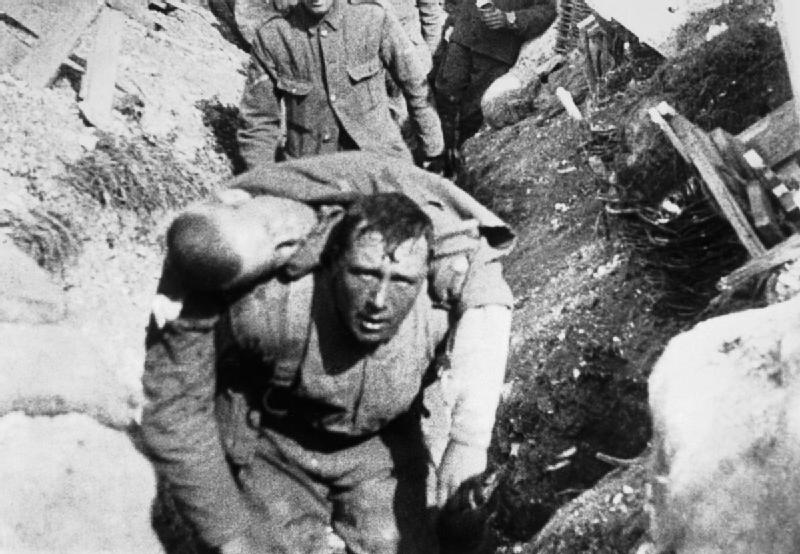
So said Igor Stravinsky of Benjamin Britten's War Requiem. He has a point, for the image we get of the 1914-18 war is distorted by media emphasis on the Western Front. Stravinsky knew that what happened on the Eastern Front was arguably far more catastrophic. Civilian casualties, famine, ethnic cleansing, the rise of Bolshelvism and the collapse of the Old Order. Benjamin Britten was only 5 when the war ended. His knowledge of that war was filtered through received wisdom. "No-one", someone once told me "can understand war if it happens far away, to other people". It's one thing to be fighting in the trenches, another to be fighting in your home town, your family dying around you. 

So it's good that Ian Bostridge has been thinking "Which war? Whose Requiem?"  Can a piece commissioned to commemorate Coventry tell us about Dresden, Stalingrad, Nanjing, Hiroshima and the Holocaust? Follow the link above to an extract from Bostridge's article in A Part of History: Aspects of the British Experience of the First World War (Continuum, 2008) 

Britten's characteristic emotional reserve causes me problems with the War Requiem and indeed the Sinfonia da Requiem because I'm focused on history, but from a purely musical perspective the War Requiem can be a powerful work.  Here's a commentary on the Barbican Britten War Requiem (Noseda, Bostridge, Keenlyside, Cvilak, LSO). It's much more than just any review, because it's written by Claire Seymour, author of The Operas of Benjamin Britten : Expression and Evasion (Boydell 2007) . "Much of the power of the work lies in its innate contrasts. Owen’s dark, distressing war poems form a counterpoint to the consolations of the requiem mass, and the interweaving of secular and sacred, vernacular and Vulgate, is often challenging, surprising and deeply ironic. A resonant, full orchestral clamour contrasts with delicate, finely fashioned chamber sonorities; soloists and chorus intertwine and counterpoise. Brightness interrupts the darkness, and is then once more overwhelmed by horror and terror."  Maybe the way into Britten's War Requiem is to understand the oblique way Britten dealt with horrifying things

Plenty on this site about war, history, music about war, Hiroshima, the Holocaust and of course about Benjamin Britten

Thursday, 13 October 2011

La Traviata and the Credit Crunch

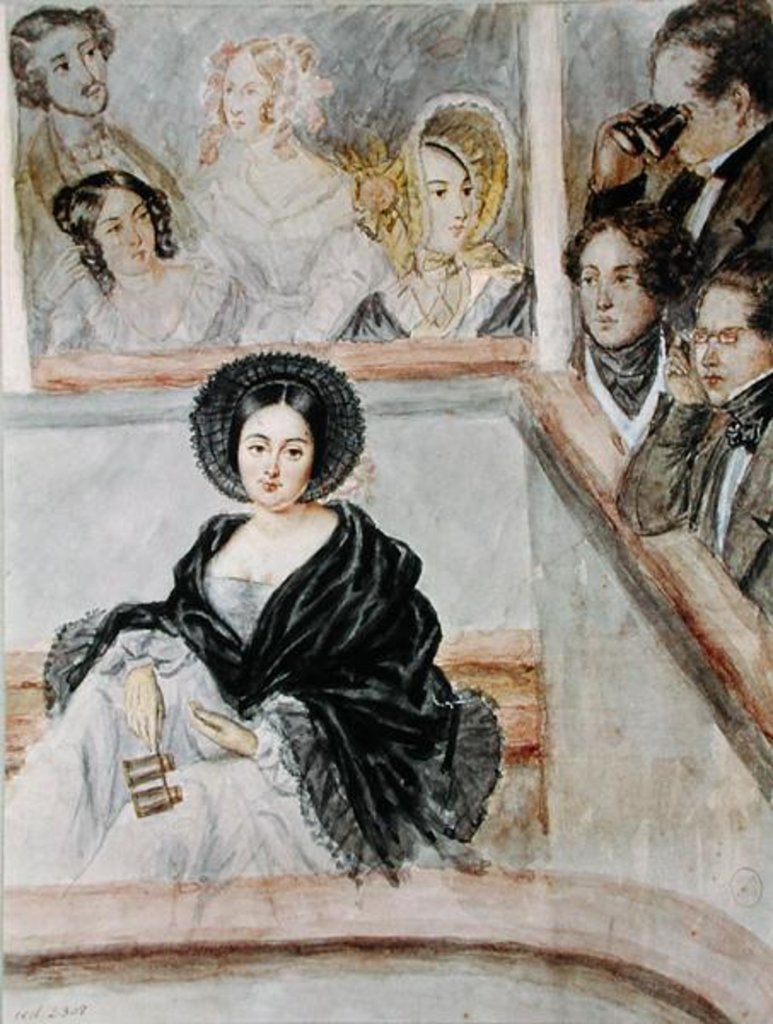
We've all seen the current production of Verdi La Traviata at the Royal Opera House. It runs til February 2012 if you want to catch it again, with different conductors, different casts etc. It's a hardy perennial that's easy on the eye and always pleases. But consider what the opera is really about. That's Marie Duplessis in the picture, the real life model for Marguerite Gautier and Violetta.  A country girl who became a courtesan, living the high life on credit, selling dreams as much as sex.  So here's a lively reminder that opera, like so much else in life, is a glorious illusion. A very different review of the ROH production in Opera Today, by David Chandler :

"One way of thinking about La Traviata is to consider it as a portrayal of bubble wealth that makes artistic capital from the shimmering, rainbow hues of the surface rather than showing any interest in what sustains the bubble....At the heart of La Traviata there is a financial crisis as Violetta attempts to trade in the trappings of wealth for actual cash, but it is touched on as lightly as possible, and really serves simply as a catalyst for the moral crisis that Piave and Verdi wanted to explore."