Thursday, 22 November 2012

Calixto Bieito Carmen, ENO

Everyone knows Carmen, or thinks that they do, which is not always the same thing.  Carmen smokes and sleeps with whom she wants, and cannot be constrained unless she wants to be. The Carmen archetype is so powerful that she's inspired countless reworkings, bringing out different aspects of the meme. Calixto Bieito's celebrated production of Bizet's Carmen, now at the ENO, is an excellent oportunity to reconnect with the fundamental human drama

Bieito is Spanish, and his Barcelona production was geared towards Spanish sensibilities. Catalunians think of themselves as distinct from Spain. The first flag we see is t la Rojigualda with the royal crest. Later we see the same colours with the image of a bull emblazoned. Obviously, Escamillo is a toreador. But the image goes far deeper. The silhouette bull we see is  the ubiquitous Osborne Bull that dots the Spanish landscape. To many it's a symbol of foreign economic domination: to Catalunians, it's a reminder that their region is controlled by Spain. Although Carmen the opera is associated with Spain, Carmen isn't Spanish but a gypsy. Her people obey no state, and observe no borders. 

The first scene is set in a military camp. The soldiers look strong and virile, but they're brutalized into conformity. Recalcitrants are punished, even by death. Duncan Rock looks god-like as Morales, but we know he's just a corporal who could be sacrificed as fodder. He's like the bull who must kill or be killed.  The crowd secenes are well choreographed. In their uniforms, men and women move like parts of  a machine. Only the children remain wild and free. When Carmen becomes Escamillo's consort, she seems poised to join polite society, but then she's killed.

Ruxandra Donose is superlative as Carmen. Concepción in Ravel's L'heure espagnole is one of  her  signature roles, which she's done at the Royal Opera House and at the Barbican.  Her voice is rich, with a lustrous smoky quality, which adds depth and mystery.  This is especially important in Carmen who carries the whole opera. In Barcelona, Erwin Schrott, Roberto Alagna and Marina Poplavskaya were superlative, comensating for a relatively weak Carmen.  In London, most of the cast comes from the usual ENO milieu. Without Donose, the performance would have been much less satisfying.

Donose creates an intelligent Carmen who negotiates her way through difficult situations. The Habanera is her calling card, advertising her image as seductress, but sexuality is a means to an end.  Perhaps Carmen wants love, but she's too realistic to expect miracles. When the smugglers bring out flamenco dresses from their loot, all three women think it's degrading. These are just cheap  costumes. What they really want is to move ahead, but they haven't the means. Donose's Carmen has a natural elegance which suggests that higher aspirations may be within her reach. Her singing is sensual but never vulgar. She's blonde, but her voice creates the "dark eyes" in the text, coloured by emotional depth.

Don José scatters the contents of Carmen's nice new handbag to demean her. Donose crawls on the ground, desperately trying to pick up the fragments. Her voice becomes almost fragile, yet she doesn't capitulate. This subtle portrayal develops Carmen as a sympathetic human being, far deeper than the slattern society assumes she must be. Donose's Carmen is genuinely truly tragic because she is no caricature, but a good woman crushed just when she might be reaching her dreams.

Bieito's staging suggests the open countryside where a "child of liberty" might roam free. Lilas Pastia (Dean Street) and the smugglers meet in the open air, just as people do in hot countries like Spain.  When Escamillo (Leigh Melrose) and Don José (Adam Diegel) fight they jump on old cars as if they were mountain rocks. In the Barcelona original, Bieito drew parallels with the way tourism despoiled the Spanish countryside and national culture. For London, that had to be moderated for obvious reasons, so all we got this time was a woman in a bikini and other tourists singing about Butlins (not Benidorm as far as I recall). The perils of opera in English!

More effectively, Bieito builds his staging on an acute understanding of Bizet's music. We see Escamillo as toreador only briefly. It's his job, not his normal world. The toreador songs are heard from a distance for the same reason: they are colourful illusion, not reality. Carmen is completely alone when she confronts José. They face each other in a circle on what looks like clay. In this corrida, they are the real Bull and Bullfighter.

Ryan Wigglesworth conducted the ENO Orchestra. He is an elegant conductor whose clarity works well in modern music. In Bizet, he could do with a bit more low down and dirty, for the story is horrible, and the charms of the music need context to give them bite. Elizabeth Llewellyn has a big following who greeted her long aria with deserved applause. Beautiful singing, but not the grittiness of Poplavskaya's Micaëla. But then she doesn't get paid as much. Madeleine Shaw (Mercédès) and Rhian Lois (Frasquita) were vividly defined, though the part of the young daughter, so well developed in Barcelona, had less impact. Graeme Danby sang Zuniga. José lies rather too high for Adam Diegel though he lasted the long role well. While Donose's Romanian accent gave her Carmen an exotic edge, Diegel's American accent was disconcerting. Leigh Melrose's Escamillo didn't cut quite as much of a dash as some Escamillos do, even when their singing isn't as steady. Very few could  manage the sheer animal magnetism of Erwin Schrott in the role in Barcelona. But while the ENO sticks to its policy of English language productions, few singers will take the trouble to relearn their parts in the vernacular. 
photo : Ruxandra Donose, credit Nikolaus Karlinksy

Tuesday, 20 November 2012

Britten, RVW, Finzi - Nash Ensemble, Wigmore Hall

"Will you see the infancy of this sublime and celestial greatness?"
(Thomas Traherne c. 1636-1674).

The Nash Ensemble's series at the Wigmore Hall, "Dreamer of Dreams" continued its survey of British music in the first half of the 20th century with an intriguing programme. Many underlying themes, and thoughtful juxtapositions.
 (photo of the Nash Emsemble credit  Hanya Chlala/Arenapal)

 Britten's Simple Symphony op 4 for strings (1933-34) shows the composer in exuberant high spirits. The "Boisterous Bourrée" romped cheerfully. The "stomping" melody mimics heavy feet dancing, but needs to sound humorous. In the "Playful Pizzicato", the Nash Ensemble strings plucked crazily but in complete technical control. Britten is having fun, sending up "serious" music while being perfectly serious. In the early 1930's Walt Disney was making Silly Symphonies, an extremely inventive series of cartoons. While nursery characters frolicked, the audience was listening to orchestral music in the classical tradition. Britten enjoyed movies. Quite possibly, he saw Disney's work. A Silly Symphony based on a Simple Symphony would have been delightful. The themes in this symphony derive from the compositions Britten wrote as a child; he re-invents them (Read my article"Benjamin Britten Boy Wonder" HERE). "Simple" is a cheekly misnomer. While this short, sharp symphony bubbles with child-like glee, there's nothing childish in the technique. This is Britten, bursting into the public sphere, inspired by the wonder of creative growth.

The recital would end with Gerald Finzi's Dies Natalis which describes the miracle of creation through the eyes of a new born.  Between these two pillars, the Nash Ensemble placed early works by Frank Bridge and Ralph Vaughan Williams, extending the theme of youth and artistic birth.  

Bridge was later to become a formative influence on Britten, who opened horizons for Britten beyond the confines of British music at the time. Bridge's Three Songs for voice, viola and piano (1906) aren't specially innovative, and rely heavily on good performance. Roderick Williams animates the songs with committment. He's beautiful to listen to but the texts and text settings aren't up to his standards. "Blow...ye..winds" doesn't flow even if the poet is Matthew Arnold. "Where is that our soul doth go?" is a translation of a poem by Heine, so stodgy that it would defy most composers. Fortunately, Bridge's ear for viola was much more acute. The viola part dominates, voice and piano taking secondary place. Laurence Power's sensual playing made these pieces effective. Perhaps they are really songs for viola?

In 1908, Ralph Vaughan Williams went to France to study with Ravel. This was his artistic breakthrough.  His Five Mystical Songs (1906-11) are well known in the orchestral version, so hearing them as piano song shows how they bridge religious music and art song. Herbert wrote hyms for the godly: Vaughan Williams wrote hymns though he wasn't devout. Easter is fervent.  Roderick Williams emphasizes the key words and phrases, like "Thy Lord is Risen", but the sensuous beauty of his voice tempered their ferocity. The text suggest militant Christianity : Williams's warmth imbues it with humanity. The middle verse "Awake my lute" shines with characteristic RVW cadences, well defined by Ian Brown the pianist.  Roderick Williams's voice is naturally beautiful and colours the words with sensitivity.  In I got me flowers, the imagery is delicate, but the subdued chromatic middle section culminates in a forceful finale. "There is but one, and that one forever" sang Williams forcefully, supported by Brown's playing which resonated like a church organ.

 Antiphon is known to Anglicans as the hymn My Lord is King!. "Let all the world in ev'ry corner sings" erupts with a flurry of bell sounds, as if bells were ringing all over the world. Ralph Vaughan Williams admirers connect immediately with the pealing bells of In Summertime on Bredon (from On Wenlock Edge)  Text is foursquare. "The Church with palms must shout". But Vaughan Williams makes it clear that, for him, this is not anthem but art song.

William Alwyn's Pastoral fantasia for solo viola and strings  (1939) may have been included as a vehicle for Laurence Power. His playing made the piece worthwhile and enjoyable even though the work itself isn't memorable. Alwyn's pastoralism is pretty, but we know from Vaughan Williams that landscape painting in music is much more than surface charm. It was good to hear Alwyn in the company of Britten, Finzi and Vaugham Williams so we appreciate their originality all the more.

Gerald Finzi's masterpiece Dies Natalis op 8 (1939) was premiered at the Wigmore Hall in January 1940, by Elsie Suddaby. The Finzis and their sons used precious petrol rations to drive up to London for the occasion. For many in this 2012 Wigmore Hall audience, with many Finzi specialists, it was the much anticipated highlight of the evening. Unfortunately, Susan Gritton was indisposed, which is a pity as she's very good. She didn't seem well the previous week at the Mendelssohn concert (reviewed here) but  her replacement was left so late that the announcement had to be made on stage. Ailish Tynan was aparently cooking lamb for dinner when she was called to sing. Dies Natalis is difficult to sing but several sopranos and tenors have it in their repertoire. Since Tynan's best work has been in oratorio, her performance was interesting because it showed, like RVW's Five Mystical Songs, that oratorio and art song are fundamentally different genres.

Dies Natalis begins with an Intrada where themes to come emerge briefly. It suggests, to me, the swirling gases of the cosmos, before the Universe was formed. Dies Natalis deals with no less than the miracle of Life and Creation, so this interpretation is valid, since it suggests primordial growth and vast cosmic forces. I was a little surprised that the themes weren't as clearly defined as they could be, but that hardly matters, since the concept is so overwhelming. This sense of infinite space and time is important because the poet, Thomas Traherne, though Christian, was a mystic. Transcendentalism "transcends" traditional dogma.  "Will you see the infancy of this sublime and celestial greatness?" the poet asks. Traherne's Rhapsody is prose, but with strange syntax, which Finzi respects by setting it with unsual rhythms  "I was a stranger, which at my entrance into the world was saluted and surrounded with innumerable joys: my knowledge was Divine!", the word "divine" jumping forth from the score, as if illuminated by unearthly glow.

Although there are references to Adam and to God, Traherne'surreal imagery bears little resemblence to conventional religious text. "The corn was orient and immortal wheat, which never shall be reap'd nor was ever sown. I thought it had stood from everlasting to everlasting". Finzi's dynamic extremes emphasize the psychic extreme of the poet's imagination. They aren't there to display vocal gymnastics. Tynan's notes were pitched to extremes, at the expense of diction.  We should be hearing meaning, not voice as such, but meaning in Dies Natalis is not easy to grasp. Calm stillness underpins the ecstasy, for the cycle repeatedly refers to sublimation over ego and the sense of self. "I saw all in the peace of Eden. Everything was at rest, immortal and divine".

From Rhapsody to Rapture. This cycle often works best when sung by a tenor, emphasizing the strange, unconventional spirituality. "Sweet Infancy!" does not refer to babies, but to the idea of birth.. Perhaps for Finzi with his beliefs in organic farming and living in harmony with nature,  it's a statement of faith in something more primeval, the very force of life itself.  Finzi was way ahead of his time.

"When silent I, so many thousand, thousand Years beneath the Dust did in a Chaos lie, How could I Smiles, or Tears, or Lips or Hands or Eyes perceive " (Traherne's upper case).  Most definitely this isn't a human baby, nor even baby Jesus. Long before science developed theories about the Big Bang and primordial soup Traherne intuited the idea of the birth of the cosmos. Dies Natalis explores new territory, completely alien to the certainities of the established Church. Indeed, the very idea of faith is challenged. Fundamental to this cycle is the sense of wonder, of seeing the world anew through absolutely pure, unbiased eyes. Even Jesus had an agenda when he became Man. Finzi creates a  Being without any consciouness other than the sheer miracle of existence.  "A Stranger here, strange things doth meet, strange Glory see......Strange all and new to me, but that they MINE should be ...who Nothing was, That strangest is, of all, yet brought to pass". 

Recording recommendations - Wilfrid Brown, schoolteacher to Finzi's sons, (1955) and Ian Bostridge ( 1997)

Monday, 19 November 2012

New Dots SOLD OUT at the Forge, Camden

New Dots has SOLD OUT! News has spread by word of mouth. This a concert you won't get into unless you're in on the loop. Try anyway, because it's the launch of what promises to be a series featuring some of the more interesting composers and performers in London.

Lloyd Moore's Diabolus in musica was broadcast on BBC Radio 3. Andre de Ridder conducted the BBC Symphony Orchestra. Ivan Hewett presenting. It's an inventive piece, original and full of personality. Highly recommended. Read more HERE. At New Dots his Six Songs for soprano and piano will feature. Anna Patalong is singing, which in itself is a big plus as anyone who's heard her will know (Opera Holland Park, GSMD, etc). Elisabeth Rossiter accompanies. Lloyd Moore's music has been recorded by NMC Records, the pioneers in British new music. He also created a new performance re-orchestration of Unsuk Chin's Alice in Wonderland which premiered in Santa Fe, and is planned for the Welsh National Opera.


Edward Nesbit studies with George Benjamin. At Aldeburgh in 2010, his Dance Portraits appealed greatly. It starts with a slow pas de deux between double bass and bass flute proceeding in the space of a few minutes into four sections. Dance as strategic game, figure shadowing one another. At New Dots, we'll hear his A Pretence of Wit, also with Anna Patalong.

I haven't heard Gonçalo Gato live -yet - but listen to his Vectorial modular HERE. It feels "physical" in the way that Rebecca Saunders' music inhabits spatial as well as aural concepts. He's not in her league, but listen out for his Shapes for string quartet at New Dots.

Stephen Hicks's Two Inventions for String Quartet will be performed by the Ligeti Quartet  He's a trumpeter and was a theoretcial physicist at Imperial, which endears him to me already, though I don't lknow his music. But he's studied with Robert Keeley, John Deathridge and Arnold Whittall, who have taste. Also on the programme, William Dougherty, The Aureole Effect for string quartet and Helgi Ingvarsson, Become for viola (Richard Jones) and piano.  Read more about New Dots HERE.

Saturday, 17 November 2012

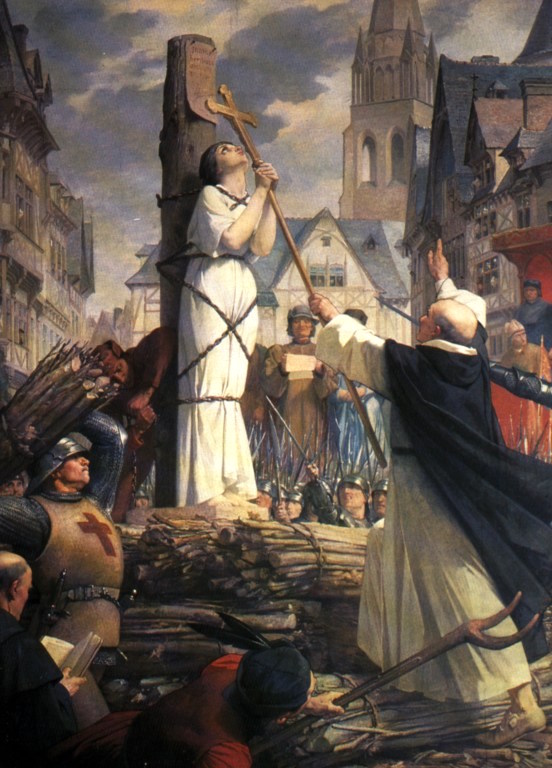
Joan at the Stake, broadcast live

French actress Marion Cotillard plays Joan of Arc in a new production of Arthur Honneger's Joan at the Stake (Jeanne d'Arc au Bûcher) today on medici tv.This will be interesting as the piece requires a very strong personality indeed in the title role. Don't judge the piece by the Barbican performance last year  which was curiously inert despite the magnificence of the score. No wonder people who didn't know the piece didn't like it. A good performance requires a good actress to ignite.....oops. Watch what Ingrid Bergman brings to the part in the 1954 filmed version of Honneger's masterpiece. The brilliant orchestration gets upstaged by her amazing performance. Read more here

Honegger's Jeanne d'Arc is oratorio as psychodrama. In these final moments of Joan's life she thinks back on how she's arrived at the stake. The raging mob screams around her. She's shaven, in sack cloth but for the presence of her Confessor, who doesn't really understand.  But she's not alone for at the criical moment, her voices return, and she's taken up to heaven.  The orchestration is amazing - ondes martenot, saxophone, huge string section. The prelude, added in 1944 during the German Occupation, sets the piece in wider context. This magnificent orchestration frames the role of Joan, She's a simple peasant girl  who does extraordinary things. Significantly, Joan is not a singing part.

Read about Carl Th Dreyers silent movie The S Passion of Joan of Arc HERE, and about  Walter Braunfels Scenes from the life of Joan of Arc, a neglected wonder, HERE. .

Friday, 16 November 2012

Resurrected, Montemezzi's epic La nave

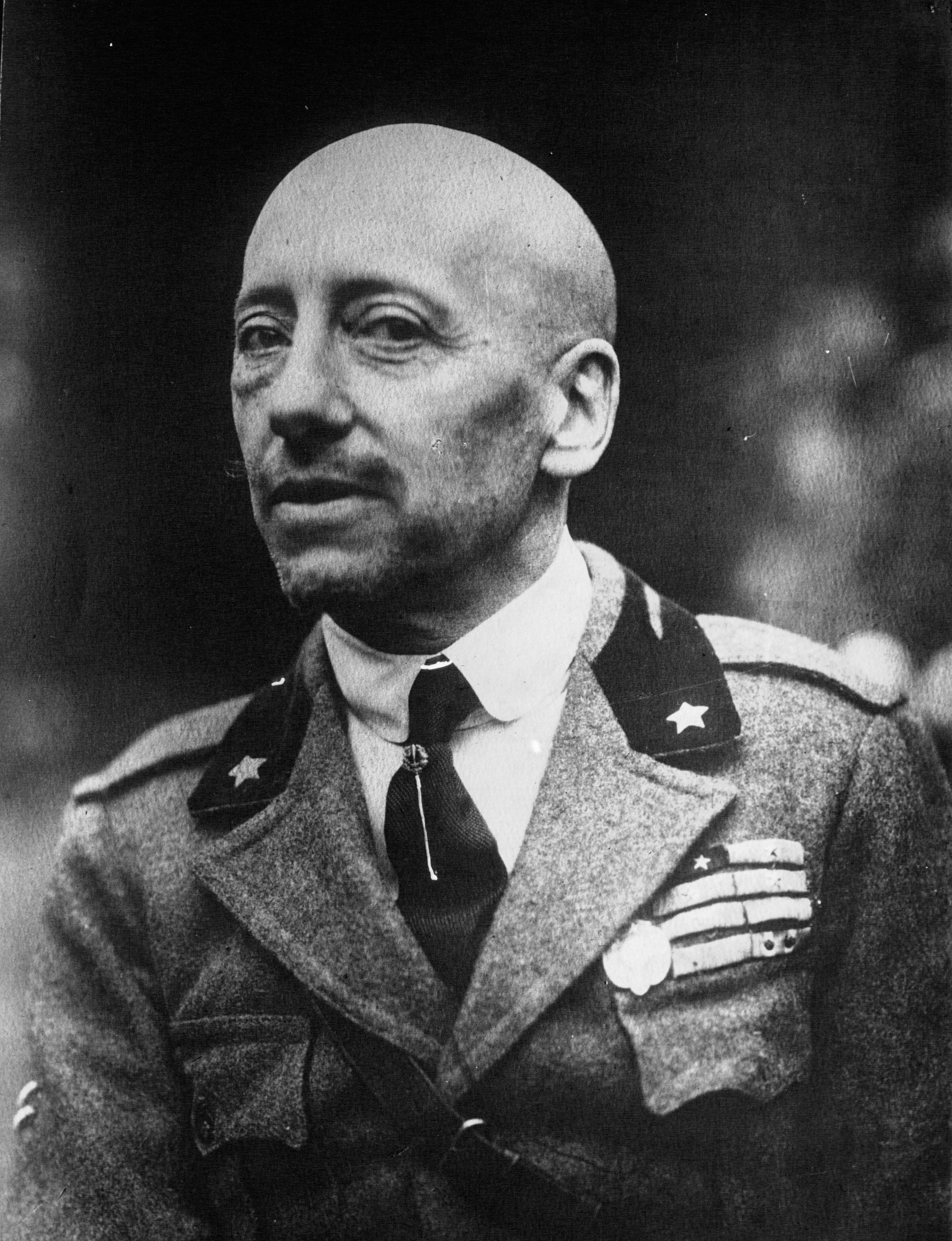
David Chandler braved Hurricane Sandy to fly to New York to catch the first performance in more than 70 years of Italo Montemezzi's  epic La Nave. The opera was written in 1918, with a libretto by Gabriele d'Annunzio (photo, left),  flamboyant poet, hero and creator in some ways of modern Italy. The opera was last performed in 1938, as the performance materials were destroyed  by bombs in World War 2. However, the full manuscrpit score survived, so La Nave can now be heard again.

Montemezzi's La nave "is a strange story concerned with the foundation, or rather the promise of the foundation, of Venice as a great maritime power; the plot is permeated with Italian nationalism, and contains a good deal of obscure motivation. But the music is magnificent from start to finish, and the opera certainly deserves to be staged, so the full grandeur of Montemezzi’s conception can be appreciated. Almost all the critics of the opera in the past agreed, whatever their other objections, that Montemezzi’s orchestration and treatment of the choir were extraordinarily impressive, and the New York performance showed they were right. The orchestration, clearly akin to that of L’Amore dei Tre Re, is Wagnerian, yet the Wagnerianism is refracted through an Italian sensibility, with a gripping nobility, sweeping, cinematic quality, lyrical voluptuousness, and restless play of instrumental textures. The sheer lushness of the score was beautifully brought out by Israel Gursky’s passionate conducting of the Teatro Grattacielo orchestra, and his timing seemed to me faultless — he let the music breathe, but also drove it along with irresistible momentum."

Read more here in Opera Today. David Chandler's latest book is a collection of essays about Italo Montemezzi, so he's the authority to listen to.  Chandler specializes in North Italian opera in the post-Wagner, post-Verdi period. He's also a specialist on Alfredo Catalani (La Wally) Read more by following the label below on Catalani.

Thursday, 15 November 2012

Barenboim Birthday Beethoven

Happy Birthday, Daniel Barenboim 70 today!  To celebrate I could cheat and post a slew of youtube clips without personal commentary,  but instead, a link to a performance that meant a great deal to him, personally. HERE again is a chance to watch him conduct the West-Eastern Divan Orchestra  in Beethoven Symphony No 9 at the BBC Proms last year. Anyone can play, anyone can conduct but what Barenboim has done with his life and for others, that's unique.

Mendelssohns and Schumanns - Wigmore Hall

The Wigmore Hall Celebration of Mendelssohn Song series culminated in a recital of works by Felix and Fanny Mendelssohn and by Robert and Clara Schumann. The programme was very well chosen because Felix, Fanny, Robert and Clara knew each other..

Susan Gritton, Sarah Connolly and Eugene Asti began the recital with duets, affirming the theme of companionship and symbiosis. Three contrasting settings of Heinrich Heine, including the famous Wasserfahrt op  50/4  which Felix Mendelssohn wrote shortly before the Schumanns married, inspiring Robert Schumann's Liederjahre. Heine's text suggests connections with Winterreise. The poet leaves his homeland. He passes his sweetheart's home but she shows no sign of interest, so he sails off into the unknown, blinded by tears. There's irony in the way the voices intertwine, though there's no hope for the relationship. The piano part describes waves: the ocean is impersonal, constantly changing, obliterating the past.

Fanny Mendelssohn Hensel wrote almost 400 works, a significant output for a woman in her social circle. Her Five Lieder op 10 reflect her intellectual rigour. Fanny endured a long engagement because Wilhelm Hensel worked in Italy, so her setting of Hensel's poem, Nach Süden (op 10/1), had deep personal meaning. The theme of separation may have resonated with her brother after her death, for he included it as the first song in this posthumous publication.  Nonetheless it's very well written: Felix would not have included anything less in a tribute to his much missed sister. It bears comparison with  Fanny's settings of Lernau, Geibel and Eichendorff. These were all contemporaries: Fanny was setting "new" poetry, choosing poets who were to inspire generations of composers to come.

 In Vorwurf, (op 10/2), she confronts the bleakness of Lenau's verse without compromise. The suggestion of ponderous footsteps in the piano part suggests gloom, but the stern reproach in the second strophe indicates strong-minded resolution.: no escape into "romantic" passivity. The vine imagery in the Geibel setting Im Herbst (op 10/4)  inspires luscious curling symmetries  Most beautiful, perhaps, is the Eichendorff setting Bergeslust, (op10/5), the last piece she wrote before she died. The introduction is written with great freedom evoking the open vistas of a mountain top. Clouds drift down, and birds descend, but "Gedanken gehn und Lieder fort bis ins Himmelreich". Voice and piano join in unison.

Susan Gritton's recording of Fanny Mendelssohn Songs for Hyperion is a a classic, but on this occasion she may have been unwell,  for she was not on her usual form. Nonetheless, she has worked so closely with Eugene Asti that he could compensate. He played with sensitivity, protecting  Gritton so she wasn't exposed.  Later in the evening, she regained her composure.  In Lieder, as in life, partnership like this benefits performance. Very much in keeping with the theme of companionship that ran through this programme. It's not for nothing that Asti is one of the great champions of Mendelssohn song in recital.

Eugene Asti and Sarah Connolly have also worked closely together in Mendelssohn.  Connolly sang Mendelssohn's Six Songs op 71  with great poise. Intelligent  phrasing, clear diction, a nice burnished tone.  I specially liked the Lenau setting Schilflied (1842) where the poet describes the stillness of a pond in the monlight, where deer and birds move among the reeds. ".....träumerisch im tiefen Rohr", sang Connolly, breathing into the vowels with great feeling. The Eichendorff setting Nachtlied (1847) is exquiste, at once elegaic and elegant. Night has descended, with intimations of death. But the poet isn't alone "Frisch auf dem, liebe Nachtigall ! du Wasserfall mit hellen Schall!"  The song of the nightingale lights up the gloom with a cascade of bright, refershing song. Gentle diminuendo in the postlude, like embers glowing in the darkness.

 If anything, Robert Schumann was even more sensitive to poetry than the Mendelssohns. Schumann's Spanisches Liederspiel (op 74, 1849) set Geibel's verses describing an exotic, imaginary Spain. The three songs chosen from the set depict flowers and sensual perfumes.  In Botschaft, "Tausend Blumen, tauumflossen", piano and vocal lines entwine like garlands, intoxicating the listener, drawing him into a world of possibly illicit passion.  In their own ways, Mendelssohn and Schumann contributed towards the Romantic challenge to the aesthetic of North  German Protestant propriety. It's no coincidence that Hugo Wolf worshipped Schumann, wrote his own Spansiches Liederbuch (also to Geibel and Heyse) and operas based on Spanish themes.

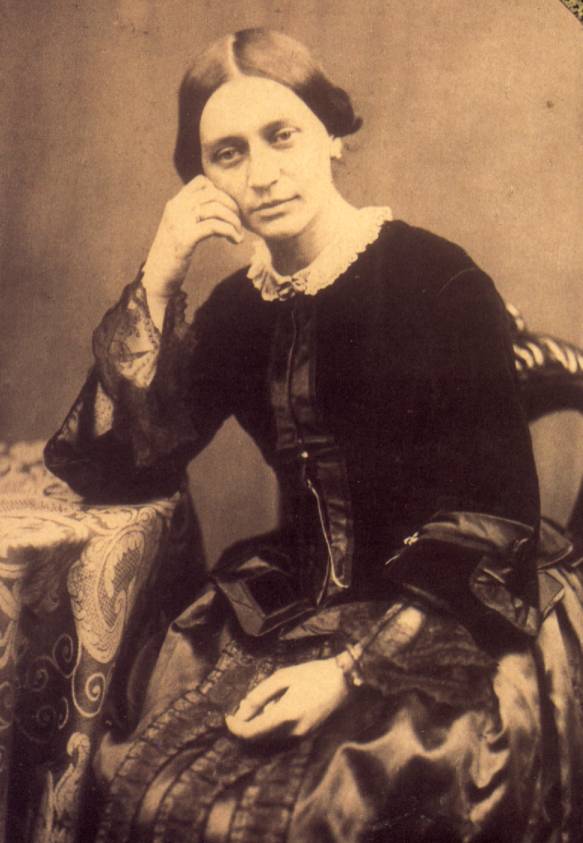
Clara Schumann was a contemporary of Chopin and Liszt. Like  them, she had an international celebrity career. She was an independent breadwinner in a way that Fanny Mendelssohn could not be, constrained as she was by her higher social status. By any standards, Clara Schumann was a pioneer, but Robert wanted her to be a composer, too. Songs like Lorelei and Volkslied  (both Heine) charm because they're so descriptive.  But her instrument was the piano, not voice. The bitter tragedy of Heine's Sie liebren sich beide (op 13/2 1842) didn't bite, though Asti's accompaniment was accomplished.

Susan Gritton sang Robert Schumann's Six Poems of Nikolaus Lenau (op 90) picking up nicely. Lyrical as these songs are, there are tricky moments, like the tongue twister "vom stillen Strahl des Schmerzens bist du gebeugt und blasser" in Meine Rose. Sarah Connolly returned for the op 90 Requiem "Ruh' von schmerzensreichen Mühen". 

Wednesday, 14 November 2012

Taxidermy Tempest - Adès at the Met

What would Robert Lepage make of Thomas Adès's The Tempest ? The Tempest is inherently dramatic, given its Shakespearean origins, and  Adès's music soars to sublime, supernatural heights.  The Met is wealthier than any other house, and Lepage has a penchant for expensive machines..This was an opportunity for the Met to use its resources to craete something truly magical.

Instead it proved to be a grotesque, proving yet again that throwing money at things means nothing if there's no vision behind it.  Imagine a Mies van der Rohe masterpiece with glorious vistas. Then stuff  it full to bursting with discards from a shabby amateur dramatics prop room.

 Lepage's concept is built round a mock-up of the Teatro alla Scala, on the dubious premise that Prospero once lived in Milan. However, La Scala didn't exist in Shakespeare's time. Why are the costumes facsimilies of late 19th century Italian opera?  " Milan" and "Naples" are symbols of temporal  power, rendered impotent.  The Tempest is allegory, not history.  In many ways it  is the most "English" of operas. Furthermore, Shakespeare deliberately locates it on a mythical island in a mythical ocean, where nature spirits operate beyond the confines of civilization.  Central to the plot, and to Adès's music is the cosmic storm.  Adès's music sizzles and spins with supernatural energy. Lepage smothers it in formaldehyde, turning it to taxidermy.
 
The Tempest is Adès's  finest achievement. How could he have countenanced this? He might as well have replaced his music with elevator muzak, for all the relevance this production had to the opera. Lepage has direccted the stage play many times. How could he have misunderstood it so completely? Perhaps he's making a reference to the artficial nature of theatre, which might work with many operas, but not for something as esoteric as The Tempest. One wonders if composer and director were hypnotized by the Met aesthetic of money before taste. Some opera goers could not care less about art, music or drama. Ironically, the same audiences who wail at "Regie" will not notice that Lepage's pointless staging and costumes are the worst form of directoral excess.

Because The Tempest predicates on psychic imbalance and distorted reality, Adès's  music is finely tuned to capture this distorted reality. Cadences rise madly up and down the scale, pitches switch suddenly, key changes occur when you least expect. Adès always conducts his own music better than he conducts any othe composer, so I shut my eyes to concentrate on the orchestra. But listen to the Royal Opera House recording, where he's more spontaneous. At the Met he doesn't take risks, and doesn't fully engage with the wild fantasy.
 
The vocal lines are set counter-intuitively, emphasizing words out of syntax.  Ariel and Caliban have the most difficult music because they are supernatural beings who aren't supposed to function in normal terms. The original Ariel, Cynthia Sieden, was an unusually high coloatura, but she had to train her voice specially to sing the part, and do excercises to recover afterwards, but she sang with a quite incredible beauty, her interpretation informed by her extensive experience in baroque roles, which are full of bizarre characters. Audrey Luna sings, but doesn't create the part. "Full Fathoms Five" drifted past, though it's integral to the plot and Adés writes some of his most glorious music for it. Indeed, the Guardian ignored it altogether. But  heroic efforts would have been in vain in this production. Lepage relies too much on mechanical effects to bother about singing or acting, and most of this cast were too inexperienced to override him.

Simon Keenlyside, however, created the role in the original Royal Opera House production. He relishes its challenges and develops Prospero into a plausible human being. He has the range and the flexibility to cope with the constant convoultions. He conveys genuine emotional depth. All credit to the felt tip pen tattoo artist, but the costume concept made Keenlyside look like a monument defaced by graffiti, rather a telling image for the production as a whole. The original  Caliban was created by  Ian Bostridge, whose unique voice brought out the alien strangeness of Caliban's personality, tragic and demonic by turns, the voice shift shaping almost as much as Ariel's but in a lower register. Caliban is a counterpart to Prospero, even though he doesn't have as much to sing, so it takes a tenor with Bostridge's intuitive feel for the surreal to develop the part for maximum impact. Alan Oke has the notes, but not the craziness, and is no match for Keenlyside, worthy as he is. As Adés said himself:"This Caliban is different".

On the other hand, maybe Met audiences don't want challenge, however integral it is to the drama. Toby Spence impressed, as did Kevin Burdette and Iestyn Davies, but the rest of the cast was hampered by the appalling libretto (Meredith Oakes). Humour certainly has a place in this opera, but this text is just plain daft. In theory, one might create a staging which turned this weakness into a virtue. The libretto can be overcome because Adés's  music ignores it in favour of his own musical waywardness. But it would take a much better director than Lepage to direct singers to sing the spirit of what they are singing rather than  just the words. Good direction is all the more important in a production which relies too much on props and mindless costumes. Adès's The Tempest is a radical but lovely piece of music, but Lepage and the Met have once again denatured art and brought it down to the level of pantomime. It's not strictly their fault aloner, but that of an audience that prefers costumes to creativity.


Tuesday, 13 November 2012

Kathleen Ferrier - new film by Diane Perelsztejn

A new film about Kathleen Ferrier exploring her life and her music is now out.  Diane Perelsztejn's film moves briskly through Ferrier's early life to the triumphs of her career, which will be familiar, but are presented in a fresh way.  There are new things too, dealt with for the first time, and new, analytical material. Read the full review by Claire Seymour HERE in Opera Today :

"The final stages of the film deal with Ferrier’s personal relationships, and we learn about her relationship with Rick Davies — the significance of which has not been previously well known due to the media’s respect for the singer’s privacy and Winifred restricting access to the diaries — and with her father. Her fatal illness is sensitively depicted, revealing the humour and courage (she continued to perform despite the pain caused by her breast cancer) with which she bore discomfort and adversity."

"Contralto Natalie Stutzmann insightfully analyses the strengths and appeal of Ferrier’s voice, remarking its ambiguous combination of “the colour of the chest voice usually found in the male voice with the clarity of the female voice”, and the beauty and length of her breath. But, whatever her technical strengths, it was the way her relaxed, earthy contralto communication so naturally that struck her devotees, for whom she was the ‘girl-next-door’, bringing classical music to an entirely new audience.

Monday, 12 November 2012

Wexford Opera season, Opera Today

Interesting report on the Wexford Opera season 2012 in Opera Today HERE.  It's too long to quote, but please read as you won't often get Cilea's L'Arlesiana, Chabrier's Le Roi malgré lui and Delius's A Village Romeo and Juliet in one sesssion.  Do take time to read the article - very detailed and thoughtful !

Sunday, 11 November 2012

Wartime Elgar The Longed-for Light SOMM

For Novemvber 11th and for the forthcoming centenary of World War One, a prescient new release by Siva Oke's SOMM label The Longed-for Light : Elgar's Music in Wartime.

Elgar was a a public figure, from whom the Nation expected support at a time of war. He had no choice but to echo the sentiments of the time .Within two weeks of the declaration of war, Sir Henrty Wood conducted Land of Hope and Glory, requisitioning it forever as a work of belligerent patriotism.  On this CD, we have another work conducted on that same programme, Sospiri op 70 (Sighs) is very different. A graceful violin line, harp and organ suggest peacefulness.

More unusual is Polonia op76 (1915), since Poland didn't yet exist except as part of the Austrian and Russian Empires. It's an iunteresting exercise which blends themes from Chopin and Paderewski in a mix of grand orchestral music, mazurkas and marches. This piece could be also do service for memorials to the Second World War, and to the thousands of Poles who escaped to England after 1939.

Elgar's Fringes of the Fleet was a smash hit at the Coliseum London, when it was a music hall, long before it became the home of the ENO. In similar stirring vein is Carillon op 75 1914, based on a poem by Belgian poet Emile Cammaerts. The grand orchestral sweep, with its evocation of church bells and bugles, is bizarrely cheerful but defiant. "Sing, Belgians, Sing! Although our wounds may bleed, although our voices break, louder than the storm, louder than the guns, Sing of hope and fiercest hate!"  Simon Callow declamation is perfect.. He describes the burial of dead children with tenderness, but spits out words like "Hate!" with vehemence.  We need that blustering  because it recreates the mentality of 1914, with the violent revanchisme. We must face this, unpleasant as it is, because that was the extremism that would lead to Versailles, reparations and  revenge from the other side.

Une voix dans le Désert op 77 is based on a much more contemplative text by Cammaerts. Hollow drum beats suggest war and the trudge of tired, marching soldiers."A hundred yards from the trenches" Callow speaks in   "there stands a little house, lonely and desperate" The farmer refuses to leave. His daughter sings of larks and of peace, while  soldiers march past. "Not a breath, not a life, not a soul, only a flight of crows along the railway line".  Elgar decorates that phrase beautifully. It's a moment of humour amid the horror, like the farmhouse itself, surrounded by battlefield.

The third Cammaerts setting is Le Drapeau  Belge op 79. "Red for the blood of soldiers! Black, yellow and red !"  Elgar's music moves like a march, so you can imagine the flag unfurled. Callow is magnificent. Irony would be out of order here. He has to sound bombastic, for such was the spirit of the time.

The longest piece on this recording is a ballet The Sanguine Fan op 81. A ballet in wartime? Elegant Elgarian sweeps, delicate lyrical notes ideal for dancing to. Pan, Echo and cupids dance in a glade while humans die. It is escapist fantasy, a coda to the comfortable Edwardian world. For a moment the music darkens with alarming chords, but serenity returns.

Surprisingly, this recording works well as a seamless whole, although the works weren't written to be heard together as such.  Just as the farmer's daughter sings about larks and peace in the midst of battle, hearing pieces like The Sanguine Fan after Le Drapeau Belge reminds us that even in wartime, life goes on  and hope will return.  Whoever decided to place Sospiri and Carissima between the  Cammaerts settings knew what they were doing.  Together the five pieces form a kind of meta-tone poem for orchestra and voices, making the whole greater than the sum of the parts.  Indeed, I think it should be regular performance practice to blend the Cammaerts settings in this way for maximum impact.  On their own the Cammaerts settings are propaganda, almost music hall.  But heard in the context of  other, more characteristic Elgar, they give much deeper insight into how Elgar responded to war. Together with SOMM's superb Fringes of the Fleet (more here ) this recording expands our appreciation of Elgar's wartime works beyond The Spirit of England and Starlight Express.

John Wilson conductsd the BBC Concert Orchestra. Hear extracts from this disc incl Carillon on BBC RAdio 3 from 12/11.

Saturday, 10 November 2012

New role for John Tomlinson!

A new role for Sir Joihn Tomlinson up close and personal! A cherished friend had a wondeful time at a recital John Tom  gave at the National Gallery this week and sends a heads up for the next performance on Friday 16th. More HERE.

"To celebrate the 500th anniversary of the unveiling of the Sistine Chapel, Sir John Tomlinson, one of England’s finest basses and pianist David Owen Norris will perform the poems of Michelangelo by Britten, Wolf and Shostakovich. Sir John will give a wonderfully charismatic staged performance of Britten’s 'Seven Sonnets of Michelangelo', Op. 22, Wolf’s 'Drei Gedichte von Michelangelo' and Shostakovich’s 'Suite on Verses of Michelangelo', Op. 145, with David Owen Norris on piano. This is a rare opportunity to hear one of the world’s great operatic voices in an intimate setting, away from the world’s biggest stages."

Wonderful programme, which will suit Tomlinson's voice.  What's more, you can combine the recital with a visit to Michelangelo's works in the National Gallery. To whet your appetite, here's a description of the piano song version of  Shostakovich Suite on the Verses of Michelangelo which Tomlinson and Owen Norris will be performing  HERE.


Thursday, 8 November 2012

Oliver Knussen at 60, Barbican Immersion

Ollie is 60! The Barbican and the BBC SO celebrated Oliver Knussen with a retrospective of some of his greatest hits. He came on stage wearing a smart new conducting tunic and what looked like one of those shiny badges you get on birthday cards that say your age. Maybe my eyes were mistaken, but it seemed a typically Ollie touch.

More typical Ollie programming wit. Maybe it was birthday fun, maybe it's Bonfire Night, but the revised programme started with Flourish with Fireworks op 22 (1988/1993),  a joyous 4 minute blast of musical high spirits, perfect for the occasion. References embedded to Stravinsky's Fireworks and to the LSO (A,m E flat, G) and to old friend Michael Tilson Thomas (E, B, B).The even earlier Choral (op 8, 1970-72) dispenses with high strings altogether. Four double basses march against counter processions of trumpets, horns and mournful trombones. Flutes and percussion cry out against the dirge. Eventually the different parts of the orchestra coalesce, not in unison, but in chorale.

In Walt Whitman's verse, dense thickets of phrase and sub-phrase pile upon each other. Parsing this grammar must be like breaking code. For Knussen, that's a challenge. Lines of text like "reck'd or un-reck'd, duly with love" aren't easy to analyse, but Knussen's music makes you feel the meaning. In the Whitman Settings op 25a (1991) density is written into the orchestration, while the high soprano line floats clear above. "I am the Poet of Earth, and the voice of the rain", sang Claire Booth, another Knussen muse.

Martin Owen was the soloist in Knussen's Horn Concerto op 28 (1994/5) . It's almost more horn than concerto, for the horn part dominates, sensually teasing and provoking the orchestra. It's inherent drama makes it one of Knussen's signature pieces. I heard Owen play in one of the first performances of Elliott Carter's Horn Concerto (2006), where the soloist dialogues with different segments of the orchestra in succession. I would have completed this review on Monday after the performance, but news came of Carter's death. It was hard to think of anything else.
Two Organa (1994) is only six minutes in total, but densely constructeed. The first part (Notre Dame aux Jouets) uses only white notes of the diatonic scale. The second adds a secret puzzle: dedicated to the Schoenberg Ensemble, it spells Schoenberg's name in pitches, concealed in dizzying polyphonic fireworks over a deeper pulse of plainchant.

By now it should be obvious that, though it was Knussen's birthday, and dozens of composers and musicans were in the audience, the presence of many others unseen was intensely palpable.  Knussen spoke about Hans Werner Henze who died the previous weekend.  Henze had a home in London for decades and was closely involved with British music, as an influence, a mentor, and as Knussen put it, "a good friend". Then Knussen conducted his Requiem : Songs for Sue op 33 (2005-6). There are Henze connections, but above all, the piece is a tribute to Knussen's late wife, Sue.  Knussen didn't need to explain. Most of the audience know the piece extremely well.

The opening line, “Is it true, dear Sue” is followed by silence, as if an answer were expected, but we know it will never come. It’s poignant without being maudlin.  The piece opens in shrill staccato, expressing tension, but the orchestration flows tenderly, in circular figures towards a kind of calm stasis. The rounded figures felt like abstract depictions of an embrace. This image reflects too in the intimate instrument doublings. This isn't so much a group of separate songs as a curving arc of sound and feeling. Silences, here too, are part of the structure, like white spaces in a watercolour, extending the music into the imagination. As a meditation on someone loved who has passed beyond the physical, these voids are not empty, but charged with memory.

Indeed, there is an almost Ligeti-like stillness in the orchestration, the unadorned vocal line subtly enhanced by hollow, metallic and otherworldly sounds which express a sense of desolation. The poem, by Emily Dickinson, is full of corny lines like “as quiet as the Dew – she dropt as softly as a star”, but Knussen shapes the vocal line with dignity. Surprisingly, there is some emotional distance in this piece which I can’t quite pinpoint either, but which adds a moving elegance to the whole, layering it with a veil of Sehnsucht which makes it universal as well as first-person.

Knussen's Requiem - Songs for Sue fascinates me because it creates a very profound sense of duality.  So many human relationships are built on control or power games, or social convention.  Genuine love, I think, transcends all that. It's based on respect for the individuality of each person, regardless of their relationship to oneself.  If we truly love, we can let other people be themselves.
It's no coincidence that most composers are men, who are often unable to articulate complex feelings in words or actions. Hence composers speak through music.  So many need to hide themselves behind elaborate structures, as if florid expression equated with feeling. Maybe that is the case for some, but I've always had a suspicion of insincere Requiems.

Perhaps the core of  Songs for Sue is the exquisite W H Auden setting, "Time will say nothing but I told you so". "Time only knows the price we have to pay. If I could tell you  I would let you know". Again this sense of dstance, and of feelings too deep to articulate. The phrase "I told you so" repeats many times. Is it reproach? Is it regret?  Sometimes the speaker is Time, sometimes the overwhelmed lover.

The absolute heart of the song pops out, almost unnoticed. Booth lowers the timbre of her voice, creating a direct sense of intimacy. The line “”because I love you” is spoken, not sung. A musician can’t “say” without music, so perhaps this is Knussen the man speaking through the medium of soprano. It's an unbelievably intense moment, but so hidden  that it's easily overlooked.

After this point I cracked up emotionally. This is why Knussen is good.  He doesn't need grand gestures or over-stuffed show pieces  He writes intricately constructed miniatures, but with a distinctive personal voice.  He seems playful but behind the whimsy there's deep feeling.  Songs for Sue prove that there's greater art in supposedly small pieces than in over-inflated  big pieces designed for public display but without real vision.  Is Sibelius Symphony no 7 minor because it lasts only 15 minutes? Size certainly isn't everything.

Knussen's Symphony no 3 (see my review of the NMC reissue here) doesn't sprawl. It's concise. It's another of Knussen's Greatest Hits, but I was still shaking after Songs for Sue and couldn't concentrate.

This concert is being broadcast on BBC Radio 3 on 9th February 2013

Tuesday, 6 November 2012

ENO The Pilgrim's Progress Ralph Vaughan Williams

The ENO production of The Pilgrim's Progress is a historic moment. This is what the ENO should stand for - pioneering good opera in English. This justifies the whole premise of the ENO philosophy.  For sixty years, The Pilgrim's Progress has suffered under the mistaken assumption that it is somehow "unstageable". Yoshi Oida and the ENO prove, indisputably, that it can be brought to vivid life and be restored to its deserved place in the repertoire. As Bunyan sings "This book will make a Traveller of thee". The "end" of the opera is just the beginning.

The Pilgrim's Progress  is a remarkable work that defies classification. Do not approach it as conventional opera, or you'll miss its fundamental originality. Vaughan Williams hiumself called it a "Morality", not quite a morality play in the medieval tradition, but much more sophisticated.
Approach it from  an oratorio background and you're on stronger ground. Yet Vaughan Williams was adamant that it was "essentially a stage piece, and not for a cathedral". These considerations are important, for they affect the way the Pilgrim's Progress can be staged. Vaughan Williams wasn't happy with the 1951 Covent Garden production., but I think he'd be pleased with Yoshi Oida's staging for the ENO because it blends Bunyan's steadfast beliefs with Vaughan Williams's distinctive artistic personality.

The Pilgrim's Progress is an allegory, progressing in ritual stages as spartan as the militant non-conformist Protestantism that inspired it. The action evolves in the Pilgrim's soul as he visualizes his journey. Thus the bizarre names of those he meets, like his neighbours Pliable, Obstinate, Mistrust and Timorous. They are not real people but symbols. Oida and his designer depict them holding banners, alluding to the illustrations in typical 17th century religious tracts. Lord Hate-Good and Pontius Pilate are meant to be caricatures, as Bunyan's readers knew their Bible word by heart and understood how it applied to The Pilgrim. Perhaps modern audiences don't make quite the same connection between the Pilgrim's fate and that of his Lord, but again that is absolutely fundamental to meaning.

Bunyan was a non-conformist independent at a time of extreme religious intolerance. He wasn''t  Establishment, he wasn't dutiful Church of England.  He came from peasant stock and probably spole with a broad Midlands accent. Vaughan Williams is making a very specific point by explicitly framing the opera with references to Bunyan and later The Pilgrim in prison. It is not stylistic licence on Oida's part but fundamental to meaning. Furthermore, it's not simply a matter of poet in prison, but the concept that mankind is imprisoned until freed by spiritual awakening. The Pilgrim cannot attain grace unless he dies in faith. Oida's Pilgrim dies in the electric chair. Bunyan refers to a river of death. Electricity is a flowing current, so death is a quick transition, fitting well with Vaughan Williams's musical setting. Visually, the image is powerful because it also suggests the idea of sitting on a throne in judgement, for like God, Bunyan condemns the venal. "If this man cannot stand before the judgement of men, how shall he stand before the judgement of God?" Oida also show the river in a film projection above the stage, a detail which reinforces the depth of his interpretation.

Ralph Vaughan Williams was not Bunyan. He affirms Bunyan's basic principles but moderates them with his music.  RVW's glorious interludes add radiant lyricism, conducted by Martyn Brabbins so that the radiance is almost overwhelming.  Brabbins's understanding of RVW's idiom is profound, sharp and never sentimental. RVW's "pastoralism" isn't bucolic fantasy but "pastoral" in the wider meaning of the word, ideally suited to this piece with its implicit message of faith in the Good Shepherd. The Pilgrim sings" I will walk in the name of the Lord, my strength", and the colours in the orchestra illuminate the words, as if the Lord is walking invisibly with the Pilgrim. RVW's Interludes tell the story so vividly that the orchestra provides much of the drama the text alone eschews. In House Beautiful, the Pilgrim listens to angelic voices "Music in the house, music in the heart, music in heaven".

There are many references to Vaughan Williams's other music, especially the Fifth Symphony, since he laboured over The Pilgrim's Progress for many years. Indeed, The Pilgrim's Progress can e read as Vaughan Williams own spiritual journey. He put his failth in music, not in God. Listen to the entr'acte before the Shepherds of the Delectable Mountains, where the melody is bathed in the simple light of solo violin reminiscent of The Lark Ascending. Oida's staging captures RVW's music with remarkable sensitivity.  The prison paraphernalia (designed by Tom Schenk) moves swiftly, respecting the momentum of the music. Glowing colours of copper and amber, verdigris and subtle shadow : natural earth tones that reflect the music and also the idea of organic change that runs through the whole piece. This is why The Pilgrim's Progress is infinitely improved by visual images.  Most of us have grown up with audio versions. Now my love for this work is enhanced by recalling this production.  Even when Oida slightly  controversially uses film images of  First World War trenches to contrast with "God's straight highway", he is referring to RVW's career. Indeed, RVW seems to have made the connection himself, given the strident trumpet parts that accompany the text. That war was a watershed (his "river"?) for him and he did not forget.
 
This is a much deeper production than one might expect. It is an infiniutely greater homage to the composer than the superficial  ENO Riders to the Sea, or well meaning but limited productions of Hugh the Drover. Oida might even make The Poisoned Kiss work nicely.

Martyn Brabbins is another reason for catching this production, sharper than Adrian Boult, livelier than Richard Hickox. This should be immortalized on DVD.  It would create a new market, especially for those who don't as yet appreciate RVW.  Roland Wood sings both John Bunyan and The Pilgrim, but combining the roles means he is singing for hours on end. It's more conducive to stamina than finesse. A beautiful voice isn't necessary in an opera about a tough minded anti-materialist. It's enough that Wood can to carry it off convincingly, especially considering that there are several other British baritones who would have been outstanding. Wood is valiant, but he's young and doesn't make his ROH debut until 2014. He's worth hearing again, though. Some of the finest singing occured in the minor roles.  Several excellent vignettes - Eleanor Dennis (especially as the Voice of the Bird), with Kitty Whateley and Aoife O'Sullivan, Timothy Robinson, Mark Richardson,  and many members of the cast and chorus in Vanity Fair.