Sunday, 14 September 2014

Benignly British - Last Night of the Proms 2014


Last Night of the BBC Proms 2014. Thousands were there, having fun, and thousands more at open air Proms all over the country. I was at Otello at the ENO – new production by David Alden. I'll write about that in a few hours, please come back – it was good! The real Last Night of the Proms was  a thrilling Beethoven Ninth with the Leipzig Gewandhaus (reviewed here)  So the Last Last Night of the Proms is Silly Season, a time to unwind and ham things up.

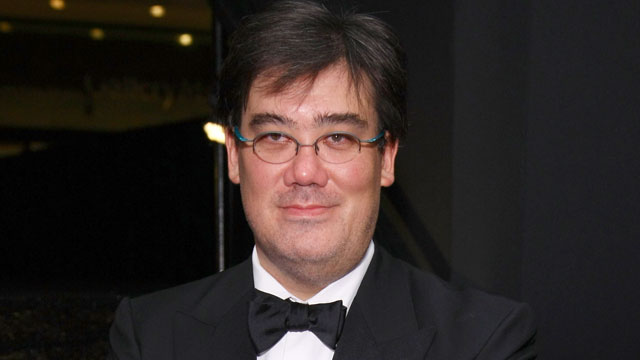
Sakaro Oramo in tails and a Union Flag waistcoat!  And Malcolm Arnold to set the right tone of doggedly British dottiness. The BBC Singers, The BBC SO Chorus, the BBC SO and conductor Sakari Oramo joined forces for Arnold's Peterloo Overture. "I felt again the passion of a great nation burning...the libertine philosophers no longer held sway, ". New words, methinks. At least Arnold had a sense of humour. Havergal Brian didn't and many others won't. 

I loved the BBC camera work, the scene shot from way up in the dome. Literally, "off the wall". Sakari Oramo hams things up with a demented grin. Wow, he's a natural TV persona. Some real music in the mix – Janine Jansen playing Chausson Poème with a straight face, and a rarity – Richard Strauss's Taillefer, a mini-oratorio about a peasant following William the Conqueror to "Eng-ger-land".  Strauss sending up Grand Oratorios and Mock Medieval Tradition.

Roderick Williams sang Rule Britannia. In recent years this feature of the Last Night has been camped up so much that there's no more room for novelty. Williams took a radically different approach. Previously he'd joked about waving a Jamaican flag. Perfectly reasonable – where would Britain be without West Indians and their descendants? At one stroke, the Proms would connect to millions of people otherwise excluded form the sometimes belligerant jingoism of the past. On the other hand, Williams is sharp enough to understand thast such a gesture might be patronizing, Much, much better that Williams chose sincerity, idealism and conviction.  His eyes shone. No gimmick, no jokiness, but absolute faith in,meaning  For me, one of the great things about Britain is that immigrants can become somebody, hard as it might be. That's what inclusiveness is really all about.

Sakari Oramo is  a natural party animal and born communicator. He takes his coat off to reveal  a Finnish flag on the back of his waistcoat.  But in his speech he addressed serious issues. "Music isn't just about knowledge and technical things, it's about love and appreciation.... Music is history, it's culture, it's a universal language to those who are open to it. It's science, it's geography, it's physical education. It develops insight. It's therapy for those who need it. Music is a wonderful high speed dual carriageway to the human mind and innermost emotions" 

Last year there was a big fuss because Marin Alsop was the first female conductor to conduct a Last Night. But so what? One person's self-congratulation means nothing when millions of women (and men) around the globe struggle simply to stay alive. Being a conductor is not only irrelevant in the wider scheme of things, but reinforces the idea of western supremacy, Far from promoting  feminism, it set the cause back,  This year's LNOP with its non-grandstanding,  gentle good humour could do a lot more in terms of bringing people together.

Saturday, 13 September 2014

Leipzig Gewandhaus Orchestra Beethoven 9 Prom London


The Last Night of the Proms is a wonderful party, but for music lovers the Real Last Night of the Proms is the night before, with Beethoven' s Symphony no 9. No music more symbolic of the Proms ethos than this wonderful symphony. This year, the Leipzig Gewandhaus Orchestra did the honours. This was a very special Prom indeed, for Leipzig's Beethoven tradition is even more glorious. The Leipzig Gewandhaus Orchestra has been doing Beethoven since Beethoven was "new music" and a living composer.

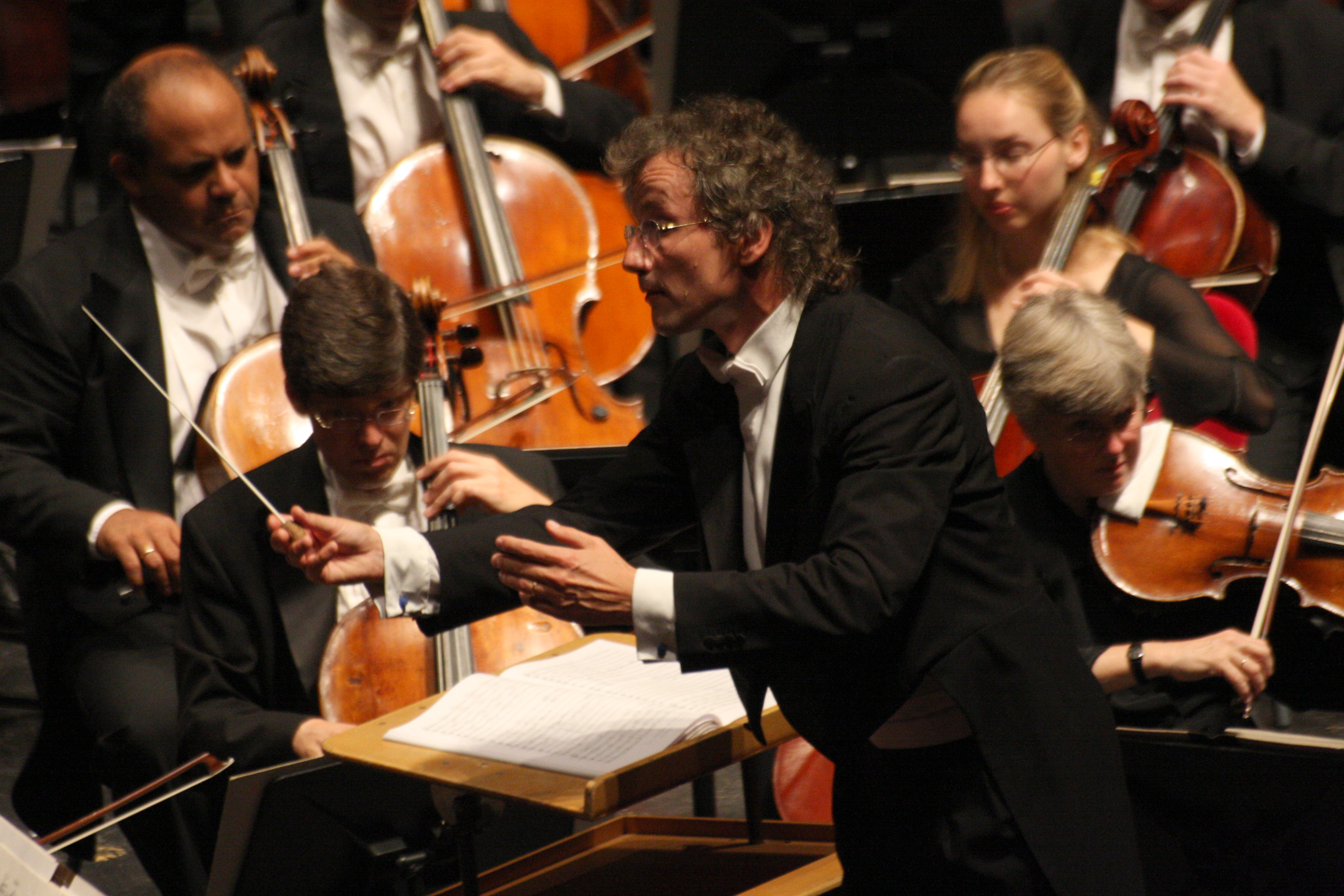
What a sense of occasion and what a rewarding performance! The famed "golden" sound of the Leipzig Gewandhaus Orchestra came vividly to life. Alan Gilbert was vindicated, too. I've heard this orchestra do this symphony twice live with Riccardo Chailly. Gilbert's approach was less dynamic, but he had a steady feel for the way the structure of the symphony builds up. Like a series of progressive waves, oddly enough like the "marches" in Mahler Second/Mvt 1, but much better defined here.  Gilbert's approach is quiet, rather than boisterous, but this in itself brings out the strengths of this orchestra. Such control from the double basses and lower strings - it's not at all easy to hold lines so long barely above the volume of a whisper. Incredibly beautiful. Wow, can the Leipzigers play! Muted, glowing, and full of meaning: Beethoven is slowly revealing a miracle, which unfolds from (controlled) chaos.

Superb singing, yet again. The Leipzig Gewandhaus Choir , the Leipzig Opera Chorus and  Leipzig Gewandhaus Childrens's Choir sing with the same rich resonance as the orchestra with which they  are associated.  The sound is something special. The London Symphony Chorus must have enjoyed working with them. Even better, the soloists. Dimitry Belosselskiy's voice rang out powerfully, commanding rapt attention in a packed Royal Albert Hall.  Steve Davislim equally impressive. I adore this singer, who can sustain phrases almost beyond human possibility, and make them float, seemingly without effort. We can't see his lungs but we can hear his total mastery oif technique. On this occasion he was putting his heart into his words: absolutely stirring, the clarity of his timbre shining, just like the brass behind him. Davislim's lyrical, too, creating the sense of quirkiness that worked extremely well with what was happening in the orchestra. To Beethoven Turkish troops with their pipes and drums, must have seemed wildly exotic. The Leipzigers , refined and lush as they are, defined the jaunty rhythms we've heard so often we take them for granted, without noticing why they're there.

"Deine Zauber binden weider,
was die Mode streng geteilt:
Alle Menschen werden Bruder,
Wo den sanfter Flugel weilt"

Absolutely, it matters that Beethoven is referring to exotic strangers, including them in the community. The word "Freude", (Joy) recurs repeatedly, but what kind of "joy" is it that intoxicates with such exhilaration? This joy has the power to break down divisons, even in war zones. For Beethoven, perhaps it was music. An orchestra epitomises that kind of shared commtment and focussed purpose.  
And so the Leipzig Gewandhaus Orchestra showed its soul.  Leipzig has always had liberal political traditions. Felix Mendelssohn was one of its great conductors. When the Nazis pulled down Mendelssohn's statue from outside the Gewandhaus building, the mayor of the city tried to protest. In 1989, thousands of East Germans fled west, provoking a crisis in the DDR. The protests that started in the nearby Nikolaikirche, supported by Kurt Masur and many members of the orchestra, led to the overthrow of repression and the reunification of Germany.
A few weeks after that, the Leipzig Gewandhaus came to Oxford, to the Sheldonian At that stage, we still thought the Soviets might march in, as they'd done before, so the occasion was extremely charged, emotionally. 

On the Real Last Night of the BBC Proms this year, the mood was happier and more relaxed - Freude in every sense. How glorious it felt - orchestra, choirs, soloists, conductor all on the same page literally, performing their hearts out. The choruses wore red and black - pretty meaningful - and the instruments glowed gold, bronze and silver.  in the background  turquoise and sapphire lighting, and a beam highlighting the bust of Sir Henry Wood, who helped create the Proms. He's long dead, but if he could sing, he'd be joining in too!

Nowadays it's fashionable to call for the end of the BBC. Sure it does bad things, but where would we be without it? Consider.

Friday, 12 September 2014

Leipzig Gewandhaus Orchestra Mahler 3 BBC Proms London


(For my review of the gorgeous Leipzig Gewandhaus Beethoven 9 Prom  Gilbert redeemed please see here).  Because Riccardo Chailly was scheduled to conduct the Leipzig Gewandhaus Orchestra in Mahler's Symphony no 3 at the BBC Proms, (Prom 73), tickets sold out within hours. All my friend could get were pricey seats in a box in the Grand Tier. The Leipzigers and Chailly are so good and their Mahler so distinctive that the cost seemed a good investment.  The acoustic in the Grand Tier really is good, though you can hear every cough and dropped booklet resonate around the building. Perhaps that's why I didn't feel entirely bad about Alan Gilbert replacing Chailly at short notice (Chailly broke his forearm). The sound quality meant that details were finely formed, and the very quietness in some passages indicated thoughtful engagement with some of the ideas in the symphony.

Like Mahler's First and Mahler's Seventh, the Third can take a variety of interpretations, from the black, haunted humour of Horenstein,  to the blazing sunshine of Abbado, to the vigorous mountaineering of Rattle, and the exceptionally poignant Welser-Möst at the Proms in 2005.  I also have a soft spot for Eugen Szenkar's  recording, made soon after the war with musicians who hadn't been able to play Mahler for 20 years. If you want a Mahler as street fighting man, that's worth hearing (and quite valid since Mahler's politics were leftist). My gut instinct is that Gilbert has something interesting to say, but perhaps not on this occasion and not with the Leipzig Gewandhaus Orchestra. That's much more than can be said of some other conductors.

"Pan erwacht: Der Sommer marschein ein", Mahler described the huge first movement in his original drafts. Pan, the god of wild open spaces, mountains., music and sexual danger. Perhaps the "marches" here aren't literal, pastoral rather than urban or  military, but what matters is the progression of ideas giving rise to a relentless series of forwards movements.  Mahler worked on this symphony in the Salzkammergut, where valleys and lakes are hemmed in, almost claustrophobically, by huge mountain ranges. Mahler, a keen hiker (and rider of early mountain bikes)  would have understood mountains as challenges to be conquered in the brief Alpine summer. The First Movement can be read as a panorama of peaks, each opening out to new vistas, pushing towards a resolution that might ultimately be spiritual transcendance. Thus the "panpipes" in the horns and the winds, and the significance of off-stage brass: something invisible is pulling the symphony, and the listener ever higher and further away from an earthly plane.

When Chailly conducted the Royal Concertgebouw Orchestra the fit wasn't quite so good, because the Amsterdam orchestra had its own great Mahler tradition. But when Chailly moved to Leipzig, to conduct the Leipzig Gewandhaus Orchestra, with even older traditions (though not in Mahler),  the magic worked perfectly right from the start, vindicating Donald Mitchell's high praise for him. The Leipzigers are famed for their warm, golden sound, which fits perfectly with Chailly's strengths. I hate using national labels but they might explain why the Leipzig Gewandhaus Orchestra and Alan Gilbert don't have quite the same chemistry. Throughout the First movement of this Prom, it felt as though the Leipzigers had their own approach to Mahler (nurtured by Chailly) while Gilbert is an American conductor.

The all-important brass entries seemed odd, as if the players were following some instinctive volition, rather than following Gilbert. His signals were pretty straightforward, but these players are so good they can almost conduct themselves. Gilbert didn't define the "marches" or the mountains" quite as monumentally as they can be done. Rather, he stressed the quieter passages, as if creating an aubade of aural texture. This is perfectly valid for it connects to the idea of dawn and regrowth : the hunter dies, but the animals go on. Gilbert's attention to detail brought out the bird song and hushed, chirping sounds in the undergrowth. Those kukkuks, the flute melodies,  the hushed murmuring strings  and hints of Mahler song: very Des Knaben Wunderhorn. I kept thinking of Messiaen. The formative years of Gilbert's career were spent in Lyons, where Nagano laid the foundations of another distinctive European tradition. But Gilbert works in New York, where he has to blend in with expectations there.  So Gilbert falls between different stools, so to speak. But he's much more interesting than many other conductors. I suspect, one day, he'll find his niche and get the respect he's due.

Gerhild Romberger
As the performance continued, the match between conductor and orchestra tightened. There were many very good moments , especially in the Misterioso, and the final section blazed with warmth and a sense of fulfilment. The Leipzig Gewandhaus Orchestra is so wonderful that just letting them get on with what they're good at would have worked better in a high-profile gig like the Proms. But full credit to Gilbert for trying to do his own thing, Maybe he will, soon, and shake up an orchestra without the sumptuous stature of the Leipzigers.

The most perfect part of the evening for me was the singing. It usually is, but this singing was wondrous. Gerhild Romberger was superb: not flashy, but self effacing and all the more convincing for that. She let the rich resonance of her voice command attention, and it filled the vast barn that is the Royal Albert Hall. Her "O Mensch" felt truly plaintive, as if she were weeping for the death of the old world and giving birth to the new. The eerie woodwind twining around her voice sounded like an instrument from the ancient past.  The Leipzig Opera and Gewandhaus Choir (women's voices) and Leipzig Gewandhaus Children's Choir (delightful Bim-bams) provided support almost as lustrous as the great orchestra they work with so well.

NEW DELIGHTED to report that Beethoven Symphony no 9 went extremely well!  I've heard Chailly conduct Beethoven 9 with this orchestra twice live. Brilliant! Alan Gilbert isn't Chailly but he's vindicated. Excellent sense of build-up in the first movement, pinpointing details which will emerge later in the symphony. How do the double basses play as quietly as that?   A freer and more sponatneous performance altogether - Gilbert and the Leipzigers meshing together well.  Orchestras at this level know what they are doing when they choose a conductor. Dimitry Belosselskiy magisterial in the bass part. Steve Davislim astounding - he can string phrases out without seeming to need space to breathe.  As he sang, I noticed how the jauntiness of his part was matched by the jauntiness in the music around him. The "Turkish" pipes and drums, perhaps? If I have time I'll write more.

Thursday, 11 September 2014

Yannick Nézet-Séguin dirigiert Bartók und Mahler


Yannick Nézet-Séguin conducts Bartók and Mahler 1. Enjoy the broadcast video HERE. Gil Shaham  is the soloist in the Bartók Violin Concerto No 2. The orchestra is the BR Symphonieorchester

Wednesday, 10 September 2014

Haitink 60th Jubilee Mahler 4 broadcast RFO not RCO


Last night, Bernard Haitink conducted Mahler Symphony no 4  to celebrate the 60th anniversary of his debut as a conductor. It's ONLINE NOW, in full video ! Listen soon because it won't be up long. Mahler 4 is very close to Haitink's heart, so this is a wonderful performance,. But it's even more poignant because, on this very important occasion, he's conducting the Netherlands Radio Philharmonic Orchestra. He's been associated with them for many years, of course, but they aren't the Royal Concertgebouw Orchestra Amsterdam. Haitink began conducting the RCO in 1957 so it really was a major shock when he suddenly quit on the very eve of his 85th birthday. Read how the story broke HERE (in Dutch). Haitink nooit meer bij Concertgebouworkest  (Haitink will have no more to do with the Concertgebouw)

Haitink felt that thr RCO management wasn't treating him with enough respect, so he decided never to play for them again. It wasn't a spur of the moment decision but had been building up for some time, as these things usually do. What was unusual, though is how Haitink went public. Usually all sides are cagey, speaking through lawyers and agents in mutually agreed terms. 

Haitink's been around long enough that he can rest on his laurels. Although some click baiters claim they know why Franz Welser-Möst quit the Vienna Staatsoper, nothing in fact has been revealed. I wasn't that surprised, as the Vienna Staatsoper has had a chequered past and in recent years it's got quite boring. But we should show more respect for condutors who place artistry above all. In this increasingly pusillanimous world, ruled by petty short-term values, we need conductors who stand up for what they believe in.

Tuesday, 9 September 2014

The Cleveland Orchestra Welser-Möst Brahms Proms London


The Cleveland Orchestra, with Music Director Franz Welser-Möst, made a most welcome return to the BBC Proms at the Royal Albert Hall.  Are the Clevelanders the best orchestra in the United States today? Their two Proms certainly made the case. Superlative finesse and poise, generated by genuine musicality.  The classical music world is international these days. Thanks to the internet, anyone, anywhere can listen to the best on offer. Orchestras can't rest on their laurels but must offer something unique. The Cleveland Orchestra is world-class, thank in no small part to Welser-Möst and his exacting standards. When orchestras and opera houses are imploding all round, Cleveland should be proud of what it has.

Classical elegance, too,  in the way the two programmes dovetailed : Brahms Symphonies no 1 and 2, preceded by Brahms Academic Festival Overture and Tragic Overture. Classical elegance is a much underrated virtue. Far too often  noise, bluster and commercialized tat substitute for well-crafted sensitivity. Welser-Möst and the Clevelanders evoke an aesthetic very much attuned to the values of 19th century Austria. This Brahms Symphony no 1 in C minor, op. 68 reminded me of Mozart, such was its freshness and clarity. This approach gives Brahms greater respect than the usual clichés about Beethoven. Brahms was very much an original in his own right, not Beethoven manqué. Such was the purity of this performance that I thought of Brahms the composer of chamber music, songs and works for piano. The larger themes thus felt like a natural development, a totally Brahmsian resolution, as personal as Ein Deutsches Requiem or the Alto Rhapsody. The ghost of Wagner towers so heavily over European music that it's salutary to hear Brahms as the pure soul of German and Austrian tradition. Perhaps that was the point of starting with the  Academic Festival Overture. Brahms, with his droll, down-to-earth groundedness, isn't Wagner or Beethoven, but himself.  [One of the big wars in music history was Wasgner versus Brahms. Maybe Wagner won since so many now expect to hear Brahms with a Wagner flavour. But Brahms  entire symphonic output adds up to one Wagner opera, and Wagner's non opera output pales in comparison with Brahms. All the more treason .that Welser-Möst's Brahms deserves respect]
 
Welser-Möst and the Clevelanders created Brahms Symphony no 2 in D op 73 with a similar sense of style. Brisk, agile playing created a sense of freedom  - no buttoned-up regression here!  The darker timbres in the second movement  suggested sensuality or mystery, rather than malice, adding nice resonance to the final movement's heady con spirito. Glorious brass playing - Cleveland's famed showpiece is alive and well.  What wit to pair this symphony with the growling Tragic Overture. creating a vivid contrast.  In August (Prom 53)  Iván Fischer conducted the Budapest Festival Orchestra in Brahms Symphonies no 3 & 4.  Usually Fischer is very impressive, but that performance sounded oddly subdued, almost as if Brahms was being submerged under the weight of much later performance practice.  Welser-Möst and the Cleveland Oirchestra presented Brahms with much greater flair, showing why Brahms's originality stunned Arnold Schoenberg, one of his greatest admirers.

Between the Brahms pieces at these two Proms, the Cleveland Orchestra played Jörg Widmann, Flûte en suite  and Teufel Amor. Widmann is very well known in London, as composer, clarinettist and brother of Carolin Widmann the violinist. Flûte en suite was written for the Cleveland Orchestra's principal flute, Joshua Smith. It's delightfully whimsical, allowing Smith to display his virtuosity, while maintaining good-natured common sense - a very Brahmsian touch. Widmann plays with the idea of Bach counterpoint, balancing soloist with orchestra. At the end, Bach takes over, with a direct, extended quote from Bach's Badinerie, as if Bach has won through after all. In lesser hands, the joke might fall flat, but Smith and the Clevelanders understand the humour.  Widmann's Teufel Amor unfolds with darker portent. It's filled with brooding incident, narrating a story without words. A good new direction.

[Further to a private discussion, I think Brahms symphonies aren't "box office" esp not without the accretions of saccharine syrup many people expect.  Furthermore two matching programmes might make artistic good sense but audiences don't necessarily want art. The Clevelanders might have nmade more money doing Copland or whatever but I respect them for choosing artistic good values]

Monday, 8 September 2014

English Sprechstimme : Walton Facade Prom

Calling Facade: an Entertainment the creation of William Walton is a bit unfair. The music in the piece comes primarily from Edith Sitwell's bizarre texts where meaning is subservient to the strange syntax and rhythms of the spoken word.  In this version of Facade, Walton's contribution serves as understated background   Everything in Facade predicates on the text, which isn't illustrated like song, and not even sung or spoken in a normal way, but in a kind of English Sprechstimme.

Everything rests on the innate musicality of the Speakers. At the Cadogan Hall in Proms Chamber Music 8 we had Dame Felicity Palmer and Ian Bostridge. They were a formidable partnership, She a Grand Dame with plummy tones that express the type of English Grand Dame whose like we may never see again. He, immersed in Britten (who adored Sitwell) and the wilder shores of British imagination. Facade isn't spoken, like speech. It's declaimed so the very nature of language is inverted  as musical form. There's something so deep and so hidden in Facade that that it's very title is a hint. "Jai'seul la clef de cette parade sauvage". Sitwell's inspirations might have been Rimbaud and Apollinaire, though she's not quite as incandescant. She's English,  after all, and more genteel. In early performances, the performers hid behind a curtain painted with a Grecian face, transmitting the words through a hole, rather like a Grecian oracle. Or, one might dare say, like the Wizard of Oz through an emerald palace. The speakers spoke through a Sengerphone, as pictured above, which would have further disguised and dehumanized the voices. That's Edith Sitwell herself in the photo. 
 
Bostridge did poems where extreme agility and rapid fire diction create jaunty staccato. Crisply defined word endings, sharp "d"s and "t"s, delivered deadpan: Sitwell didn't want soppy sentimentality. Yet Sitwell's Neue Sachlichkeit masked great sadness. An abused, awkward child, she hid behind strange costumes and affectation, as if the mask - the facade - of eccentricity could mask the pain within. Bostridge's perfect poise let just enough of Sitwell's singularity through so we could feel the person behind the arch cleverness. What a coyly secretive language English can be. Bostridge ever so subtly emphasized the silent "h" in words like "when" and "where" Even the way he clipped words like "room" to "rhum" as repressed,  upper class Englishmen still do, suggested meaning beyond the obvious play on words. 

Dame Felicity did poems where longer lines allow words to pop up like images in the subconscious. Once could analyze the words, like people do with Bob Dylan lyrics, but it's better I think to focus on the play of sounds within words, and the deliberate dissociation of fractured images. Hence the exoticism,, which constantly throw the listener off track. There are images of Spanish grandees ("mouldy" men with young brides) and Cockney couples whose accents Palmer mimics with great verve. We're in the world of Rimbaud's Les Illuminations, though Walton's music is far less inventive. In this version of Facade, Walton's contributions are subtle: jazz riffs on saxophone, which would have seemed much more daring and avant garde in the early 1920's then they do today, and sultry woodwinds. Even the Hornpipes suggest images hidden from plain view. And oh, that gorgeous Sir Beelzebub where both speakers and the orchestra dance in mock heroic glee. 

Before Walton's Facade, members of the Nash Ensemble, conducted by John Wilson, played Shostakovich's Four Waltzes (Op 97c) in a transciption by L Atovmyan. Delightfully cheery and cheeky.

Sunday, 7 September 2014

Bach St Matthew Passion Rattle Berlin Prom


Peter Sellars's Bach St Matthew Passion Prom with Simon Rattle and the Berliner Philharmoniker can't have been anyone's top pick of the season because it's been done so many times and in so many places since first produced five years ago. There's a DVD and a relatively recent performance on the Berliner Philharmoniker Digital Concert Hall with much the same cast as we had in London.In principle, there's absolutely no reason Bach Passions should not be staged.  Strict Lutherans didn't do theatre, but theatre is very much part of Christian tradition. Latin  Masses were mystical, artistic experiences. Modern masses put the emphasis back on what Christianity means, rather than thrills like flowers, statues and incense.

There's also no reason why Bach Passions shouldn't be reinterpreted in new terms. That said, it depends on what  the new terms are. I'm no fan of Peter Sellars's self-indulgent, often maudlin stagings which say more about him than about the music he's staging (which is fair enough).  Since I've seen the production several times I wasn't going to rush out to the Royal Albert Hall.  This isn't Sellars's worst. It's  relatively austere and moving in a simplistic way, which  might appeal to some. A friend did, however, go last night.  Here's his review ! 

Saturday, 6 September 2014

Stravinsky Rachmaninov Rattle Berlin Phil Prom

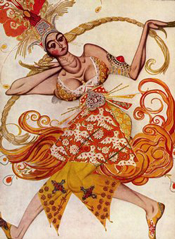
Surprisingly symphonic - Igor Stravinsky's Firebird (L'oiseau d'or) with Simon Rattle conducting the Berliner Philharmoniker. BBC Prom 64. What a pleasure it was to hear this familiar music played with such elegance and grace! Although The Firebird was written too be danced to, this performance was a reminder that it is also very fine pure music.  Rattle and the Berliner Philharmoniker dispelled memories of the more raucous suites, concentrating instead on the inherent beauty of the piece. Strictly speaking, music for ballet needs to follow the human body, and the physical capacities of dancers. As an orchestral piece, the music moves in a very different way because instrumental musicians spread the effort between them. With Rattle and the Berliners, The Firebird could breathe on its own, revealing its strange, exotic mysteries at its own pace.

Rattle preceded Stravinsky's Firebird with Rachmaninov's Symphonic Dances (1940) which wasn't actually written to be danced to. The Symphonic Dances are an exercise in memory. Rachmaninov was re-imaging the Russia of his youth through the splendour of the ballet. Quite probably the work could be choreographed, but its pulse is fundamentally symphonic.

While Rachmaninov re-images Russian ballet, Stravinsky's Firebird was written for the Ballets Russes. By pairing the two pieces, Rattle emphasizes the Firebird's fundamentally orchestral origins. Six years ago to the very day, Vladimir Jurowski conducted this full Firebird at the Proms, pairing it with Rimsky-Korsakov's opera Kashchey the Immortal. (more here)   Rattle's Firebird dances, but with abstract sounds. The "dancers" are instruments, who create impressions of dance in the imagination.

The strings pivoted en pointe, percussion suggested bright, golden colour. The Berliners are such good players that they make the music move as if it were a physical force, sliding and turning with exquisite grace.  While Jurowski's Firebird emphasized the savagery of Russian myth (ie the ogre), Rattle's Firebird emphasized its idealistic magic. The woodwind melodies rose sensuously from a swathe of shining strings: exotic, mysterious and seductively tantalizing. This Firebird  flew free from the original fairy tale, soaring onto an altogether more elevated, esoteric stratosphere. The woodwind and violin  melodies sounded exquisitely poignant: so perfect in its beauty that it broke my heart, knowing that it couldn't last.

Rattle didn't need to milk up the inherent drama. The Berlin Philharmonic are so good that they respond well to understated conducting.  Rattle isn't Gergiev. That's not a value judgement, since both their approaches are valid. Rattle's dynamics aren't extreme, but they're atmospheric, creating a Firebird of great sensitivity and depth. When the woodwinds theme returned for the last time, warmed by strings and harps, it felt like a kind of apotheosis, a transcendance Mahler would have been pleased with.

Listen to Rattle and the Berliners  in this same programme in their 2014-15 season opener on the Berliner Philharmoniker Digital Concert Hall.  The Prom performance is more relaxed but equally enjoyable. Such is the magic of the Proms and the Royal Albert Hall!

For their encore, Rattle and the Berliners played the Intermezzo from Puccini Manon Lescaut,the opera they performed at Baden-Baden (reviewed by me here)

Thursday, 4 September 2014

Salzburg Schubert Fierrabras Knights in white satin

Knights in white sarin - Schubert's opera Fierrabras at the Salzburg Festival, conducted by Ingo Metzmacher. Fierrabras is an opera with no performance tradition, whatsoever. The only performances between 1835 and the 1980's were concert performances, some in greatly shortened versions. Arguably, there's little Beidermeier about FierrabrasIt didn't catch the popular mood.  In an era when opera audiences fell in love with Rossini, Fierrabras might have seemed a throwback. On the other hand, for modern audiences it's an insight into Schubert's ideas on music drama,  inspired as it was by his imagination and by Germanic Singspiel.

In Peter Stein's production,Charlemagne's Knights are clothed in white satin and shining silver chain mail. Later they'll carry palm branches, like Christians on Palm Sunday. The stark black-and-white colour scheme is perfectly apt. When the knights are imprisoned in darkness, their costumes pick up just enough light to remind us that they're the good guys and that they will, eventually, be saved.  Visually, this is a very beautiful production, but it's also intelligently thought through. No mawkish kitsch here. The Knights represent an idealized dream, not reality.

The elegance of this setting (designed by Ferdinand Wögerbauer and Annamaria Heinreich) is utterly magical.  Lovely as this production is to look at, it's also a lot more intelligent than the sort of mindless fodder that pleases so-called "traditionalists". The backdrops are black-and-white too, scored and cross-hatched like engravings in antique story books. Stein  reminds us that Schubert got his ideas from books. He was a Romantic, in every sense of the word, using medieval images as a language his contemporaries would have recognized as artistic licence. In  Claus Guth's Fierrabras for Opernhaus Zürich in 2005,  Schubert himself appeared, a silent figure scribbling away seated at a giant desk, the singing roles got up like characters in 1820's Singspiele. Peter Stein develops the same idea but in an infinitely less confusing manner.

In many ways,  Fierrabras is almost unstageable. The libtretto (Josef Kupelweieser) is obtuse and pure fiction.  Emma (Julia Kleiter) daughter of Karl der Große (Georg Zeppenfield) is secretly  in love with Eginhard (Benjamin Bernheim)  Fierrabras (Michael Schade) the son of the Moorish King Boland (Peter Kálmán) has been captured by Roland (Markus Werba),  Eginhard is captured by Boland and Roland has to save him.To complicate matters, Fierrabras and his sister Florinda (Dorothea Röschmann) met Emma and Eginhard in Rome, which explains why all ends neatly. .If only Christians and Muslims solved things so easily!

Faced with multiple sets of would-be lovers, Schubert employs similar voice types and a lot more spoken dialogue than might appeal to non-German speakers or modern audiences. There are some lovely choruses and individual arias, all well performed.   Röschmann's monologue was specially effective, since her face materialized out of the gloom. As a plot device, Florina is a deus ex machina, but Röschmann makes her feel real.  As music drama, Fierrabras is as clumsy as the story books Schubert and his contemporaries would have read. But its charms work  as long as you don't expect anything on the lines of opera after 1830.  There are many passages (especially the choruses) which are recognizably Schubert, to those familiar with his part songs and larger pieces like the longer ballads. For me, anyway, three hours passed like a flash and I watched all over again.  Stein's Fierrabras is an excellent introduction to the opera and to the style.  Enjoy it here on medici tv and hope it makes it to DVD.

Beethovenfest Bonn livestream Andris Nelsons

BEETHOVENFEST BONN LIVESTREAM

7.9.2014 um 19 Uhr live aus der Beethovenhalle Bonn mit dem City of Birmingham Symphony Orchestra und Andris Nelsons

Mit den Beethoven-Symphonien 1, 2 und 3 (»Sinfonia Eroica«) beginnt am 7. September der Beethoven-Symphonien-Zyklus mit dem City of Birmingham Orchestra und dem Dirigenten Andris Nelsons beim Beethovenfest Bonn. An vier aufeinanderfolgenden Abenden wird das Orchester alle neun Beethoven-Symphonien chronologisch aufführen. Dirigent Andris Nelsons: »Ich verstehe die Chronologie als eine Art Reise. Wir bleiben Beethoven auf den Fersen, durch die Höhen und Tiefen seines Lebens hindurch. Und wir stellen uns den Höhen und Tiefen unseres eigenen Lebens. Darum geht es

7th September (Sunday) at 1700 European time (1800 GMT) livestream from Bonn - CBSO and Andris Nelsons  Trailer HERE (with listening link)

Wednesday, 3 September 2014

Singapore Symphony Orchestra Prom 61 Zhou Long


The presence of Andreas Haefliger should have alerted audiences to BBC Prom 61 with the Singapore Symphony Orchestra, conducted by Lan Shui. Haefliger played Zhou Long's Postures, which he premiered in July in Singapore. Zhou's Postures may not be newly written, but it's genuinely new music. It's not radical avant garde but it's very imaginative and tightly written. Zhou studied in the US with Chou Wen-chung, who himself studied with Edgard Varèse. Indeed, Professor Chou is perhaps the world authority on Varèse and a respected composer in his own right. With credentials like this, Zhou stands out from the large number of Chinese-born composers working in the west. For one thing, he doesn't write pastiche. His music subtly acknowledges his roots but doesn't become a substitute for genuine originality. 

Zhou Long's Postures begins with brisk attack,  Haefliger defines the first theme, capturing the wild angular rhythms with  great alacrity. This first movement refers loosely to the tribal shamans of North China who wear fierce masks and dance rituals to appease evil spirits. Hence the demonic character of the music - imagine peasants stamping their feet into the earth. Think Varèse, but more ebullient.  Zhou is definitely his own man. This gives way to lighter dotted rhythms which seem to sparkle - is rain falling at last on the bleak North China plains. Raindrops, dancing feet and the sound of bells.

In the second movement, "Piano Bells", high flutes play a plaintive melody which soon evolves into something much more unusual. Expressive, fast staccato lines, percussion, bizarre circular figures for brass. Dark-hued bells, multitudes of light, bright bell sounds reverberate. Haefliger played delicate sections then single notes like the tolling of  a bell marking the passage of time.  Interesting sliding elisions in the strings. and longer moments of lyrical beauty. Rushing angular rhythms return, as Haefliger plays " Piano Drums". The "dance" theme returned, fast and flowing. Zhou's Postures packs dozens of imaginative ideas into the space of +/- 25 minutes, but his sense of structure is so firm that one never loses sight of the vibrant overall arc. For all its exuberance, this is a very disciplined work. That's what"gong fu" actually means – "application" or dedicated concentration. The concept applies to all things, not just to martial arts. It's a pity that the broadcast cuts off the final moments. But how refreshing to hear "real" new music in an otherwise dull season.

The Singapore Symphony Orchestra and conductor Lan Shui are very good, much better than some of the other orchestras we've heard this year and that includes some who can't be deprecatingly dismissed as "global".  The BBC used to bring American orchestras to the Proms, but the orchestral scene in the US is not what it was. The Cleveland Orchestra on Sunday Prom 68  are perhaps the best these days, thanks to Franz Welser-Möst. It doesn't matter what an orchestra's home turf is as long as they're well motivated and willing to take artistic risks. 

The Singapore Symphony Orchestra also did the Overture to Glinka's Ruslan and Ludmilla and Rachmaninov Symphony No. 2 in E.  The performances were more straightforward, briskly executed. Between 1917 and 1957, Chinese orchestras were greatly influenced by Russian musicians, But that hasn't applied for nearly 60 years. Why it would apply to an ultra modern metrpolis like Singapore at all, I'm not sure. I'm old enough to remember when a Singaporean conductor dominated an orchestra further north, who had a thing for strong personalities.

Tuesday, 2 September 2014

West Wycombe Festival 2014 - why you need to go


The West Wycombe Festival is a festival organized  by musicians, for musicians and those who like music making in a serious but informal setting. That's especially important when it comes to chamber music. Many of  the people involved, like Festival Director Lawrence Power, are connected to The Nash Ensemble and regulars at the Wigmore Hall.  West Wycombe might be small and understated but musically it packs  a punch.  Everyone knows everyone, which is part of the ambience. Concerts take place in St Lawrence's Church, which isn't quite an average village church. St Lawrence is the patron saint of prostitutres, and the church was endowed by Lord Dashwood,who ran the Hellfire Club where posh hellraisers romped with prostitutes dressed as nuns. You can spend the day before a concert visiting the Hellfire Caves, whose entrance is close to the church. Alternatively, the village itself has authentic medieval buildings. You can stay overnight in the George and Dragon pub which is haunted. Very atmospheric place, great choice of local beers.And it's only an hour from London !

Monday, 1 September 2014

Electrifying Elektra Goerke Bychkov Prom

Electrifying Strauss Elektra at BBC Proms 59 = Semyon Bychkov, Christine Goerke. Amazing on radio asnd even more so live. Indeed, this was one of those rare occasions when you can say, in awe, "I was THERE!". The Royal Albert Hall is a huge barn of a hall.  Six thousand seats placed round a hollow space that rises upwards, culminating in a dome that used to suck up sound until they added those space-age acoustic baffles.  But there's nothing like a Royal Albert Hall Prom. The atmosphere is so intense that the excitement must communicate to performers. If they've not overwhelmed (understandably) they can be challenged to give the performances of their lives.

Yet, despite the size of the Royal Albert Hall, Semyon Bychkov conducted an Elektra so full of intelligent detail that the vast cavern of the building seemed to burst with colour and incident. The BBC SO aren't normally an "opera" orchestra, so perhaps they were responding to Elektra as dramatic orchestral music. Bychkov made the music move, almost as if it were an invisible demonic force. Agamemnon has long been dead, yet his ghostly presence hangs heavy over those he's left behind. In Charles Edwards' production (read my review here) the dead king hovers over proceedings like a shadow. Bychkov's intense, impassioned conducting suggests the psychic havoc the king must have unleashed in his time. Perhaps the savage, pathological genes Elektra and Orestes carry came from him  Their lust for revenge goes far beyond filial love. Maybe Clytemnestra killed him because he wasn't a nice man.

Add caption
Soon after Elektra starts singing, the "dance" theme  bursts out. Dance in this case is a form of madness. Bychkov conducted the circular rhythms so we could feel the obsessiveness percolate. Savage climaxes, the strings screaming and stabbing. The axe lies buried underground but "sings" through the orchestra. Strauss builds maniacal laughter into his music, and  even  the unearthly bright stare some schizophrenics exhibit. Woodwinds played sensually but with morbid undertones. Bychkov's ear for detail is musically informed but also psychologically true. Someone complained that the ROH production wasn't "palatial" or elegant. But for Strauss, and for Bychkov, this palace is a prison of the soul. Andris Nelsons was brilliant at Covent Garden last year, but Bychkov works with the dynamic of the Royal Albert Hall to bring out subtleties often missed, like the parody of waltz and "family values". In the final dance, Bychkov highlights the percussion,  with its intimations of the organized violence of a military society where women like Elektra (or Clytemnestra) can't act other than through men.The lushness of this instrumentation is deceptive. Like the palace, it's poisoned. The savage last chords made me think of Wozzeck.

Christine Goerke has created so many Elektras in recent years that she probably owns the part these days. Her voice is richly resonant, shading into mezzo territory, which allows a remarkable range of emotional expressiveness. Elektra's a killer part, forcing the voice up to the extremes, torturing technique, but Goerke delivers. She's not afraid to let the role dictate the way she sings. When she recognizes Orestes, her voice rises to near-scream, then softens into tenderness. How long it must have been since Elektra felt safe enough to feel human kindness, Goerke's voice warms yet still carries memories of pain.  Through Goerke, we glimpse what Elektra might have been. At the Royal Albert Hall, Goerke displayed a new dimension to her artistry. She wasn't giving an "opera house" performance but enacting the role in such a way that she filled the massive auditorium, not with amplified voice but with amplified personality. Truly remarkable: in all these years of Promming, I can't remember any singer taking control of the RAH like this. She made an impact that felt strikingly personal, up close and human, as if the distance her voice carried meant nothing, and we were one-to-one with Elektra in her isolation.

This warmth in Goerke's voice was paralleled by Gun-Brit Barkmin's Chrysothemis. Little sister wants marriage and babies, not death   Yet the firmness in Barkmin';s timbre, and the assertive confidence in her delivery  brings out the underlying strength in the role. We need to hear more from Barkmin. ROH take note! Chrysothemis is no Barbie Doll image of womanhood. Although Justin Wray is creditted as stage director, there wasn't any evidence of directing (other than use of lighting) until the final scene when Goerke and Barkmin embraced each other. Subtle, but significant.

Much-loved Dame Felicity Palmer sang Clytemnestra, receiving much applause. Although her voice is beginning to show its edges, Palmer's experience in the role paid dividends. When she sang about her fears, she made the chaaracter sympathetic. Cold-blooded killers don't fear bad dreams or, for that matter, fall for toy boys.  Johan Reuter sang Orestes, with Robert Künzli as Aegisthus. Katarina Bradić , Zoryana Kushpler, Hanna Hipp, Marie-Eve Munger, Iris Kupke, Miranda Keys as the maids and their overseer, Ivan Turšić as a young servant  and Jongmin Park as Orestes' tutor completed a fine line-up.

Strauss Elektra Prom 59 - part ONE, part 2 follows

My review, as pronised, is HERE.  Richard Strauss Elektra, BBC Prom 53 – an amazing experience!  Semyon Bychkov, Christine Goerke, Felicity Palmer and a cast who could hardly be faulted.  Christine Goerke "is not one of those Elektras who start the opera as demented and raddled. From the opening she projected youth and a certain rapture in the vocal line. Only gradually did you come to realise that this young woman was unhinged. Goerke had a way of smiling to herself which told volumes. What was refreshing about her performance was that, though certainly a very big sing, she did not seem to need to attack every single phrase. There was some profoundly poignant moments and this was one of the most sympathetic Elektras I have heard in a long time."

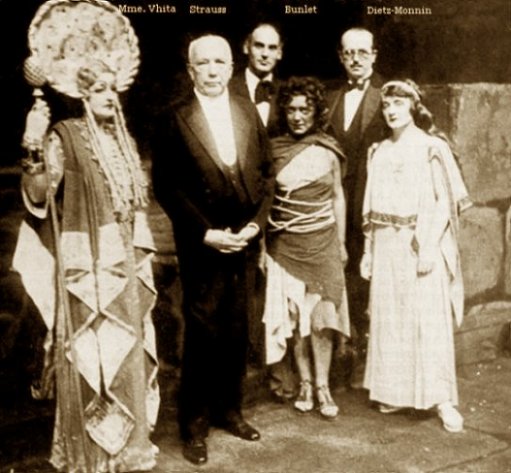
Please read the full review in Opera Today HERE  I'll be writing too about the experience – for an experience it was! The Royal Albert Hall is a vast cavern, but Goerke filled it  so well that she made Elektra feel close up and personal.  Read my review here.Photo above shows Strauss at the premiere. Note costumes. That Clytemestra's not authentic period  Greek!

Operas we can hear in an opera house anytime, but this was no ordinary performance.  I loved the Royal Opera House production in September 2013 (which I reviewed HERE), and so did just about everyone else. I saw the previous  ones too, but 2013 was by far the best.  Goerke and Andris Nelsons, go figure. When this production is revived again, do not miss it as  it's very intelligent and very passionate, which is perhaps why some didn't get it in 2008.