Thursday, 12 July 2012

Live from Munich Götterdämmerung

LIVE webcast from Bavarian State Opera, Munich Richard Wagner Götterdämmerung. Nina Stemme, Stephen Gould, Wolfgang Koch, Iain Patterson. Alas it clashes with Debussy Pelléas et Mélisande at the Proms and doesn't repeat. For weeks there's a drought culturally and then there's a flood. So anyone who watches this, please let me know.
photo Wilfried Hösl

Charpentier David et Jonathas LIVE

Broadcast of Marc-Antoine Charpentier David et Jonathas on arte tv on Friday 13th HERE. Les Arts Florissants conducted by William Christie, which makes it a major event. Pascal Charbonneau, Ana Quintans head the cast. It's a completely new production directed by Andreas Homoki who's taking over at Opern Zurich later this year (so you need to know). This is the baroque event of the year (so you should not miss).

It clashes with the First Night of the Proms, but is by far the classier event. Indeed, it's the main draw at this year's Edinburgh Festival, which features an ambitious baroque programme. I was sorely tempted to splash out and travel, but decided to reduce carbon emissions when I heard that Arte was sponsoring Aix.

What is the future of classical music? Is the way ahead dumbing down, even to the extent of dumbing down music itself? Maybe. But David et Jonathas is fairly rare and hardly hoi polloi. Instead of dumbing down, Aix and Arte raise the bar, in the faith that audiences will rise to the challenge. Another reason to thank the gods for a good education system and public funded arts management. This David et Jonathas is likley to beome the benchmark and recoup its costs on DVD over the years.

George Benjamin Written on Skin - world premiere

George Benjamin's eagerly awaited new opera Written on Skin received its world premiere this week at the Aix Festival. Michael Milenski was there, and writes in Opera Today.

"Not since Monteverdi have music and words combined with more force and clarity. Playwright Martin Crimp distills a thousand years of images and issues into a brief text that composer George Benjamin embodies in one hour and forty minutes of sounds that defy definition. If opera is essentially sex and violence Written on Skin well qualifies. Benjamin’s score magnifies the strange and delicate sexual stirrings that Benjamin Britten musically discovered and carries these urges to powerful and violent climax, rendering Britten’s guilty regret into utter hopelessness. And there is the sonic scope of timeless Messiaen transferred from God’s lofty nature to the creator’s own, base human nature. It is the sonic gamut of human nature." Hyperbolic, but said with a smile.  Read more, and see the photos in Opera Today.

The idea of a protagonist who illuminates medieval manuscripts is slightly unsettling, as Benjamin is himself a meticulous miniaturist.  His Into the Little Hill is a masterpiece (read more about it here), but it's a chamber opera and very compact. I was worried that writing for a large house might push Benjamin too far, but from all accounts, Written on Skin works very well. Andrew Clements in the Guardian likes it too, though he's not keen on the staging. Oh, for John Fulljames who made Into The Little Hill the experience it was!  But Fulljames is busy at the Royal Opera House, which will be bringing Written on Skin to London from 8 March 2013.
photo Robert Millard

Tuesday, 10 July 2012

Porn shoots Tallis up the charts

Dead 500 years, Thomas Tallis tops the charts after his tune appears in porn novel. I don't know how Spem in alium gets into bestseller 50 Sades (freudian slip) of Grey and I'm not sure that I want to know. 

 "Written during the reign of the first Queen Elizabeth it features 40 individual voices singing in Latin that combine to a thrilling climax for the words "respice humilitatem nostram" (be mindful of our humiliation)" says Peter Phillips, leader of the Tallis Scholars. Since the novel is about S&M, maybe this isn't quite the "humility" Tallis would have meant.

But so what, as long as people are buying and listening who might never have come to Renaissance polyphony any other way. This could make rockstars of the Tallis Scholars, founded in Oxford nearly 40 years ago. Phillips adds "Please buy The Tallis Scholars recording today from iTunes and we might just replace Nessun Dorma at the top of the Classical Singles Chart! "

Spem in alium was one of the Tallis Scholars most important early recordings. Their catalogue is huge, all available on independent label Gimell Records. I've written about their superb Josquin Masses here. Their latest release features music by the French composer Jean Mouton (c.1459-1522) including his masterpiece the Missa Dictes moy toutes voz pensées.. "The sweetness of tone in Mouton’s music that makes him quite distinct from everyone else is also combined with an ability to write music of the utmost mathematical complexity. This was almost unparalleled and led him to be routinely compared with Josquin in his lifetime".

Why shouldn't people discover classical music in new ways, like they discovered Nessun Dorma from football? This is how the real world operates. Jeremiahs who think that the future of classical music lies in writing pap to order should take note. The public isn't stupid. Inspire people's imaginations, give them real music and they rise to the challenge.


Mozart Superstar Nozze Aix broadcast

Hit the Target with Mozart Le nozze di Figaro streamed on Arte tv on 12th July here. This is live from Aix-en-Provence, where hip things happen. Excellent cast : Patricia Petibon, Paul Szot, Malin Byström, Kyle Ketelsen. Conductor is Jérémie Rohrer and film director Andy Sommer, whose work is very good.

If you login an hour earlier you can also catch a documentary Mozart Superstar made for French TV. "Plus fort qu'Elvis, Madonna et Michael Jackson réunis, la plus grande pop star de l'histoire s'appelle Wolfgang Amadeus Mozart."

The photo shows a paper target used in a darts game popular in the 18th century. It depicts Mozart saying farewell to his cousin in Augsburg. Strange subject for target practice! But not so different from modern celebrity merchandisng. Mozart Rockstar, alright!

Billy Budd gay subtext ?

Last month I wrote about the gay subtext in Benjamin Britten's Billy Budd. " A homosexual story". Note the quotation marks, read the context.

Now all over the web, there;'s discussion of Billy Budd and homoeroticism. Read Parterre Box's piece "Closet Drama", especially the comments, which are very pertinent. Sure there's a gay subtext in Billy Budd. But it's one-dimensional to think that's the whole story. No wonder the "London correspondent" can't get the opera. Britten's music expresses moree than the text implies.

The thing about Billy Budd is that it's a  dilemma, like the fog that descends on the Indomitable and stops it moving ahead. If the answers were easy, why does Captain Vere spend the rest of his life agonizing about what Billy meant?  Neither Vere nor Britten were coy. The Navy was notoriously "Rum, sodomy and the lash". That's why they had to pressgang sailors. Which is why Billy, who likes the open seas, stands out.  But that says nothing about his sexuality. He isn't the hero of this opera, not even a hero at all. He simply "is", which is why everyone projects onto him. Only a truly exceptional singer like Jacques Imbrailo for Glyndebourne can really develop the part, and his interpretation was that Billy represented goodness in its purest form, which few people really understand. That's why Billy is "Beauty". His sexuality is immaterial, for his world is above the decks and the infernal hull, up the top of sails, in the (relative) freedom of wind and sky, and he's happy just to be who he is, without much complication.

The Navy is an institution which predicates on regulation, mindlessly enforced. Captain Vere follows rules, so Billy dies. He knows, and Billy knows, and the men know, that Vere as Captain can break rules but doesn't. So he grows old, unable to find peace. The seamen don't revolt because they, too, are institutionalized.  Novice suffers because he's beaten so badly he can't walk. Once he was clever but now his dreams of a better life are lost and he becomes a snitch. He's one of Britten's numerous innocents, destroyed by the sick world around him.
 
Benjamin Britten knew a lot about institutions that brutalize those within them. One day, perhaps, someone will stage Billy Budd in a minor public school, with teachers as officers and boys as seamen. Also remember that Britten was a pacifist, and also one of the first people to enter Belsen Bergen after it was liberated. And, while Billy Budd was being written, Senator McCarthy's witchhunts were raging, affecting many who Britten knew. No way is Britten going to miss out on the brutal nature of institutions and the cruelty they generate. Billy Budd is a critique of society. Captain Vere is the hero of this drama because he's the one who faces up to the fact that he could have made a difference but didn't. Miss the fundamental moral dilemmas in this opera and we might as well watch Popeye the Sailor Man, which is a damn sight more brutal than it seemed when we were kids.

We wail and rage at directors who latch onto one detail in an opera and miss the wider picture. It's not a crime. But until we ourselves know an opera well enough to understand its complexities, we're doing the same thing.

Monday, 9 July 2012

Berlioz The Trojans BROADCAST analyzed

Hector Berlioz Les Troyens (The Trojans) is available from 9th July, online, on demand, free and internationally until October HERE on thespace.org.  Live opera and filmed opera are completely different, complementary experiences. Live, the David McVicar production was what the French call a spectacle, created to stun. On film, directed by François Roussillon, it reveals extra subtleties not visible on stage.

Always, I think, judge a production by how it reflects the composer and his ideas. So David McVicar's decision to set the opera in Berlioz's time absolutely connects to Berlioz and his times. Under Napolean , France conquered Europe. Under Napolean III, France was building an empire all over the world. This was a time of grand visions. So Berlioz is channelling the spirit of the times, creating an opera he hoped would outdo anyone else in sheer scale and audacity.

Hence the panoramic sweep, and the cornucopia of ideas in the opera. Just as Mahler would later speak of "a world in a symphony", Berlioz is creating a world in an opera. Hence the extremes, and the flaws. But that's what the world is like, it's not meant to be perfect. When we listen to Les Troyens, we should be listening to what Berlioz was trying to achieve, and the context of his work. The extravagance of this staging reflects the extrvagance, even the vulgarity, in the opera itself. It's not surprising that he never heard Les Troyens in full performance. Even by the standards of the time it was a blockbuster of cinematic scale. And after the war of 1870 and the Paris Commune, would audiences want to reminded of empires destroyed?  Understand McVicar's concept of the Second Empire and its analogy with the Trojans, and this production shows its intellectual depth. (It's certainly not just about the Crimean war as some suggest).

The opera happens on two continents, in Troy and in Carthage. The dichotomy is significant, in terms of style as well as in narrative. Which part means more in terms of the opera? In the first part, the Trojans rejoice, but are annihilated because they believe in the Horse. Thus the Horse as theatrical device is meant to shock and awe, and breathe fire. It's a symbol of war. Yet it's not just a machine. Wars are created by people. So the Horse here moves like a living being, and at the end, the figure of a mechanical man is seen, a silhouette of the  Horse in the background.

 In the scenes in Troy, Berlioz goes for big effects. Cassandre dominates because only she can see what fate has in store. It's a role meant to be done with exaggerated histrionics, because that's in keeping with the heightened madness of the events. Some have commented on Anna Caterina Antonacci's semaphore acting, but I think it's appropriate. Berlioz wrote extremes into the vocal part, partly to counteract the tumult behind, but also, being a canny operator, he must have known that audiences go in for that sort of excess. There is no need for Antonacci to engage emotionally with the role as long as she projects it in extreme high relief.  Rather like the stylized depictions in Greek art. When Énée appears, he's automatically upstaged, by the turbulence around him and by the sight of Hector covered in blood. Good singing from Jihoon Kim, considering he's rolling on the ground.  I think Berlioz wants this because it emphasizes just how important the role is going to become later. The First Act is fantastic theatre, but what really counts in this opera is what happens to Énée after Troy is destroyed and the Trojans are forced to roam the Mediterranean as refugees. 

After the bombast of the First Act, Berlioz is deliberately shifting gears. That's why Didon is written as a kind of Earth Mother, beloved by her nation because she's benevolent. Someone said to me that  Eva-Maria Westbroek doesn't  look Lebanese (where Tyre was), but so what? She's meant to be a contrast to the harrowed Vestal Virgin Cassandre. She has loved before and is mature. The gentleness in the part doesn't grab the audience by the throat as Cassandre's part does, but that's the point. Film brings out the graciousness in Westbroek's singing, and redresses the imbalance created by the two disparate parts of the opera.

Ultimately, Les Troyens predicates on how the two central characters relate to each other against a background of tragedy. The Trojans are dispossessed, and the Carthaginians threatened by the Numidians. Nothing is stable, even if Carthage is prosperous for the present.

After the bombastic extremes of the First Act, which are necessary to the plot,  we're conditioned to expect more of the same later, but is that what Berlioz wanted? Énée is a hero, so we expect action man histrionics. But let's not forget that Didon was a refugee too, and won't be fooled by fake heroics. "Je suis Énée", sings Bryan Hymel,  but as he recounts the sufferings of his people, he expresses the human face of the tragedy.  Énée wins Didon's heart because he's sincere, a good father and a sensitive man.  Because Westbroek and Hymel create their roles with such sensitivity, their Nuit d'ivresse is exquisitely beautiful. The set transforms into night sky, the city of Carthage revolving like a distant planet. The exotic colours are picked up by Antonio Pappano and the ROH orchestra. Truly memorable and intimate. 
 
Flashy singing and acting might impress audiences on a superficial level, but Hymel's interpretation is much more psychologically correct. On film, we see tiny, subconcious movements which reflect the subtle vocal inflections. No director can teach a singer such detail. Hymel has  internalized the part on a very deep level. On the first night, everyone was thinking Jonas Kaufmann, and Hymel seemed to be pushing his natural timbre lower, possibly without realizing it. Besides, audiences nowadays aren't as used to high voiced heroes as was the case in Berlioz's time. French opera favours these voices, but we're also more used to German or Italian norms. On this film, made ten days later, he's settled better into the part which suits his tessitura well. He's done Énée before, and he's still only 32. Lots of potential. Listen to his long soliloquy where he prepares himself for his farewell. Technically this is difficult enough, but Hymel expresses Énée's inner conflict perceptively. Énée is a real hero because he confronts fate, knowing it will break his heart, and Didon's too. Listen for that final, heart rending flourish when he leaves. Berlioz lets Énée depart a warrior. "Italie! Italie!".

As for the final image when the figure of a man appears in the backgroiund, a silhouette of the Horse behind him, it derives straight from Berlioz's stage directions. "On voit passer devant le Capitole un guerrier couvert d’une armure éclatante conduisant des légions romaines". The hero will die but he will help found the Roman Empire. Carthage and Rome will fight, both eventually blitzed by history, as Troy was.

The ballet sequences on stage dragged, but the fault isn't so much with  the production as with our modern assumptions of what opera should be. The 19th century public didn't know or much care what North Africa was really like. For them orientalist fantasy reinforced their image of themselves as conquerors.  McVicar and his team are giving us the "real" Berlioz. It's we who have to adjust to the alien, instead of imposing our own wishes.  Which is the very nature of Imperialism. This Berlioz The Trojans, with its awareness of the hubris of Empire, is extremely deep, but you have to respect it on its own terms. Which is why you need to hear this broadcast.

Please also see my review of the first night HERE. There's a link to Opera Today's review HERE and a link to the libretto and free download (Cambreling, Paris 2006) HERE. 


photo : Bill Cooper, details embedded.


Sunday, 8 July 2012

Susan Graham, Wigmore Hall

"Embodying a range of iconic female characters from history, literature and song — both the ‘good’ and the ‘not-so-good’ — Susan Graham delivered a wonderfully suave and entertaining performance before a delighted Wigmore Hall audience. Much of the success, both musical and theatrical, was surely due to the finely-tuned partnership between Graham and her frequent collaborator, pianist Malcolm Martineau. The ease with which Martineau moved between idioms, the naturalness and fluency of the dialogue he shaped between piano and voice, and his sensitive gradation of dynamics and timbre all contributed immensely to the superb, sustained quality of the recital"

Prem Sanyas, Die Leuchte Asiens

Prem Sanyas, Die Leuchte Asiens (The Light of Asia)  is unique. It's much more than a movie. Since the film was funded by the Maharajah of Jaipur the film makers were able to use authentic palace areas where outsiders weren't normally allowed to enter. Absolutely stunning - elaborate detail that no artificial set could ever deliver. This movie is so gorgeous that you need to watch over and over to appreciate how gorgeous it is, preserved forever in beautifully made film..

Yet this is the story of Prince Gautama who became the Lord Buddha. so the scenes shot in slums and markets are, if anything even more important. Real street people and beggars, in their thousands - watch the children, some of whom have hardly seen a camera before.

Gautama is born into untold wealth but from an early age seeks something unknown. His father wants to sheild him from all knowledge of sorrow and death. He marries a princess and is blissfully happy, but goes off to seek wisdom among the poor. That's why Buddhism is so hard for some to comprehend. The whole point is letting go, disposing of judgemental ego games and fixed outcomes. The narrative unfolds slowly. No rushing, no need to grab. We all know how Gautama will become the Buddha.  The drama is in the contemplation of each moment. Buddhism doesn't "solve", but offers alternative resolution. The Light of Asia is poetic, and spiritual  in the way most movies cannot be.

The Light of Asia is also unique because it was made in India, by Indians, at the height of the Raj, in 1925.  Obligatory scenes of white tourists looking at exotic locals : they had to give context to the film if it were to be seen in the west. But as the credits roll, we're told that the actors are "members of the Indian Players Company, each of whom gave up his or her career as Doctor, Lawyer, Engineer and Professor to bring about a renaissance of the Dramatic Art of India". It's highly idealistic, in keeping with Buddhist values. The film was directed by Himasu Rai, who plays Gautama. Significantly, it was co-produced by a German, Franz Osten, which is perhaps another reason the film doesn't sentimentalize or play to colonial stereotypes. Of course the script follows a British epic poem, but the story itself is obviously Asian. So this film is important in itself as a document of Indian dignity at a time when colonial values prevailed. Since the world is becoming increasinbgly west centric, we need this film now even more than before, to remind us that there are other alternatives.

Read much more about this remarkable film HERE on Memsaab's blog,  Full of screengrab photos, scene by scene description, so even if you can't track down the full film (BFI restored) you can feel what it's like. As the blogger says, it's good karma, rewarding Rai and those involved in making the film for the love they put into it.


Saturday, 7 July 2012

Country house opera, Glastonbury style

Another reason to catch John Barber's new opera Eleanor Vale at Wedmore Opera this coming week (11th, 13th and 14th July)! These men are putting up the opera tent. It's huge. It seats 600! The village of Wedmore is postcard-pretty, real Olde Worlde, though the locals are more posh than rustic. Although the weather is forecast to be wet, the same applies all over the country so you might as well be in Somerset as in London. Avoid Olympics paranoia and traffic chaos and head up the M4. Bring wellies and raincoats. Stilettos not advised. It could be fun, doing Country House Opera, Glastonbury Festival Style. PS. I've just been advised, Wedmore is on high ground - no risk of flooding.  (read more about Eleanor Vale here) And watch the videoclip below. The singer in the clip is not Sarah Minns who is singing Eleanor Vale, but Marie Vassiliou, who is singing the Headmaster's wife.


Music as space : Philharmonic 360 New York

Music as spatial experience: Philharmonic 360 with Alan Gilbert and members of the New York Philharmonic Orchestra. "Philharmonic 360", because the musicians were embedding the music 360 degrees round the whole performance space. Conceptually, it was brilliant, a reminder that music isn't confined to 19th century concert halls. Sound came from different parts of the auditorium, audience and musicans integrated, not artifically segregated. Lit in neon pink and sapphire, people loomed out of the darkness. At the centre, Alan Gilbert stood alone, under a single white light. Obviously they had the sightlines right, and Gilbert was clearly communicating with his players, but the effect must have been quite magical. Great theatre!

Philharmonic 360 started with Giovanni Gabrieli's Canzon XVI. A fanfare of three sets of five brass players, calling out to each other across space. Sixteenth century music was often heard 360, in the round. Although this isn't opera as we know it, the quintets function as voices, communicating with each other. Alan Gilbert is no fool. He was preparing the audience for two monumental pillars of modern repertoire,  by connecting them to music history. Even audiences who aren't familiar with new music can appreciate it in this context.

Gilbert was wise, too, to choose Pierre Boulez's Rituel in memoriam Bruno Maderna as the centrepiece of the programme. Like Gabrieli, Maderna was a Venetian, and grew up aware of the function of music in society. It's significant, too, that Luigi Nono, who also pioneered music with spatial dimensions, was also Venetian. Gilbert's choice of programme was an inspired reflection on the interrelationships behind the piece, and also on the intricate connections within the piece.

Boulez's Rituel commemorates Maderna on many different levels. On an obvious level, it's a ritual procession. The orchestra is divided into eight unequal parts, moving at different paces and in different ways, just as mourners follow a cortege, seemingly disparate but with common purpose. Solemn percussion, often hollow, evoke the image of a funeral, but also serve to measure time and its inevitable passing. This percussion functions like a heartbeat, so the sudden interruptions, changes of direction and pauses feel organic. Boulez's Rituel has been heard as a commentary on Maderna's own music and his place in music history, yet it's also psychologically intense, as if through the formality of the structure, Boulez is coping with extreme emotion. Maderna was like a father figure to Boulez, and was instrumental in persuading him to conduct as well as compose. Anyone who still swallows the myth that Boulez is cold and clinical needs to listen to Rituel. Significantly, solo clarinet functions prominently, weaving past the regulatory percussion, like a lone mourner wailing. I've often imagined Rituel as if it were a chorus in a Greek tragedy, for it sounds primeval. Superbly disciplined playing from the orchestra, so the complexities in Boulez's score are clear, as they should be, throwing its deeply-felt spirit into high relief.

The picture above shows Boulez (seated) with Bruno Maderna and Karl-Heinz Stockhausen in 1955, around the time Stockhausen's Gruppen was wriiten. It's such a classic that it's hard to believe how advanced it was for the time. Three orchestras functioning as independent units, the music as much in the convergences and breakings away as in the separate parts. On this occasion, Gilbert was joined by Magnus Lindberg, no less, formidably important, and by Matthias Pintscher, less famous perhaps now, but still young . (lots about him on this site). Pintscher is moving heavily into conducting, so again, Gilbert is ahead of the game, picking Pintscher to work with.  What a constellation. Sorry, I couldn't resist that dig at Stockhausen's later preoccupations, which distract from the visionary innovation in his work.

Stockhausen's Gruppen is powerful, conceptually and musically. It was written to work in conjunction with the performance space where it happens. At the Royal Albert Hall in 2008 (read more here) it was an overwhelming experience, almost cosmic, "beyond" mere music. A close friend was at the London premiere in 1967, also at the Royal Albert Hall, listening from up in the gallery. Perhaps the Park Avenue Armory in New York doesn't do it justice, for this performance didn't come over nearly as well as Boulez's Rituel. 

Sandwiched between Boulez and Stockhausen was Mozart! This was the real test for the audience. Would they figure out why? Choosing the ballroom scene that ends Act One of Don Giovanni was a stroke of genius on Alan Gilbert's part. No gorgeous extended arias, but instead, tightly crafted ensembles. The three groups of protagonists converge upon one another, some hidden behind masks, others pretending to be what they are not. Mozart defines the parallel groups with three seperate small ocrhestras, each operating as a unit, but together creating a coherent logic. Mozart's writing Gruppen 200 years before Stockhausen!

It would be a complete mistake to judge this bit of Don Giovanni in conventional opera terms, because it wasn't being presented as opera as such, but as an example of spatial music. The stylized, witty staging was sending out signals. It didn't matter that the singing was so basic. What we were supposed to be listening for was the orchestra, and how deftly Mozart constructed the music.

Philharmonic 360 ended with Charles Ives The Unanswered Question. The question is answered in the programme! The Unanswered Question is an 8 minute study in disparate parallells, three orchestras and  flute quartet. Ives's Fourth Symphony might make the point better, but it's too long and ambitious to fit into a programme like this. And it aso shows Alan Gilbert's sense of humour, for it's a companion piece to Ives's Central Park in the Dark. Both were titled "Contemplations", of Nothing Serious and Serious, in Ives's wry irony. Some in the audience at the Armory in Central Park must have known! How wonderful to emerge into the night, hearing the diverse sounds of the city.

Any conductor can throw together a programme but very few indeed do it with Alan Gilbert's erudition and wit. Any conductor can keep an orchestra (or multiple orchestras) from falling apart, but it's a rare gift to have a conductor who can communicate like this and develop the audience. Often, as an outsider reading the NYC press, I wonder at what poiltical battles are happening behind the scenes, and why the negativity toward change. NY needs Alan Gilbert. If they don't appreciate him, it's their loss. Watch this programme streamed on medici.tv. The filming is done by a crew who know what to focus on, without losing the big picture. Which is what Philharmonic 360 was all about.

Wednesday, 4 July 2012

Les Troyens online, but the real story is the medium

From tomorrow 5th July, the Royal Opera House Berlioz Les Troyens will be available live, then available online and on demand until late October, after which cinema screenings start and presumably a DVD release will follow. And for free, too, if you pay UK TV licence fees. In the rest of Europe, it will be available on Arte TV. It will be available internationally from Monday 9th July on http://thespace.org/  HERE is a link to my analysis ofthe film.

Rarely has any ROH production been given such  exposure. My review is HERE. But even more significant is the medium through which the broadcast will be delivered. It's a new website thespace.org, a joint creation of the BBC, The Arts Council of England, the British Film Institute and various different partners.  In Europe, comprehensive website broadcasting like this isn't new, Mezzo.tv and Arte.tv and Medici.tv have been around for ages. But there hasn't beem any similar site in the UK. So the potential for thespace.org is huge. It reaches far beyond the BBC. Sadler's Wells, the Globe Theatre, the BFI, art galleries etc can participate, creating a huge umbrella for the arts of all kinds. Strength in numbers, economies of scale. I don't know if thespace is experimental or permanent but it's a good idea. It could be a treasure trove. If the French and Germans can do such things, why can't we?

At the moment there isn't a lot of content, though there's masses and masses of Shakespeare, not only from the Globe Theatre but also international productions and a rare 1910 silent film of King Lear, painstakingly hand-tinted. The BBC's archives will be available. At present there's a very well made film-length documenatry called From the Sea to the Land Beyond, using historic footage of British life.  Highly recommended.  More to come, as well, like John Peel's sound archive and broadcasts from festivals. The problerm is that much of the content seems to have been written by technology geeks, so there's little consistency in what's being offered. Perhaps it's early days, but the possibilities are vast. From a business, legal and political perspective, there all kinds of angles and complications. But vision was never easy.

Then  there's the problem of public perception. Remember the hysteria when it was claimed that we couldn't see Britten's War Requiem  at Coventry Cathedral ? Since it was available as normal on i-player what was the fuss about? And it was live on thespace and is still available online for the foreseeable future. I-player generally has a 7 day limit, thespace seems indefinite. But maybe it's a British tradition to moan and whine, whatever happens. So you need a TV licence? That's the law. So you have to pay for viewing from Arte? So what, it's cheaper than travelling. At the end of the day, no broadcast is ever the same as the live experience. Everyone seems to want everything free, but the arts are not cheap to produce, and audiences should take some responsibility. In Europe. we're lucky. We could be stuck with the US model.

BCMG - exciting 25th anniversary season

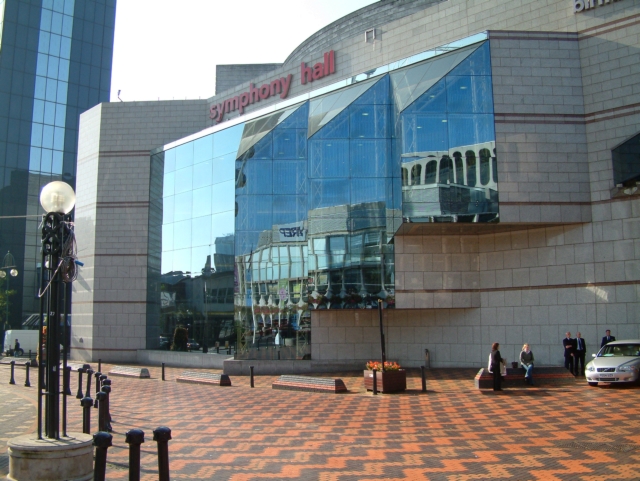
Ambitious season ahead for the Birmingham Contemporary Music Group, as it celebrates its 25th anniversary. More than FOUR world premieres! The BCMG was founded by members of the City of Birmingham Symphony Orchestra with a nod from Simon Rattle, so they could focus on playing new music, outside the mainstream repertoire.

It's now recognized as one of the most exciting new music ensembles in the world. British  new music thrives because of the BCMG, so take note!  This year, there'll be world premieres of new works by Alexander Goehr, Richard Baker, Magnus Lindberg, Joanna Lee, David Sawer and Simon Bainbridge. Four of the new works ( Goehr, Baker and two by David Sawer) have been commissioned through BCMG’s remarkable public commissioning scheme, Sound Investment.  

Simon Bainbridge : Garden of Earthly Delights 18th August, BBC Proms Nicholas Collon conducts a 22-player BCMG ensemble, an eight-voice choir (London Sinfonietta Voices), mezzo-soprano Anne-Marie Owens and counter-tenor Andrew Watts. "The work is inspired by Hieronymus Bosch's extraordinary painting of the same name, which presents the viewer with many powerfully evocative and inventive images. Musically, the piece centres on a vocal duo, out of whose sumptuous polyphonic web the character of Hieronymus Bosch is created. Both painter and guide, he leads audiences through a sequence of the most unearthly landscapes ever painted. The music will be in three sections, mirroring the three panels of the painting - Eden, the Garden of Earthly Delights and Hell".

Alexander Goehr : To These Dark Steps. 30th September 2012, CBSO centre, Birmingham "Written for BCMG, the CBSO Youth Chorus and tenor voice (Andrew Staples),To These Dark Steps is based on texts by the poet Gabriel Levin, whose friendship with Goehr grew out of a shared interest in Greek tragedy,cemented later by their involvement in political protest in Israel. The subject of the poems is music itself, and the act of listening to 20th century composers – Webern, Ligeti, Messiaen, – whose compositions frame Goehr’s new work. Oliver Knussen conducts.

Magnus Lindberg : new work,  Aldeburgh Festival June 2013
This is really big as Lindberg is such an important composer and an Aldeburgh regular. "Magnus Lindberg’s new work for BCMG (conducted by Oliver Knussen) has been commissioned by The Royal Philharmonic Society [RPS] and The Britten-Pears Foundation as part of a programme of major co-commissions to mark the RPS’s bicentenary and Britten’s centenary in 2013. The BCMG commission is one of six to leading international composers who will write works for different ensembles - each reflecting the range of Britten’s compositional output".


David Sawer : The Lighthouse Keepers - Cheltenham Music Festival July 2013 "David Sawer’s Rumpelstiltskin, premiered and toured in 2009/10, was one of BCMG’s most successful commissions". (Read about it at the Spitalfields Music Festival here).  "It was always Sawer’s intention that Rumpelstiltskin should become the second half of a double-bill, with another new work, The Lighthouse Keepers, based on a 1905 French play, as a shorter first half. This is a claustrophobic tale of father and son lighthouse-keepers. The son reveals he has been bitten by a dog and is rabid, and begs his father to kill him, just as the light goes out and a ship approaches the rocks…."

This will be a highlight of the Cheltenham Music Festival and the BCMG will go on to tour the double bill in 2014/15. Sawer describes this smaller scale work for two actors and 9 musicians "as having the look of an ‘on-stage radio play’". BCMG, conducted by Martyn Brabbins, premieres this work in Cheltenham alongside Morton Feldman/Samuel Beckett’s radio play Words and Music (which BCMG first toured in 2002)

David Sawer : Rumplestiltskin Suite, April 2013, Wigmore Hall London and CBSO Centre, Birmingham
Sawer has also created an instrumental suite which George Benjamin will conduct alongside his own fairytale-inspired work Into the Little Hill. Benjamin's Into The Little Hill is one of the masterpieces of modern British music, and was a BCMG project. It's so good that, though it's a revival, it's essential for anyone who takes modern music seriously. Read more about it here. I've seen it several times and heartily recommend the CD.

CBSO centre photo: Graham Taylor, Sawer's Rumplestitlskin photo : Keith Pattison

Tuesday, 3 July 2012

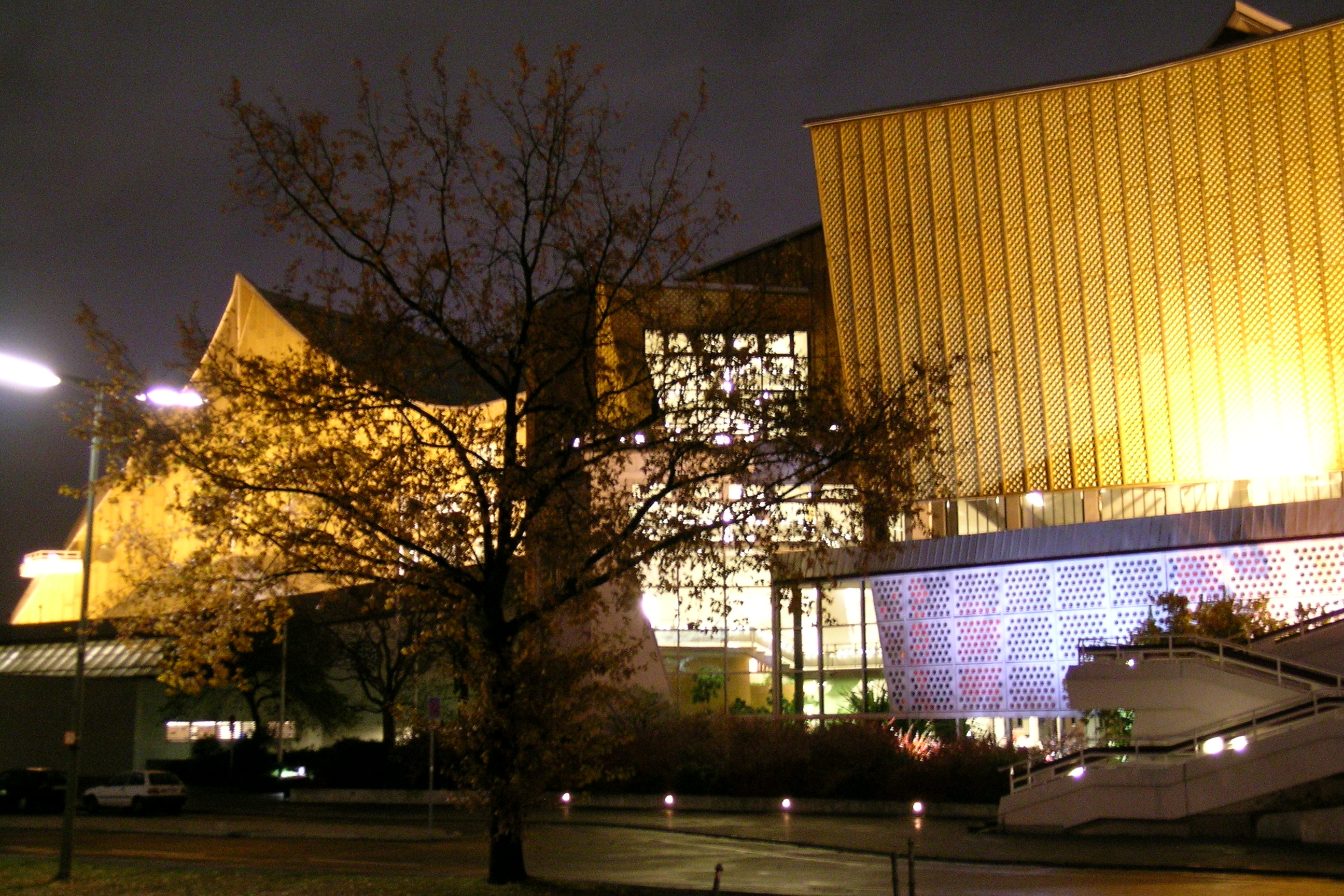
Berliner Philharmoniker 2012-2013 season

Thanks to its digital programme, the Berliner Philharmoniker is everyone's hometown orchestra. Season details out now for  2012/13. Not just the usual concert hall routine, but things that you might not get everywhere.

Simon Rattle and Yefim Bronfmann kick things of on 24/8 with Brahms and Witold Lutosławski's Third Symphony. This symphony is a statement, more powerful than purely abstract music. Although it's almost mainstream now, it still needs to be heard. Lutosławski himnself conducted it in 1991 at the Newbury Festival but I didn't go. Newbury is now a shadow of what it was then, a reminder that we should never take music venues, or music, for granted.

Huge Charles Ives celebration this year. Ingo Metzmacher conducts Charles Ives Fourth Symphony on 8th Sept. This will be an occasion as the Fourth is spectacularly ambitious and probably needs to be experienced live (as Ives himself never did except in his imagination). Metrzmacher should be brilliant in this, as he has such a good feel for what mnakes a piece unique and modern. Pierre-Laurent Aimard will be playing the piano part, and also Ives's Piano Sonata no 2 later that evening. Aimard's Ives is exceptional, so lucid that it puts less skilful performances to shame. But Ives deserves this kind of pianism because it brings out exquisite things in the music. Ives was a visionary and conceived his work for ideal performers.. Get the CD.   Metzmacher is also conducting George Antheil's Jazz Symphony (1955 version) which should give Antheil's later work the prominence it needs.

Gershwin Porgy and Bess with  Willard White, Measha Brueggergosman and the Cape Town Opera Voice of the Nation Chorus. Next April's opera is Mozart The Magic Flute, and another Britten War Requiem in June (Rattle, Magee. Ainsley and Goerne).

Violinists will drool for Christain Tetzlaff (conducted by Andris Nelsons) and Lisa Batiashvili (cond. Ivan Fischer), and later, Frank Peter Zimmermann and Leonidas Kavakos. (He's playing Henri Dutilleux L'arbre de songes. Perhaps Dutilleux will be there for that?  He''ll be 97 years old.

Maurizio Pollini is scheduled to play Liszt and Brahms in December. Next year, Louis Langrée, Kiril Petrenko, Murray Perahia, Chailly, Janssons, Frank Peter Zimmermann, Kavakos, and Claudio Abbado in May, conducting Mendelssohn 3 and Berlioz Symphonie fantastique. All this delivered to the smallest hamlets on earth via the internet. This is how technology is shaping the future of classical music.

For me the season's attractive because of the repertoire. Lutosławski and Ives keep popping up, but also look at other offerings.. Paul Hindemith, three concerts (Kammermusik 1 and 3) , Georg Freidrich Haas, Boulez (Notations), Maurice Ohana (Livre des prodiges), Hans Werner Henze (Being beauteous - Babara Hannigan)  and our own Benedict Mason.
 See the full Berliner Philharmoniker schedule HERE
 photo: Josef Lernkuhl

Monday, 2 July 2012

Eleanor Vale - Somerset mystery opera

"Like the wind through the sedge on the edge of the rhyne, like a cloudburst she came sweeping down off the moor".

It is 1900. A mysterious woman sails into a sleepy Somerset hamlet, confidently astride a man's bicycle. She's intelligent, vivacious and unconventional and intrigues the village community. Who is she, and why has she come?  Eleanor Vale is a new opera, specially commissioned for Wedmore Opera, which has been bringing opera to Somerset for nearly 25 years. I'm making the trip to see it because the composer is John Barber, who studied with Harrison Birtwistle and David Sawer (BCMG Rumpelstiltskin)  His opera We are shadows featured in the Spitalfields Music Festival in 2011. He's created works for Glyndebourne and ROH Education. The Wigmore Hall has commisioned a chamber piece with Sophie Daneman later this year.

Barber's Eleanor Vale is interesting because it's set in the area where it's being performed. Peter Cann's libretto reads well. Rustic rhythms that could translate well into music. "Ale is fine but cider is best. Blackmore girls don't need to be pressed". Images of the countryside - flowers, hedgerows, cider. But don't be lulled. There's rot at the heart of some of these apples. Eleanor Vale is a Modern Woman with a mission.

Another good reason for seeing this opera is Sarah Minns. She's a regular at Opera Holland Park (Fantastic Mr Fox and La Rondine)  and Grange Park Opera and a graduate of the RAM. Eleanor Vale was created for her. She has  a fresh, lively voice and the strength of personality to make a role like this work. She was born locally, but has gone on to make a career in London. Sarah Minns will be joined by Marie Vassiliou, Adam Green and Nicholas Sharratt who guests at Opera North and ETO. Director is Marylin Johnstone. Carolyn Doorbar conducts.

At Wedmore Opera "We believe that excellent opera can be an amazing experience for anyone, of any age, wherever they live and however they spend their days...... The arts change lives"  Even children are involved, making corn dollies to be used as props in the production.  Learning crafts is fun in itself, but in the process, they are also learning that opera is a living art form. What could lift Eleanor Vale out of the ordinary is that it blends local enthusiam with professional standards. Performances take place in a 600 seat marquee in the country village of Wedmore, but access from London is easy, as it's not far from Bristol. Three performances from 11th July. Read more here. "Excellent opera in a village setting".