Tuesday, 6 November 2012

Elliott Carter is dead

Elliott Carter - 11th December 1908 - 5th November 2012. Elliott Carter died at home yesterday, aged 103.

So much about Elliott Carter defies stereotypes. Although he was born into a wealthy New York family Carter was thoroughly cosmopolitan. He spoke French like a native, travelling back and forth between Europe and the US. Growing up in the 1920's and 30's, he wholeheartedly embraced the cultural innovations of his time. He personally knew Stravinsky, Bartók, Charles Ives, Edgard Varèse and many others. He attended classes with Nadia Boulanger but she had fixed views on what composers should do, and Carter didn't. His first major compositions didn't happen until he moved out - literally - into the desert to find his own voice.

He was still writing until this year, redefining what he called his "Late, late style".  He used to joke that he only wrote miniatures after the age of 100 "because I might not have time to finish". Some people don't find themselves creatively til late, and some never find themselves at all, but Carter kept developing and refreshing himself.

At Aldeburgh, even the non-musical townsfolk talked about the 100-year-old composer, still playing the piano and taking animatedly with Pierre-Laurent Aimard about works in progress.  That vivacious personality, that chirpy voice! When he was a mere 97, he attended a Barbican Total Immersion, partying up to 2 am with the orchestra, then starting rehearsals the next morning at 10, then flying off to Paris. A dear friend gave me an introduction and gave me a tip: "Don't go up to him, too many admirers around. But go to Virgil and say that I sent you." Sure enough, Carter was surrounded by the head of the BBC and many other household names. Virgil said "X wants you to meet ....". Immediately Carter bursts into a huge grin, and shoves the VIPS aside. I was a complete stranger but his friend meant so much to him that he welcomed me as a friend too, hugging me and giving me a kiss. That was the kind of man he was, totally open and sincere.

Carter couldn't make the 2010 festival at Aldeburgh where one of his premieres was performed. I was sitting behind Virgil and Oliver Knussen. "Do you think they'll let me take a photo for Elliot?" asks Virgil. "I'll GET them if they stop you," says Ollie.  Carter and his wife Helen lived in the same New York brownstone for many decades as the neighbourhood changed around them. A friend used to see them out for walks, but respected their privacy too much to interrupt. They were inseperable.  Once someone phoned up and demanded to speak to Elliott. Helen relayed the message. "He's busy just now." "Don't you know how important I am!" raged the caller. Well, yes, actually, that's why Carter wasn't impressed. Everyone has fond memories of the Carters. who doted on other people's families and were always generous with their time.

Elliott Carter was born a day after Olivier Messiaen. Two immense pillars of western music whose influence reached far beyond what they did on their own. In so many ways it seems that the world is entering a  selfish retrograde cycle, much of what we've learned the hard way through the 20th century erased. It's like the Taliban wrecking ancient monuments. All the more we need to honour Elliott Carter for his music and for his eclectic, open-minded joy of living.


Monday, 5 November 2012

Yoshi Oida - Curlew River


Tonight at the ENO - Ralph Vaughan Williams The Pilgrim's Progress.Yoshi Oida directs.(MY REVIEW IS HERE). That's seriously important. As I wrote in April about the ENO 2012-13 season, The Pilgrim's Progress is "not an "easy" opera,  and needs a director who understands stylized allegory. The reason that this will be important is the choice of director, Yoshi Oida. Oida is astoundingly sensitive. His Britten Death in Venice was exceptional. (read more here) It ran within a month of the ENO Deborah Warner Death in Venice. Two drastically opposite approaches.Warner's was high on glossy fashion shoot glamour, Aschenbach relegated to the sidelines in every way. Oida's approach was psychological, with Aschenbach foremost, action happening around him and in his mind."

This is absolutely pertinent to The Pilgrim's Progress, since that too is more allegory than opera,  Expect a "storyline" and big numbers and you'd be stumped. If anyone can pull this spiritual saga off, it's Yoshi Oida.

So take the opportunity to watch Yoshi Oida's production of Benjamin Britrten's Curlew River from the Aix en Provence Festival. In Curlew River a boy has been kidnapped and probably murdered. His mother, maddened by grief, searches for him but cannot cross the river on her own. Emotionally, this is one of Britten's most traumatic pieces, for the feelings are so raw that it's hard to concentrate. Anyone who thinks Britten wasn't traumatized by the loss of innocence has no idea about Britten at all. Oida's staging is so stark that you're hypnotized by the sheer horror of the psychic dilemma.  This seminally important production of Britten's Curlew River is now available for download on Classical TV. You might have to pay to view, but it's worth it.

Han Suyin 1917-2012

Han Suyin has died. Everyone's heard of her novel, Love is a Many Spendoured Thing,  because it was turned into a hit movie in the 1950's.  Read the book, the movie is pure Hollywood. But Han Suyin was far more interesting as a person than as a writer.  Her novels are autobiographical, rather than works of fiction. Indeed, one of my aunts who knew her personally said that one of the characters in Love Is a Many Spendoured Thing was a composite based on several Hong Kong doctors they both knew, including my uncle.  Her books are therefore a form of highly subjective social commentary.

To people in the west, Han Suyin symbolizes China. In fact, she wasn't Chinese but mixed race and very westernized. She wrote in English, not in Chinese. To Chinese people in China, she'a an anomaly.  There are plenty of Chinese novelists, but  Han Suyin was different, sometimes trying too hard. You can read the outlines of her life anywhere on the web and read her formal autobiographies, especially the early instalments like A Mortal Flower, and Destination Chung King. (Her accounts of her parents lives aren't first hand so a little highly coloured)  But from me, you'll get a more individual perspective.

 For me, Han Suyin was an example of someone growing up "between" cultures, always alert to cultural clues people in mainstream societies take for granted without noticing. "We always have to negotiate," a prominent Eurasian woman of her generation told me. "We are interpreters all the time". And she didn't mean just language. One thing for sure, being Eurasian means always being the outsider.

 In colonial times, mixed-race people were considered degenerate, quite literally "mongrels" and "lesser breeds". Remember Madama Butterfly? Many assume that mixed-race children came from prostitution when in fact this was most certainly not the case. What kind of handicap is that to live under? But because Empire depended on the bluff that white people were somehow destined to rule, any contagion with the natives was politically dynamite. The downside of being Eurasian was that Eurasians were always under pressure to prove themselves worthy. On the other hand,  that gave them "hybrid vigour", as my father used to say. 

 Nowadays there are hundreds of thousands of Chinese growing up in the west, largely cut off from the experience of growing up in a community where everyone is rooted in Chinese culture. When children grow up, they want to be like their peers, so it's hardly suprising that cultural dilution is pretty much the norm today. This new generation has a whole new set of identity issues to develop, and many more options. Having Chinese DNA does not make anyone Chinese in the deepest sense of values and mores. "Bananas" people joke, "yellow on the outside, white on the inside". Since it's almost impossible to completely penetrate a culture as complex as Chinese, there aren't any reverse bananas.

So how do foreign born and raised Chinese develop their identity? Having a Chinese face does not automatically make anyone Chinese. That's not a value judgement. It's realism. People respond in the way the culture they grow up in teaches them to think.  If they grow up in large communities with a common background, and know the language, that helps. But not everyone is in that position. I thought I had myself figured until I went to the west as an adult, and it threw me off balance for years. That I think is the challenge Chinese growing up outside Chinese society need to tackle. What is identity, after all? Do we create our own as we go through life? Are we fated to be "outsiders"?  That's not such a bad thing because conversely, you're not bound by what others expect you to be.  Face is not destiny. There will be lots of different ways, personal to each individual. Han Suyin found her own way, controversial as it was. Others will find their own.

Sunday, 4 November 2012

Faith in Food - Oliver Knussen's Sendak operas, Barbican


The closer you are to your Inner Child, the more you get from Oliver Knussen's Sendak operas, at the Barbican Theatre. Remember being a kid, wide-eyed with wonder listening to crazy stories? Maurice Sendak's stories are surreal: they defy logic. Yet their anarchic mayhem connects to something deep in the psyche. "NO EAT!" screams The Baby in Higgelty Piggelty Pop!, "NO EAT!!!!!". A bundle wrapped in lace asserts its dominance. Nurses who cannot cope get eaten by The Lion. Sendak appeals to kids because he subverts the power structure and releases primal feelings. A man playing a pig hands out ham (!) sandwiches to the real audiences. "Faith in Food" says Jennie the Dog, but faith in fundamental sustenance rather than something handed out free by a stranger. 

Jennie the dog tries to make Baby eat an egg by telling a silly story, just as mothers have done since time immemorial. Baby's not fooled. Just as the Lion is about to swallow them, Jennie finds the courage to stand up for herself. "I want to be in the Mother Goose World Theatre!". It's the Magic Word she thought she didn't know. By confronting her own needs, Jennie is able to break the cycle of silly games. In Castle Yonder, Baby at last grows up, nurtured by emotional fibre, not vanilla pudding.

Although Where the Wild Things Are is by far the best known of Maurice Sendak's stories, and the selling point of the Barbican Knussen Double Bill at the Barbican, it's fairly straightforward, by Sendak and Knussen standards. A kid dresses up as a wolf , releasing his base instincts and gets into trouble. So he runs off to Where the Wild Things Are. The monsters grin and look benign but the kid knows that if he stays, they'll consume him. So home he goes and peace is restored (by the smell of warm food). Strangely enough, my own children were immune to the delights of this Sendak story, while most of their friends wewre transfixed.  I don't know why because they weree addicted to Sendak's In the Night Kitchen, where bakers making the morning bread tumble through the sky and  a child in an aeroplane made of dough saves the day. Maurice Sendak is upstaged in every way by Maurice Ravel's L'enfant et les sortilèges, a much darker and more sophisticated tale (read more about the Glyndebourne production HERE). Knussen's zany, cheerful music makes his opera fun but doesn't stimulate the deeper levels that are in Higgelty Piggelty Pop!. 

Nonetheless, it's an entertaining experience, and would have been more so had Ryan Wigglesworth kicked more spirit into the Britten Sinfonia. At Aldeburgh, the playing was livelier, laced with manic dementedness, which added spark. (read more here)  At the Barbican they were rather Better Behaved which doesn't work quite so well with subversive music like this. Wigglesworth always looks impeccably immaculate, but he's much more fun when he roughs up. Nonetheless, the children in the evening performance listened avidly, wide-eyed, sitting forward, taking everything in with a sense of wonder. What a pity that a small number of adults behaved like philistines, yawning and sneering loudly. What were they trying to prove? That they were cleverer than kids? At least the kids haven't lost their instinct for magic.

On the other hand, there's a lot in Higgelty Piggelty Pop! that alert adults would get more than kids. The reference to the Mother Goose World Theatre is crucial, for it links to an undercurrent about theatre and illusion. Is opera a grand form of Mother Goose? We all need fantasies to sustain our prosaic lives. That's why we need music and opera or we'd shrivel up and die, emotionally, I think.  This is where  Knussen asserts himself above Sendak. He writes in wry references, like snatches of Mozart, baroque and even Barber Shop. In her despair, Jennie the Dog sings mock-operatic arias of exaggerated desperation. Then the tree sings back to her. It's an ash tree. Knussen sets its words with great portent. The World Ash Tree, like the Mother Goose World Theatre, Jennie the Dog and Sieglinde, both searching for the way out of their dilemmas. 

Are the multiple mock endings a sly reference to the ending of Don Giovanni ? It's also a way of linking "reality" opera to the stylized cardboard theatre games children used to play with long ago. Could it also be typical Oliver Knussen with his fondness for repeats? But could it on the deepest level be like the way adults and children play together? Even small babies like peek-a-boo games where they think something's over and it pops up all over again. Even pre-verbal children instinctively like illusion and role playing. Parents put on funny voices, and make nonsense sounds, playing wth pitch and tempo. They say "Boo!" and the kid bursts out laughing. I imagined Knussen reading Sendak stories to his little daughter, the "Muse of Higgelty Piggelty Pop!" and making her squeal with delight. Children need fantasy if they are to grow up open minded and creative. As do we all.  Deprived of that child-like sense of wonder, we'd be like The Baby screaming "NO EAT!"

photo : Lucy Schaufer as Jennie, credit : Mark Allan, courtesy Barbican Centre. 

Saturday, 3 November 2012

Hans Werner Henze and Oliver Knussen - Undine

Oliver Knussen retrospective at the Barbican this weekend, but Hans Werner Henze's death last weekend still haunts me. Henze and Knussen have a lot more in common than one might assume. Both of them Wunderkind, with wide-sprawling careers. Henze was more prolific as a composer, Knussen  has been busy as conductor and general guru. Both of them connected to Aldeburgh. Henze, thinking Auden and Britten were still friends, naively sought Auden's patronage. It was good for Henze's art but not so good for his prospects with Britten. Henze's prospects on the big money US market were effectively doomed by his Communist ideals. Knussen';s career took off when he went to the US.

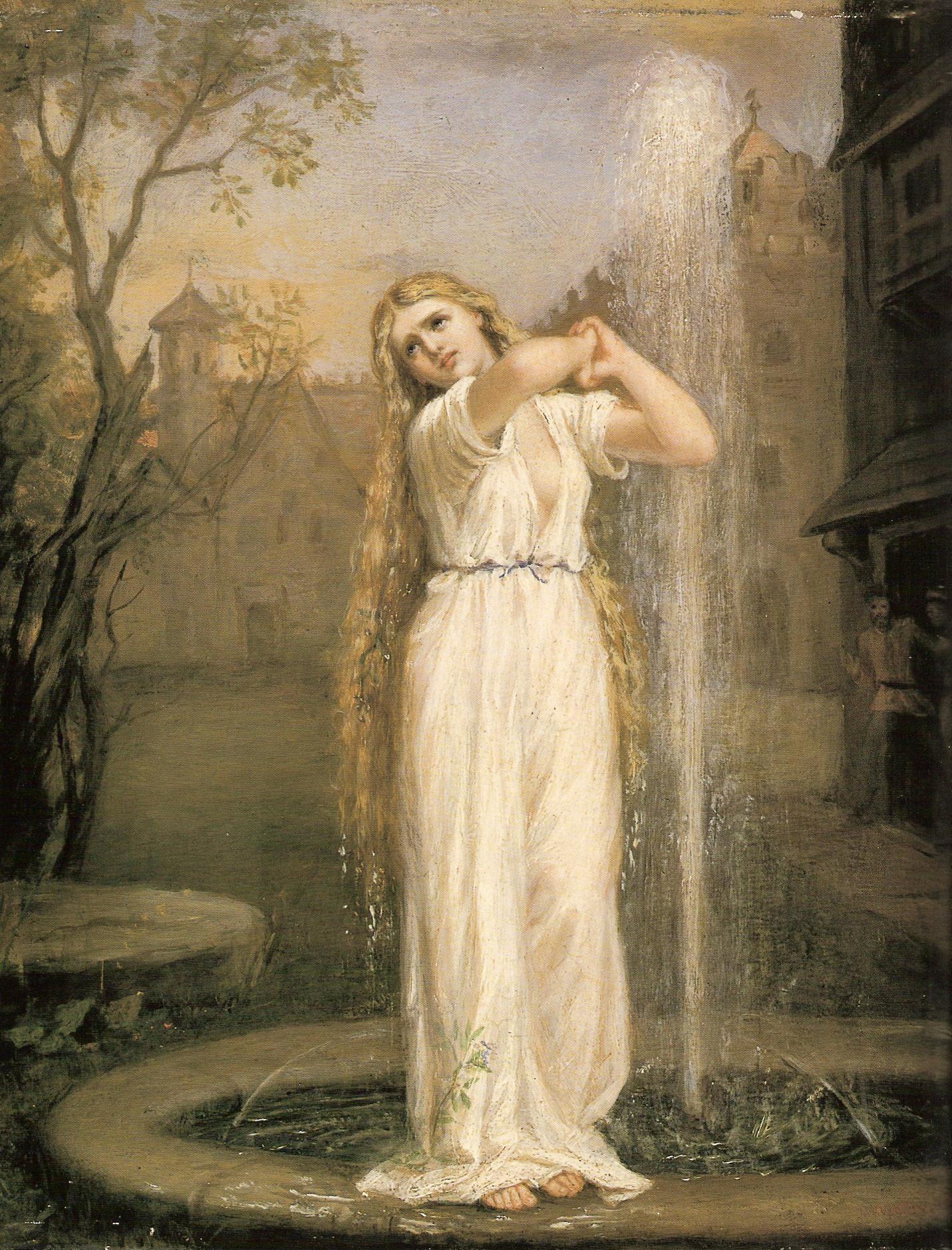
This week I've been listenin again to Knussen conduct Henze's ballet Undine (Ondine). Music for ballet  is different to music for theatre or for the concert hall. Music for ballet has to allow for the physical demands of dancers. Balletomanes come to see dancers : for them music is often secondary. So a composer must write bearing in mind the limitations of the human body. Dancers can't float up in the air indefinitely. There have to be breaks for them to rest and regroup.  Hence the episodic nature of ballet music, which has to allow for sequences that display the skills of the dancers. The episodes have to be long enough to give choreographers something to work with, yet not be too long or complex that dancers can't cope. Ballet music, one may say, follows the body not just the mind. 

 On audio such moments may drag but the drama is in the dancing itself.  Which is why seeing a ballet helps you connect between music and visuals. Henze was still only 30 in 1956 when Ondine was written, but he'd already written seven ballets : Ondine was the breakthrough that established him in the genre. The ballet was commissioned by Sir Frederick Ashton to showcase Margot Fonteyn.

Henze’s music thus focuses on images of water, tides and waves, for the sea is Ondine’s element. She’s supernatural, so her music is magically lyrical. When she dances in the waterfall, the colours in the orchestration shimmer around her. In comparison, scenes that take place on land, especially in Act 2, are relatively earthbound, but that’s the essence of the plot. Palemon dies, but Ondine lives on, immortal. The music flows so seamlessly into dance that you can almost see semi quavers enacted in movement. Every note reflects in dance. Pizzicato becomes en pointe, the interplay of piano, harp, and celeste become intricate ensemble. The guitar part is more than mere “Italianate colour”, for Henze loves the instrument and has written more for it than any modern composer. Seeing Ondine in performance shows just how good a composer Henze was and is. Sir Frederick Ashton and the audiences of 1958 found the music difficult, but Henze, a devoted balletomane, wrote intuitively for dance. Now the music poses no problems. Instead, we can appreciate how it respects the physical demands of ballet. Despite the undulating, wavering beauty of the scoring there are firm undercurrents and a strong dramatic pulse.

The water spirits form a circle, their arms undulating, like a giant sea anemone, moving with the ocean tides. Graceful as the image is, it’s also powerfully muscular, underlined by the depth and energy of the music. Sea anemones look delicate, but they’re strong, a lot like ballerinas. I learned Ondine from the audio recording conducted by Oliver Knussen. Now the image of the ondines in the corps de ballet will remain with me.

The sets were designed by Lila Di Nobili, who also designed the British premiere of Elegy for Young Lovers at Glyndebourne in 1961. Sir Frederick Ashton wanted to pay tribute to 19th century ballet tradition, so the set is lushly romantic, complete with proscenium arches, like a cherished museum piece. Against this background, the dancers seem all the more youthful and vibrant. I quite like the tension between Ashton's retro vision and Henze's irrepressible inventiveness.

Friday, 2 November 2012

Paul Spicer - Ireland Delius part songs

When Paul Spicer conducts English choral music, it's worth paying attention, because he's one of the finest interpreters in the genre. Siva Oke's SOMM label has just released the first major collection of part songs by Frederick Delius and John Ireland. Paul Spicer directs the Birmingham Conservatoire Choir in performances that will be hard to surpass.

This weekend, the Royal College of Music is hosting a major symposium on John Ireland (read more HERE). Ireland taught at the RCM and left an impact on English music. Speakers include Paul Spicer, Bruce Philips, April Frederick,. Recitals, too, and masterclasses. What a pity the conference clashes with the Oliver Knussen Sendak operas at the Barbican! But this reassessment of Ireland is timely. His songs, like Sea Fever and The Vagabond , have always been part of the repertoire, but his part songs are less well known. Indeed, he wrote very few after his mid 40's.

Yet Ireland's songs show character. In Heraclitus,(1924),  Ireland embeds the idea of a man mourning his dead friend into the very fabric of the song."They told me, Heraclitus, they told me you were dead".  High male voices lead, shadowed by low. "For death. he taketh all away, but them (memories) he cannot take". The low voices rumble, as if they were ghosts. Ireland deploys voices as he might deploy instruments in an orchestra. Beautiful parting in songs like Immortality (1942) where the vocal parts intertwine attractively. Ireland sets text imaginatively. In The Hills, written for the Coronation in 1953, key words leap gleaming out of the text : "golden", "flowers", "sun","enduring", so when the last lines return to a mood of calm repose, images of brightness light the darkening timbre.

Ireland was one of relatively few British composers with whom Benjamin Britten consorted.  Perhaps they shared a common interest in Elizabethan poetry. The charm of The Peaceful Western Winds (1896) written when Ireland was still a student, lies in its uncomplicated simplicity. Choruses of "cuckoo, cuckoo" in Spring, the sweet spring (to Thomas Nashe), and tinkling laughter in The Laughing Song (William Blake) suggest innocence determined to triumph. Three carols, Adam lay ybounden, The Holy  Boy and A New Year Carol reflect this steadfast belief in prelapsarian purity.

It's interesting to hear John Ireland's part songs together with those by Frederick Delius. Delius almost seems to be subsuming text and meaning in some of these part songs in order to create a wash of impressionistic colour. As abstract sound, they are attractive, as if Delius were using voice as a form of instrumentation. The voices of the Birmingham Conservatoire Choir ring cleanly. By keeping textures so clear, Spicer makes them sound like a carillon of bright, shining bells.  Indeed, the finest songs in this collection are wordless vocalise.  In Two Songs to be Sung of a Summer Night on the Water, a glorious swathe of "ahhhhh....." is followed by a tenor soloist singing "la la la", vaguely reminiscent of a nursery rhyme. It's a tone poem for unaccompanied voices, more effective than I can describe. Similarly, Delius sets Tennyson's The Splendour Falls on Castle Walls, emphasizing the "echoes, answer, echoes, dying, dying". There's a market for music like this when it's done with such finesse.  Refined and very calming. More details on the SOMM site.

Ollie Alert - Knussen at the Barbican

Tomorrow at the Barbican - Oliver Knussen Total Immersion. Actually, it started this morning with the high level conference (more here). Tomorrow Knussen's zany, anarchic but magical double bill based on Maurice Sendak, Higgelty Piggelty Pop! and Where the Wild Things are. Read about the Aldeburgh performances HERE to get a taste of what to expect.  Photo shows Claire Booth battling demons - credit Eamonn McCabe. Netia Jones's staging captures the zany, whimsical spirit infinitely better than the lumpen, overly literal Glyndebourne production many years ago, which I've just seen. You DON'T need large adults in animal costumes to act the Wild Things because the Wild Things exist in the kid's imagination. In any case, Sendak's drawings are visually part of the experience. Sendak was involved with the Glyndebourne production but he was not a theatre person. Netia Jones is. Her projections move like magic and light, and the adults who do sing are recognizable "not" caricatures but people transformed..

Netia Jones's stagings are good because they don't burden the music with excess baggage. Her Before and After Life was fascinating because she combined three works by Tippett, Britten and Finzi. Each of them so very different, yet she intuited the common threads that link them. Read what I wrote about the London premiere in 2010 HERE.  Coming up next year, Netia Jones is doing a staging of Kurtag's Kafka Fragments at the Linbury where seating is so tight I can't go unless I get an aisle seat and they're sold out already.  But it is top of my must-do list because I'm so passionately into the piece, having written about four different performances. I can imagine Jones doing it intelligently. Read about the András Keller  and Juliane Banse performance at the Wigmore Hall  HERE. There are levels in the piece which only come through abstraction, which I think Netia Jones can access better than most.

Thursday, 1 November 2012

George Benjamin Written on Skin - Amsterdam

George Benjamin's Written on Skin is making its way across Europe. It's presently in Amsterdam, where Jim Sohre caught it :

"Written on Skin was that all-too-rare treat, a compelling new piece of writing that spoke with its own affecting voice, performed by a peerless cast and band, matched by an enthralling stage production that served to make for a potent evening of musical drama. Here’s wishing it many more successful first nights and an enduring presence in the repertoire."


"I shall not soon forget the coup de theatre at opera’s end as the misused wife flees her murderous spouse up a white staircase extending into the loft, running to leap to her death, pursued by the rest of the cast, all in excruciatingly. Slow. Motion. Ironically, this is one of the few instances where the production fails the script since it calls for her to leap but be suspended mid-air, but then who has ever seen Brűnnhilde ride Grane onto the pyre? (So there.) Never you mind, it is spell-binding nonetheless."


Read the full review with production photos in Opera Today HERE

Arditti Quartet Wigmore Hall Rihm Saunders Abrahamsen Clarke

Wild weather outside the Wigmore Hall on Halloween Night, but the Arditti Quartet sparkled, revitalizing what has been a relatively bland five months in London music (with a few notable exceptions).

Brisk start to proceedings with James Clarke's String Quartet (2002-3) in place of the scheduled premiere of Clarke's 2012-5 for two string quartets. The JACK Quartet were due to join the Ardittis for this, but Hurricane Sandy intervened. No worries, since Clarke's String Quartet was commissioned for the Ardittis in the first place.They played with brio, relishing its zany, almost-but-not-quite anarchic delights. Ecstatic audience reaction.

Hans Abrahamsen's serene String Quartet no 4 (2012, UK premiere) was somthing of an odd man out in an evening of musical bourrasque, but I loved it. It's beautifully constructed in four movements, starting in a pitch so high it seems ethereal. Abrahamsen calls this movement "hoch im Himmel gesungen".  Arditti's bow scarcely seems to move, but amazing sounds emerge. Ashot Sarkissjan shadows the first violin, ghost-like, adding depth. The earthiness of folk melody, translated in graceful refinement.  A jam session for samisen and koto? Cello and viola (Lucas Fels and Ralf Ehlers) reinterpret the first movement in rumbling low pitch. Pizzicato reinforcing the idea of samisen and ancient instruments.  "Big black raindrops" says Abrahamsen in his notes. Joyous purity, good-natured poise.

"Fletch" refers to the feather placed on the end of an arrow to stabilize it in flight. You don't need to know this to follow Rebecca Saunders's Fletch for String Quartet (2012, UK premiere) since so much of her music moves like physical form. Great forward thrust and balance, purposeful.  Even her programme notes sound musical  "....this elemental sonic gesture is an up-bow sul point double-harmonic trill, often with fast glissando, crescendo-ing rapidly out of nothing to fortissimo....surface, weight and feel are part of the reality of performance. The weight of the bow on the string the differentiation of touch of the left-hand finger on the string...feeling the weight of sounds is an integral part of the composing process.... being aware of the grit and noise of an instrument, tracing the essence of the fragments of colour within a confined and reduced palette of timbres and exploring the physical gesture which creates a fragment of sound"  Anyone who still thinks modern music isn't emotional needs to hear Rebecca Saunders. Her music moves sensually, as if it were a living being, alert, sensitive, eclectic.

Before Hurricane Sandy, the Arditti and JACK Quartets were planning to play Mauro Lanza's Der Kampf zischen Karneval und Fasten for octet ( 2012, UK premiere).  One can imagine what that might sound like! Instead, the Arditti Quartet played Wolfgang Rihm's String Quartet no 13. Explosive attack at times, vigorous.  A deliberately deceptive ending to further throw you off balance, in a nice way. Listen to the August 2012 performance at the IMR HERE.


photo :  Zé Carlos Barretta from São Paulo, Brasil

Wednesday, 31 October 2012

Busoni's werewolves - Lieder for Halloween

Lieder for Halloween ? The choice is huge, some choices obvious, But here is one that isn't quite so well known : Ferrucio Busoni's setting of Goethe's Zigeunerlied.

Busoni is best known for Doktor Faust and for his piano music, but he wrote an number of lively songs. Listen to the demented piano part and the refrain "Wille wau wau wau, Wille wo wo wo, Witu hu !". This is a wonderful encore piece, ideally suited to low baritone, and will have audiences wondering who the composer is. The singer here (guess who!) lets his hair down and brings out the dark humour. One of the best versions I've ever heard.Enjoy the almost scat rhythms and play on words. A singer could have fun throwing his head in the air pretending to howl.

A man is out on a windy night and hears the howl of wolves. He takes a shot at a black cat. Not smart ! It's a witch's familiar. Instantly he's surrounded by werewolves. Even in wolf form he recognizes them as women from his village out on a hen night from hell.

 Ich kannte sie all', ich kannte sie wohl Die Anne, die Ursel, die Käth', Die Liese, die Barbe, die Ev', die Beth'; Sie heulten im Kreise mich an. Wille wau wau wau! Wille wo wo wo! Wito hu! 

Da nannt' ich sie alle beim Namen laut: Was willst du Anne? was willst du Beth? Sie rüttelten sich, sie schüttelten sich Und liefen heulend davon. Wille wau wau wau! Wille wo wo wo! Wito hu! 


photo : GCD Comics

Tuesday, 30 October 2012

Alternative Erlkönig? Loewe Der spaete Gast


An alternative Erlkönig? A woman and her son live alone in the wilderness.One night, there's a knock at the door. It's a goblin. "Little mother, take me into your little house, it's cold and wet out on the moor." "No, I lost my daughter out there in the heath, underr the moon". Then the dog starts to wail, recognizing the voice. Mother thinks her son has opened the door and let in a draught. But his body lies in his bed, in his little room, blaß wie der Mondenschein. Carl Loewe (1796-1869)  Der spaete Gast Op. 7 Nr. 2 to a poem by Willibald Alexis (Georg Wilhelm Heinrich Häring 1798-1871)
 
 Was klopft ans Tor? Über die rote Heide geht nur mein Sohn und ich, wir beide. Wir beide wohnen in der Wildnis allein, mein Sohn schläft dort im Kämmerlein. Keinen Kobold laß ich zur Tür herein. "Mutterlein! nimm mich ins kleine Haus, draußen weht es so kalt, draußen weht es so graus. Oft schon kreuzt' ich die rote Heide, oft schon sahen wir uns beide, kein Kobold ich, tu nichts zu Liede."

Denn bist du ein Irrwisch und locktest ins Moor meine Tochter, als ich das Kind verlor. Im Schilf, das dort am Felsen gränzt, da tanzt mein Kind, wenn der Mond drauf glänzt, du magst bei ihm schlafen, du hässlich Gespenst. "Ich kann nicht schlafen auf welkem Gras, von Tau und Regen ist's kalt, von Tau und Regen ist's naß. Ich bin kein Irrwisch, ich bin dir verwandt, deine Tochter hab' ich Schwester genannt und hab' sie gewarnt vor des Sumpfes Rand."

Verwandt ist mir niemand, niemand wert, ich steh' allein hier an meinem Herd. Den Fremden empfinge des Hundes Gebell, dem Blutsfreund, spräng'er entgegen schnell, nun starrt er zitternd auf eine Stell. "Mutter, der alte Hund kannte bald die Stimme, die draußen im Dunkel schallt. Er hatte schon sieben Jahr mich gekannt, seit ich ihn drüben am Kreuzweg fand. Mutter, ich bin dir so nah, so nah verwandt."

Was hast du mich spät in der Nacht geweckt? Was hast du im Schlummer die Mutter geschreckt? Was schläfst du nicht ruhig im Kämmerlein? Was spukest du draußen im Mondesschein? Mein Sohn kanns ja nur draußen sein. "Mutter, dein Sohn steht draußen nicht, aber mich brachte dein Schoß ans Licht. Noch schläft dein Sohn im Kämmerlein, aber ich schwebe im Mondesschein und will so gern zu dir hinein."

 Mein Sohn, du stehst so nahe bei mir, warum öffnest du selber dir nicht die Tür? Leicht Flechtwerk ist sie von Elsenwald, und draußen weht der Wind so kalt, o komm ins warme Kämmerlein bald!

"Mutter, ich stehe sehr weit von dir, öffnen kann ich nicht mehr die Tür! Selbst wie der Wind bin ich leicht und schwacht, komm nie mehr unter dein warmes Dach, drum gib mir draußen ein kalt Gemach!" Ich öffne geschwind, mein liebes Kind. Wo bist du? Es saust vorbei der Wind. "Der Wind weht fort mich, Mütterlein!" O weh! da liegt im Kämmerlein mein Sohn, blaß wie der Mondenschein.

Monday, 29 October 2012

Scandal! Henze Das Floß der Medusa

Hans Werner Henze on the scandal surrounding the first performance of Das Floß der Medusa (the Raft of the Medusa). In April, 1968, "Red" Rudi Dutschke, demonized student leader, survived an assassination attempt by a neo-Nazi. Henze helped Dutschke and sheltered him in his own home, attracting the kindly interest of the local police. That summer, Henze had written an article about the arts and revolution, in which he linked culture to social equality. "I most certainly did not mean international Stalinization or some such other horrific scenario". But in the paranoid atmosphere of the time, tempers ran high, and with that fear, denunciation  and self interest.  According to Henze, Luigi Nono and Peter Weiss had written letters in defence, but Theodor Adorno refused because he "could not consort with Communists". "Today", said Henze in his autobiography "we can see the cultural misunderstanding that obtained at the time for what it was - stupid and arrogant - but at that date...how difficult it was to explain....the wrongs that had built up over the years".

At a performance of his Second Piano Concerto on 29/9, Henze noticed that the orchestra refused to applaud. "It was because of my world revolution", he said he was told. Soon, there was a "media campaign" against him "by a "ghost writer also active as a composer" and a Hamburg journalist who attacked Henze "pillorying me and  the artistic ideas in the score of Das  Floß der Medusa, a work which, as yet unperformed, they could not possibly have known." During rehearsals, there were rumours of possible trouble. "Throughout this period, I felt as though I was cut off  from the rest of humanity and utterly on my own". 

He describes the night of the premiere : "There we were, waiting backstage - Charles Regnier (Charon),  Edda Moser (Madame la Mort), Dietrich Fischer-Dieskau (Jean-Charles),  and I, ready to go on, but no-one came to fetch us, ...through a chink in the wall, we could see that something was wrong in the hall. People were standing around. Had there been a problem with tickets?........ later we discovered that plain clothes detectives were in the audience, keeping an eye out for rebellious-looking types would that be my claque or my critics? Since no-one came to fetch us, the four of us decided to go out on the platform on our own. After all, the power of music, or at least the power of musicians  might have been sufficient to restore a semblance oforder, And so we set off, the soloists ahead of me, with the result that they were unaware of a man in a grey suit detaining me and saying that if I did not remnve the red flag  that was then being unfurled on stage, I would be held responsible for the consequences. .....In a flash, I realized that it was important for my whole future as an artist and as a member of civilized society, to react impeccably towards this obvious provocation.... I could also have said that I was there to conduct, not to keep the place clean..."

" I  mounted the podium and asked for silence  in the hall...... I raised my baton for the first entry. It was then that I heard a chorus of voices, at first pianissimo, then increasinglu audible. Where was it coming from? I could scarcely believe my ears, it was coming from the platform. The ladies and the gentlemen of the RIAS Chamber Choir that had come to Hamburg  from Berlin ...with whom I had often worked in the past  on terms of perfect amity were chanting in unison "Get rid of the flag!"...."

"A violent off-stage discussion now broke out. The chorus said that they could not bring themselves  to appear on stage with the red flag, the very flag that fluttered from the Brandenburg Gate in Berlin. By now Fidi too was worked up  and announced that this was the last time he would allow himself to be led up the garden path by me. I was so shocked by his remark that I forgot to ask when the previous occasion had been. ...What garden path? But before I could  think of an answer, Frau Moser broke in and threw her arms around me explaining that whatever happened, she would always stick by me. All this happened in the green room within a matter of seconds, while outside in the hall riot police were starting to launch their attack. That they were already on the scene was due to the fact that they had been stationed in an adjoining room since before the start ofv the concert, ready for action with their clubs and shields and riot gear..... "

"But why, I wondered, had Mr Plod entered the fray? I returned to the platform to find that the orchestra had left... Finding a microphone, he tried  to protest the police intevention, but before he spoke a word, the mike was wrested away. "Meanwhile, at the entrance, representatives of different schools were laying into each other...There was total confusion, brute force was used, and a number of arrests were made. Ernest Schnabel may have been a former controller of North German Radio, but that did not stop him from being thrown through a plate glass door by a representative of the forces of law  and from being locked up in a cell for opposing the state's authority. He had tried to stop the fighting. The red flag was torn to shreds. One thing that I did not see that evening  and discovered only from a photograph  in the newspaper, was a further poster attached to the conductor's desk on which someone had daubed the word "Revolutionary" followed by a question mark. What was meant by this and what happened to the poster are questions I have never been able to answer".

".....I spent the evening with some acquaintances in Poseldorf....in the same street as the one in which some old friends  from the music world live. They were at home, I saw the lights on, and I knew that they knew where I was , but none of them made any effort to telephone or call around." 

The next day, the programme director of North German  radio apparently told a press conference that "for the next ten years, Henze would be dead as far as the German music scene was involved" and tried to charge Henze for damage to the hall. "At the time I thought the whole thing risible, and shameful, unnecessary, mismanaged  and mean. Time has done nothing to alter that position".

This incident is critical to an understanding of Henze's career. Whatever the details it's clear that Henze was also traumatized by a sense of personal betrayal. He was getting stick from all sides, Far Right, Far Left and points between.  Notice the poster with the question mark after the word "revolutionary". There's no evidence that Henze was complicit, and he emerged greatly damaged by the taint of scandal.  There's a brief hiatus in his output during 1969, which wasn't really broken until El Cimarrón (The Runaway Slave) and Henze's Sixth Symphony. In both cases he reaffirms his ideals and doesn't compromise for the sake of popularity.

 One can completely understand the actions of the Berlin RIA Choir, since their city was still brutally divided. For them, the traumas of the past were still open wounds.  But the sudden change in Henze's position is harder to explain. No-one could claim not to have known what Henze's politics were. Das Floß der Medusa is an explicit condemnation of the exploitation of the poor. It was even dedicated to Che Guevara. Perhaps people like revolution when it's sanitized and defanged, like wearing a Palestinan headscarf shows ones credentials without actually having to care about the issues. While Henze was being demonized,  Leonard Bernstein was admired for flaffing about with Black Panthers, who had no illusions about him.  Henze was lionized when he was fashionable and could guarantee those around him fame and fortune. But once he was demonized, the fashionable fled. That I find more shameful than those who objected to his politics.

Sunday, 28 October 2012

I put a spell on you


When this came ourt in 1956 most kids were listening to Pat Boone...... i didn't discover it til 1964, but it changed my life. Never could go back to Perry Como.

Saturday, 27 October 2012

Hans Werner Henze has died

Hans Werner Henze (1926-2012). Henze's death has just been announced by his publishers, Schott. Ironically, his Moralitäten is being performed tonight in Basel. No details yet, but Henze has been unwell for many years. Despite his suffering, Henze continued to write. If anything some of his later work is even more uncompromising. Henze would not "go gently into that good night". He believed in principles, even if they might not fit in with what others might expect. His music defies categories. It fits no easy pigeonholes. Henze was contradiction, personified.

Read the obit on Schott's website here.  (photo: Peter Andersen). One of the best pieces on Henze in the British media is here (Ivan Hewett). There is a lot on my site here on Henze.  Especially read  what I've written about Phaedra, which is much misunderstood by listeners expecting easy focus feelgood. Henze confronted death during its genesis and came up with a powerful statement on love and life. I attended the Berlin premiere but over the years,  I've grown to appreciate its profound depth even more.  The score is available bei Schott.  It's ironic that Henze should die just as we enter Benjamin Britten's centenary, for Henze was a Britten devotee, though never a part of Britten's inner circle. Henze's Phaedra and Britten's Phaedra are worth considering together, though they could never be performed together. Read what I've written on the subject HERE 

Also  read my piece on Henze's Six Songs from the Arabian, based on Ian Bostridge's searing performance at the Wigmore Hall this year (more mature and more intense than the recording). This is another seminally important work which anyone interested in Henze needs to know.

Also on this site, Henze's Voices , Der junge Lord,  and Elogium musicum, one of his last works.
Listening recommendations ? Obviously in the circumstances, the Requiem (superlative recording conducted by Ingo Metzmacher). But anyone who loves Henze would have many other favourites.  Later I'll listen to The Raft of the Medusa which started my Henze thing when i was a kid. Or the Ninth Symphony, or L'upupa.  I might however go into the garden because it's the first sunny day in weeks, and remember Henze in the Italian sunshine. But for starters, Henze's very early Whispers from heavenly death. 
 

Friday, 26 October 2012

Romance of the West Chamber 1927 - analysis


The Romance of the West Chamber (1927) (西厢记) was made barely two years after Eisenstein's Battleship Potemkin, and was almost exactly contemporary with Abel Gance's Napoléon, both of them landmarks in western cinema. The Romance of the West Chamber is almost up there with them, for it was the first grand-scale historical saga made in China. The subject itself was ambitious, because it's one of the great classics of Chinese literature. Adapting it for film was an entirely new concept, and the film makers knew how much they had to live up to. The movie was concieved on a grand scale, shot on location in the vicinity of the 1,000 year old Liuhe pagoda (六和塔) near Hangzhou. Some of the scenes are clearly shot on location in an ancient monastery because they feature elaborately carved gates and architectural features which no studio mock-up could hope to emulate. The film used the most advanced film techniques available at the time, so the narrative blends realism with fantasy.

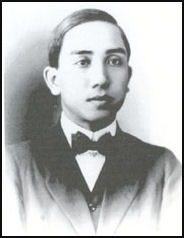
Hong Kong was right in the vanguard of Chinese film. Lai Man Wai (黎民偉, Li Min-wei, 1893–1953), made the first Chinese feature film in Hong Kong in 1913 and founded Minxin Film Company, which later moved to boom-town Shanghai.. Lai was a visionary, who had supported Sun Yat Sen during the 1911 Revolution, and who understood the potential film could contribute to the modernization of China. Earlier Minxin movies were relatively low budget but Lai put so much in the Romance that his company didn't reecover financially. Indeed the whole of Lai's life can be seen as a struggle to create art despite adverse situations. Choi Kai Kwong's 2001 documentary Lai Man Wai, Father of Hong Kong Cinema is absolutely essential, for Cantonese film makers, actors and technicians were fundamental to the development of film in China. Get the DVD  here.

The Romance of the Western Chamber is available on DVD and through other sources, but it's only half of what the original must have been like. Of the 10 original reels, only 5 remain, so it helps to know the basic story, rather than judge the film in ordinary movie terms, because there are so many missing parts.  Luxuriate in the scenery and the attention to detail. Look out for the bamboo filigree in the ornamental garden, the carvings in the temple, the costumes and the antiques. Watch the soldiers running up hills, with the Liuhe pagoda in the background. The real pagoda in which the original story was set is hundreds of miles away in Shanxi province. Liuhe is closer to Shanghai, and more convenient for the film studio. It's also quite a sight.

Tsui Yingying is a maiden who is staying in a monastery with her mother, younger brother and maid. The actress is Lim Chocho, a big star at the time, very charming. She was a Cantonese too, though born in Vancouver. She married Lai Man Wai in 1920 and made many movies together. Read more about her here. The hero Chang Kung (T K Kar) is a scholar travelling to Beijing for the Imperial exams, who stops at the monastery because it's a quiet place to study. Their eyes meet, they fall in love. However, the countryside is overrun by bandits and the bandit king wants to abduct Miss Tsui, so he attacks the temple. Wonderful battle scenes, soldiers running along up steep slopes and a fight between the bandit and the White Horse General who happens to be a friend of the scholar. Here is where you wonder what the missing reels might have shown - the earliest swordplay choreography in Chinese film?

Wonderful vignettes, such as the  Stupid Monk (pictured left), the old abbot, the maid and Miss Tsui's maid Hung Niang.  Great acting, and wry humour.  The bandit, Tiger Sun, is more stylized, as if he's a direct descendant of a character in traditional Chinese opera. He doesn't have to emote because he doesn't have to think. He's a warrior. It's interesting to see how this film mixes "modern"  acting with traditional dramatic practice. The director was Hau Yiu, (1903-42), also a Cantonese. Read more about him here. What a tragic life, but so typical of that period.

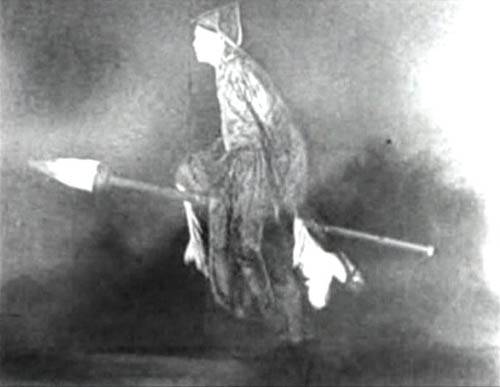
Some of the frames are so well lit and focussed that you realize just how well made the original movie must have been. Chang Kung the scholar falls asleep at his desk and dreams that he's with  Miss Tsui, and the bandit king comes in and drags her away on his horse. What's a scholar to do? He looks at his ink brush and suddenly it grows so big that he can ride on it . He whips it as if it were a horse, and rides through the skies in pursuit. Nice use of superimposed images, a device that features in later Hong Kong movies, though less so in the realism of left wing mainland film. The image of the scholar riding his brush to defeat the bad guy illustrates the precept "The pen is mightier than the sword".  When he wakes, he realizes that he's been cuddling his servant boy, whose face is now smeared with the ink from the brush.

It's tantalizing to watch the 45 minutes remaining of the Romance of the West Chamber because so much of it seems to foreshadow later Chinese film. Perhaps it was more influential than we realize, even if it didn't make a lot of money. Because the world is west-centric, the creativity of non-western cinema isn't appreciated enough. All the more reason for watching the Dream of the West Chamber and other Chinese movies. They are an insight into how other cultures adapted the new medium for their market.  You might also like to read about Prem Sanyas, "The Light of Asia" the 1925 Indian movie about Gautama Lord Buddha in his youth. That was also filmed on location and in the private palaces of the Maharajah of Jaipur. Both the Romance of the West Chamber and Prem Sanyas are important because they counteract colonial stereotypes. Asian film makers were every bit as adept as their western contemporaries.