Tuesday, 11 December 2012

12/12/12 Jurowski LPO Grisey Quatre Chants Mahler 5

Vladimir Jurowski conducts the LPO in Mahler's Symphony no 5  on 12/12/12. We'll never see dates like that again. Some could deduce  Portents of Doom but maybe we're safe, as the concert doesn't start at 12 past 12.

Even though music is abstract, listening is a subjective experience.  Music itself is neutral, but we would not be human if we did not respond emotionally and carry unconscious connotations into the process. We might read Portents of Doom into this symphony since Mahler nearly died while writing it. However, the thought of haemorrhoids should stop excess sentimentality.

Jurowski is no fool. He's programmed Mahler with Gérard Grisey's Quatre chants pour franchir le seuil.  As Mahler said,"music is more than just the notes". When we listen, can we think how our responses are being channeled?  For me this is one of the truly great song cycles of the last 50 years. In the last 6 years,  it's been heard live in London at least 4 times, twice I think with Barbara Hannigan. Jurowski's soloist is Alison Bell. The classic recording is Catherine Dubosc, with Cambreling.

Grisey was interested in "psychoacoustics", which sounds terrible, but what that means is intense awareness of how what we hear affects how the brain rocesses what comes through our ears, and vice versa. A lot of his music seems attuned to natural body rhythms, so you hear tiny nuances. It's surprisingly therapeutic without actually being designed to be that way. This is not waffly New Age stuff.   It's mentally challenging because it needs careful attention, but somehow it connects to your pulse, as natural as breathing. Often I play this music on continuous loop, so it "evolves" like it's alive.
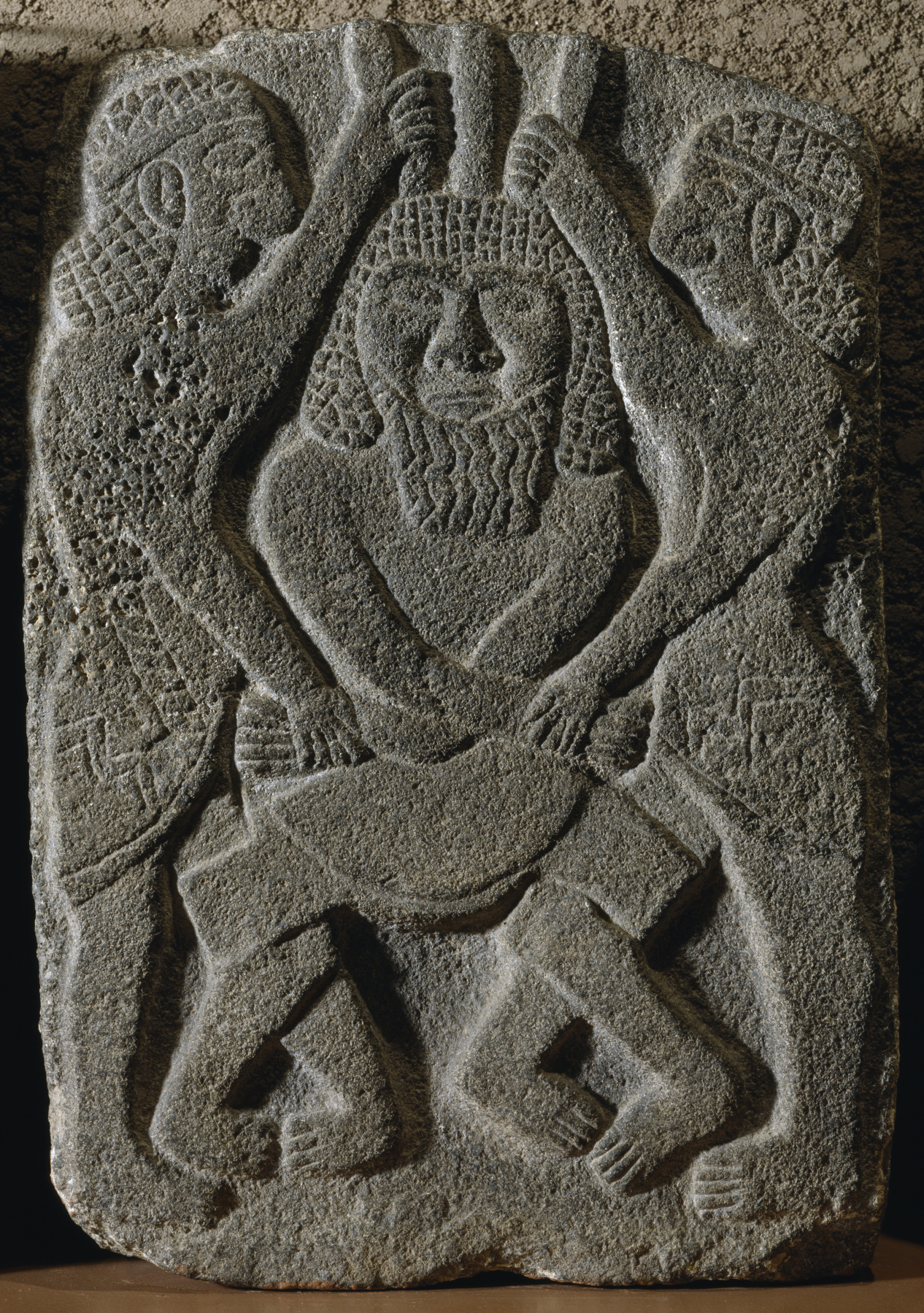
 Quatre chants pour franchir le seuil. refers to the idea of "crossing the threshold", between life and death, between struggle and sublimation, a flux between levels of consciousness. It works like deep meditation, releasing the soul so it can be free. Shortly after it was completed Grisey died suddenly but that's pure coincidence. There's nothing spooky about that at all, even though Grisey's  title comes from a line in Claude Vivier's Glaubst du, an die Unsterblichkeit der Seele? That earlier piece refers to being stabbed and crossing over into the unknown. Shortly after, Vivier (ironic name) was murdered by a casual stranger in almost exactly the same circumstances. (Lots about Vivier elsewhere on this site.)

Grisey's Quatre chants pour franchir le seuil.starts with long semi-silence then suddenly waving chords enter, not discordant, but disjointed, This isn't firm ground but exploratory. "De....qui....se....doit....." sings the soprano, vertical sounds over the hazy horizontals around her. Gradually the patterns merge, the Voice part disintegrates and reforms in abstract, transcended form, soaring like an arc, stretching outwards into space. Then the incantation, based on sacred Egyptian texts instructing the soul on its journey from death to immortality. The texts are fragmented, and the music hovers as if intuiting the gaps in the transmission. Each stage in the ritual is numbered and intoned, for what's even more important than the detail is the sense of inexorable forward movement. "Laisse moi passer, laisse moi passer"....then "formule pour être un dieu"'.

More wonderfully shaped moving sound, deep timbred instruments like contrabass clarinet, muted tubas and trumpet, contrasted with the high voice. "Le voix s'épand dans l'ombre". Only the rumble of drums like distant thunder and barely perceptible rustling, hurrying sounds like wind. We're crossing something..... Circular arching trumpet sounds, more rustling, speeding up, punctuated by sharp thwacks on percussion and harp. Then waddling tuba and screeching (but harmonic! ) saxophones and clarinets. We enter a new place, vivid with clear light. The soprano's singing text from the Epic of Gilgamesh. This is the "death of civilization". Human bodies have turned into a vast sea of clay, but to the prophet, it's a terrace open onto an endless horizon. The violin part is painfully beautiful, and there's a steady hum vibrating in the background. Of the final Berceuse, Grisey said it's not a lullaby but "music to the dawning of humanity finally liberated of its nightmare".

Monday, 10 December 2012

Open Day at the Royal Opera House

On 7th January The Royal Opera House is live streaming for 10 hours. It's  a kind of visual live blog of what's hapening all day behind the scenes as well as front of house. Obviously you pick and choose what you want to watch !

Most interesting from a technical point of view, they'll be showing Act III from Die Walküre (pre-recorded from September) and showing how the filming was done from several different perspectives, and you will see some of the preparations, like watching Bryn Terfel getting ready. Filming opera is an art in itself, so this should be fun for those wanting an idea of how it's done.

Thank goodness the ROH keeps art and technical stuff well apart.  Background is important but it's not foreground. The way the Met crams gimmicky chitchat into its intervals distracts from performances. It's cute to see backstage once but ultimately it degrades the magic of performances.  Maybe it appeals to audiences who aren't really interested in opera as drama and just want an "experience". But god forbid ROH should stoop to such crassness.  Better to keep the technicals as technicals. Once at the Met Bryn Terfel brushed Renée Fleming away as she pounced on him, "Sorry, I have another Act to sing", he said, showing where his real priorities lay. As a singer herself she ought to know better.

Other highlights include glimpses into stage rehearsals of Nabucco and rehearsals for Kasper Holten’s new production of Eugene Onegin his first production for ROH.  John Fulljames will present a model showing of his new production of  La donna del lago. Also, Antonio Pappano will do a masterclass with a singer currently on the Jette Parker Young Artists Programme, while  Rolando Villazón lets us in on his preparations before going on that evening as Rodolfo in La bohème. Sort of an extended Insight Evening in the comfort of your own PC. 

Details will be in the Guardian and on The Space. It's a good thing that The Space still exists because Britain needs an all arts online channel, like the French and Germans. But The Space is badly managed. They don't have details about the ROH day even though it's less than a month ahead. Why do a project like that, with so much potential, and do it so incompetently? It isn't easy to organize strong links with venues and negotiate rights, but really......  


 photo : Elliott Brown from Birmingham

Saturday, 8 December 2012

Triomphe! Meyerbeer Robert le diable, review, Royal Opera House

Why was Giacomo Meyerbeer's Robert le Diable an overwhelming success in its time ? The Royal Opera House production suggests why: it's a cracking good show! Extreme singing, testing the limits of vocal endurance,  and extreme drama. Robert le Diable is Faust, after all, not history, and here its spirit is captured by audacious but well-informed staging. Listen with an open mind and heart and imagine how audiences in Meyerbeer's time might have imagined the madness and magic that is Robert le diable.

Bryan Hymel is outstanding, singing the difficult, unusual part with exceptionally fluid, lyrical singing, the cruel tessitura negotiated with such strong technique that we hear the part, not the effort. He isn't simply displaying vocal skill, but infusing the part with greater psychological depth than  the text itself suggests. That is true artistry. Opera is not singing alone, it is drama with music at its heart.  The extremes Meyerbeer writes into the vocal line express Robert's tortured soul: Hymel makes them ring with emotional conviction. In the duet "Mon coeur s'élance et palpite",  he almost steals the show though Isabelle has the killer high notes. Many other exquisite moments, like the Act Four "du magique rameau". Hymel, still only 33, is a voice to cherish.

The parts of Alice and Isabella are tours de force. Alice is a maid from Normandy, as the orchestra tells us with  vaguely folk melodies. Although she carries a letter from Robert's mother she is not Micaëla whose love for Don José is tainted with possessiveness.  Meyerbeer's audiences would have no trouble identifying Alice with Joan of Arc, another girl from Normandy who fought against all odds.  Marina Poplavskaya's Alice is no bimbette, but a heroine worthy of Jeanne d'Arc herself.

Poplavskaya's voice soars clear over the orchestra in the tricky early parts of the opera. But it's in her confrontation with Bertram that she shows the intelligence she brings to the characterization.  Poplavskaya reaches the horrendously high notes with clarity. Alice is direct, she doesn't make a fuss, so this intense portrayal is psychologically true. Yet it also refects the recurrent staccato in the music, and the thrusting, stabbing passages in the orchestra. The mock medieval battle in the text is outclassed  by the cosmic battle for Robert's soul. Poplavskaya's Alice is lithe and energetic, for she's a swordsman duelling against death.

Isabella's two biggest arias, "Idole de ma vie" and "Robert, toi que je t'aime" define the word "show stopper". Done well, the audience is stunned and the action stops until applause subsides. That alone can make good theatre.  In  the Cavatina, the word "Grâce" is repeated in elaborate variations. Then the orchestra chimes in, provoking even greater feats of vocal gymnastics.  You're left gasping. Patrizia Ciofi received much applause for standing in at the last moment. She's very experienced, having first taken the role more than ten years ago.  Perhaps she'll  slip back into gear as the run continues.  She's excellent, but this is a role that needs heart shatteringly astonishing singing.

John Relyea sings Bertram's set piece arias at the end of Act Four impressively but he is no pantomime villain.  Tellingly, he sings details like the recurrent "mon fils, mon fils" with gruff tenderness. He wants Robert because Robert is his son.  Relyea's subtlety suggests why Bertram was once loved by the saintly Rosalie, Robert's mother. While Meyerbeer milked the plot for melodrama, there's room in the music for the depth Relyea brings to it.

Since many people know nothing of Meyerbeer other than Wagner's slander, our modern approach to Meyerbeer is distorted.  Wagner was such a complex person that it's nonsense to take a simplistic view of the Wagner/Meyerbeer relationship.  Alberich-like, Wagner had to attack Meyerbeer to  hide how much he owed him.  It's a classic troll tactic. No wonder Wagner understood the Niebelung mind. If Meyerbeer's use of the orchestra seems over the top to us, it's because we are thinking in Wagnerian terms. Meyerbeer extends his characterizations with motives that run through the opera like a thread - drinking songs, marches, Norman folk songs. Develop these further and call them Leitmotivs.  He also uses the orchestra sparingly - harps around Isabella's angelic singing, brooding winds and brass around Bertram.  The large orchestral flourishes are deftly done, and move the action forward, without overpowering - you want to hear those clear high notes shine.
 
If we free ourselves of Wagner snobbery, we can appreciate Robert le Diable's true place in music history. Its obvious antecedent is Carl Maria von Weber's Der Freischütz and its direct descendant Berlioz The Damnation of Faust.  All derive form the High Romantic fascination with Gothic fantasy and the occult.  Meyerbeer may not be "modern" taste but that reflects on our awareness of period opera. Even Bach was largely forgotten until Mendelssohn championed his music.  Perhaps the shadow of Wagner is so strong that we don't let ourselves enjoy Meyerbeer because we're too worried about what others might think.

We should bear this background in mind when assessing this Royal Opera House production, directed by Laurent Pelly with designs by Chantal Thomas. This would go a long way towards a reasessment of Meyerbeer because it is very well researched and erudite. The ballet, where the ghosts of dead nuns are seem rising from their graves, is based almost exactly on the original Paris designs. The etchings we see are also based on authentic period imagery.  The huge revolving mountain that dominates the stage could come straight out of a Gothic painting or novel. To 19th century people, wild landscapes represented fear and superhuman forces. Think the Wolf's Glen in Der Freischütz.

Robert le Diable is melodrama, by no means po-faced. This staging is colourful because the music is colourful.  How Meyerbeer's audiences must have thrilled to the sight of semi-naked nuns dancing lustfully. They would have enjoyed mock medieval pgeantry without worrying too much whether it was authentic.  Our modern obssession with period-specific staging meant nothing to audiences who were used to seeing zany mixtures of period and style. Ironically, this is a much more authentic staging than many realise. In many ways, we are less open to the art of imagination now than our forebears were once. Why shouldn't we have as much fun as they did?  Pelly and Thomas are giving us a chance to see the opera in period context. We should value the chance to see this opera done in this way because chances are we won't get many opportunities since it's not at all an easy work to stage.
This ROH production is being recorded and filmed. BBC Radio 3 is broadcasting an audio version on Saturday 15th December (link here).

Longer version of this review with full cast list in Opera Today Go to Opera Today for a full download of the 1985 production and libretto

photos :  Bill Cooper, Royal Opera House, details embedded

Wednesday, 5 December 2012

Summer Coup for Garsington Opera

Cheery news on a dark December day! Garsington Opera's 2013 summer season is now officially announced.  Last year the weather was unnaturally cold and wet - blankets and wellies  - but let's hope that next year we'll have proper summer weather, and long, bright evenings to enjoy the park at Wormsley as well as the opera offerings.

The new season starts on 7th June with Mozart's Die Entführung aus dem Serail. The cast includes Norman Reinhardt, Rebecca Nelsen, Mark Wilde, Susanna Andersson and Matthew Rose. Conductor is William Lacey and director Daniel Slater. who directed Britten A Midsummer Night's Dream, the glorious finale to Garsington Oera's years at the home of Leonard Ingram, before the company moved to Mark Getty's home at Wormsley.  Read more about that here. If this Entführung is nearly as good, we're in for a treat. 

Garsington Opera scores a coup with the first British staging of Rossini's Maometto Secondo (Maometto Segundo). Garsington has always been famous for reviving lesser known baroque work, and Maometto Secondo is a jewel.  Mehmet II, Sultan of the Ottomans, conquered Constantinople, ending the Byzantine Empire. Next ambitious plan: to conquer Rome, thereby linking Europe and Asia under Islam. Mega geopolitics. Venice was the front line because Venetians traded throughout the Eastern Mediterranean. For Venetians, Turks posed a genuine threat to survival. This Turk was no buffo.  Rossini with political depth? Surprisingly, yes, for he treats his characters as individuals rather than cardboard stereotypes. Maometto is a villain who has beseiged a Venetian outpost, but he's in love with the commander's daughter Anna. The plot's convoluted but the Venetians escape (it's an Italian opera, of course). For 19th century audiences the idea of a lustful exotic foreigner must have created a frsson. (read more about the opera here) David Parry is conducting, so frisson will be guaranteed. Singers include Darren Jeffery, Paul Nilon, Siân Davies, Christopher Diffey, Richard Dowling and Caitlin Hulcup.  Maometto II was a hit at the Santa Fe Opera festival in 2012 so it's going to be fun !


Olivia Fuchs's Britten A Midsummers Night's Deam at the Linbury Theatre, ROH was one of the finest productions I've seen. (more here). She's a Garsington Opera regular, too, and has directed opera throughout the UK and Europe.  So when she directs Humperdinck's Hansel und Gretel at Garsington Opera in late June/early July, we should be in for something interesting.  This is the cast :
Claudia Huckle, William Dazeley, Anna Devin, Yvonne Howard, Sophie Junker, Ruth Jenkins, Susan Bickley.and Sophie Junker  Martin André conducts.

For more information, please see the Garsington Opera at Wormsley site HERE.

Robert le Diable - full download libretto

The Dancing Nuns scene from Meyerbeer's Robert le Diable starting Thursday at the Royal Opera House. Robert le Diable is taken to the haunted convent by Bertram who is the Devil and Robert's father, though Robert doresn't know it yet. Bertram is also Alice's father, but she and Isabella save Robert, and Bertram is despatched to hell. Audiences in the 19th century didn't have delusions that opera was "historic". They heard past the fake medievalism and enjoyed the drama for what it was. Indeed, Heinrich Heine wrote a poem about  the social context of Robert le Diable.

 "Es ist ein großes Zauberstück
Voll Teufelslust und Liebe;
Von Meyerbeer ist die Musik,
Der schlechte Text von Scribe."

Heine understood the social context of opera in his time and why audences enjoyed Robert le Diable despite the audacious plot.  Read what I wrote about Heine's Meyerbeer poem earlier this year. Since Heine doesn't actually mention the title of the opera, not many  people make the connection.  You saw it here first! But it's pretty obvious as it is ein großes Zauberstück, Voll Teufelslust und Liebe;

Trysts or not, we can at last enjoy Robert le Diable We can enjoy it too at the Royal Opera House, where the cast are experienced and the director knows the genre. Read my comments on the ROH cast here - they could be as good as we can get.

HERE is a link to a full download of Robert le Diable from Paris in 1985 with Alain Vanzo, Sam Ramey, June Anderson and Michele Lagrange.  Even then, they werer bedevilled by cast changes. Nothing new - these things happen. Vanzo is a much more idiomatic Robert than Rockwell Blake who took the part when they made the film of the same production.  Stick to the audio download above. It's lively and the audience keeps erupting with applause. Usually I can't stand applause because it breaks drama but in this case, it's part of the fun.  There's a link to the full libretto as well.

Tomoorow I'll write a survey of some recordings. Please read other pieces I['ve written about Meyerbeer by following the labels

Tuesday, 4 December 2012

Meyerbeer Robert le Diable - who's behind it

Much has been made of the cast changes at the Royal Opera House Meyerbeer Robert le diable that starts Thursday. It's easy to make a fuss if you don't actually know what's involved.  But listen to the music - it's fiendishly difficult, created to shock and awe. The tessitura in most parts lies so high that few singers are conmfortable in the range or have the stamina to stick it out for hours, That's another reason why ballet features - it takes the pressure off the singers and gives them time to rest.  Some of these arias are tour de force killers, easier to pull off in concert performance than in full staging.

When we hear it at the ROH, we should bear in mind how rare it is to hear music of this type. We are fortunate. Bryan Hymel will be singing the title role. He was specially chosen because he's a high lyric tenor, with a clear, refined top and elegant ping.  Hymel sang Enée in Berlioz Les Troyens  with great subtlety. Although Enée is a hero, he's not butch but filled with human conflict. Hymel's interpretation was right for the part, a truly refreshing approach.  Please see my review of Les Troyens live  and my analysis of the broadcast ). Hymel also impressed greatly as the Prince in the ROH Rusalka, another of his signature roles, with which he shot to fame. Read about that Rusalka here and why Dvořák may have chosen that voice type here, and read my interview with Hymel in February 2012. It's vital to understand the voice type and its relationship to the genre. We're used to heavier Italianate tenors in the Verdi manner, and to German Heldentenors, but the French style is different and more refined. It has to be heard on its own terms. Since there's a revival in 19th century French opera, we need to accustom our ears to voice styles like this.

John Relyea is singing Bertram. Several years ago Relyea told me “I find villains in general to be great fun to do. I suppose you can say that they are much more direct in the sense that they don’t have the same sort of inner conflicts that you get with “normal” characters and heroes. A lot of the bass repertoire is of course the “patriach” type, kings, priests, sympathetic charismatic roles whose inner worlds are developed from humanity and compassion. Villains' aims and goals are unwavering, most of the time and on a certain level that’s easy, but I like the clarity of a villain’s mind and the way they focus so firmly on objectives. It gives you a line to follow."

Patrizia Ciofi has been singing Isabelle since the 1990's, so she's a wise choice for the Royal Opera House. Hear her in the first four performances and in the video below (Paris 2000).  Marina Poplavskaya is singing Alice and Jean-François Borras is singing Raimbout. It's a strong cast, better than we might deserve, I sometimes think. .The director is Laurent Pelly, who specializes in French  repertoire.   Pelly's very sharp, passionately intense about what he does. Read here what he's said about Ravel L'enfant et les sortilèges for Glyndebourne. HERE is a link to a clip where he talks about the production. Get a glimpse of the production - quite amazing. "C'est un ouvrage très particulaire, très difficile, très longue, très mystérieux ....un blockbuster".

Tomorrow a survey of Robert le Diables of the past and a download.

Sunday, 2 December 2012

Unusual Partners? Jurowski LPO Zimmermann Brahms

For their second concert on the theme of human suffering, Vladimir and The London Philharmonic Orchestra presented Brahms German Requiem with Bernd Alois Zimmermann Ich wandte mich um und sah an alles Unrecht (Ecclesiastical Action). Unusual partners. But what they share is a deeply felt concern for the human condition.  So much of the Unrecht (injustice) of this world haopens because people deny others the right to exist. The least we can do can do is listen.

Zimmermann's  Ich wandte mich um und sah an alles Unrecht (Ecclesiastical Action) opens with baleful blasts of trumpets and trombones, suggesting the Biblical connection. Part of the text comes from Ecclesiates Ch 4 but the mood is apocalyptic. One can think of Messaien Et exspecto resurrectionem mortuorum (read more here), The brass forms great arcs of sound reaching into space, a reference to the Final Trumpet of the Last Judgement?  Zimmermann uses a large orchestra but colours are used in stark black and white contrast, powerful blasts of sound against tiny barely audible detail. Zimmermann embeds meaning into his musical form. The two speakers  (Omar Ebrahim and Malcolm Sinclair) quote text from Ecclesiates, which the central figure transforms into strange, incantation. What he represents is not of this world.

Zimmermann then employs the tale of the Grand Inquisitor from Dostoyevsky's The Brothers Karamazov. Christ has returned to Earth, and is imprisoned as a madman. The two speakers come at the central figure on all sides, but the Prisoner remains silent. When Jesus was tempted in the desert, Satan proposed that He use his powers to end evil. Why should mankind suffer if God can change things?  "But You would not deprive humanity of its freedom".

The Grand Inquisitor (Speaker 2) cannot comprehend.  "I swear mankind is weaker and more worthless than You could ever have imagined?" UN REST, CON FUSION, MIS FORTUNE this is the lot of mankind, " Sinclair spits out savagely (it's even more effective in German)  "oh for many centuries the chaos of man's free thinking". The emphases are in Zimmermann's score, for he uses the shape of sound to suggest the speaker's dilemma. For a man of temporal power, faith in the flawed "children" of  humanity is plain illogical. Can he understand why The Prisoner kisses him as he is released? The speakers shout staccato, disjointed phrases, which express their confusion.

A long, cataclysmic chord rises, to overwhelming crescendo. Each section of the orchestra explodes - tubular bells are struck, the strings whizzing and whirring, the woodwinds wailing. It'a as if the heavens are being ripped apart, yet Jurowski maintains tight control, focussing the energy into meaning, for there is method behind this supposed madness.  Up to this point, The Prisoner (Or Christ) hasn 't said much, so the metallic dryness in Dietrich Henschel's voice is appropriate. Now, though, the bass part launches into an extremely difficult vocalize, where pitch and rhythm oscillate. Because there are no words, we have to listen for the emotional inflections in the voice. There are two recordings of this piece - Dietrich Fischer-Dieskau and Andreas Schmidt - which show how much the individuality of the performer fills out where words can't suffice. Henschel creates intensity, but relatively little coloration.

As the "normality" they represent collapses, their words gradually disintegrates, though phrases can be heard, "Man does not live by bread alone". They lapse into formal, mechanical gestures. Even the conductor has to stand down from the podium in symbolic renunciation. This isn't gesture for its own sake, but integral to the meaning of the piece. Jurowski has no problem assuming the lotus position with hands across his face. I''ve been told that he's a practising Buddhist, so maybe he knows why his face is covered, prayer-like, at this point. Muffled voices are heard, coming from members of the orchestra, indicating perhaps that Christ's message is understood by some of the common folk, at least. 

In the baritone's second solo, words like "Weh!" and "Allein"  and "Wer" are uttered in multiple variations. You need to listen carefully to piece the phrase together but that is the whole point : if we think, then we deserve the freedom Christ believed in.  (For ease of reference, it's "Woe to him that is alone when he falleth").  Then suddenly Jurowski leaps up and conducts the short but intense finale, a quotation from the Bach chorale Es ist genug. Trumpets and trombones blare but this feels different to the fanfare at the beginning. What does Zimmermann mean?  Hope or abandoned hope? Six days later, he committed suicide.

Johannes Brahms. German Requiem also takes its cue from the Bible, but not from conventional Christian piety. The choral part is glorious, but some of the impact was muted by less than perfect diction. The London Philharmonic Choir are reliable, and were pleasant enough, but on this occasion the honours went to the London Philharmonic Orchestra.  Jurowski's pace was contemplative and serene - a necessity, I think, after Zimmermann. This time we could hear the German Requiem as a resolution to the anguish that went before, though Brahms is too strong-minded to be soothing..

Jurowski emphasized details lovingly. In  Denn alles Flesich es ist wie Gras. the winds were particularly lush and verdant, which made Henschel's singing seem dry in comparison, though that worked well in Herr, lehre doch mich, but less so Denn wir haben keinen bliebende Statt, where his voice didn't glow in the critical word "Geheimnis". Still, it had been a long evening for him. Miah Persson sang Ich habe nun Traurigkeit sweetly, like an angel.


photo credit : Chris Christodoulou, IMG

Friday, 30 November 2012

Zimmermann Ich wandte mich um und sah RFH

"Ich wandte mich um und sah an alles Unrecht, das geschah unter der Sonne; und siehe, da waren die Tränen derer, so Unrecht litten und hatten keinen Tröster; und die ihnen Unrecht taten, waren zu mächtig, daß sie keinen Tröster haben konnten." 

Vladimir Jurowski and the London Philharmonic Orchestra at the Royal Festival Hall tomorrow (1st December) in a concert that will shatter and shake:  Bernd Alois Zimmermann's Ich wandte mich und sah an an alles Unrecht (Ecclesiatical Action)  here.  (CLICK HERE FOR MY REVIEW) This was Zimmermann's last completed work, written shortly before he committed suicide in despair at the state of the world.  Ich wandte mich um is ferocious, so dramatic that you feel your guts are being ripped out.Soothing and Christmassy it is not. Fortunately for us, Jurowski's planning Brahms German Requiem afterwards, or we would not be able to sleep.  Ich wandte mich is  more tightly constructed than Zimmermann's better known Requiem for a Young Poet, which I wrote about when it was on at the Berliner Philharmoniker (prob still searchable in their archives), and also more concise than Die Soldaten.. Link HERE to Dominy Clements' review of Zimmermann's Requiem for a Young Poet.


Thursday, 29 November 2012

Mega Symphony of Human Dignity : Jurowski, LPO Beethoven Schoenberg Nono

Vladimir Jurowski's programme  at the Royal Festival Hall proved that intelligent musicality can reach people as well, if not better than, the celebrity gimmicks so popular these days. Jurowski simply stood in front of the audience, speaking in a quiet voice. "This programme is about the dignity of those oppressed and the triumph of the human spirit". (or words to that effect). The concert should be heard, he suggested, as a whole entity culminating in Beethoven's Fifth, rather than a series of disparate parts.

We all know Beethoven. This was a new challenge, to listen through colorations filtered through a new context, and to develop our own sensitivity to the issues involved. Conceptually, this was sophisticated. Conventional wisdom assumes that "ordinary" people are too stupid to respond to new ideas. Thus the obssession with celebrities, dumbing down and "explaining" things in over-simplistic terms.  It's counter-productive. "A little knowledge is a dangerous thing", goes the saying, for it inoculates people with prejudices. Instead, Jurowski treats audiences like sensible people who can listen for themselves and draw their own conclusions.

Thanks to the generosity of Deutsche Bank, who sponsor tickets for those who don't normally go to concerts, there were a lot of people in the audience for whom this was a new experience. Would they be scared off by Schoenberg? Fortunately they hadn't swallowed the myth that Schoenberg is too "difficult" though he's been dead 60 years.  Many of them responded to what Jurowski said, and listened with fresh ears, experiencing the "mega-symphony" as a response to universal human conditions. That, all said and done is what music is.  All the fuss made about clapping between movements, appropriate dress, youth participation etc is sideshow. Concerts are not about behaviour or social function, but about music, above and beyond all. Everything else falls into place as long as you listen.

This audience was most definitely listening, and emotionally engaged from the start. It wasn't relevant whether they knew Fidelio as opera or not. It was sufficient that they realized that Fidelio is about political prisoners. Listening to the drama in the music, they could use their own imaginations. The performance didn't matter so much as the way it stimulated the audience to think about human suffering. Most of us, thankfully won't have to live through that first hand. Ultimately that is the purpose of art: to make us more sensitive, and make us think of lives othetr than our own. 

Wisely, Jurowski chose three items in the English language for the core of the programme, so the audience could understand without filter.  Lord Byron's poem, on which Schoenberg's Ode to Napoleon is based, uses florid, impenetrable text.  References like "Corinth's pedagogue" and "Thou, Timur, in his captive's cage" are closed to those without a classical education. But then dictatorships are opaque, so it's psychologically true. Schoenberg sets the text unadorned, recited in quasi Sprechstimme, in this version with string orchestra and pianist (Catherine Edwards). Robert Hayward conveyed meaning through the intensity of his gestures.

Schoenberg's A Survivor from Warsaw is much more visceral because it's so direct. "I cannot remember everything....." intones the narrator. "But I have no recollection how/ I got underground/ to live/ in the sewers of Warsaw/ for so long a time". Jurowski moderates his natural tendency for lyricism with stark angular rhythms, intensifying the psychic dislocation of this extreme situation. Hayward is an opera singer but the art requires the intensity of an actor. He obviously knows German, but the shouts of the Nazi guards are better delivered with more bite. Jurowski gets the LPO to create savage staccato. temi almost spinning out of control as the guards march the men off to the gas chamber. You could analyse this music in terms of serial rows, but it works just as well to listen emotionally, hearing the repetitions as manic  obsessive. Structural form serves musical feeling. The Gentlemen of the London Philharmonic Choir had been seated behind the orchestra all evening. Now they rose and the chorus "Sh'ma Yisroel" exploded like a miracle, transcending the grimness that had gone before. This is the "grandiose moment when they all started to sing as if prearranged, the old prayer that they had neglected for so many years".

Luigi Nono's Julius Fučík was semi staged (Annabel Arden) which is valid, for it connects to Nono's opera L'Intolleranza. This simple staging referenced the photographs we've seen of the 1961 production.  Above the orchestra, a projection of a cloister which seems curiously serene given the subject. Fučík was a Communist, arrested and murdered by the Nazis. Scraps of writings he made in prison were collected after his death and published as Notes from the Gallows. Ironically, Fučík's oposition to one form of totalitarianism was co-opted by another. The book received saturation coverage in Communist circles. Yet the reason the book is so powerful is perhaps its message of hope.

An anonymous Voice (Malcolm Sinclair) dominates at first, the orchestra oppressively brooding. Surprisngly idiomatic playing from the LPO. I'd never thought of Jurowski as a Nono conductor, but he approaches this music with instinctive passion. Then, quietly, Omar Ebrahim as Fučík takes control. No matter how he was humiliated, Fučík was not destroyed. "Winter prepares man for its rigours as it does a tree". If a man loves life, he cannot be diminished even if he's beheaded. "Remember me, not with sorrow, but with precisely that joy with which I always lived".  Ebrahim barely has to raise his voice, so powerful is his characterization. Now the image of the cloister makes sense. Read more here about what I've written about Julius Fučík, including a baby picture)

From out of Nono's Julius Fučík the famous first bars of Beethoven's Fifth Symphony arise. The power of this symphony can be dimmed by over-familairity, but how it shone here in the context of Jurowski's programme! The driving tempi, the scurrying whips of string and brass, absolute confidence in certain triumph. The symphony can bear many different interpretations, but here Jurowski brought out its energy and vigour - the spirit of human dignity that triumphs over all odds.


photo credit Roman Gontcharov, IMG

Wednesday, 28 November 2012

Fučík Alex Ross : tonight at the South Bank

Tonight at the Royal Festival Hall, Vladimir Jurowski conducts the London Philharmonic Orchestra in a remarkable programme. (My review is HERE). It starts with the Overture to Beethoven's Fidelio. Then, Schoenberg Ode to Napoleon op 41 and A Survivor from Warsaw op 46 and Luigi Nono's Julius Fučík, which will segue straight into Beethoven's Symphony no 5 without a break. Beethoven 9 might be more obvious, but there are good reasons for this choice.

This should be an extremely stirring recital because all these pieces are intense - and political.  Composers write about human situations they care passionately about. Why shouldn't they write about human rights and the suppression thereof? Beethoven shows us  that there never was a time when music had to be soothingly retro. The Sarah Palin School of Music will have to wipe Beethoven off the map! Much respect due to Jurowski for programming this. It's an act of courage and principle.

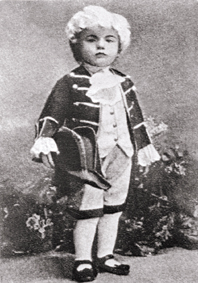
The photo above shows Julius Fučík (1872-1916) uncle of Julius Fučík (1903-43) the composer who wrote spectacular military marches, including Entrance of the Gladiators, which is often heard at the start of circuses and sporting events. That's relevant because Fučík the younger sacrificed his life to oppose the Nazis.  Here he is a an infant dressed up in the sort of costume that went nicely with the pomp and circumstance that his uncle's music inhabited (though not only for belligerent reasons). He's inspired. He's even got a hat, like a miniature Napoleon. This little lad grew up to be Communist leader and was arrested by the Nazis. He was tried by by Judge Freisler who would  murder thousands of opponents to the regime, and hanged in the Plötzensee Prison in Berlin. In 1947, his widow gathered together his writings and messages from prison and published Notes From the Gallows. Further irony: the Communist Party used Fučík's words to legitimize their regime. Luigi Nono, also  a Communist, chose Fučík as a subject because he cared about what Fučík stood for.

Nono was also son-in-law of Arnold Schoenberg. It's important to remember Schoenberg, Nono and their peers especially now that the South Bank has finally launched its Alex Ross The Rest is Noise year. That's been so heavily promoted for so long that it's hard to believe it still hasn't started. The year will mean programming based around Ross's idea of what 20th century music should be, which is not the same thing as what 20th century music actually was. For a much more incisive approach,  read Paul Griffiths. There is no comparison. It's not the dumbing down that's a problem but the idea that  musical experience should be governed by commercial promotion of one source, not necessarily the best, and so heavily marketed that this one source obliterates all else.  Totalitarian revision of music history? The South Bank gets state funding, but it uses its status to serve commercial purposes? No-one will dare query the ethics because there's too much money at stake.  All the more reason we need programmes like the one Jurowski has planned for us tonight.

Monday, 26 November 2012

Cunning Vixen and Scheherazade, Sisters: Hrůša BBCSO Barbican

Many performers get attention because their youth excites some sections of the press. But Jakub Hrůša has solid experience without attracting the media circus. He's Music Director of the Prague  Philharmonia and has conducted all over the world. He's recorded extensively for Supraphon. He's Music Director of Glyndebourne Touring Opera, which is a significant force on its own. I first heard Hrůša conduct Mozart Don Giovanni at the Glyndebourne Festival in 2010 and was even more impressed by his Britten Turn of the Screw in 2011   No chance would I miss hearing him conduct the BBC Symphony Orchestra at the Barbican, London.

Surprisingly, publicity for this concert was very low profile, especially given that Hrůša, a Czech music specialist,  was conducting the British premiere of František Jílek's arrangement of the suite of Leoš Janáček's The Cunning Little Vixen. Jílek (1913-93) was one of the important Czech conductors of his time, closely associated with Brno, Janáček's home turf. Jílek and Charles Mackerras were men of the same generation, but Mackerras dominated Janáček performance in the west, and Jílek remained behind the Iron Curtain. Although Talich's orchestral suite on The Cunning Little Vixen is better known, and in the Mackerras revision, Jílek's suite deserves more attention.

Jílek based his suite on the whole opera, whereas  Talich concentrated on the first act. Jílek used Janáček's original orchestrations and concentrated on the non-vocal aspects of the work. Jílek chose carefully, including passages from the scene where the Vixen comes to sexual maturity. If The Cunning Little Vixen was informed by Janáček's relationsips with women, this passage is crucial to meaning. Please read my article Janáček's Dangerous Women and many other articles I've written about this opera, (use labels below). Jílek also emphasizes the transformation music in the finale, where the Forester dies, and is reunited in spirit with the Vixen. This section is in many ways, the whole point of the opera, for it links themes of rebirth, regeneration and the cycle of Nature. The Cunning Little Vixen marks the beginning of the most fertile phase of Janáček's creative career, so Jílek's Suite works as a study of the opera and of the composer himself.

Like most Czech musicians, Jakub Hrůša probably imbibed Janáček from birth, but he's able to assert an individual stamp on his performance. He thrusts the music forward, yet marks the breaks with sharp definition.  This creates a combination of attack and tension, an angular energy that expresses the spirit of the Vixen, an animal who lives by her wits, surrounded by danger.  Conductor body language can often be "read": Hrůša points both hands downwards, fingers angled like a toreador, marking his point so it's unmistakeable. Later, he cups both palms in a rounded gesture, releasing the elegant lyricism in the finale, so it's illuminated like a halo. 

Another reason this concert was interesting was the world premiere of Rolf Hind's most extensive work to date, The Tiniest House of Time, for accordion and orchestra, with James Crabbe as soloist. "The accordion is cast as shaman-magician, party-animal, healer, rabble rouser" says Hind. Hence, perhaps the lively but controlled cacophony, wacky, swaying rhythms. Hollow metal sounds, folk-like bells, deep booming basses and low brass.  Three of the four sections are inspired by Persian poets (Rumi and Kabir), so the suggestion of dervish dance is prescient.  For me, the relationship between accordion and orchestra was paramount.  An accordion functions when air is squeezed through its chambers, shaping and elongating sound. The keys are played like a form of piano. Hind uses wind instruments to extend the idea of breathing, and strings and harmonium to reflect the idea of tinkling keys. Later in the piece, the string players hit the air with their bows, using invisble air just as the accordion does. The sound is only just audible, but the connection is clear. Hind's instrumentation also calls for wind whips, which create whirring noises when they're waved by the percussionists. The concept works fine as sound, but distracts visually.

More vaguely Persian exoticism in Rimsky-Korsakov's Scheherazade op35 (1888) which followed, rather eclipsing Rolf Hind, whose work would have fared better in a more contemporary programme.  Scheherazade is so ubiquitous that everyone knows it, even if only through movies and TV ads.  In the concert hall, this poses a challenge. How to make it sound fresh and original? Hrůša's approach was to conduct it as if it were entirely new, its ideas undimmed by familiarity. Colours are kept scrupulously clean, so they dazzle. Hrůša and the BBCSO bring out the vivacious sparkle in the music. Scheherzade's tales are beautiful, but if she doesn't outwit the Sultan he will kill her, like he's killed so many women before. So the sour note in the woodwinds is perceptive, reminding us that beneath this glamour lies danger.

The solo violin (Stephen Bryant) and harp (Sionead Williams) mingle flirtatiously, but is this a duet or a duel?  Hrůša doesn't stint on the hyper-romantic luxury in the score, but does not muddy it in indulgent swoon. Details are carefully observed, like the military rat-a tat-tat of the small drum, supported by tambourine. These lovely tales unfold against a backdrop of fear.  Hrůša shows that Scheherazade and the Cunning Little Vixen are sisters, both using their charms to survive in dangerous environments.

Listen to this concert on 2nd December at 2 pm and for 7 days after on BBC Radio 3

Saturday, 24 November 2012

Braunfels Berlin Jeanne d'Arc

Currently on at the Deutsche Oper, Berlin,  Walter Braunfels Jeanne d'Arc, Szenen aus dem Leben der heiligen Johanna.  (Scenes from the life of St Joan).  (more HERE with production shots). Braunfels is a fascinating composer because he doesn't fit easy categories. He's been posthumously castrated as soft-centred ultra-romantic. But listen to his music without an agenda, and think about the man behind the music, and a much deeper Braunfels emerges.

Braunfel's Joan of Arc is not a comic book retelling of the historic Joan of Arc. To suggest that it's religious is beside the point,  except in a sense that any contemplation on the nature of evil involves ethical thought.  Absolutely not a drama to be staged as comic book piety!

Braunfels places much more emphasis on the male authority figures, and how they deal with violence, faith and evil. Braunfels was a front-line soldier in the First World War. The experience traumatized him. He became passionately anti-militarist.  Szenen aus dem Leben der heiligen Johanna was written between 1938 and 1943, when Europe once again descended into war. The madness was happening all over again. "We are like castaways on a desert island, around which the hurricane continues to rage", he wrote.

By connecting to medieval Christian Europe, Braunfels eschews both totalitarian anti-religion and the kind of nationalism that causes war. Braunfels's libretto, which he wrote himself after reading about Joan's trial, places the context firmly in  a time of crisis. A chorus of villagers cry in panic, Hilfe, Hilfe! As Joan's father later says "An Himmel lohnt drer Brand von tausend Höfen". Johanna, however, is sitting by a tree from which a strange light is shining. Voices tell her that she has a mission. She';s so child-like that she sings a ditty, complete with tra la las. "Denn ein Kreiger, ein Kreiger, soll ich werden".

Braunfels's music is pointedly pure and simple. Single instrumental groups, often solo instruments, swathes of strings and winds suggest flowing movement not decoration for its own sake. Even in the scenes in the royal court, textures are clean, texts conversational. King and knights, portrayed as ordinary men. When Saint Michael appears, he's almost one of their own. For the faithful like Johanna, (and Braunfels), saints are as natural as normal people.

For a more detailed analysis of Braunfel's  Jeanne d'Arc, Szenen aus dem Leben der heiligen Johanna. and its music,please read what I wrote about it last year HERE.  Lots more on other portrayals of Joan of Arc in music (use labels)

If you can't get to Berlin, there is an excellent recording.  It's conducted by Manfred Honeck, with Juliane Banse as Jeanne. Terje Stensvold sings Gilles des Rais, Günter Missenhardt the Herzog de la Trémouille.

Friday, 23 November 2012

Silly Skeleton Symphony


Earlier this week I was writing about Benjamin Britten's A Simple Symphony and Walt Disney's early Silly Symphonies.  So here's The Skeleton Dance from 1929 which is so good that it should be part of everyone's heritage. We should be brushing up on cartoon history with the Philip Glass opera The Perfect American coming up at the ENO next year.

UB Iwerks was the artist. He was an early friend of Disney's and co-created Mickey Mouse. Iwerks split from Disney for a while, and later returned, but did many other things besides animation. The music was by Carl W Stalling who later went on to write Loony Tunes and Merrie Melodies for Warner Brothers. The animation is innovative, and the music matches it perfectly.  Listen to the mad mazurka at 4 minutes, where a skeleton uses femurs to  play xylophone on a spine. Anyone who thinks music can't be fun is nuts.

Thursday, 22 November 2012

RARE clip Britten and Pears in Japan, 1956


Today Benjamin Britten would have been 99. Here is a very rare clip made by Japanese television in 1956, when Britten toured East Asia with the true love of his life, Peter Pears.

Tony Hall to head BBC, quits ROH

Breaking news ! Tony Hall has been named Director General of the BBC, in the major upheaval that's taking place. He's always been a hands-on leader, so his departure from the Royal Opera House might mean big changes there too. Here's the statement :

Following today's announcement by the BBC Trust regarding the appointment
of Tony Hall as the next Director-General of the BBC, Simon Robey,
Chairman of the Board of Trustees, Royal Opera House, has made the
following statement:

"I was not surprised when the BBC turned to Tony to lead them through
their current difficulties. They see, as we do, his qualities of
leadership and his depth of relevant experience. I can think of nobody
better able to bring stability back to the BBC.

"Tony has been a truly distinguished Chief Executive of the Royal Opera
House. He has been a tremendous and inspiring force for good. The ROH he
will leave in March is very different to the one he took over in 2001. We
have a world-class senior team, both artistic and non-artistic, led by
Antonio Pappano, Kasper Holten and Kevin O'Hare. Our artistic standards
and reputation have never been higher and are unsurpassed around the
world. Many, many more people see the extraordinary work of both companies
through audience development programmes, ticket pricing initiatives and
digital and cinema distribution. We have a very large and impactful
education and community engagement programme and we are now a beacon of
best practice in the arts sector. We are financially stable and we have
changed the mix of our funding so that our ACE grant (now down from 40% to
about 25% of our income) and our philanthropic revenue is broadly in
balance. Tony deserves credit for all of this and we now face the future,
with its inevitable challenges and opportunities, with strong foundations
and very broad and loyal support.

"Speaking personally, I will miss him tremendously. He has been an
outstanding colleague and friend, as I know he has been to many others at
the Royal Opera House. "We will turn immediately to finding a worthy successor. I am confident
that this exceptional place will continue to be led by an exceptional
person. "There will be good occasions to celebrate Tony's extraordinary
contribution to the Opera House over the coming weeks and, of course, we
all look forward to welcoming him back to the opera and ballet house he
loves so much as a treasured member of our audience for years to enable us to get opera way
beyond the Opera House auditorium into homes and cinemas around the world.

"He's been a great friend and colleague and whilst this is a fantastic
opportunity for him to return to the BBC - and I can think of no better
person for the BBC - we will miss him hugely here."

Kasper Holten, Director of Opera said "Congratulations to the BBC. They
are very lucky. Tony is the most inspirational leader I have ever worked
for. He will be sorely missed at the ROH and by me personally, but I am
excited for him about this, and I am sure he will do a fantastic job.

"Tony's importance for Royal Opera House cannot be underestimated and he
has managed to create an incredible platform for us to do our artistic
work and take opera forward."

Kevin O'Hare, Director of The Royal Ballet said "Tony's genuine love for
ballet and dance has been a huge advantage for The Royal Ballet.  He's
done so much, not only for this Company, but for dance in general through
the Dance Review and support for the sector. I feel privileged to have
worked with him, both in my previous roles and now as Director of The
Royal Ballet.  He's been an inspiration and a great support to me over the
years, and has been fundamental to our programme of new initiatives to
bring ballet to a wider audience.  He's also been a great friend to me and
to many people in the building. We will all miss him."

"He's been a great friend and colleague and whilst this is a fantastic
opportunity for him to return to the BBC - and I can think of no better
person for the BBC - we will miss him hugely here."