
Sunday, 16 June 2013


Saturday, 15 June 2013
Astonishing Britten Death in Venice - Aldeburgh Festival
.jpg)
Benjamin Britten's Death in Venice at the ENO is revived at the Coliseum. Deborah Warner's production is slick, as glossy as a fashion magazine photoshoot. Aschenbach went to Venice in the first place to escape the comfortable convention he enjoyed with his late wife. Of course Aschenbach in Venice is isolated, an outsider looking in at a strange and alien world. He's a German in Italy, for one thing. Warner's production, however, tips the balance firmly in favour of superficial glamour.. This is the kind of set that gets applause : elaborate costumes to swoon over, vistas that make you gasp at their beauty. But the whole point, to Thomas Mann and to Benjamin Britten, was that surface beauty hides corruption. Venice is lovely but it harbours plague. "All Germans must leave" says the libretto. All non-Germans should be hypnotized by glam, says the staging. Forget the music and meaning.
In 2007, Warner's Death in Venice and Yoshi Oida's Death in Venice premiered within a month of each other. One high budget and glamorous at the ENO and the other at
Aldeburgh with a much more humble pedigree. Yet the latter easily
eclipsed the former in terms of artistic merit. Oida's staging is powerful, intelligent and absolutely true to the music and spirit of the opera. It's being revived at Aldeburgh this November : the true highlight of the year for those who like their Britten with depth and insight. At the time, I wrote :
"Yoshi Oida knows that the real focus of the plot lies within Aschenbach’s psyche. Nothing here was mere decoration, nothing merely for superficial effect. Everything revolved around the definition of the central character, even the basic imagery of Venice itself.
“Ambiguous Venice, where water is married to stone, and passion confuses the senses” sings Aschenbach as he encounters the city built on water where horizons of land, sky and sea blend amorphously. This Venice isn’t about luxury hotels: indeed Aschenbach is repelled by tourist touts and tries to escape. “Ambiguous Venice” is something altogether more sinister. It is a “timeless, legendary world, of dark, lawless errands”, a place of menace and mystery."
"This is an unnatural city, built on water, back into which the city will slowly but inexorably sink. The set designer, Tom Schenk, used the rough-hewn walls behind the stage at the Maltings without adornment, because they resemble the weather-beaten walls of Venice rising straight out of the canals. Only a little clever lighting was needed to convey the impression that we were trapped in an endless Venetian canal, an image that intensifies the claustrophobia that is so much a part of the atmosphere in this opera. Yet, more subtly, the set embeds the opera into the building for which it was conceived, linking this new production to its premiere, when Britten was himself nearing his own demise."
" Even before arriving in Venice, Aschenbach is thinking of death, of “a rectangular hole in the ground”. There’s just such a hole in the middle of the stage, filled with water. It’s a masterstroke. With simple changes of light, it convinces as the sea, or the maze of lagoons and canals through which gondolas ply. Sometimes it evokes the foul-smelling sewers of the city, emptying into canals, spreading disease. Aschenbach’s journeys across water are like journeys across the River Styx, each crossing propelling him towards destiny. Yet water symbolizes life, too. Tadzio and his youthful friends cavort on the beach. They splash carelessly in and out of the water. As Aschenbach tries to draw closer to Tadzio, he, too, tries to approach the water, but can’t bring himself to get wet. Music and staging converge together to amplify Aschenbach’s dilemma.
This production has grown from a profound understanding of the score. The music itself portrays character. Tadzio’s music, based on gamelan, is completely alien to Aschenbach’s. It’s bright, percussive sharpness contrasts with the shadows and ambiguity elsewhere in the score. While Aschenbach has lost his faith in life and in his creative powers: Tadzio reminds him of what he was and might have been"
"This production was a wonderful confluence of music, ideas and theatre. Oida says he developed his ideas by asking questions – why does Tadzio unsettle Aschenbach ? Why doesn’t Aschenbach leave when he knows cholera is around ? Is this “passive suicide”, an unconscious death wish ? It is from this curiosity about the human side of the drama that this sensitive interpretation grew. “I am telling the story of the end of a human life”, Oida adds in his programme notes, “All I can do is demonstrate how far the life of every individual is unexpected and mysterious”.
photo : Amanda Slater from Coventry
Friday, 14 June 2013
L'Aiglon Honegger Ibert RARE broadcast
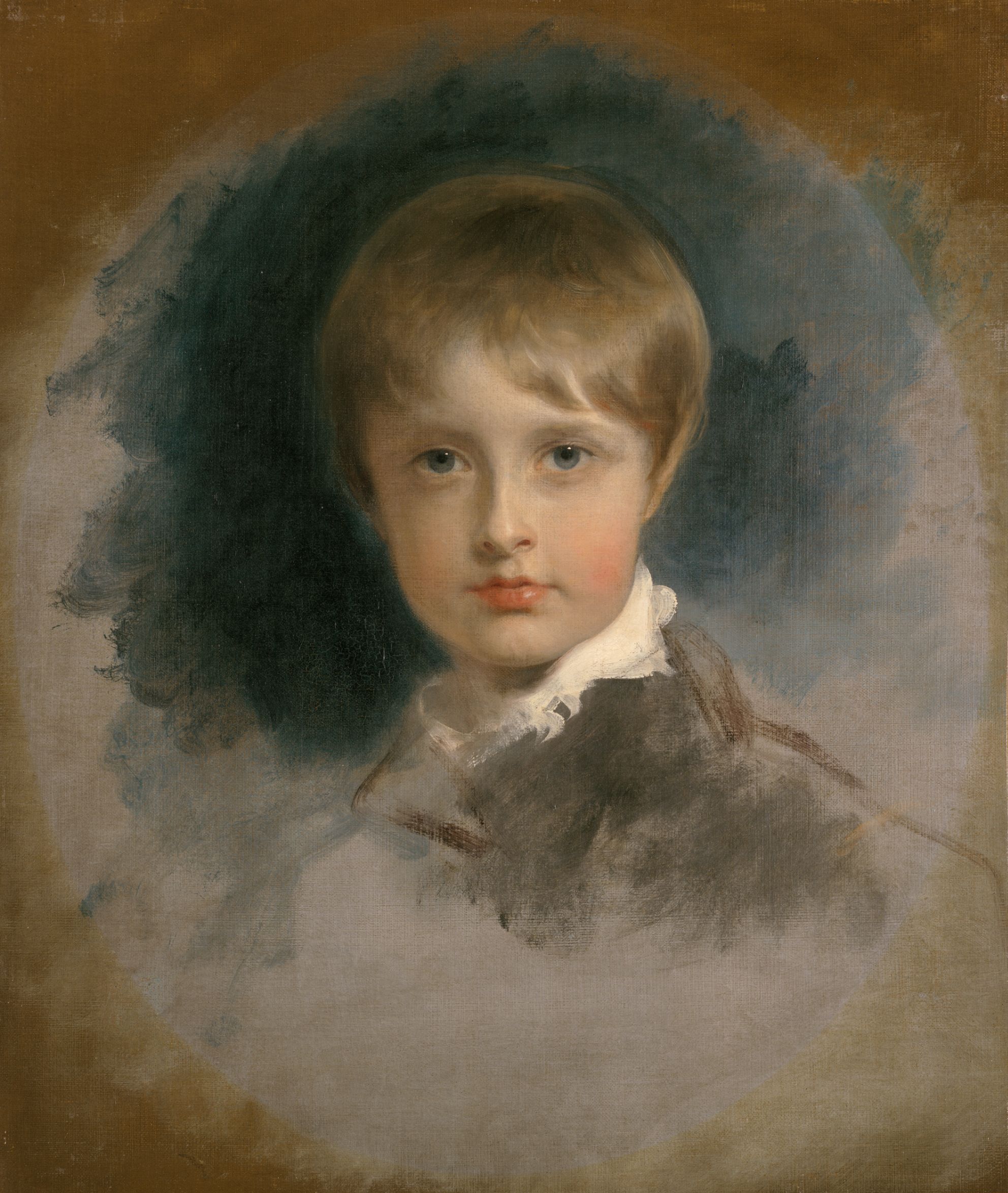 Unmissable! The opera L'Aiglon, by Arthur Honegger and Jacques Ibert on BBC Radio 3 online for a week. This is the performance at Opera Lausanne in April 2013, not available as a recording or online. Quite a discovery!
L'Aiglon, "The young Eagle" was the son of Napoléon Bonaparte and carried his father's name. Even before he was born in 1811, the boy was a pawn in a grand dynastic alliance between two empires. Napoléon was at the height of his powers, able to force the Hapsburgs into a showdown. By marrying the daughter of Marie Theresa, Holy Roman Empress, Napoléon could hope to unite all Europe. Yet by the time the child was three, Napoléon had been defeated and sent into exile. Suddenly the child was a misfit, an embarrassing reminder that power games don't last. The boy was retitled Herzon von Reichstadt and kept in gilded isolation at the Schönbrunn in Vienna. He died, perhaps conveniently for the Hapsburgs, aged only 22.
What must it have been like to have been L'Aiglon? The opera portrays the boy as a romantic dreamer, inspired by the glory of his father's achievements, even though he was brought up in a hostile atmosphere where his father's memory was reviled. What psychological mind games must the boy have faced ? His story lends itself to dramatic interpretation.
Honegger and Ibert were writing in 1937. The traumas of the First World War were still fresh in memory, but Europe was once again sliding into war. Honegger and his contemporaries re-examined the past as a route to the future. L'Aiglon is part of a meme that runs from Abel Gance's 1927 epic Napoléon (for which Honegger wrote the music) to Carl Th Dreyer The Passion of Joan of Arc and to Honegger's own Jeanne d'Arc au Bucher, and even to the wartime anti-fascist resemblance to dramas of Braunfels and Hartmann.

In the second act we hear what L'Aiglon is up against. Nearly the whole Act is sung by Prince Metternich (Franco Pomponi). The role is a tour de force, The lines crawl almost bass-like along the lower reach of the register: a snake, slithering quietly but with menace. Metternich was the greatest schemer of his time, and an arch-reactionary who despised everything Napoléon stood for. In 1937, the implications were pretty clear. There's also a parallel with Frederick the Great, who as a young prince tried to escape the Prussian military machine. Honegger softens the portrayal with moments of reflection, and the sound of distant war-horns, but L'Aiglon cannot possibly compete. Séchaye sings wild, almost shrill staccato as L'Aiglon falls crushed.
Act Three is set in a ballroom. Dancers are masked, circulating in neat, formal .rituals. Masked ball as metaphor for power struggle. The orchestral music is elegant, but the voice parts are tense, jerky interjections. L'Aiglon and Flambeau run off into the night to the strains of the Marsellaise. The Fourth Act is as powerful as the Second. Driving, swirling chords, like smoke, wind, storm, suggest the sounds of battle. One "hears" The March on Moscow. L'Aiglon sings of Wagram, his father's decisive victory over the Austrians in 1809, which led to the Hapsburg alliance in the first place.. But Honegger reminds us of defeats to come. Like Frederick the Great's companion, Flambeau dies so L'Aiglon can survive. Trumpet calls, alarums : we can almost see flags flying and horses running into battle. "A Wagram!" cry the chorus, muted as if in fear. L'Aiglon, crazed by his vision, gets carried away. Suddenly, though, the climax ends mid-flow with a few tentative notes. The young man's moment is over.
Carried back to the Schönbrunn, Reichstadt is surrounded by the voices of Maréchals and soldiers and his mother the Duchess of Parma. The sadness in the music is palpable, slow tempi speeding up towards the inevitable conclusion, diminuendos falling like snow. As the young man dies, he hears the song "Sur le Pont d’Avignon". This isn't simply a twee reference to folk song which a young prince in Austria probably didn't hear too often. The song continues "L'on y danse, l'on y danse". It can be sung as a round, the dancers repeating formal patterns that lead nowhere.
More Written on Skin - broadcasts updates
George Benjamin's Written on Skin (recorded at the Royal Opera House) will be broadcast by BBC Radio 3 on 22 June 2013 at 6pm and on BBC 4 TV on 28 June 2013 at 7.30 pm. The CD recording made in Aix-en-Provence is available from Nimbus Records (Catalogue Number NI5885), from the Royal Opera House shop and from Amazon. Opus Arte will be releasing Written on Skin on DVD and Blu-ray in January 2014. Just announced (though long rumoured) is a new Benjaimn opera. Kaspar Holten says :
"As a part of our focus on new commissions on all scales over the next years, this will obviously be a key project. It is hard to imagine a better match between a composer and a writer than Benjamin and Crimp, we have enjoyed doing Written on Skin immensely and we are extremely proud that they will be writing a new piece for Covent Garden".
Please see my review of Written on Skin HERE and of Into the Little Hill Here. Lots on George Benjamin on this site, more than anywhere else.
"As a part of our focus on new commissions on all scales over the next years, this will obviously be a key project. It is hard to imagine a better match between a composer and a writer than Benjamin and Crimp, we have enjoyed doing Written on Skin immensely and we are extremely proud that they will be writing a new piece for Covent Garden".
Please see my review of Written on Skin HERE and of Into the Little Hill Here. Lots on George Benjamin on this site, more than anywhere else.
Thursday, 13 June 2013
Britten, Paul Bunyan and the Idea of America
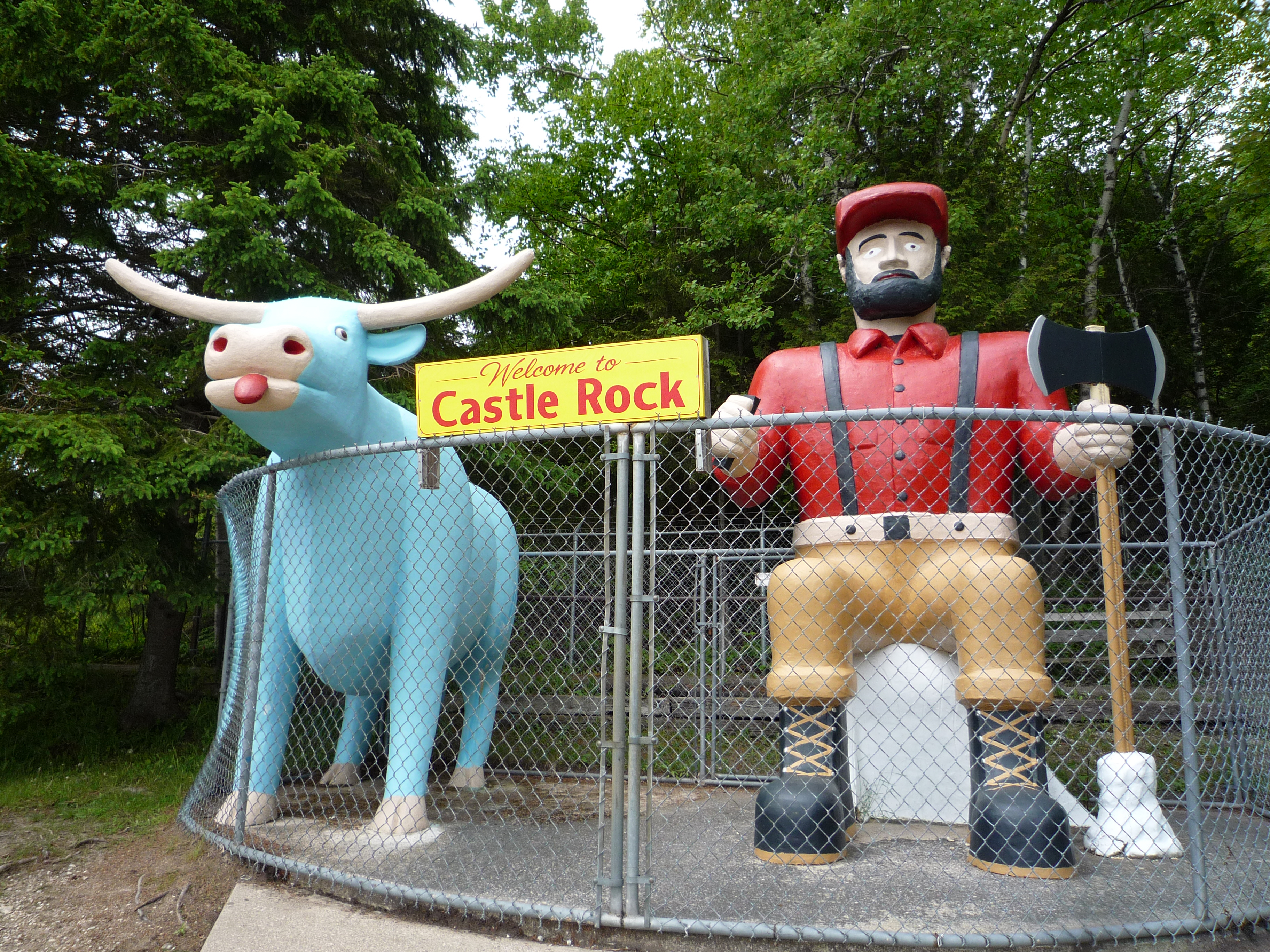
WANTED: Disturbers of Public Order,. men without foresight or fear
WANTED: Energetic Madmen, those who have Thought Themselves a body large enough to devour their dreams
WANTED: The Lost, those Indestructibles whom Defeat can never Change. Poets of the Bottle, Clergymen of a Ridiculous Gospel, Actors who should have been Engineers, and Lawyers who should have been Sea Captains. Saints of Circumstance, Desperados, and Unsuccessful Wanderers and all who can hear The Invitation of The Earth. America, youngest of her daughters, awaits the Barbarians in marriage"
Announces the Narrator in Benjamin Britten's Paul Bunyan, the opera Britten wrote in America. The words ring out with the false theatricality of a "Wanted" poster in the Wild West. The words are framed by a woodwind melody that might evoke birdsong in a virgin forest. But note its sour tone. This is no Wood Dove. Paul Bunyan may not know fear but he's no Siegfried.
Paul Bunyan is a curious beast. Sometimes it sounds like a parody of a Broadway musical, even less rugged than a Hollywood western. The rhyming couplets are deliberately faux-naive. Britten is Tourist in the Redwoods. He's not even attempting realism. America, or the idea of America symbolized by the Paul Bunyan myth, meant something different to him from the America that surrounded him when he went there in April 1939, before the outbreak of war, when Britons still believed that Chamberlain could hold Hitler at bay. Britten haters use his sojourn in America to attack him for being unpatriotic, ignoring the fact that he returned at some danger to himself and joined the war effort in other ways than by fighting. So what was Britten searching for when he went to America?
Paul Bunyan isn't a very good opera. Indeed, it's perhaps the worst music Britten ever wrote, even taking into account his juvenilia. But it is worth studying to give insight into Britten's creative development. For years I've been praising Our Hunting Fathers, arguably Britten's first great masterpiece. It's so raw and passionate that it's hardly surprisng that its premiere in 1936 was met with polite incomprehension. The good burghers of Norwich weren't ready for That Sort of Thing. So, in America, Britten tries to engage with the ideal of America as Arcadia The hokiness is artistic licence. Paul Bunyan is a stylized vision of "a Forest, full of Innocent Beasts. There are none who blush at the memory of an Ancient Farm, None who hide beneath dyed fabrics a Malicious Art ".
Britten didn't find that nirvana in America. He suffered a debilitating illness of some kind, almost certainly connected to creative and psychological turmoil. Almost certainly it was not merely physical, nor, as Paul Kildea suggests, the onset of syphilis. Significantly, Britten resolved the crisis when, in Escondido, California, he read George Crabbe's The Borough, and rushed back to Aldeburgh and to Peter Grimes.
Please see my other pieces on Britten. More Britten on this site than anywhere else, and original stuff too !
Peter Grimes, Aldeburgh Festival

A CD is in the offing. The Guardian predictably makes more of the novelty of Peter Grimes on the Beach, the open-air performance this weekend, where the singers will be amplified and the orchestra will be a recording. This ought to be fun because you can't get a more "authentic" staging. Britten drew inspiration from the natural surroundings. We hear the sea in all its moods in this music, so vividly that we can almost feel the rain and salt spray and smell the algae. Britten lived in Crag House, his study window opening straight onto the sea. At Aldeburgh, the fishing boats are launched straight off the beach from ramps. If you walk on the shingle, as Britten did, you are in among the boats and the fishermen. They aren't isolated in quays and harbours. The North Sea howls onto the beach: no barriers, no protection. For me, this is the essence of Peter Grimes and indeed of Benjamin Britten. Peter Grimes on the Beach may not be best way to hear the music, but it will be a unique experience.
As for me, I'm at Orford for Curlew River and the other Church Parables. These will also be atmospheric as they were conceived for Orford Church, the setting integral to the operas. Britten's Church Parables will also be performed at Southwark Cathedral as part of the City of London Festival (details here). In September, Stuart Skelton will be singing Peter Grimes at the Royal Festival Hall. Skelton is a consummate Peter Grimes and has done the role many times. This will be a highlight of the year.
I've beenn thinking a lot about the role. There is no reason Grimes "has" to be old and gruff. Troubled souls can be any age. For all we know, Grimes had been abused as an apprentice. Perhaps he's re-enacting the brutality he received as a child. He knows no other way. Given a choice he might not have been a fisherman at all, but comfortably indoors, knitting and embroidering. Which makes one wonder about the dynamic between Grimes and Ellen Orford (note the name). Who would be the man in the house if they marry? Does Ellen really love Grimes or is she projecting her conventions onto him? Grimes is much more isolated and misunderstood than we think. Maybe he realizes that he's better off dead than with her or with society. We're bound by tradition to expect the role to be played in a certain way, but the score itself suggests we should consider more senitive singers than the usual type. Musically, too, we'd be much better off.
photo credit Ian Rees
Wednesday, 12 June 2013
Rossini Maometto Secondo Garsington Opera at Wormsley

Maometto Secondo, or Mehmet II, Fatih Sultan of the Ottomans, captured Constantinople, and ended the Byzantine Empire. This Turk was no buffo. His next ambitious plan: to conquer Rome, thereby linking Europe and Asia under Islam. Mega geopolitics. Venice was the front line because Venetians traded throughout the Eastern Mediterranean. The Ottomans posed a genuine threat to survival of the Italian region. Rossini's audiences knew that Negroponte fell and its occupants were massacred. Mehmet asnd the garrison commander, Paolo Erissso, existed, but the opera is not based on historical facts. The plot resembles La donna del lago,. Both foreign kings in disguise are called Uberto, and both offer tokens of safety. Indeed, Rossini simply lifted the aria "Tanti affetti" from La donna del lago straight into the 1823 Venice revision of Maometto Secondo . So much for historical specificity.
 It is pertinent that Rossini wrote Maometto Secondo while Naples was occupied by the Carbonari, a volatile, violent secret society dedicated to revolution. The opera bristles with danger. A confident melody suggests happy memories, but the garrison is under siege. Rossini's vocal lines tear up and down the scale, but the long, difficult runs aren't there for ornamental display. The singers are pushed to the edge, just as the characters they portray. Technically, the musicians are in control, but dotted rhythms and coloratura extremes can suggest palpitating heartbeats, or muscles on alert. Rossini doesn't let the tension subside. Erisso, Anna and Calbo sing a long terzetto which is interrupted by the sound of cannon. Suddenly, Maometto materializes, high above the melée. "Sorgete: in sì bel giorno" is cavatina as theatre.
 The melody that opened Act One appears again at the begiining of Act Two. This time, the women of the harem sing of sensuous joys. Anna, having been raised strictly in "tanti affanni d'una rigida virtù"is sorely conflicted. She loves Uberto for what he represents but is duty bound to reject him as Maometto. The struggle between Anna and Maometto is tense because Anna comes very close to surrender. Rossini balances this by giving Calbo the Venetian an aria so stupendous that Anna's decision to marry him seems perfectly plausible. Calbo's "non terrer, d'un basso affecto" is bravura designed to demonstrate bravery.
 Rossini prepares us for Anna's sacrifice by introducing a new theme with long brass chords and flurrying woodwinds. Anna's music must seem almost impossible on paper. This is coloratura on a grand scale. It is a compelling reason for using the new Hans Schellevis critical edition of the 1820 Naples original. The best-known recordings conducted by Claudio Scimone both use the 1822 edition, Rossini's sop to Venetian audiences who didn't want suicide on stage.Anna has to sing almost continuously for half an hour with brief respite when she's supported by the female chorus. Each show-stopping section is followed by another. It's hard to imagine going back to the compromise Venice edition after hearing Naples.
David Parry conducted with verve and passion. His musicians are dedicated and carefully chosen, but the orchestra comes together for a short period during the early summer, though perhaps the same could be said of Pesaro. Parry gets good results from his orchestra, but one wonders how much more thrilling this music would sound with a more sophisticated orchestra. He's good with voices too, inspiring commitment. On paper, this score must look almost impossible to carry off. Performances all round were good. Just getting the notes is an achievement, but these singers added personality to what they sang.
What a role for Siân Davies to make her European debut! Her "Giusto Ciel" showed the innate colour in her voice, and the final scene showed her stamina. Paul Nilon sang Erisso. As an actor, he's more convincing than Scimone's tenors, both of whom looked too young for the part. Darren Jeffery sang Maometto with a sense of presence. Caitlin Hulcup's Calbo, however, was outstanding. She has a remarkably flexible voice, particularly lustrous in the lower register, so the extreme range in the part elides gracefully. She also moves with energy, not always a given in trouser roles. She's very experienced. As I listened, I remembered hearing her before as Arbaces in Thomas Arne's Artaxerxes at the Royal Opera House.
One day, perhaps, a larger and much wealthier house can do Rossini's Maometto Secondo full justice, and we might get Joyce DiDonato or Juan Diego Flórez.. We can but dream. Until then, we can cherish the memory of Garsington Opera at Wormsley's sterling production.
Full review with cast list in Opera Today
Photos credit Mike Hoban, courtesy Garsington Opera at Wormsley
Monday, 10 June 2013
Garsington Opera Die Entführung aus dem Serail

Mozart didn't encounter many real-life Pashas. Selim is a man of formidable wealth and power. Men this rich aren't in touch with reality. They're isolated in their places, guarded by paranoid henchmen. They don't do things like normal people. Turning Selim into an oligarch isn't mere updating. It's a perceptive reading of the personality type.This Selim (Aaron Neil) likes football. "I built my house near the stadium. Or did I build the stadium near my house".This deepens the portrayal and is an opportunity for good visual effects. The backdrop suddenly opens and a real Jaguar is driven onstage! This is Wormsley after all, where they do things in grand style. Football also serves as plot device. It makes Selim human. Osmin (Matthew Rose) can see through Belmonte (Norman Reinhardt) and Pedrillo (Mark Wilde), because they know his weak spot. When Selim's team win a match, he drops Konstanze, as easily as a child moves on to a new toy. The contrived ending becomes perfectly logical.
Slater replaces the German spoken dialogue with multi-lingual banter. Why not ? How did the "Turks" communicate with the "foreigners"? When Osmin says "Ich hass Englander!" the audience laughs, but the idea springs from the original libretto. In the Vienna of Joseph II, England represented liberty. Osmin isn't so much a Turk as an agent of repression. Thus Blonde sings "Ich bin eine Engländerin, zur Freiheit geboren". It's doubly funny when we know that Susanna Andersson is Swedish and is cooking up a sokker kaka. Her mistress is being preened in a spa where calories are seditious. The new dialogue is fast-paced and funny even when the jokes are deliberately hammy. Comedy subverts.
"Ein Herz, so in Freiheit geboren
Läßt niemals sich sklavisch behandeln
Bleibt, wenn schon die Freiheit verloren,
Noch stolz auf sie, lachet der Welt!"

Rebecca Nelsen sang a feisty Konstanze. In the torture scene, she's seen sitting in the same reclining chair she used in the spa. Now it's an instrument of torture, the ideas not unconnected. Mozart writes tension into the music to suggest extremes of pain and screaming. Nelsen's "Marten aller Arten" felt vivid, as if she were shaking with the effect of electric shock, though she maintained the proper flow.
Mark Wilde's Pedrillo was as well acted as sung, with sharp control of fast-paced dialogue. Incidentally the speech rhythms in the dialogue mirrored the way Mozart sets the brisk, punchy vocal lines. Norman Reinhardt sang a laconic Belmonte. William Lacey conducted with brio.
Much credit must go to Francis O'Connor who designed the set. There isn't much backstage area at Wormsley, since the pavilion was designed as a temporary structure. O'Connor's simple backdrop suggest an impenetrable wall when Belmonte stands alone before it. Later segments pop in and out through recessed compartments. One becomes a lift which suggests movement beyond the stage, though it's of course illusion. When the conspirators escape the guards, the guards are seen watching football in security control. The torture scene was particularly well executed, though that's perhaps the wrong choice of words. The same compartment which had served as the lift and the entrance for the Jag became a claustrophobic room in stark black and white. Stagecraft rarely gets the attention it deserves, but it makes good drama possible. At Garsington Opera at Wormsley, technical facilities may not be huge, but they are used very effectively.
Please see the full review in Opera Today with photos and cast details.
photo credit : John Persson
Saturday, 8 June 2013
Nocturne Britten Tony Palmer new film
 Nocturne is a new film about Benjamin Britten from Tony Palmer. Britten's archives are so extensive that it's difficult to mine anything new. So the way ahead is interpretation. Hence Paul Kildea's sensationalist biography which states that Britten died from syphilis, against all other evidence, including medical opinion. Tony Palmer's angle focuses on Britten's pacifism, which is perfectly valid.
"I believe", says Britten, "that the artist must consciously be a human being. He is part of society and he should not lock himself up in an ivory tower". Palmer traces the origins of Britten's political views to a his childhood. Britten was a strange, singular child, even then aware of unknown "dark forces" of foreboding, according to his cousin. Beneath Britten's genteel surface lay complexities In his last years he was wracked by illnesses, many of which might have been psychosomatic. Someone suggested that he see a psychiatrist. Britten was furious. "Do you expect me to ruin my gift!" he shouted. "I'll never be able to write music again!".
Britten's relocation to America is often held against him by those who don't understand that there are many ways of fighting fascism. He was making an attempt to connect with wider horizons than Europe. Yet he suffered an illness. There is no proof that this was anything to do with venereal disease, as Kildea suggests. It seems to have been a kind of personal and creative watershed. He resolved it by rushing back to England, to Aldeburgh and the true beginnings of his career. It would be interesting if someone would study this period in depth. It's more than an interlude but has implications on the way Britten's music developed. In 1945, Britten was one of the first outsiders to enter Belsen. In comparison the bombing of Coventry Cathedral seems minor, but the War Requiem stems from very deep sources.
The general gist of Palmer's film is good, with judicious use of archive footage. On the other hand, the film runs over 130 minutes, and there's a lot of padding. Some of this is music, well chosen and well presented, but some is rather less relevant. On the other hand, in any film documentary, "talking heads" aren't visually absorbing : we need illustration. The footage of Belsen - in colour - is particularly powerful. One wonders what Ken Russell would have made of this material. In the past, I've often disliked Tony Palmer's work, but Nocturne is good, and a genuine contribution to Britten's centenary.Recommended ! It's being screened at festivals all round the country this year, and is available on DVD.
.Please also see Britten's Endgame by John Bridcut which focuses on Britten's often misunderstood last works and last years. It's a much better film than Nocturne, and more detailed.
Friday, 7 June 2013
Les Vêpres siciliennes changes at ROH
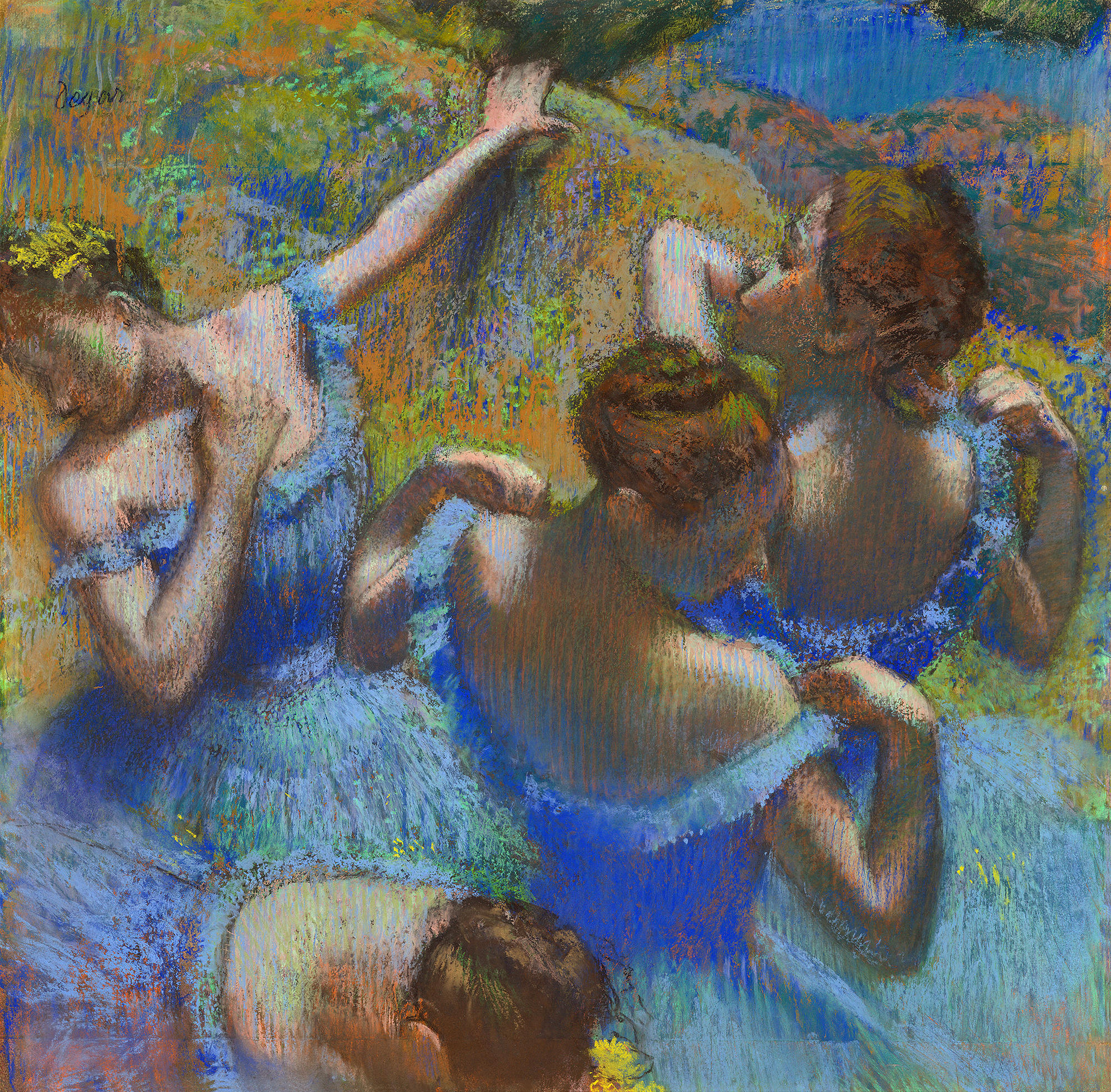
Verdi's Les Vêpres siciliennes would have been an ideal vehicle because it centres round a long ballet which is integral to the opera. The music itself is glorious. Verdi's Four Seasons might not be as famous as Vivaldi's but it's extremely well known - it's even on Youtube. You can't have half an hour of abstract music in an opera, and the ballet reflects the composer's original intentions. If we care about Verdi, we need to hear more than the usual blockbusters. In this Verdi centenary year it's good to focus on Verdi's music in wider context. One of the top Proms this summer will be Viva Verdi on 20/7 where Antonio Pappano will conduct an unusual Verdi programme.
"There
will still be a strong element of dance in the production, however no longer
featuring Artists from The Royal Ballet, The Royal Danish Ballet and students
from The Royal Ballet School", says the ROH press release. The new choreographer is André de Jong.
Being a music person, I don't know much about the dance background but Judith Mackrell, a dance critic does. Read her article here. The choreographer who is leaving is a well-known dancer Johan Kobborg, the partner of Alina Cojocaru, who announced recently that she's leaving the Royal Ballet at the end of the season. Dancers don't have long shelf lives and need to make the most of their careers and good for them. According to Mackrell, Kobborg is "about to turn 40 and while still a dancer of intelligence and style, he's at the age when the range of his repertory has inevitably begun to diminish. He's also begun focusing on choreography – with a handful of short ballets to his name and a new production of Giselle" in New Zealand.
"The Royal haven't ignored Kobborg's skills, commissioning his perfectly pitched production of August Bournonville's La Sylphide back in 2006. But the opportunities for him to create new work for the company are very limited. Already the Royal has its resident choreographic triumvirate (Wayne McGregor, Christopher Wheeldon and Liam Scarlett) to accommodate, along with Alastair Marriott, Kristen McNally, and a new generation of choreographic associates. Faced with such a crowded marketplace, it's not surprising that Kobborg is looking for projects elsewhere, and would ideally like the chance to direct a company."
When the Royal Ballet and the Royal Opera House merged, there were those who said that it would be hard to balance the two halves of the house at Covent Garden. Perhaps they were right.
Being a music person, I don't know much about the dance background but Judith Mackrell, a dance critic does. Read her article here. The choreographer who is leaving is a well-known dancer Johan Kobborg, the partner of Alina Cojocaru, who announced recently that she's leaving the Royal Ballet at the end of the season. Dancers don't have long shelf lives and need to make the most of their careers and good for them. According to Mackrell, Kobborg is "about to turn 40 and while still a dancer of intelligence and style, he's at the age when the range of his repertory has inevitably begun to diminish. He's also begun focusing on choreography – with a handful of short ballets to his name and a new production of Giselle" in New Zealand.
"The Royal haven't ignored Kobborg's skills, commissioning his perfectly pitched production of August Bournonville's La Sylphide back in 2006. But the opportunities for him to create new work for the company are very limited. Already the Royal has its resident choreographic triumvirate (Wayne McGregor, Christopher Wheeldon and Liam Scarlett) to accommodate, along with Alastair Marriott, Kristen McNally, and a new generation of choreographic associates. Faced with such a crowded marketplace, it's not surprising that Kobborg is looking for projects elsewhere, and would ideally like the chance to direct a company."
When the Royal Ballet and the Royal Opera House merged, there were those who said that it would be hard to balance the two halves of the house at Covent Garden. Perhaps they were right.
Thursday, 6 June 2013
Multiple Britten this week
 The Aldeburgh Festival starts this weekend, and of course, is packed with Benjamin Britten . He never intended it to be a festival about himself and certainly not a festival of "British music" but in this his centenary year, we should be pushing out the boat. Or perhaps I should use different terms, in view of Peter Grimes....
See HERE for my summary of this year's Aldeburgh Festival. The highlights are important although this year some of the performances are geared towards the "Britten industry". On the other hand, Britten believed that music should be accessible, so perhaps the "anniversary year" side effects might not be as negative as they too often are.
Peter Grimes opens the Aldeburgh Festival on Friday and Sunday at the Maltings, Snape. Steuart Bedford heads a worthy cast. Claire Seymour, who wrote the standard reference book on Britten's operas will be reviewing for Opera Today. She's very astute. Keep reading! Friday's concert is being broadcast live on BBC Radio 3 at 7.15.
Much more unusual will be Peter Grimes on the Beach, a unique realization of the opera enacted outdoors, on the beach at Aldeburgh. This could be very good, as open air performances have been a feature at Aldeburgh for many years, and they know how to do these things well. That's not til 17th June, around when the Church Parables will be heard.
This week's Britten actually started last night at The Guildhall School of Music and Drama with Owen Wingrave. GSMD productions are always lively and Owen Wingrave is the kind of opera students can really get their teeth into,. Should be good. Further performances on 7th, 10th and 12th.
Today, Paul Bunyan on BBC Radio 3, available online for a week. This is conducted by Richard Hickox for the Royal Opera House in 1999, when ROH used Sadler's Wells for medium sized productions. The photo above (by Ellin Beltz) shows Bunyan and Babe the Blue Ox in the Bunyan park in Klamath, California. See the man in the corner to get a idea of size ! The park is nestled within a forest of giant Redwoods, so you really feel the grand scale of nature. My son went when he was a toddler, and raved about it for months.
Wednesday, 5 June 2013
Maometto II - Rossini specialist David Parry speaks

"All the parts are written with amazing coloratura passages, but that´s not simply for display", adds Parry. "It is a dramatic device. Its principal function is to push singers to the edge of their abilities to project the extreme situations they are singing about".
"Rossini knew the singers he worked with in Naples very well, and knew what he could expect from them. His first Anna, who premiered the role, was Isabella Colbran, whom he later married. Fillipo Galli, who sang Maometto, had a range of over two octaves and was one of the most celebrated basses of the time."I have heard many difficult operas in my life, but Maometto Secondo is one of the most demanding for voice."
photo credit : Studio Elite
Tuesday, 4 June 2013
Great Führer of the sausage people

.All works of art are works of the imagination. Even history is a form of performance art because it can be reshaped through interpretation. And so to the Haggis, which appears in the John Fulljames staging. You don't need to know about the Celtic Society seen dining in the opera to get what the image means. All you need to know is what a haggis basically is, which isn't exactly rocket science. And if you don't know, you can find out.
Haggises are simple cheap food,made from offal and stored for times when fresh meat and veg were scarce. They weren't even Scottish. But they "became" symbols of Scotland when Robert Burns wrote a poem about them and the Celtic Club turned them into a cult. From poor folks' nosh to posh toffs' parties. Nowadays haggises are siupposed to be served with semi-religious ritual on Burns Night, and stabbed in solemn fashion with a knife. Maybe it's a re-enactment of some Jungian memory of hunting real beasts in wild woodlands. Or it's a total send-up! See how easy it is to create culture and history? Anyone can do it if they try. There's no such thing as "fixed" history. Or performance.
Now for .the Great Führer of the sausage people. A friend mailed me today to say:
"On Burns Night the Scots recite Burns's lines on the haggis when they stab the beast. Thus:
Fair fa' your honest, sonsie face,
Great chieftain o' the puddin-race
Great chieftain o' the puddin-race
At
a Burns Supper in Germany Burns's Lowland Scots lines had been
translated into German. They were than translated back into English,
thus:
A blessing on your honest, ruddy countenance,
Great Führer of the sausage people
So you don't need to know much to get an opera. But you do need to take on board the fact that you don't know everything. We all have different levels of general knowledge but the skill lies in a) using your brain and much more important b) realizing that other peoiple might just have something to say.
photo : courtesy Kim Traynor
Sunday, 2 June 2013
Silent film? Glass Perfect American ENO

As Disney discovered, cartoon characters come alive when they tell a good story. Cartoons are static images, thousands of frames meticulously drawn by hand. They only come alive when a machine runs them in sequence. Movement is illusion. Glass's music can work as drama. His whirring repetitions suggest the mechanical processes used in film. We can "hear" whirring of the camera, and imagine the way individual cells of film are transformed when the projector rolls. Glass makes the connection between cartoons and trains. Both run on tracks, both are inanimates transformed by machine. Thousands of illustrators worked on Disney's films but their work only became art when he processed it. In theory, Philip Glass could have made good music to fit the subject. But even by his own standards, The Perfect American feels like a tired rerun.
There's nothing wrong with repetition per se, but here it's an excuse to pad out a marginal story line. The Perfect American might work as drama if it were cut down to, say, 60 minutes, distilling it down to the essentials. Glass's In the Penal Colony was powerful because it was so tightly written. You felt like you were inside the infernal machine operated by a demonic entity. It even works as pure music, though the Music Theatre Wales staging was superb. (Read my reviews here and here). This is minimalism free of danger or meaning. It's quite pleasant in its own way, an ideal alternative to sleeping pills or a shot of whisky before bed. But Glass needs focus to concentrate his mind from wandering. Listening to The Perfect American without visuals would, I think, be torture.
The Disney Corporation refused to allow the use of Disney images in the production, but Phelim McDermott gets round this by showing the camera. Its round reels look like Mickey's ears. The projection shaft looks like a mouth.. Just as Disney anthromorphised animals, McDermott turns machine into Mouse. Improbable's group sequences are always notable. The chorus moves like a single organism made from many parts. The chorus helps the figure of Abraham Lincoln move, like a puppet on strings. The political allusions are valid, but curiously undeveloped. The libretto flits from idea to idea without depth or perception.
If Glass were to save The Perfect American as drama, he's be wise to stick to a few strong images and ditch the less relevant. Lincoln (extremely well realized by Zachary James) is worth keeping because McDermott shows him so well, but Disney and Ronald Reagan are innocent indeed compared with the machinations of modern politics. Andy Warhol (John Easterlin) is a character worth saving because Warhol and Disney had so much in common. If Glass's focus is on Disney as visionary artist, there's a lot of potential. But the libretto is fatally diffuse.
Christopher Purves sings Walt and David Soar sings Roy Disney. Good performances but the script lets them down. Both singers have enough musical nous to sing their lines so they flow better than what's in the subtitles. Sometimes, Glass's problems with text work out fine because they emphasize meaning. Mechanical expression squashes human speech. In The Perfect American, the text is just plain dumb. These roles are central. Both Disney brothers were visionaries in their own ways. Whether you like multinational corporations or not, they helped create the genre. Perhaps Glass and his librettist were inhibited by fear of litigation. But the Disneys were remarkable people: the Disney Corporation has nothing to fear. Especially not from a work as inept as this. There is one spark of perception in the text. The Disneys are "hiding behind a mouse and a duck". But that's all. Then the moment is gone.
Soar is an interesting singer, much admired since his early days at WNO. Hopefully we'll hear more of him at the ENO. Donald Kaasch sings William Dantine, the employee fired for organizing a union. As "evidence" that Disney mistreated his employees, it's pretty weak, since far worse things happened and happen still. The Lucy/Josh character (Rosie Lomas) is bizarre. If Lucy is an apparition based on the ghost of an owl Disney killed as a child, there's potential in that too, but the role is so badly drawn (by the librettist, not the singer) that it's a waste of time. We don't really need to know so much about how Disney loved nature. But as my friend exclaimed. "Disney wasn't Janáček!".
An opera that would have been better as silent film? The irony would not have been lost on Walt and Roy. It doesn't matter how you tell a story as long as you have a story to tell in the first place.
A full review and cast list is in Opera Today
Glass ENO and Coronation Calypso
Tonight, ENO Philip Glass The Perfect American at the Coliseum. Read about Philip Glass's Satyagraha, Einstein on the Beach and his In the Penal Colony on this site. They are relevant. I don't shatter Glass easily but The Perfect American didn't sparkle for me. Review HERE.
But it was nice seeing London decorated for the 60th anniversary of the Queen's Coronation. Less nice the post-midnight road closures. Admirably tasteful banners in maroon and gold. I love the Queen because she comes over as a genuinely decent person, who works extremely hard and cares about the country. One of the reasons we admire the Queen is because she came to the throne at the right time. The war was over, but there were still bombed areas and memories of rationing, death etc. And out of this a pretty, conscientious young woman taking on the mantle of Empire. Highly symbolic. Monarchy is image, not logic, and if it remains, the monarch must fill a need. Which is a contradiction in terms when it's hereditary. Long Live the Queen, Long May She Reign! Preferably til she's 120. and keeps the throne warm for William. In 60 years, Britain has changed a lot, but she's been a wise monarch, interested in what's happening and placing nation above herself.
Anyway, here is a Calypso from 1953, and the singer, nice tenor, is Young Tiger (George E Browne) who was young then but was nearly 87 when he died in 2007. Listen to the inventive words, and the way they twist round the line. "Her Majesty looked really divine, in her crimson robe furred with ermine", "the night wind was blowing freezing and cold, but I held my ground like a young Creole".
Subscribe to:
Comments (Atom)