Thursday, 14 April 2016

Sir Henry Wood, radical : New Music at the Proms


How deep must the malaise in BBC Radio 3 and the Proms go, if it's suggested that "revolution" only came in with William Glock?  The whole concept of the Proms predicates on the radical idea that audiences can rise up to the challenge of good music, whatever it might be. That's a very different concept to the modern idea that music must be dumbed down and made palatable for "popular taste". Sir Henry Wood did not patronize. He made taste; he didn't creep timidly behind it. Glock carried on his his artistic mantle.

Sir Henry Wood wasn't a Wagnerian for nothing. Only a generation before him, Richard Wagner had created a revolution with his radical new ideas: the aftershocks of that upheaval being felt for decades.  Wood followed the courage of his convictions, and did what he loved. The very first Prom for which we have full records featured many living or only recently dead composers. Some are still famous, some you have to look up, but Wood and his audiences didn't have rigid preconditions as to what was "difficult" and what was "safe". Sir Henry Wood premiered Schoenberg in 1905, Sibelius in 1903,  Mahler in 1903, 1905, and 1909, Debussy Nocturnes in 1909, Stravinsky's Firebird Suite in 1913, Janáček Sinfonietta less than two years after its premiere and even part of Berg Wozzeck in 1934.

The idea that anything new should be feared is in itself nothing new, but the degree to which it's been applied to modern music says more about media manipulation than about music. Until very recently, Schoenberg was demonized for inflicting the 12-tone system, and enforcing the end of tonality. Now he, Berg and Webern are being re-branded by those who realize the "Vienna City of Dreams" myth makes money.  Now, Boulez is the demon du jour to those who think music comes packaged in little boxes. Far from evolving, the BBC Proms are regressing to a time that never was. 

Thankfully, there are some interesting things in the 2016 Proms season, some involving new work, some involving new performers (as opposed to safe marketable names). There are other potentally good things, though some mismatch between repertoire and performers. In addition to the Proms I've already picked (more here) here are a few more goodies which may have slipped past the new outlook.  Some are must-gos, some would be fine on radio.

Prom 12 Magnus Lindberg, a work so new it has no title, but it's on with Jurowski Beethoven 9 which will be good

Prom 26 (4/8)  Oliver Knussen conducts conductor composer Reinbert de Leeuw Der nächtliche Wanderer, a substantial new work of 54 minutes. 
20/8  afternoon the London Sinfonietta, exiled to the Roundhouse despite doing Birtwistle, Ligeti, Georg Friedrich Haas and David Sawer

Prom 46 (20/8) Gérard Grisey Dérives,  oddly with Mahler songs and Mozart

Prom 48 (21/8) Matthias Pintscher conducts his own Reflections on Narcissus (33 min) 

Prom 55 (27/8)  Hans Abrahamsen Let Me Tell You.  Celebrity marketing behind this piece. It's hardly typical Abrahamsen, and several times longer than all his vocal work published to date. It's a good piece, but maybe its appeal isn't entirely musical.  OTOH, Mirga Gražinytė-Tyla conducts the CBSO for the first time at the Proms. From what I've heard of her so far, she's extremely good indeed. The CBSO's track record for spotting talent seems to have worked again. 

Prom 57 (28/8)  Thomas Larcher Symphony no 2 (35 min) with Semyon Bychkov and the BBC SO

Prom 65 ( 2/9) Baldur Brönnimann conducts Ensemble Intercontemporain in Boulez, Carter, and Bartok.  Perhaps the finest new music ensemble around, one of the best conductors, and a wonderful programme. This is one of the most exciting Proms this whole year, squeezed as it is into the late-night slot which limits the audience since it ends too close to last trains, tubes and buses.

3/9  Bold Tendencies Multistorey Car Park. Don't laugh! Though this sounds gimmicky, I've been told by those who've experienced it that it is rather fun.

Wednesday, 13 April 2016

Not pizzazz but pizza : BBC Proms 2016


Generated by machine? The BBC Proms 2016 season just announced might well have been designed by algorithm. Once,the Proms meant pizzazz. Now we get pizza, and not good pizza but a frozen, soggy machine product.

It's way too early to blame the new Proms Director, David Pickard, who's been in the job only a short time. The malaise has been setting in for some years: Roger Wright was right to get the h out. The Culture White Paper is symptomatic of the demented mindlessness that passes for arts policy.  Report after report, written in the same comatose Watch with Mother style. Someone should draw a flow chart and identify the suits behind the system. They might all be the same!  No, the arts aren't a substitute for an education system, nor a means of social engineering. In this Brave New World, we have soma, not sustenance.

On the First Night of the Proms, predictably, with the BBC SO, Sakari Oramo, Elgar, Tchaikovsky and Prokofiev. Nothing wrong with that, but we can get that fare anytime, anywhere, even on Classic FM.  All the right boxes have been ticked. Nice things there and popular performers, Dare we say it, but maybe the BBC has turned its back on its founding principles. Even the highlights, like the ROH Mussorgsky Boris Gudonov and Berlioz Romeo et Juliette (John Eliot Gardiner) are things serious listeners will have heard elsewhere. But maybe the BBC and the Proms have given up on serious music. Instead, we have the stranglehold of Ten Pieces, that moronic list of approved works drawn up as if by Stalinist diktat.  It was good enough for a laugh for about ten seconds, but it's counter-productive. Read my piece on Ten Pieces Motherhood and Poisoned Apple Pie.  

Although there are nice tidbits along the way, serious listeners might need to wait until  Prom 45 on August 19th for  Janáček The Makropulous Case when Jiří Bělohlávek brings his singers from Prague. His concerts with the BBC SO were milestones, bringing Czech repertoire into the mainstream. At Prom 68 on 4th September, Rossini Semiramide with Operas Rara, the Orchestra of the Age of Enlightenment should be good. The Staatskapelle Berlin and the Dresden Staatskapelle (Barenboim and Thielemann)  raise the game immensely. Despite some nice things, this is a Proms season that's afraid of its own shadow. The season seems to have been designed for the Last Night of the Proms market - not the loyalists having fun, but for the millions who tune in but don't otherwise worry too much about listening.  Guess us dinosaurs who actually like music don't belong anymore.  

See also  Sir Henry Wood, radical : New Music at the Proms. An antidote to the formulaic corporate speak that seems to be suffocating the BBC

Tuesday, 12 April 2016

Not the usual Brahms German Requiem - ENO chorus


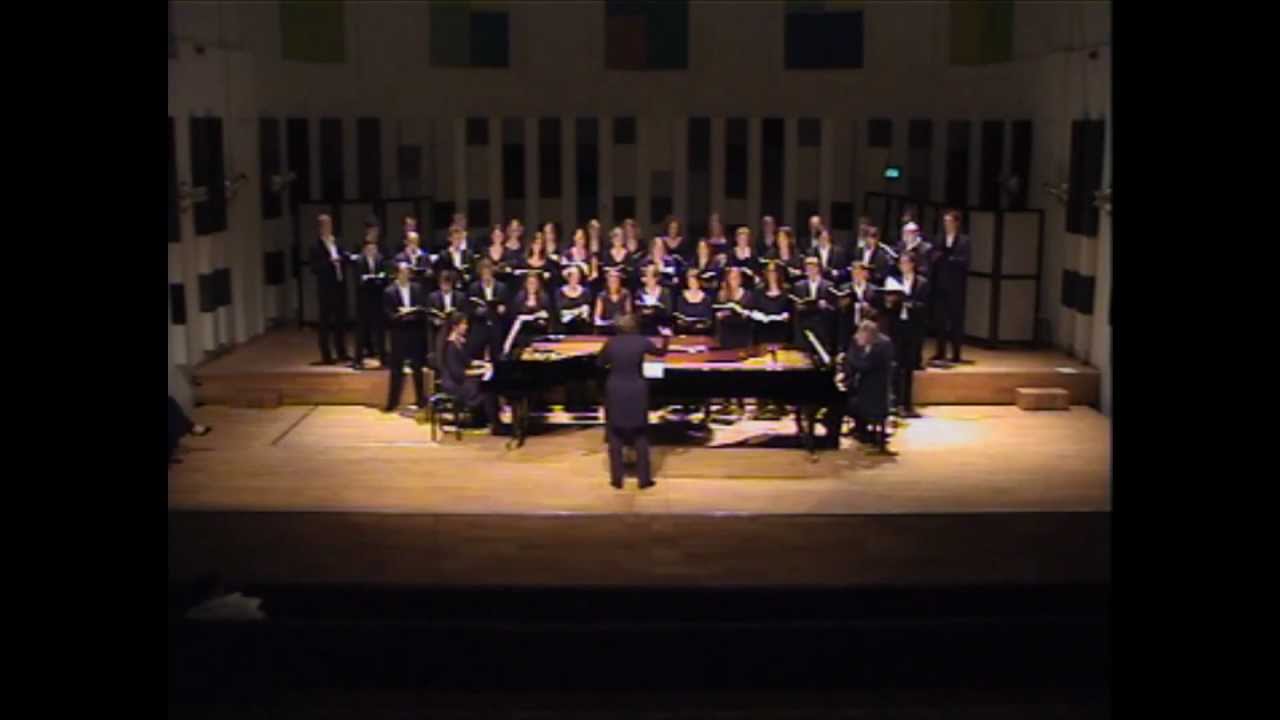
The ENO Chorus will be doing Brahms Ein Deutches Requiem (A German Requiem) in three churches around London on 15th, 16th and 29th April.  But not the usual Brahms German Requiem. Instead, the relatively less well known "London" version from 1871. It's not a transcription but a through composed chamber adaptation written by Brahms himself.  The ENO chorus will be conducted by Mark Wigglesworth, with Eleanore Dennis and Benedict Nelson as soloists with Kate Golla and Chris Hopkins as pianists. Get tickets here.

Brahms's ideas differed from conventional approaches to Requiem Masses.  He expressed his values as an agnostic, a humanist and a North German. His  contemporaries joked that conservative Catholic Viennese audiences needed a stretch of imagination to fully appreciate it. The chamber version is even more spartan and pure than the version for full ensemble, and thus lends itself well to more intimate performance spaces - closer still to the rugged  spirit of Lutheran pietism  While the impact is less powerful the focus is more personal. "One man and his God" whatever that God might be.  The benchmark recording, from 2004, is by Accentus , conducted by Laurence Equilbey, a performance so beautifully ethereal that the voices seem to take flight like a flock of birds, each individual but co-operating in tight formation. 

The ENO Chorus will be using two pianos to  better "stretch" the balance. this also works better because it showcases the piano parts. The crucial line of the music is articulated clearly, so it feels  understated and yet definitive. When the famous melody appears, and the voices intone, the music can seem like a moment of private contemplation.  This foundation allows the voices to soar, unfettered. While almost no-one is in the superhuman league of Accentus (then with Sandrine Piau)  the ENO Chorus is extremely good, and one of the company's great assets.  Support them - they are too good to be wasted. Ideally, if these concerts succeed, they could bring extra income as well as giving London a new specialist, fully professional choir, with a mission exploring unusual choral repertoire. Please see my piece on helping the ENO to make money by capitalizing on its unique position in the market, much more effectively.  

Monday, 11 April 2016

Dennis Hopper naked - Night Tide


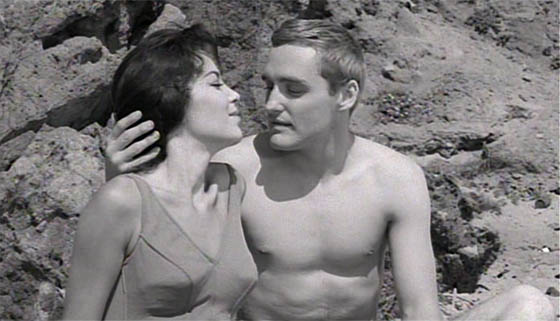
Night Tide (1961) a Hollywood B movie so beautifully made, so quirky and so original it should be recognized as art. It stars Dennis Hopper , then only 24, as Johnny, a sailor who comes from land-locked Denver, Colorado. Fascinated by the sights and sounds of Venice Beach with its carnival attractions. Enticed by exotic music, he wanders into a jazz club. Pay attention to the  music. It weaves serpent-like throughout the film and is a way above average film score. Composer is David Raskin.The director was Curtis Harrington. 

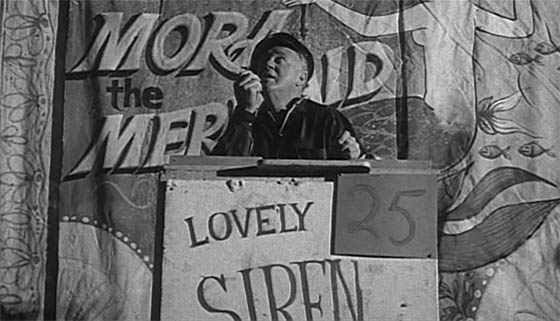
Johnny sees an exotic woman, so elegant she seems to come from another  world.  She's terrified when a strange woman comes in and addresses her.  It's all Greek to  Johnny, but he follows her because she's so upset. She's called Mora, and she lives in a tower, looking out to sea, over a merry-go-round. "I'm a mermaid" she says, "Half woman and half fish". She sits in a tank of water and people pay 25 cents to look at her. "It's very relaxing". She came from the island of Mykonos, adopted by a sea captain, who is way too Oxbridge to have been a career seaman, but has washed up in Venice Beach ("nothing like the real Venice, of course")  At a night party on the beach, Mora dances to hypnotic bongo drums, faster and faster til she falls in a faint. Johnny spots the Greek woman in the distance.  A bizarre English fortune teller and a wholesome American girl warn Johnny that there's something dangerous about Mora.

A wonderfully-filmed sequence of angles and strange planes, where Johnny runs under freeway bridges and derelict buildings, following the Greek woman who disappears outside the sea captain's house. Captain Murdock tells Johnny about the Sirens, who lure men to their deaths.  Not legends. . "There are things in this world you'll never believe!"  At last, Mora acknowledges the mystery woman. "She's one of Them, she's coming to take me back" The fortune teller, like Captain Murdock, has a bizarre past,{ but is or the scriptwriter was)  transformation, vortices, danger. "Is that good or bad?" says down to earth Johnny.


Back in his rooming house, Johnny thinks he's embracing Mora but she disappears. He sees wet footprints running from the bathtub, down the stairs, and follows them to the beach. Another well filmed sequence , shot under the pier: Johnny rescuers Mora from the water.  Next we see her in bed, but where was Johnny all night? Mora tells him to go get a massage, which is a very strange thing to say if they'd spent the night together in the usual way.  The masseur is one of the jazz musicians. Captain Murdock's there, too.

This is no ordinary massage. "You all tied up in knots" says the masseur. "Girlfriend not treating you right?" Are there deeper meanings in the film? The conversation between the masseur and the sea captain is full of innuendo, so explicitly homosexual that the scene was cut from initial release. The camera has lingered lovingly on Dennis Hopper's body, in tight Navv pants and naked, so many times that it's pretty clear that there's another narrative behind the main plot. hence the jazz band and dangerous (for 1961) interracial and unmentioned other subcultures, but an overwhelming fear of women.   Unsurprisingly, the movie was released as downmarket schlock horror. Mainstream audiences wouldn't get the subtext. Needless to say, the film was produced by a small independent company, not a big studio.

Mora calls Johnny into the sea. He dives underwater and nearly drowns. Where's Moira?  He next sees her on the rocks, with a fishtail instead of legs.  In reality, or what passes for it, he reads a newspaper which has a story about Mora the Mermaid. She and the Captain have been doing their act for 20 years, but she still looks the same as she did then.

Yet another brilliantly filmed sequence as Johnny walks throughb the fairground, the carvings on the attractions lit up as if the were gargoyles come alive. Lightning flashes, waves crash. Then Johnny sees Mora, floating, apparently dead......  But how did she die, ad who killed her? Captain Murdock tells the police that he'd brought Mora up to think she was a Siren, so she couldn't have relations with men.  He says he killed her previous boyfriends, so they couldn't take her away, and committed suicide rather than have Johnny die, too. The police think Mora was the killer and that the Captain was trying to protect her. "But what about the mystery woman?" asks Johnny. " It was true. !It wasn't m imagination".  When Johnny leaves, the nice wholesome girl asks if he'll be back. "Merry-go-round", he says. Mora lived above the merry-go-round. in ever sense. As the shore patrol take Johnny back to base, it's pouring with rain outside. Not quite "Sunny California".

If you like this post, please read : George Antheil : Daughter of Horror 
and Zemlinsky Die Seejungfrau

Saturday, 9 April 2016

Les Illuminations illuminated - Aldeburgh Festival 2016

 Britten's Les Illuminations - illuminated! This year's Aldeburgh Festival starts with typically provocative panache. Les illuminations, staged as theatre, with circus performers, sets, costumes and lighting effects. And why not?  Rimbaud's poems are highly dramatic, teeming with images, screaming out for expression.  Britten responded by creating vivid settings which bring out their manic exuberance. Was Les Illuminations Op 18 (1939-40)  Britten's first true opera?  It's infinitely more accomplished than Paul Bunyan, written around the same period.  Opera doesn't have to be grand in the Wagner/Verdi mode. Not for nothing that Britten would create smaller-scale opera, more suited perhaps to his personality.  Understand Les Illuminations. and comprehend  why Britten is the antithesis of Andrew Lloyd-Webber.

Les Illuminations is also a watershed in Britten's creative growth because he was finding his own, individual voice through what Auden was to call "mediterraneanising" - breaking away from the conventional world of a mainstream British composer. Britten's horizons looked outward to the North Sea and beyond.  He adored Alban Berg and would have been well aware of Lulu, where characters flit from persona to persona, and where proceedings are overseen by a Ringmaster.  Perhaps it's no accident that he responded to ever-changing circus in Les illuminations and it's keynote cri de coeur "J'ai seul la clef de cette parade sauvage!" It's not a cry of triumph but the realization that the key - the illumination -  to creativity lies in being genuinely original.

Rimbaud completed Les Illuminations in Britain, amending the  drafts in a garret above what is now the A4, near the M4 junction.  London, for Rimbaud, was a liberation. After the confines of Charleville, he felt propelled into the future, a world where possibilities were infinite. It wasn't British tradition that aroused him, but the thrill of modernity: trains, technology, urban life and social change. Les Illuminations is a young man's vision of new frontiers.  Britten's Les Illuminations sounds nothing like an opera but it's an inherently theatrical work, surprisingly close to later, one-person monologues like Poulenc's La voix humaine., which, incidentally stages extremely well. Musically, Britten responded to the variety in the texts with endlessly inventive movement, bristling with energy, lending itself well to physical movement. There's an edgy restlessness, too,  in this music which may reflect the fact that it was written in the hiatus between one war and another.

At Aldeburgh, from 10th June, Les illuminations will be sung by Sarah Tynan, with Nicholas Collon conducting the Aurora Orchestra, with an ensemble of "international circus performers" devised and directed by Shaun Leslie. In principle, absolutely nothing wrong with seeing it staged : no no faux purist sneering. Adventure is an Aldeburgh Festival thing. They've been doing open air installations for years, so enhancing a concert at the Maltings, Snape, shouldn't prove too difficult. Proper fireworks (illuminations)  might upset Health and Safety, but there might be ways around that. The secret - to enjoy and get into the spirit of things

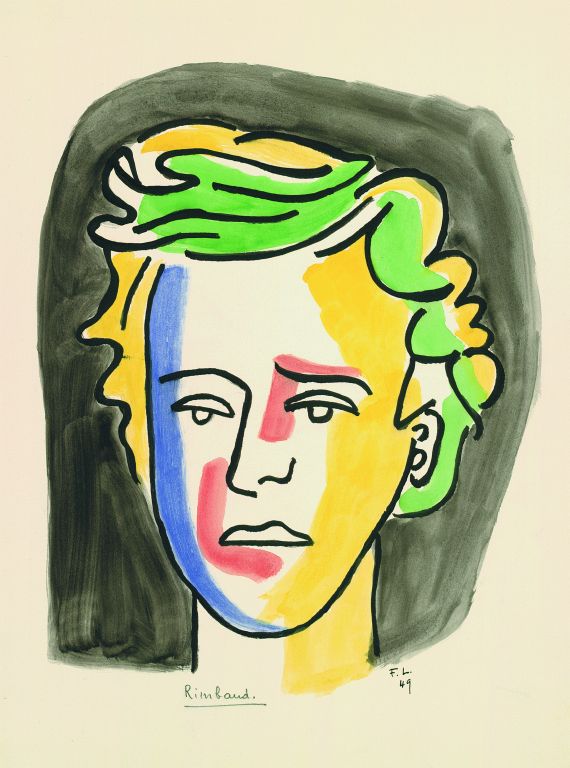
Rimbaud's dense images seem to scream out for visual expression. The illustrations I'm using come from Ferdinard Léger's illustrations for  the 1947 edition of Rimbaud's Les Illuminations. . The first is the title page, the second a portrait of Rimbaud and the third an illustration of Parade.

Friday, 8 April 2016

Donizetti is Dangerous : Lucia di Lammermoor ROH


The Royal Opera House was right to warn audiences about Donizetti Lucia di Lammermoor.  Donizetti is dangerous. In his time, the glass harmonica, which gives this opera its unique character, was believed by many to induce insanity. Its surreal drone would have added an extra frisson of danger to early performances, enhancing the dramatic impact. The full impact may be lost on modern audiences used to horror movies and the ondes martenot, but the instrument  serves a purpose. Donizetti's audiences might well have gone to the theatre half-believing that  the glass harmonica might induce hysteria. Might Lucia's madness be contagious?  If they don't turn into zombies first.  Lucia's family is falling apart, so they use her to restore their fortunes, much in the way one might trade chattels. It hasn't occured to them that their troubles were caused by feuds and an obsession with form and status. Lucia has no escape other than to go off the rails. It's not a pretty story.

The mad scene for which the opera is famed is central to its meaning.  Of course it's gruesome.  Lucia stabs Arturo on the wedding night.  In societies where women are traded like possessions, the act of deflowering  signals ownership.  This time, the bride penetrates the bridegroom, and he dies.  Whether Lucia's actually having an abortion or not is largely irrelevant.  This marriage won't yield fruit.  Audiences just need to wake up to the fact that opera is about human emotion, and human feelings are messy.

Lucia is clearly unstable long before the wedding. It's significant that she's lost her mother, and presumably doesn't want to share whatever fate befell her mum.  Thus she identifies with the ghost and falls suddenly in love when Edgardo kills a wild animal at her feet. Blood, love and death inextricably linked.  Freudian undertones long before Freud.  Lucia's psycho-sexual problems go back a long way. She's an accident waiting to happen. After Manon Lescaut, a man was enraged because he'd taken a young girl to the show and was furious that she'd seen something sexual.  That says less about the production than about the man himself and his own psycho-sexual hangups. Plus the fact he didn't know beans about the opera.

Donizetti set the opera in the Highlands because at that time Scotland symbolized the borders of civilization, where primitive extremes prevailed.  This Scotland was largely the creation of Walter Scoitt's imagination. Scott himself was a buttoned-up urbanite who wanted Scotland tamed by Victorian values.  So there's absolutely no reason why the setting shouldn't be Victorian, since Donizetti was dealing with emotional truth.  Yet again, the onus is on the audience to understand the work  and - horror of horrors - to realize that there is more to an opera than the first line of the synopsis.

Every performance, every production, reflects someone's interpretation of a work of creative imagination. Unfortunately, in ths age of narcissism, the consumer is king. But the world does not exist as a Gigantic Selfie. In theory, we go to the opera to learn , and we learn by taking on board new perspectives, right or wrong. Now productions are judged by the baying, booing mob, some of whom seem to get their kicks not from art but from socially sanctioned abuse.  If audeinces don't want blood, sex and drama, they should stick to the circus (and ignore the sufferings of animals and underpaid staff) or to cartoons (where there's a lot more violence than some realize - think Tom and Jerry)  FULL REVIEW appears shortly in Opera Today.

Thursday, 7 April 2016

Francophobe Frenzy, or Thomas Hardy on Brexit


With the Panama Papers and Brexit hanging upon us, consider Thomas Hardy's poem The Sergeant's Song and its setting  Rollicum-rorum, by Gerald Finzi.  Nothing like belligerent jingoism to distract attention from dishonesty and the abuse of power at home. Blaming  "foreigners" is a strategy that fools the populace all the time.

Napoleon's plans to invade England may or may not have come off, but fractious Whigs and Tories united behind the Hanoverian monarchy in a show of strength against  France, that ancient enemy. Not all that long before, it was the English who invaded France. So there we go! All along the coast of southern England, Martello towers were erected to spot ships at sea. At Aldeburgh today the Martello still stands, so solid that it might withstand nuclear attack. The enemy never materialized. But what cause for jingoist bluster! One hundred years later, when Europe was once again tooling up for war, Hardy wrote The Sergeant's Song implying that ordinary Wessex worthies weren't fooled.  Gerald Finzi, ever a pacifist, set the text as a jaunty romp, so the nonsense refrain Rollicum-rorum sounds dementedly manic. The best recording is by Roderick Williams, who captures the satirical punchline.

When Lawyers strive to heal a breach,
And Parsons practise what they preach;
Then Little Boney he’ll pounce down,
And march his men on London town!
    Rollicum-rorum, tol-lol-lorum,        5
    Rollicum-rorum, tol-lol-lay!
When Justices hold equal scales,
And Rogues are only found in jails;
Then Little Boney he’ll pounce down,
And march his men on London town!        10
    Rollicum-rorum, etc.
When Rich Men find their wealth a curse,
And fill therewith the Poor Man’s purse;
Then Little Boney he’ll pounce down,
And march his men on London town!        15
    Rollicum-rorum, etc.
When Husbands with their Wives agree,
And Maids won’t wed from modesty;
Then Little Boney he’ll pounce down,
And march his men on London town!        20
    Rollicum-rorum, tol-lol-lorum,
    Rollicum-rorum, tol-lol-lay!


Wednesday, 6 April 2016

Mixed augury : Royal Opera House 2016-2017


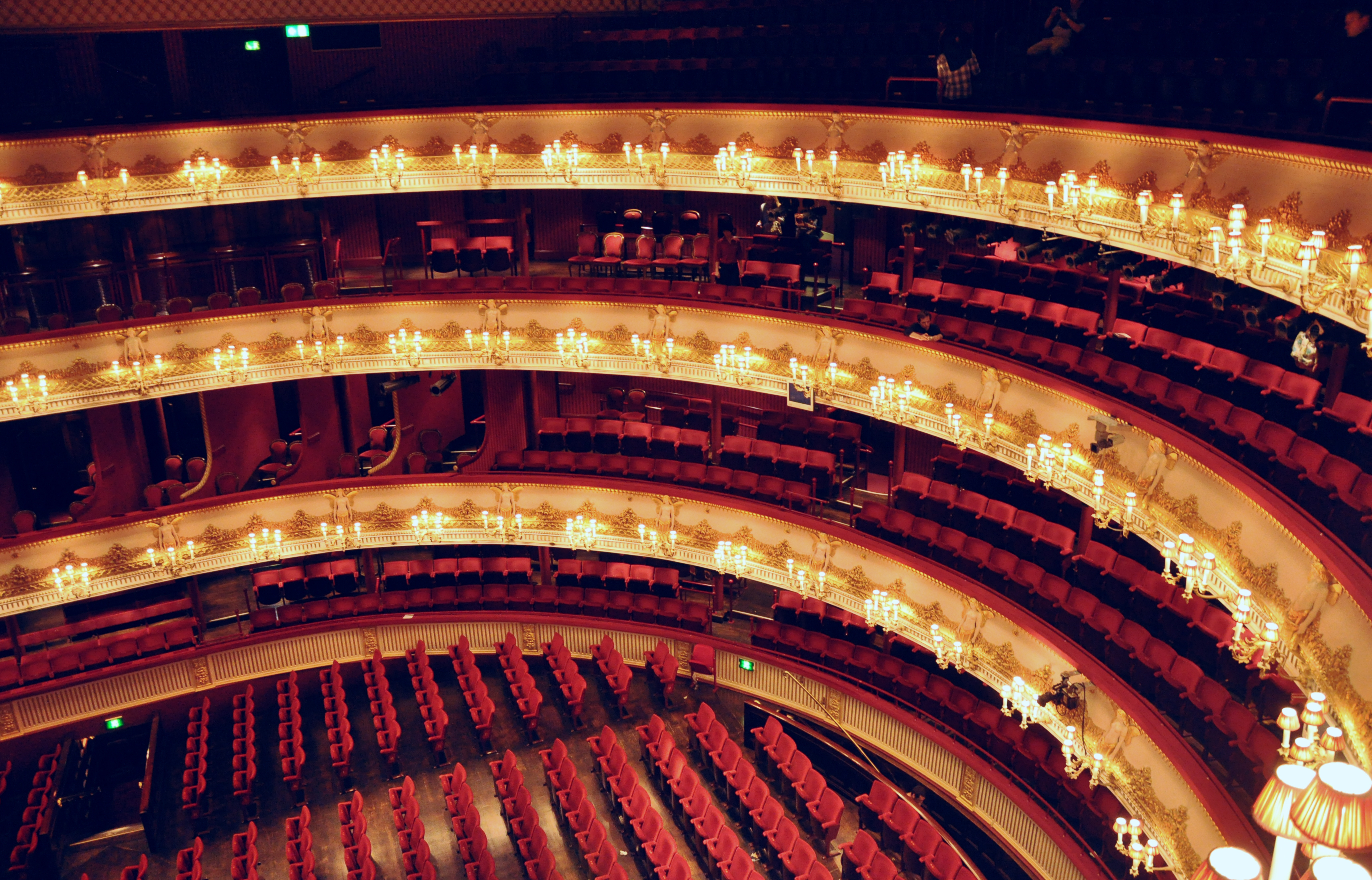
The Royal Opera House 2016-2017 season, announced today, poses questions. Where can the House go, pinched as it is by the pincer movement of budget cuts and increasingly philistine sections who aren't interested in opera as an art form?

 Seven new productions are planned, as opposed to 8 last year which in  itself is no big deal. since the operas are heavy hitters -  Norma, , Der Rosenkavalier, Die Meistersinger von Nürnberg, Così fan tutte, The Nose, The Exterminating Angel, and Otello

Norma with Anna Netrebko Joseph Calleja, Brindley Sherratt and Sonia Ganassi.  The production should have fundamentalists howling without having seen it at all, It's by  Alex Ollé and  La Fura dels Baus. They did a spectacular Ligeti Le Grand Macabre at ENO in 2009 but a less effective Enescu Oedipe at La Monnaie (coming to ROH) . Bel canto as theatre? But consider the plot, which reflects on the role of fanatical religion in a society in crisis, dominated by a strong military power. A Catalan company should know about such things. In any case Antonio Pappano is conducting so this should be red-blooded Bellini, and why not?

Die Meistersinger von Nürnberg, with Bryn Terfel and Gwyn Hughes Jones  reprising the roles they created for the superlative ENO production by Richard Jones (read more here)   This new production will be directed by Kasper Holten who created the "Copenhagen Ring", which many liked for its familial focus, which might pay dividends in Meistersinger where good humour is of the essence. It's disturbing that audiences like the Glyndebourne Meistersinger so much which is pretty but steers well clear of Wagner's ideas on art and anti-art.

Otello with Jonas Kaufmann making his role debut, a surefire draw! No more needs to be said. . . Pappano conducts Keith Warner's new production

The Nose - subversive Shostakovich, which Gergiev and the Mariiinsky brought to the ENO in 2006.  Ingo Metzmacher conducts, which will be a plus.  Barrie Kosky,directs,  so expect gratuitious prurience. But maybe that's what audiences actually prefer,  despite protest,  since they liked  (I didn't)  his Glyndebourne Saul and his Munich Prokofiev Fiery Angel.

Così fan tutte conducted by Semyon Bychkov, in his first Mozart for ROH.  A competent but not outstsnding cast. It's an opera where balance counts so Bychkov should hold it together. Jan Philipp Gloger directs. I don't know his work, but the old Jonathan Miller production was toe cringingly awful with its 70's hippies.

Der Rosenkavalier with Renée Fleming, Alice Coote, Matthew Rose and Andris Nelsons - another surefire hit   Maybe Rosenkavalier is supposed to suggest a moth-eaten , fading hierarchy, but John Schlesinger's ancient production really needed refreshing. Robert Carsen directs, so perhaps we won't get something as wittily Octavianesque as the Glyndebourne Rosenkavalier, which the London press didn't notice, obsessed as they were by their own sexual tastes.  Schlesinger's Tales of Hoffmann, though, last seen in 2006, is coming back, with Vittorio Grigolo.

Thomas Adès’s The Exterminating Angel gets it UK premiere. Based on Luis Buñuel and Luis Alcoriza’s screenplay for Buñuel’s 1962 film El á​​ngel exterminador, it's co- commissioned  and co-produced by The Royal Opera, The Salzburg Festival,  The Metropolitan Opera, New York, and the Royal Danish Opera, Copenhagen. Director is Tom Cairns, with whom Adès created The Tempest at ROH in 2004. The Tempest propelled Adès's career into the stratosphere.  Contrary to popular belief, English operas - even the operas of Benjamin Britten - tend to be written for smaller ensembles and houses, so  ROH has a role to play in shaping the future of British opera by doing works like these. There is a market, as proved by the success of Benjamin's Written on Skin (being revived in 2016-2017) . As techno communications make English the world language, surely there is a need for good opera in English, (as opposed to  the plethora of mediocrity)? The ROH has the standards and resources to do English opera well.

Plenty of safe revivals, and exciting singers: Bryan Hymel in Don Carlo. Christine Goerke, Ermonela Jaho in Turandot, and many others.

Antonio Pappano has been confirmed Music Director til 2020. He's a superb communicator  and front man, a role not many conductors can carry off well. Plus he's hands-on, which is more than can be said of James Levine. A few years ago Pappano conducted onlt revivals in repertoire to whivh he's ideally suited. Now we have cameos fromm Nelsons,. Bychkov and Metzmachrr with baroque being done by specilaoist 9fair enough)> And we can also see just how much British music owes the ENO.

Tuesday, 5 April 2016

Benjamin Appl Heine Lieder : Stunden, Tage, Ewigkeiten

First solo recording from Benjamin Appl is now out. In fifty years of listening  to Lieder, I've  followed many singers right from the start of their careers, including Holzmair, Goerne, and Boesch. Talent doesn't always equate with fame, alas, but if Appl is lucky, he could be in that league.

"Stunden, Tage, Ewigkeiten sind es, die wie Schnecken gleiten ". The title  comes from Heinrich Heine,  Read the whole poem HERE for it encapsulates Heine and much of the Romantik spirit. This recording explores different settings of Heine, culminating in the immortal Schumann Dichterliebe Op 48. Everyone loves Dichterliebe, but even if you've heard 1000 Dichterliebes, this one is worth checking out.   Appl's voice is still very youthful, which in itself is refreshing,, imparting a vernal freshness which enhances the images of   Spring, flowers and abundant growth.  When inevitably, the images end in heartbreak, the pain feels palpable. A young man hasn't yet (and shouldn't) become inured to the cruelty of  the human condition  Heine is ironic, but irony is born from faith not cynicism.

The variety in the songs that make up this cycle also reveal a singer's versatility. Appl's voice has great range and flexibility. matched with purity of tone. He flies through the tongue-twisting Die Rose, die Lilie, die Taube, die Sonne, then breathes warmth into Wenn ich in deine \Augen seh.  In Ich grolle nicht, there are hints of how Appl's voice might develop with maturity:his Ich hab' in Traum geweinet.  suggested how his tone might mellow. There's a lot going for this voice, so I hope Appl will keep developing and not take the beauty of his timbre for granted.  That might mean taking risks, vocally and emotionally.  At his Wigmore Hall recital in January, I and some others felt he might be holding back, since anyone might feel in awe of a place so hallowed in Lieder tradition.  But I think Appl has what it takes. Hopefully, he's enough of an artist not to slip into a crowd-pleasing comfort zone.

Appl's choice of repertoire also suggests an independent mind with a feel for repertoire. Another singer I greatly admire said, "You need to know  background". It's not enough to just sing.   On this disc, he sings famous Schubert Heine settings like Der Atlas and Die Stadt, but also less well known  pieces like Anton Rubinstein's Sechs Lieder von Heine Op 32 (1907). Though fairly straightforward, these are charming. Der Asra  sets, one of Heine's many excursions into exotic alien  climes. A Sultan's daughter notices a slave by a fountain, who's wasting away. "Ich heiße Mahomet. Ich bin aus Yemen" His tribe are the Asra, who die when they love. Wilhelm Killmayer's setting of this poem emphasizes the anguish. Rubinstein decorates it with "Arabic" figures.  

Appl and pianist James Baillieu also include a set of Mendelssohn songs, which juxtapose Fanny's settings with Felix's. It would be hard to top Felix's Neue Liebe and Auf Flügeln des Gesanges  but Fanny's Schwandenlied and Warum sind denn die Rosen so blass are accomplished, reflecting her experience as a pianist. They're only Opus 1 because she didn't get published til near  the end of her life.  Special praise, too, for James Baillieu, one of the most interesting of the younger generation of accompanists.  Pianists are the unsung heroes of Lieder,  since they can make such a difference to a performance. Appl is a singer who doesn't need cossetting but benefits from being challenged by the  assertive, individualism of Baillieu's playing. This disc was recorded in July 2015 at Champs Hill. 

Sunday, 3 April 2016

Nicholas Collon CBSO Mahler 10 Webern Brahms


Nicholas Collon conducted the City of Birmingham Symphony Orchestra in Mahler 's Symphony no 10, or to put it more accurately Deryck Cooke's third Performing edition of Mahler's manuscript. Although it might seem redundant to point out that Mahler didn't complete the symphony, that basic fact is fundamental to any interpretation.  Performance practice , and the evaluation thereof, has to deal with its very open-endedness. No one knows what Mahler would have done, had he lived, but one thing is clear. He was looking forwards, not backwards.

When he was working on the Tenth, the parameters of his life had been overturned. He had left Vienna acrimoniously, he'd been betrayed by his wife.  Literally, he was in new territory.  With all his previous symphonies, he had broken new ground. So whither the 10th?  Mahler famously said "My time will come". Perhaps "the time has come" now for Mahler's Tenth.  Prof Henry-Louis de la Grange's monumental work has demonstrated just how intellectual and progressive Mahler really was. Far from being the maudlin neurotic Alma portrayed  in her memoirs, he was a man keenly aware of what was going on in the world around him, mentally disciplined and unconventional. This has profound implications for performance practice.In the case of Mahler 10, there simply isn't any received wisdom.  We are fortunate that Alma's embargo saved us from highly interventionist approaches coloured by factors other than deeper knowledge of the composer and his mind. 

The CBSO has an unerring instinct for picking exceptional conductors, with whom they develop stimulating  relationships.  It's a bold and very creative philosophy.  From what I've heard so far of Chief Conductor designate Mirga Gražinytė-Tyla, she could do great  things. Their instincts seem to pay off, too, with Nicholas Collon.  He made his name with the Aurora Orchestra , the lively chamber ensemble. Although I personally haven't heard him conduct large orchestras, he's worked with the CBSO before: now we can hear why.  This Mahler 10 wasn't conventional but all the more rewarding for that, since good performance should stretch our understanding of the repertoire.

The Adagio glowed with connotations of Tristan und Isolde, which Mahler always made a point of conducting in Vienna, and particularly poignant in the context of this symphony.  The interplay of the two principal themes was well defined, against a surging backdrop. With his keen ear for the pulse of Nature, perhaps Mahler was intuitively evoking the ocean which he'd crossed, physically and emotionally. The themes though elegant seem to stalk each other: lovely as the music is, it's undercut with the chill of sharp, shrill almost staccato figures, eventually rent asunder by blazing dissonance.  The pastoral theme which emerges grows more refined and more distant. 

At first, I couldn't understand Collon's approach to the first Scherzo, where the jagged edges  seemed more frantic than demonic.  On re-listening, however, it clicked. It allowed more emphasis on the Purgatorio, which may well have been the heart of the symphony, though it's so brief, and on the more complex second Scherzo.  On the title page of the second Scherzo, Mahler writes “The Devil is dancing it with me! Madness, seize me … destroy me! Let me forget that I exist, so that I cease to be.” But a careful observer will note that Mahler then adds “dass ich ver ….” (so that I ….) and trails off without completing the idea. It’s a preposition, but this whole work is a kind of preposition.  Collon's first scherzo thus felt like the first stage in a journey, further focusing attention on whatever might have been the ultimate goal of the symphony.  

In this Finale, Collon and the CBSO  connected the end with the beginning,  thoughtful symmetry connecting to the duality in the Adagio.  The hollow drumbeats in this  "Fireman's Funeral" were chilling, but the theme resembles the poignant pastoral theme in the adagio. It resolves itself in another dissonance, which yet again dissolves into upward, searching arcs, more and more rarified til the symphony reaches a kind of sublimation.  We don't know where Mahler would have gone, but this ending leaves the horizons open, and  free. 

This concert began with Webern, Six Pieces Op 6 in the chamber transcription, the first version of which was written around the time of Mahler 10 though Webern, for obvious reasons, didn't know that.  Schoenberg, Berg and Webern were fascinated by Mahler, and there are many good reasons behind this programme. Incidentally, Boulez discovered Mahler and Webern at roughly the same period, long before he recorded either. Also included was Brahms Four Songs for Women's Voices Op 17 (1862). There aren't many pieces in which a chorus is accompanied by two horns, a harp and nothing more. This minimalist accompaniment sets the voices off surprisingly well. The CBSO Youth Choir did the honours, singing with angelic brightness.  Their accents were English, not German, but I didn't mind at all, since that added to the slightly surreal atmosphere of the settings, which are strange, but in a nice way. 

Saturday, 2 April 2016

New from Opera Rara - Gounod La Colombe, Donizetti Le Duc d'Albe

Latest recordings from Opera Rara - Gounod La Colombe and Donizetti Le Duc d'Albe.  Read a full and detailed review HERE IN OPERA TODAY by Claire Seymour.


photo courtesy Macbeth Media Relations

Thursday, 31 March 2016

Ollie and George Benjamin's Dream of the Song


Ollie and George: powerhouse pair! George Benjamin's Dream of the Song , given its UK premiere by Oliver Knussen and the BBCSO at the Barbican London.  Listen here on BBC Radio 3.  Benjamin's Dream of the Song starts at 1h:11. One of the perils of modern writing is the rush to instant judgement as quickly as possible even if such comment is so shallow as to be utterly meaningless. No point in rush if you have nothing to say! That might well be George Benjamin's motto. Benjamin works with the meticulous  pace of a medieval illuminator working with gold and precious powders.  And so I've tried to live with Benjamin's Dream of the Song to give it some of the care Benjamin put into it. I don't know if I'll succeed, but it's better than to try than gloss over it.  Thank goodness for the BBC's Listen again policy.

Dream of the Song is based on texts by three poets. Two of them lived in Granada, the jewel of Islamic civilzation, where education, art and philosophy were honoured.  Samuel Hanagid (993-1056) and  Solomon ibn Gabirol (d. approx 1050) were Talmudic scholars but also fluent in Arabic, for this was a time when Granada was a haven of tolerance in a Europe plagued with prejudice. Benjamin sets their poems with one by Federico García Lorca, the radical modernist  who was assassinated by fascist forces in Granada in 1936.  Songs silenced across the centuries: chances are that the "Dream" Benjamin is referring to is no reverie.

Significantly Benjamin blends and combines the poems into a seamless flow.Strange rustling bell sounds and a cry that sounds like the call of a mullah; "Naked" sings Iestyn Davies, the word broken into fragments but reiterated. An epigrammatic opening, opening out, like a window onto another vista. "The multiple troubles of man" The oboe calls out plaintively, its firm, clear sound probing outward as if searching across time itself.  In the central section, the countertenor's lines are haloed by a chorus of female voices, from the BBC Singers, intoning Lorca. the words don't really matter. In Andalusian art, images aren't representational but  myriad intricate patterns and colours. epitomized by the Palace of Alhambra.

Instead, Benjamin writes patterns of sound which serve the purpose of rhymes.  Brief images float into the foreground in typical Benjamin style "A girl in a garden" elides smoothly, to suddenly switch to terse staccato "tending her shrubs".  a transition built on pizzicato - suggesting the passage of time, perhaps, or splashing water, a concept fundamental to Andalusian metaphysical thought.  The women's voices herald a change of direction - bright, sharp and urgent. Then a brief pause, the silence almost imperceptibly interrupted by quiet tapping.   The male voice returns, singing strangely abstract semi harmony  "Written", Davies sings but in what /the word is unintelligible but the sound is  magically clean and pure, shining all the brighter against a backdrop of a murmuring horn.  "The stars....." Davies sings, and the sound seems to break off. But perhaps that is the point ; the music, the "Dream of Song" does not die with its makers.

Benjamin's Dream  of the Song is a milestone. It represents a return to the meticulous craftsmanship of his work before Into the Little Hill and Written on Skin, though the operas are distinctively Benjaminesque.  Although it's written for small orchestra, it's  ambitious  compared with some of his earlier output, utterly assured and confident.

Also on the programme, the UK premiere of Dreamscape (2012) by Gunther Schuller , who mentored Knussen in his youth.  Nontheless, Schuller's late  work reminds me a lot more of Knussen than of Schuller. It's quirky, humorous in an episodic way and worlds away from Benjamin's Dream of the Song.  Very good performances, too,  of Debussy Nocturnes and Stravinsky Symphony in Three Movements. 
photo of Geirge Benjamin courtesy Askonas Holt

Wednesday, 30 March 2016

Wagner without ideas ? Parsifal, Vienna 2016


Wagner without ideas? Whatever Parsifal may or may not mean, ideas are its lifeblood, the flowing source of inspiration and thus of life. Christian Mielitz's staging of Parsifal at the Vienna State Opera is so bereft of ideas that it might as well have dispensed with the return of Parsifal in the Third Act. Maybe some minds like ideas-free opera. but why desecrate Wagner's most challenging opera?

There is a section of the opera world that resents the very word "regie" because they can't see past the English language connotations of the word. But all "Regie" means is that other people have tried to engage with what an opera might mean. There is no such thing as non-interpretation. No thinking person can read a score without considering how music, text and ideas connect. Basically, the anti-interpretation crowd don't want any ideas except their own. In other words, a kind of nihilism, though that's perhaps too big a word for that crowd. They should love this Parsifal, though, because it's an ideas-free vacuum, so sterile and diffident that no-one should be forced to think.

To be fair, though, there are stabs at ideas that don't go far enough to penetrate. Act One takes place in a fencing school, which is a fertile premise, since fencers use foils which vaguely resemble knightly swords, and wear protective padding like knights wear armour. They become anonymous behind their visors. But  that's as far as the concept goes. Fencers stand around posing a lot, then suddenly thrust and cut.  It's an art which depends on quick wits.. My father was crippled, but a champion fencer.. Unfortunately, this production doesn't get past the idea of costumes, flitting away from ideas without any concept of strategy.  Act Two is bathed in red light, the set decorated with overstuffed sofas, there for display, not for use, which says a lot more about the production than about Klingsor's infernal realm.  Act Three is pretty much black and white, in a drama where everything is as unblack and unwhite as possible.   From time to time there are smatterings of promise, such as Gurnemanz depicted with one arm exposed and wounded, like Wotan with his eye patch, but the ideas dry up, desiccated by their own inertia.

This production has been around for ever, though it was probably dead in the water from the start. Maybe it;s regularly revived because it's a money-spinner, designed for audiences who like non-challenge and non-intellect. But why Wagner?  Sorry RW, we don't want you and your conceptual thinking.   The 2016 revival doesn't have a whole lot going for it. Instead of Thielemann, we got Adam Fischer, who is OK, but won't stir waves.  The principals are good - Michael Volle, Falk Struckmann, Stephen Gould and Violetta Urmana - but more reliable than overwhelming, which is perfectly acceptable. I did enjoy Urmana's voluptuous Kundry, this time portrayed as a lady who enjoys the physical side of life without worrying too much about the metaphysical.  I also liked the choruses, with an unusual proportion of very high voices.  Maybe there's a very subtle message embedded here, which connects to the role of women in a misogynist environment, but I don't think Vienna runs that deep.  At the beginning of the 2014-2015 season  Franz Welser-Möst quit suddenly as Music Director after holding the post longer than most. A few days later, Bertrand de Billy quit, too.  Read more here. No-one was saying why but who knows ?  Maybe they care about art with ideas.

Tuesday, 29 March 2016

Sexploitation and stereotypes : Anna May Wong and Li Li-hua

Is Anna May Wong a symbol of Chinese womanhood? To those in the west, perhaps. Her genius lay in her creation of a persona so stunningly original that she's stiill the defining icon of exotic beauty. Strikingly photogenic, she commanded the camera into submission. Modern supermodels look good because fashion stylists and photographers work on them. Anna May Wong was her own stylist, her art was her own image.  She has become an object of identity for many who look Chinese but whose connections with Chinese culture are minimal. In any environment where you're a minority, relating to others who might be like yourself is sensible human instinct.

Anna May Wong's persona was so compelling that the image has become self-fulfilling. Looks are a mirror on which other people project their own fantasies. instinctively channelling western fantasies. Instinctively, she knew her market, fuelling western stereotypes about the Orient. She was successful because in many ways she was more American than Chinese. She embodied the side of Grant Street where tourists thrill to the "Chinese experiece". Better that than being totally insular.  But looks are a mirror on which other people project what they want to see, not necessarily what's really inside.  Therein lies the danger.  Icons can replace reality, and sometimes that iconography can be poison.

Because she usually played herself in different costumes, Anna May Wong wasn't a great actress. Only occasionally do we get a glimpse of real feelings, such as when she flashes a look of contempt at actresses in yellowface who got better billing than she did. But that's what the public wanted, an inscrutable ouitsider. The word "alien" has sinister connotations.  Her roles rarely varied beyond fashinn-plate stylization: those eyes at once alluring and pointedly opaque. When she moved, she writhed like a snake, playing to the stereotype of Orientals (of hybrid type) whose temptations led to doom. In Piccadilly (1928), perhaps her most famous film, she plays an exotic dancer who hynoptises nightclub audiences but can't integrate into "civilized" society. The villain, of course, isn't society but an inscrutable Chinaman. In The Cheat (1915) Sessue Hayakawa played a sophisticate less dishonest than those around him, but paid the price for not being white. Read my piece on The Cheat HERE.  

Piccadilly gets admired because it features an oriental in a central role, rather bthan a bit part, but it reinforces unpleasant negative stereotypes. Thus it's more offensive than The Cheat or DW Griffith's Broken Blossoms (1919) where white people play Chinese but the message is radically anti-racist. Read my piece on Broken Blossoms HERE. There were more Asians in Hollywood than most realize, but Anna May Wong's movies were a step backward, not forward.

And Asian cinema was full of Asians. Movies were made in China from around 1909. Shanghai, then the biggest city in the world, supported a huge film industry serving a mass audience. Because art was an integral part of modernization and education, Chinese movies usually carried social comment, many of a quality equal to anything in the west.  Chinese cinema featured women of all types, heroines and victims, and ordinary women living normal lives (as far as film can be normal).   


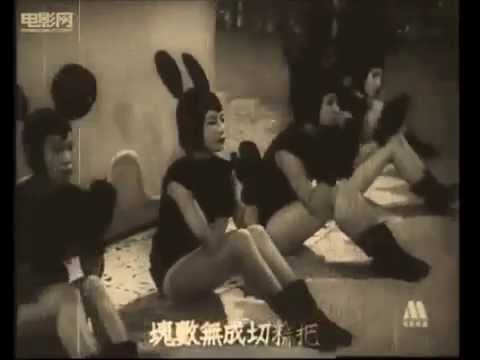
Below a clip from Colourful  万紫千红 (1943. The director was Fang Peilin. The star was the then 18 year old  Li Li Hua (李麗華) later a megastar for Shaw Brothers Studio. Here she plays a starstruck young girl, so desperate for the good life that she gets drawn into the world of Shanghai nightlife. There are many Chinese movies which satirize and reverse cultural stereotypes, including fantasies with exotic dancing femmes fatales, like Anna May Wong played. The photo above is a still from Colourful, showing a high kicking chorus line, the women dressed in traditional Chinese robes. Also a still from the same movie where the chorus girls are dressed as Mickey Mouse. 

 But this is enough for now.  Please explore the label "Chinese movies" in the list on the right - this site is one of the main sites in English about Chinese film. 

Monday, 28 March 2016

The Haunted Manor Moniuszko Straszny Dwór


Stanisław Moniuszko's Verbum nobile (1861)  on BBC Radio 3 on Thursday, but even more fun, Monciuszko' Straszny dwór (The Haunted Manor)  in a wonderful new production from Opera Narodowa (Polish National Opera)  The production was very high profile, created to mark the 150th anniversary of the opera's premiere at Teatr Wielki, Warsaw, and the 50th anniversary of the rebuilding of the theatre, largely destroyed in the 1939-45 war. Fifty years ago, Poland was still part of the Soviet bloc, so the significance of the opera had to be played down for obvious reasons. Straszny dwór was written shortly after the suppression of  the January Uprising of 1863 against Tsarist rule. Its message wasn't lost on Poolish audiences, and it was promptly banned by Russian cenors. The manor is haunted, but who are the ghosts?

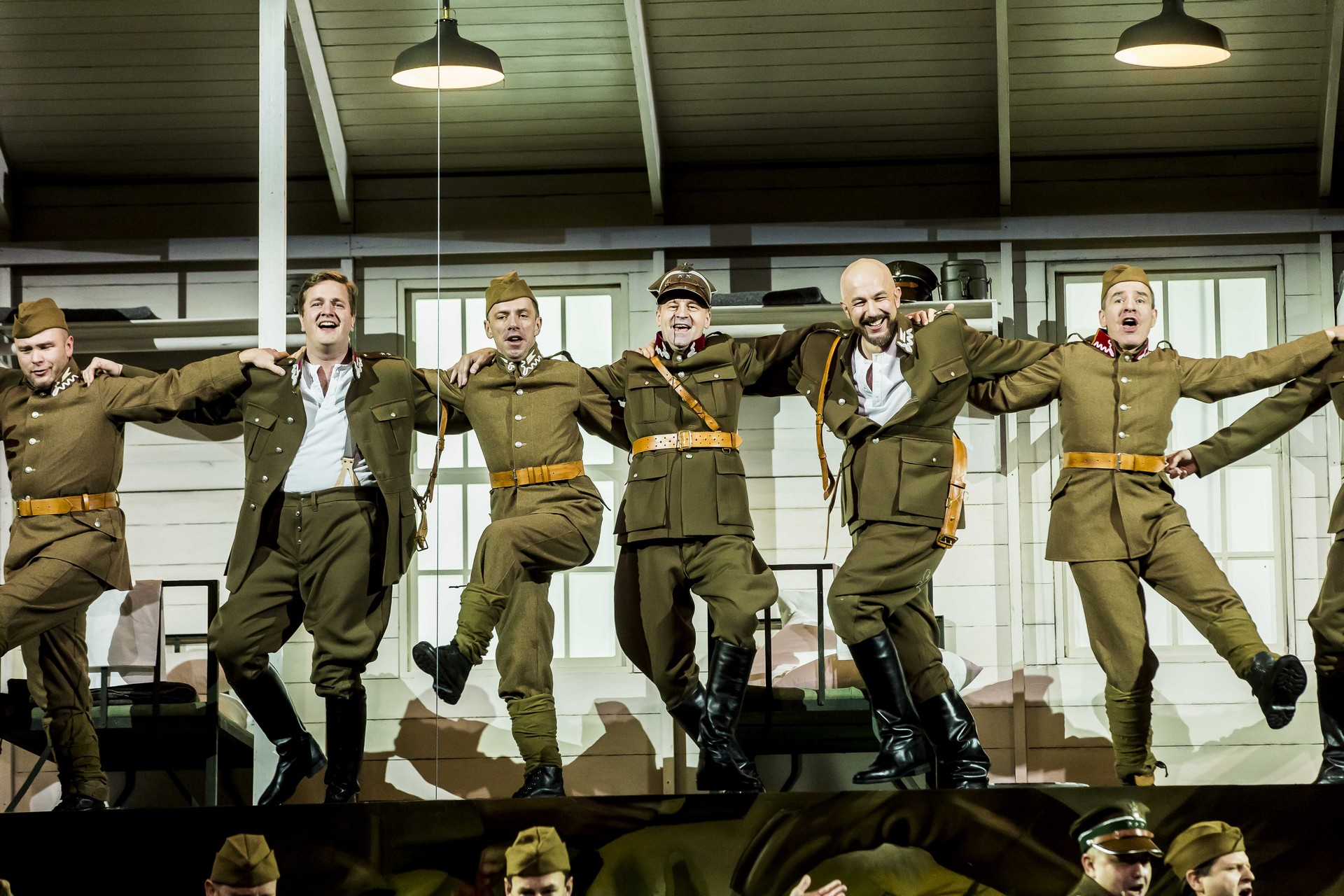
In Straszny dwór an unspecified peace has been declared. Soldiers are returning home happily to their families but brothers Zbigniew (baritone) and Stefan (tenor) declare they won't let their swords rust: to stay battle ready, they won't even marry. In David Pountney's production, the brothers are seen with their comrades in an exuberant chorus line, which emphasizes the boys-only naivety of their vow. "Long live Bachelorhood!" they sing, hoping to live in isolation with their valet Maciej. But if aristocrats don't have heirs, there'd be no-one to keep the farm (or estate). The enemy might win by default.  Aristocrats who don't have heirs leave no-one to carry on their line. Aunt Cześnikowa  wants to marry them off.  They escape her by going to Kalimov, the manor in the forests, in the dead of winter. Aunt describes the haunted manor in lurid horror, but the music suggests that maybe the horror isn't quite what it seems. Zbigniew and Stefan aren't scared because the owner, Miecznik, owed their father debts: in a way, the manor is rightfully theirs.

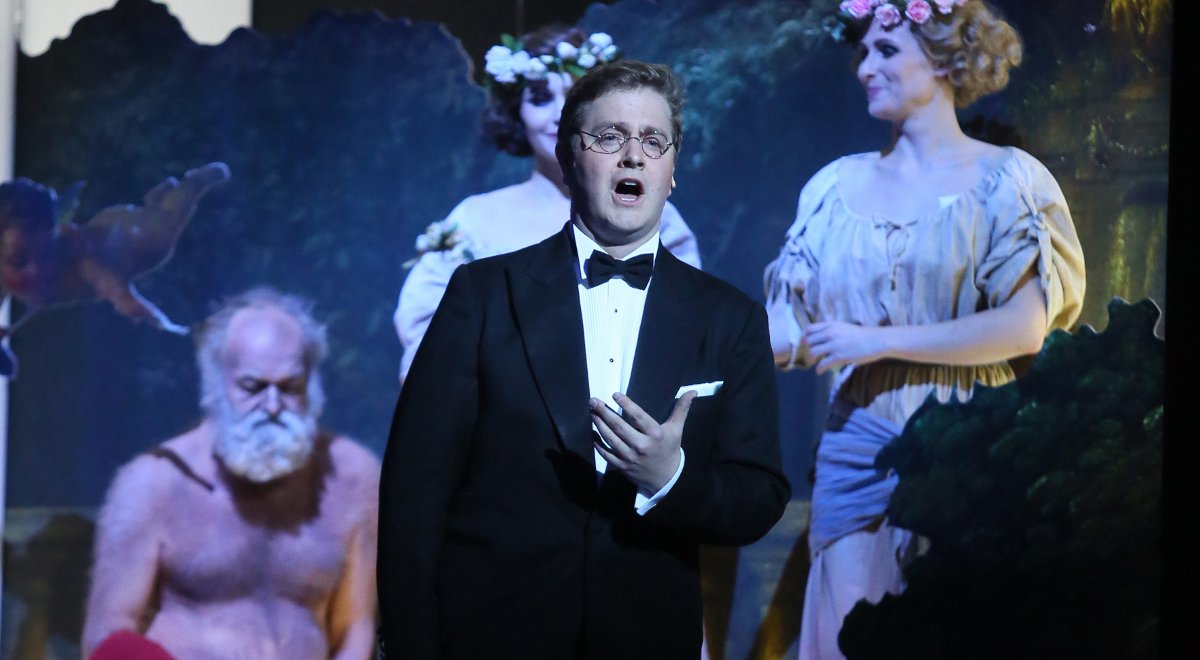
It's New Year's Eve, when women are supposed to be able to see their future husbands by vaguely occult means.  The lawyer Damazy wants to marry Miecznik's eldest daughter, Hanna, and thus presumably inherit the estate, but Miecznik wants his girls to marry real men, dressed in rugged Polish garb. Since Damazy dresses in ludicrously foppish "foreign" costumes, it's clear what he stands for. Kalinow is shown as an art museum, dominated by huge paintings, familiar to those who know 18th and 19th century Polish painting. To help those who don't, there are helpful labels in Polish, if you can read that.  Not that it really matters, because the subjects in the painting strike noble, classical poses like denizens of ancient antiquity sternly observing the proceedings below them.

"Silence everywhere" sings Stefan, in a beautiful aria about moonlight which could come straight out of a Romantic dream. The manor clock, which has not struck for 1000 years, rings out a delicate melody of enchantment. It's a tune Stefan associates with his mother. In the middle of the night, Zbigniew and Stefan can't sleep,  envying their valet Maciej, who sleeps with a tear in his eye, though he snores so much, he makes the walls shake. It's not ghosts that are keeping them awake but the realization that they might be falling in love, and losing their delusions. They remember their parents, who shared their troubles and were stronger for being together than apart.  Another painting comes alive. Now Hanna and Jadwige (or their ancestors) sing together with Zbigniew and Stefan.

Politics aside, Straszny dwór is a deliciously funny opera, with cheery tunes and comic parts.  At dawn, Maciej  thinks the house is haunted, though it's  Damazy hiding in the clock. In a wildly camp vignette, Damazy tries to scare the brothers with a tale of cursed spirits. An ancestor steps out of  a painting. Have  Miecznik's ancestors come back to life. His daughters or Hanna and  Jadwiga have inherited their forebears' formidable personalities.  Pondering the brothers' ideas on being single, ancestress (or Hanna) sings "You don't know Polish women!". "A soldier's wife does not show fear", she sings, in a series of extreme trills ferocious and funny at the same time, "with a sign of the Cross, she prays for his victory'. To make the point further, the ladies in Kalinow are dressed in white, the footmen in red.

In the morning, Miecznik appears. Now we know why his title is "Swordbearer" though he didn't need to flourish his sword around before, when he was disguised as provincial gentry. The orchestra strikes up a proud mazurka , the chorus return, singing with confident glee. Pountney's set explodes in vivid colour. This staging is magical - darkness is driven away by bright light, dancers in red and white fill the stage,  Miecznik is revealed as a medieval Polish prince. Miecznik explains that his ancestor had so many lovely daughters that jealous neighbours spread the rumour.that the manor was haunted. History in a nutshell. But those who are brave defy the curse. Stefan marries Hanna and Zbigniew marries Jadwige. The manor is no longer haunted but restored to its rightful glory. Watch the opera HERE til 18 May. 
Plenty of other related posts on similar subkjects, see lists at the right column. Szymanowski is my main man (I don;t write |Chopin)