Friday, 23 August 2013

West Wycombe Chamber Music Festival starts soon

 
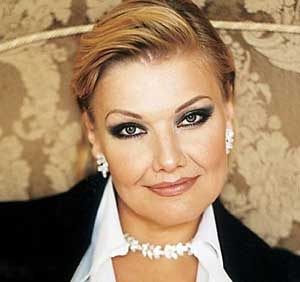
The third West Wycombe Chamber Music Festival starts Thursday 12th September. This is an interesting Festival because it features members of some of the best chamber music ensembles in the country. Recognize the faces in the photo ? Laurence Power of the Nash Ensemble and Leopold String Quartet and a much respected soloist, for example. He's Artistic Director and Founder of the Festival, which should give an indication why the festival is worth paying attention to. For a list of who's playing this year, see here., Other well-known names may be in the audience. This year's progamme is good, too and includes Messaien Quartet for the End of Time and a special arrangement of Bach's Goldberg Variations for string quartet. Read more here. and book soon

West Wycombe is a a festival by musicians, for musicians and those who like music making in a serious but informal setting. Everyone knows everyone, which is part of the ambience. Concerts take place in St Lawrence's Church, which isn't quite an average village church. St Lawrence is the patron saint of prostitutres, and the church was endowed by Lord Dashwood,who ran the Hellfire Club where posh hellraisers romped with prostitutes dressed as nuns. You can spend the day before a concert visiting the Hellfire Caves, whose entrance is close to the church. Alternatively, the village itself has authentic medieval buildings. You can stay overnight in the George and Dragon pub which is haunted. Very atmospheric place, great choice of local beers.And it's only an hour from London !

Thursday, 22 August 2013

Exceptionally well written review Tippett Britten Elgar Prom 51

An exceptionally well-written review of Prom 51 Tippett, Britten and Elgar, Daniel Harding and Ian Bostridge. Read it HERE in Opera Today. It's by Claire Seymour, which is why it's so well informed and analyzed. If only more music writing were on this level!

On Tippett : "In the Adagio cantabile Harding placed more emphasis on the adagio than cantabile. The conductor took a risk not only with the tempo, but also with the dynamics, resisting the temptation to let the arching lines grow and swell, restraining the strings to a mezzo piano.

On Britten : "Bostridge totally immersed himself in this work, musically, emotionally and physically, at times leaning (dangerously?) far backwards, elsewhere thrusting his hands nonchalantly in his pockets, sometimes fixing his eye confrontationally on the audience. Willing to throw caution to the winds, Bostridge gave a technically flawless account, the arresting characterisation absolutely convincing. It is hard to imagine a better performance of Britten’s thrilling song-cycle. "

.On Elgar : "The racing scherzo, by contrast, wickedly transformed the theme of the first movement into a nightmarish vision of horror, and there was plenty of pomp and majesty in the final ‘Moderato e maestoso’, although here again the recapitulation did not fully achieve a sense of liberating affirmation. But, the final bars were wonderfully contemplative and whispered; a shame, then, that the spell-binding silence that Harding desired was shattered by overly hasty, impatient applause."

Elgar Sibelius Bantock Oramo Prom 52

In BBC Prom 52. Sakari Oramo presented a triumvirate of British composers: Elgar, Bantock and Sibelius. Sibelius, British? You might think not. But Sibelius's British connections were strong. Sir Henry Wood, father of the Proms, promoted Sibelius with vigour (that's him in the picture, from 1907). The Proms helped put Sibelius on the map, to the extent Finnish Independence might not have succeeded but for the huge international profile the composer had gained for his nation. So when Proms directors are criticized for promoting new music they should remember that it's long been part of Proms tradition. Sibelius's Violin Concerto in D minor was premiered in 1907. Lisa Batiashvili played at this Prom. What history rested on her shoulders! But she's a veteran with this piece and carried it off with totally assured, stylish energy

Sibelius is one of the BBC's "selling points" re Granville Bantock, so perhaps it was wise to bracket it with Bantock's Celtic Symphony. It's a tone poem, more atmospheric than structural. Scored for six harps and strings it could hardly be less romantic. One melts in the mood of mystic wistfulness, musing on mists of magical miasma. I use these words advisedly. If this symphony were colour coded, it would be vivid purple. I'm actually quite fond of it, but it belongs in the realm of daydream, rather like the Arthurian fantasies that might have inspired it. You're supposed to swoon and not examine too closely. It's hard to believe that it was written in 1940. Nonetheless, whole new generations have become hooked on fake Celticism through video games, Goth music and New Age babble so perhaps its time has come

Bantock was a "Celebrity Personality" before the term was invented. He is perhaps best remembered for his extravagant, eccentric persona rather than for what he actually wrote. Just as fashionistas define themselves by the labels they wear, Bantock adopted exotic subjects to give his work colour and flamboyance. But unlike other composers, he doesn't use exoticism as a springboard for exploring new musical territory. When I listen to Bantock, I swoon, but think of Liberty's, not liberty.

Sakari Oramo established his Elgar credentials  when he took over the City of Birmingham Symphony Orchestra after Simon Rattle had built it up. Birmingham is an Elgar stronghold, and Oramo absorbed the Elgar idiom so well that he's become one of the foremost Elgarians of our time. His traverse of the symphonies during the Elgar Centenary year is still spoken of with reverence. Oramo's Elgar is distinctive. He shows that there's infinitely more to Elgar than pomp and circumstance. This performance of the Enigma Variations was subtle, connecting to the intimate, secret portraits which inspired it, and the private circumstances in which it was written.

At Prom 51, the previous evening, Daniel Harding conducted the LSO in Elgar's Symphony no 2. Listening to that again, without being ovewhelmed by the magnificent Britten Les Illuminations  (reviewed here). that went before, I realized how well Harding expressed it as pure music. Maybe some people want their Elgar butch and bloody, but Harding's Elgar is a real surprise for those willing to listen in a different light. Harding's delicate sensitivity brought out the melancholy in the piece, even the suggestions of tonal ambiguity. Given that that Prom was dedicated to the memory of Colin Davis, it was totally appropriate. Harding doesn't get the respect he deserves because he's very different, but he's a master in his own way.

Wednesday, 21 August 2013

Herheim's perceptive Die Meistersinger von Nürnberg Salzburg


Stefan Herheim's Wagner Die Meistersinger von Nürnberg in Salzburg will transfer to the Met. Will audiences collapse in hysteria? Not if they know and care about the opera or about Wagner. Herheim focuses on Hans Sachs himself, as individual and artist, not the "public" displays of civic pride. This Meistersinger is exceptionally werktreue and perceptive. It engages with Wagner's ideas on creativity and the purpose of art.  Herheim deals with the true meaning of "die heil'ge deutsche Kunst" and with Wagner in the context of German tradition.

The Overture unfolds showing Sachs (Michael Volle) in nightcap and gown, surrounded by relics of his long dead family.  Herheim shows us Sachs the man who was once happy with a wife and children. Perhaps that's why he acts as father figure to others. But it also shows how "Wahn, Wahn, überall Wahn" grows from deep emotional scars. Life is short, and unfair. It shouldn't be wasted on things that don't really count. There's nothing silly about seeing Sachs playing with toys. This gives depth to Sachs's personality, and also connects to the idea that creativity is instinctive. References to youth and renewal run throughout the opera. The congregation in church are witnessing a baptism. Herheim's toys remind us to play with our imagination. Beckmesser thinks art comes from rigidly following rules. Sachs doesn't. Do we approach Herheim's Meistersinger as Beckmessers or as Sachs?


Throughout the opera, there are references to craftmanship and the process of creation. "Schuhmacherei und Poeterei", as David says.  Understanding Die Meistersinger von Nürnberg  as a work about art and the making of art can't surely be too difficult a concept to grasp. So there's no need to sneer when the set turns into a giant desk.  So the characters in the narrative spring to life on Sachs's workstation. The Meistersingers make much fuss about proper seating. Herheim has them sit on upturned giant thimbles, which are later revealed as empty buckets. When Walther (Marcus Werba) sings his first "Fanget an!", the Meistersingers collapse like skittles. It's funny but also very apt.

By defining the concept of art as imagination, Herheim is able to release much more esoteric levels. The imagery of sleep is important, too. By day, Sachs is busy making shoes. At night he's alone. Sleep releases the unconscious, creative mind. Sachs solves the dilemmas in his art as a craftsman, just as he fixes shoes so they function properly. In Act Two, the desk is shrouded in darkness. We catch a brief glimpse of the lilac tree through Sach's window, but we don't need to see it again on the desktop "stage". Its fragrance perfumes the music. Johannistag coincides with Mid Summer Night's Eve, the shortest night in the year when magical things can happen. When the townsfolk awake, they're literally surrounded by "Gespenstern und Spuk". Fairy tales, as Bruno Bettlelheim said, mask subconcious fears under a guise of comic figures. Ghosts and spooks would be hard to depict in a more literal staging. We laugh, but take the point. There's even a group of trolls! Herheim's wry sense of humour is deliciously wicked.

These images also bring together several periods of German culture. Herheim's costumes suggest the Early Romantic period, when German intellectuals like the Brothers Grimm, Brentano and von Arnim and Gottfried Herder were rediscovering premodern tradition. Without the Romantics, we might not have the modern world with its interest in the darker side of life, and in creative freedom. Nor would we have Richard Wagner. He knew very well what he was doing when he chose Sachs for his subject, since Sachs lived robustly in the Reformation, another important flowering period of German culture and identity. At Glyndebourne in 2011,  David McVicar's Die Meistersinger von Nürnberg (review here) was set in the period of Wagner's youth but to little effect. It romanticized without connecting to the savage spirit of the Romantiker.There's a huge difference.

Herheim's staging is much more literate, and intelligently thought through. The Romantiker fascination with Nature was often seen through the prism of the drawing room, so Herheim's indoor setting is wittily ironic.Things seen through the imagination are often hyper real. When David sings of "der rote, blau' und grüne Ton" we see wild flowers held aloft. The final scene on the banks of the Pegnitz isn't shown literally. But there's a train! This isn't director whimsy. Without railways, industrialization and the rise of the middle class, modern Europe wouldn't have developed. Trains represent change, just as aristocratic Walther represents change when he joins the good folk of Nuremberg.

The townsfolk are draped in flowers: if these were real their scent would fill the hall. The women wear white aprons, so dazzlingly bright they light the stage. Herheim's having a merry little dig at the idea that costumes "make" an opera. Although there's a lot of detail to reward repeated viewings, the visuals aren't there for their own sake but to intensify the fundemental drama in the music. The critical moments, like the quintet and the Prize Song are shown with simple clarity. Those who hate modern productions on principle often claim that directors should "respect the work". But that argument can be turned completely on its head. A really good opera is strong enough to withstand multiple interpretations, and perceptive interpretations like Herheim's show us how much there is yet to discover. "Verachtet mir die Meister nicht, und ehrt mir ihre Kunst!".

Michael Volle's Hans Sachs is excellent. It helps that he looks like the historic Sachs, and that he himself grew up in the Lutheran tradition. Volle gives the character grit and gravity, mixed with a genuinely warm humanity. Volle's diction highlights the couplets and phrasings so typical of German tradition. When  he sings "ehrt eure deutschen Meister! Dann bannt ihr gute Geister" he infuses the words with positive feelings, banishing  memories of wartime Bayreuth.

Markus Werba's Sixtus Beckmesser quivered with nervous energy. He sings with more colour and charm than we'd expect from Beckmesser, but that enhances his portrayal. Beckmesser's weak rather than evil. He wouldn't be a Meistersinger in the first place if he was incomptent. He just doesn't get it, that true art comes from being original. Werba makes the part sympathetic. This Beckmesser is deluded rather than a troll. Peter Sonn's David is delivered with strength and conviction. This David is no ingénu, and justifies his master's faith in him. Herheim's blocking of ensemble also shows how the apprentices connect to David.

Rather less rewarding were Roberto Saccà's Walther and Anna Gabler's Eva. Saccà's voice finally did him justice in the Prize Song but it was a little late. As for the orchestra ? What was Daniele Gatti doing? The pace kept slackening. Sachs is a cobbler, not a carpenter. Wooden playing like this just doesn't work. When Herheim's  Die Meistersinger von Nürnberg transfers to the Met, with a different cast and conductor, it should be a success.

Dangerous Britten, Tippett and Elgar Prom 51

Rebels at the BBC Proms? In Prom 51, Daniel Harding conducted Tippett, Britten and Elgar with the LSO and Ian Bostridge. British greats, yes. But nothing Establishment.The Fanfare from Tippett's The Mask of Time might have heralded a conventionally stolid celebration of British music, but Harding drew out the "secret" background. This time, the Fanfare blasted us back to 1939, and the Concerto for Double String Orchestra. Context matters, for England was on the verge of war. Tippett, being politically aware could hardly have been confident or cheerful.  In the Concerto, Tippett builds conflict, pitting the two parts of the orchestra against each other and creates a sense of divisiveness by combining themes that seem loosely connected. Free of slogans and earnest wordiness, he expresses himself more effectively through abstract music. The Concerto works in purely musical terms because it isn't elevated agit prop (though that can make great music too). Its angular, jagged edges engage us in self doubt and contradiction. Prince Charles might find it all a bit too "modern" but this is Tippett at his best.

Benjamin Britten's Les Illuminations also starts with a Fanfare, but the strings are jerky and nervous, crackling with tension.  Les Illuminations was also written on the verge of war, when Britten was in despair about the future of Europe and his own future as a composer who wanted to create something new and original but hadn't quite found his mission. Although the text is in French, it is a mistake to assume that Les Illuminations is French music or that it must be performed in a French style.

It's vital, in performance, to appreciate what Britten (whose command of French was poor) was trying to do. Rimbaud's poems are short outbursts of feverish emotion. The imagery is highly condensed  meaning elusive. You can almost feel Rimbaud hyperventilating. Having escaped the bourgeois confines of provincial France, Rimbaud was intoxicated by London and its frantic sense of modernity but he was desperately poor. He completed Les Illuminations while working in a garrett in Reading, trying to scrape a living. Britten respects the almost kaleidoscopic fragmentation of ideas  by breaking words up into individual sounds, then elides lines into dizzying freefall. The last thing you want is "conversational". Bostridge captures the sense of surreal, almost hysterical psychic dislocation, so fundamental to interpretation. Again and again, the phrase ""J'ai seul la clef de cette parade sauvage!" explodes  as ecstatic revelation, but each time with slightly different colouring. Perhaps there is no "key" other than the immediacy of the moment.

"Tourillons, tourillons", turbulent, sudden switches of timbre and pace. Bostridge draws out the extreme in the music, reaching ethereally high pitches, growling along low passages, colouring sounds with sensual nuance. The piece was originally performed by a soprano, perhaps because the deepest levels in the piece might have been too hard to cope with in Britten's buttoned-up Britain.. Bostridge brings out the profound danger in the piece, twisting his tongue and projecting sound as if savouring some mind-altering potion, enjoying the delicious challenge of things unknown. Perhaps the violin solo functions as the snake offering an apple in Eden? Bostridge and Harding have been doing Britten together for years, developing a singularly original and very perceptive approach. Their recording of Our Hunting Fathers is absolutely brilliant, as is their Billy Budd. (more here). Perhaps some might prefer their Britten sweeter and prettier, but for me Britten's music can't really be performed by "ordinary" tenors. Imagine Placido Domingo!

Elgar's Symphony no 2 (1911)  is stylistically so adventurous, (for its time and place) that one wonders if the composer might have felt he was entering new territory he might not want to examine too closely, rather like Sibelius on the completion of his last great works. Harding emphasizes the clarity with which Elgar contrasts divergent themes. We hear the familiar "warm" Elgar confidence, but also a more subtle sense of unease, in the best and most creative sense of the word. Without a degree of soul searching and questioning, can good art exist? Elgar, despite his worldly honours and clubbability, was essentially an "outsider" as all true artists are on some level.  Listen to the whole broadcast HERE.  And for an exceptionally well informed and well written review of this Prom, read Claire Seymour in Opera Today.

Monday, 19 August 2013

Brahms A German Requiem Prom 47

Hearing The Orchestra of the Age of Enlightenment play Brahms' German Requiem  with Marin Alsop, restored its true period context. Brahms uses texts from the Bible, but, being a non-believer, didn't write a conventionally pious Mass.  Ein deutsches Requiem is just that, A German Requiem. Brahms looks back on North German tradition, and by extension to the whole spirit of the Reformation. In pious, obedient Catholic Austria, that in itself suggests rugged independence of spirit. Period instruments create lighter, cleaner textures, evoking the spirit of Protestant piety. "Brahms free of the thick veneer of varnish", I wrote many years ago about a particularly powerful Vier ernste Gesänge. The same would apply to this OAE performance. I would have liked even greater asperity but this was the Proms where you have to think about the wide spectrum of audience expectations. Besides, I'm immersed in the Salzburg Meistersinger (review to come soon) and its perceptive take on German traditions. I keep hearing  "Johannes Brahms, Johannes Brahms" instead of "Johannes Sachs".

Claire Seymour reviewed Prom 47 Brahms Requiem in Opera Today. "Alsop consistently gave the text — garnered by the composer himself from Luther’s German Bible and from the Apocrypha — room to speak without undue force, and the result was a remarkably intense quietude matched elsewhere by an equally dignified and moving radiance"....

"The second movement, ‘Denn alles Fleisch, es ist wie Gras’ (For all flesh is as grass), began with fateful gravity, the timpani’s dark, funereal pulses sensitively articulated by Adrian Bending. Legend has it that a pre-premiere run-through of the first three movements of the Requiem were somewhat sabotaged by the relentless fortissimo pounding of an over-enthusiastic timpanist; here, and throughout the work, Bending offered a master-class in percussion playing, achieving tense restraint, insistent power, and building to perfectly judged, thrilling climaxes. The movement roved through alternating passages of despair and resignation before the Choir’s grandiloquent outburst, ‘Aber des Herrn Wort bleibet in Weigkeit’ (But the Word of the Lord endureth for ever)." Read the whole review HERE.

Prom 48 Pintscher Stravinsky


Matthias Pintscher has chutzpah, conducting his own Chute d'étoiles (2012) between Ravel Rapsodie espagnol  and Stravinsky's L'oiseau de feu (Firebird)  in all its original (1910)  glory. But Prom 48 worked well because Chute d'étoiles is a daring, dramatic piece that holds its own in grand company. Pintscher is one of my favourites. Though he's only 42, his work has been conducted by Boulez, Eschenbach and Abbado.

Chute d'étoiles was inspired by an intallation by  Anselm Kiefer in Paris in 2007. Kiefer created a structure combining physical objects and other media. Monumental as the piece was, it was temporary, dismantled at the end of the exhibition. Read more about it HERE. Pintscher doesn't replicate Kiefer's work in a literal way but instead develops its concepts. Two trumpeters (Marco Blaauw and Tine Thing Helseth) engage with members of the BBC Scottish Symphony Orchestra and indeed, the Royal Albert Hall, since, like Keifer's installation,  part of the experience seems to be the interaction between performance and performance space. It's an extremely tactile piece : the trumpets project sounds which seem to reach out, exploring physical distance. I thought of Stockhausen (read more here) but also of Rebecca Saunders, but music has often been created in this way - think of church organs and vast choirs.

Pintscher  develops concepts of solidity and impermanence. The trumpets penetrate the void with brazen confidence, echoing resonance even when the sound has left the instrument. Brazen assurance, metallic and shiny. But, as if heard from a long distance, the percussion rumbles in mysterious murmur. The trumpets react, as if some electrical impulse causes them to fibrillate. The percussion becomes more insistent. Tapping noises give way to strange, unworldly metallic sounds and ferocious angular ostinato. One trumpet continues to arch tentatively outwards. When both unite, they play odd, bluesy riffs  but the orchestra stomps even more violently, and suddenly, it all ends. It is important to know what Pitntscher says about the piece, so read the interview he gave last year HERE.For me, the piece worked well on its own terms. Then I noticed who'd helped finance the work : Roche, the giant chemical products conglomerate. When I was a kid, I'd read my Dad's pharmaceutical journals which carried an ad for Hoffmann La Roche (as Roche was known then). The ad showed a man, buckled over having come up a flight of steep steps, maybe having a heart attack. Probably an ad for hypertension drugs, but the image fascinated me. Whatever ideas Pintscher had for Chute d'Etoiles, it resurrected this memory for me. They're not, altogether, really so different because both connect to the idea of strength and fragility, solidity and disintegration.

Pintscher also conducted Igor Stravinsky's L'Oiseau de feu (the Firebird) in the full ballet edition form 1910. Five years ago, at the Proms, Vladimir Jurowski conducted it (though I can't remember exact details and the Proms archive is no help.- it doesn't even recognize that the French and English names refer to the same piece. Jurowski created vibrant, colourful physicality. Pintscher's approach is more sonorous than bright, but evokes the same image of the Firebird, which materializes magically, in a glorious, but ferocious display, before it disappears as mysteriously as it came. Read what I wrote about L'oiseau de feu in 2008. 

The photo shows Leon Bakst's design for the premiere of the ballet.

Sunday, 18 August 2013

Salzburg Don Carlo Kaufmann Hampson Harteros


Verdi Don Carlo live from Salzburg. Vocally, it's ace. With a cast like this, it couldn't be otherwise. Visually, it's  much better than you'd guess from some sections of the press. "Sumptuous emptiness"? Only in the eye of the beholder. Peter Stein's production focuses on the underlying drama, allowing the music and singing to tell the story. Stein is now nearly 80, but his background was  cutting-edge theatre, and he's musically aware. So there's no way this Don Carlo would be retro banality. Sure, the costumes are "historic" but the way they're used is part of the overall concept. Like the drama, the set is stark and unyielding, like the situation Don Carlo and Elisabetta are up against. The costumes serve as contrast, making the point that luxurious trappings conceal barbaric cruelty. Glory and power are nothing if they result in mindless killing. The sumptuous colours here are in the lighting. They are illusion, just as in the drama. Verdi's anti-clericalism is in some ways even more radical than Schiller's original text. Anyone who thinks Don Carlo is costume drama needs to pay attention. Tu che la vanità conoscesti del mondo e godi nell'avel il riposo profond
etc etc, as Verdi makes perfectly clear.

 Jonas Kaufmann and Anja Harteros sang  the leads as they did a few weeks ago at the Royal Opera House in London, (reviewed here) but the contrast between the Salzburg and London productions could hardly be greater. Nicholas Hytner's production decorated the stage with silly Legoland images, trivializing the opera. So grotesque was the auto-da-fé scene that one might assume Hytner thought being burned at the stake was fancy floorshow. Stein's staging emphasizes the fundamental conflict. Church and State are depicted in sinister darkness, the monks dehumanized and robotic. Those who are to be burned alive are seen in extreme light, skies and clouds behind them. On film (very well directed) you can see details like bloodstains which probably weren't visible on the wide stage at Salzburg.

 In the final confrontation in the tomb of Charles V, Stein again emphasizes the unyielding coldness of stone, formality and death. Hytner's tomb was comic book with the words "CARLO" on the side so you wouldn't miss them. Like the Commendatore in Don Giovanni, the Old King drags the Young Prince into the grave. Hytner's approach is embarrassing. Stein, instead, shows a sinister figure slowly emerge, embracing his grandson. It's altogether more subtle and complex. Kaufmann expresses a range of emotions and smiles as he dies. Stein knew what Charles V represented in the Counter-Reformation, and also what generational power struggles represent in Verdi. If you want intellectual and musically informed, go for Stein at Salzburg, any day.

Kaufmann sang even better at Salzburg than he did in London. "Fontainebleau! Foresta immensa e solitaria!" he sings, immediately showing what the freedom of the forest means to the cloistered Prince. He commands the stage with energy and authority: no wonder Elisabetta falls in love. She's dressed in a truly hideous costume which looks like an accident in the curtain section of a thrift shop. At first I groaned, but seeing her elegantly dressed in later scenes, I wondered if the designer was trying to say something?  Elisabetta's tragedy happened because her father placed politics above love. She and Don Carlo have lots in common.

Harteros was impressive because she is good and very experienced in the role. Kaufmann dominated this time for the most part, but Harteros truly came into her own as she showed how Elisabetta develops as a personality during the course of the opera. In her private confrontation with Phillip II, her voice shows how the young Queen is becoming a mature adult. In the final tomb scene, Harteros characterizes with such depth and power that you hardly dare breathe and lose the moment.  Harteros's majesty comes from the strength of her portrayal. As she finds resolution, youthful freshness returns to her voice. It's as if she's being reborn, purged by suffering.

Thomas Hampson's Rodrigo, Marchese di Posa, was outstanding for much the same reason. Hampson's Rodrigo is fully-fleshed in personality, the edges that are creeping into his voice used intelligently to enhance portrayal. Hampson's Rodrigo is a strong father figure, a counterbalance to Philip II, even perhaps a ghost of Charles V. This is a characterization to be reckoned with, immensely enhancing the meaning of the opera.

Ekaterina Semenchuk's Princess Eboli also extended the role from relative sideline. In real life, as far as we know, the princess was ugly and blind, so the plot is rather cruel. Semenchuk, however, is beautiful in a fulsome way, and as elegant as the Queen, but the warmth in Semenchuks's timbre adds an interesting twist. She creates Eboli as a sympathetic person, driven to extremes by the frustrations of her place at court. She's a parallel Elisabeth, just as Hampson is a parallel Philip II. Singing of this exceptional quality brings out levels of exceptional interpretation. At Salzburg the singers were admirably supported by Antonio Pappano's impassioned, vivid conducting, inspiring the Wiener Philharmoniker to the high standards they should always aspire to. Like Stein's staging, Pappano's approach highlights the inner tension in the drama, with its interplay of luxurious excess and ascetic self-denial.

In real life, Philip II wasn't the villain he's depicted as in English history books. Like Charles V, who retired to a monastery and gave up ruling the world, Philip II wasn't fooled by the trappings of power. In his own way, curiously, he was a man of the counter-Reformation though he was too devout to lose faith. He chose a kind of "inner exile", letting the Church have its way for political reasons. In London, Ferrucio Furlanetto was outstanding. In Salzburg, Matti Salminen was less effective, though adequate.  He's only four years older than Furlanetto, but his voice isn't what it was in his glory days.  But then, neither  was Philip II. HERE is a link to the broadcast.and HERE is a link to my review of Stefan Herheim's perceptive Wagner Die Meistersinger von Nurnberg.

Short-sighted BBC Proms programme policy.

The BBC Proms are half over but I only noticed this week, when someone pointed it out, that they aren't doing programme notes online anymore. Perhaps the idea is that people will be forced to buy programme booklets when they attend, But the rationale is flawed. Surely more people listen to broadcasts than can ever fill the hall? What about listeners too far from London to commute, or those who live in faraway countries ? In any case, not everyone who attends buys a programme.So to boost the sales of a few extra booklets, some beancounter at the BBC deprives thousands more of a chance to find out more about what they're listening to. Which beats the whole purpose of the BBC remit to educate and inform and reach out to wider audiences.

There are many good reasons for NOT having programme notes. It drives me crazy to see faces buried in booklets when ears and minds should be absorbing the music. It's much better NOT to follow every word or note, but instead open your heart and mind. Familiarity will come with time. Never miss the opportunity to engage with what the performers are expressing. Programme notes can encourage lazy thinking and lazy writing too, for that matter (unless the notes are by the composer or someone who knows the subject well enough to have something useful to say, in which case they need to be preserved.)

In theory programme notes (and not just the BBC's) should be a way of enhancing the musical experience.  In practice, programme notes are often "filler", so superficial as to be downright misleading. Sometimes I've read things by people who clearly haven't even heard the piece they're writing about, and chunks of material borrowed without attribution. They can get away with it because programme notes are ephemera, designed to be, like their medium, discarded and often unread. Most programmes exist so promoters can sell advertising.

But notes should serve a purpose. When people have taken the trrouble to come to a concert, they deserve some form of extra enlightenment.

During a recent Prom, a friend overheard a conversation at the first interval. "Is it over already?" some tourists asked.  "We don't know what this is is about but WE'RE QUITE ENJOYING IT". I thought it was wonderful that they could be so open-minded that they could approach Wagner and get pleasure from just listening. They were exactly the sort of listeners we should encourage. In their case, telling them to look at programme notes would be a mistake. Rather, it would have been nice to talk to them about how they felt and why the music was so exciting. "Wait til the end", I would have said. "Everything goes up in flames ". Capture people's imaginations and they can sit through six hours of singing in foreign, Or kill their souls with lousy advice.

Saturday, 17 August 2013

Tippett : The Midsummer Marriage Prom 45

Michael Tippett The Midsummer Marriage BBC Prom 45 reviewed by Robert Hugill in Opera Today

Compare Tippett's The Midsummer Marriage (1955) with Benjamin Britten's A Midsummers Nights Dream (1960). Tippett's studied, self-conscious earnestness doesn't fit well with Shakespeare, which is perhaps why the plot diverges.  Britten's approach is altogether more magical, and for that matter, genuinely musical. This photo shows Tippett's uncanny resemblance to HRH Prince Charles. Secret Twins! Think about that and the more troubling connotations. If Tippett serves no other purpose, he is a reminder of how much British music owes Benjamin Britten.

"Sir Michael Tippett's The Midsummer Marriage has a lot of things against it, it requires a large cast including dancers and a large chorus and orchestra, the plot with its elements of Jungian analysis is confusing, the composer's libretto with its colloquial elements now sounds rather dated and frankly a bit embarrassing.

But you only have to listen to the music to be entranced. From the opening moments of Sir Andrew Davis's performance with the BBC Symphony Orchestra at the Proms in the Royal Albert Hall on 16 August 2013, you knew that you were in for a very special occasion."

More secret twins !

Friday, 16 August 2013

What's rumbling under Salzburg ?

Ahead of the Verdi Don Carlo broadcast live from Salzburg this afternoon (link here), musings on what's happening in Salzburg. It's hardly news that Alexander Pereira is leaving after a year, though he spent 20 years in Zurich. Shirley Apthorp in the Financial Times writes that this Don Carlo is "conclusive proof of the artistic bankruptcy of Pereira's brief leadership". (read the whole article here). "Sumptuous emptiness", though, is no crime in itself. It would go down well with audiences who like status symbols rather than artistic integrity. Much more worrying, long term, is the news that the Vienna Philharmonic threatened to leave the Festival altogether if they weren't more involved with the artistic content. If they were more involved, it might raise standards, as long as that doesn't mean more Lorin Maazel.

Yet opwra productions are planned five or more years in advance, so it's not completely fair to blame Pereira. Stefan Herheim's  Die Meistersinger von Nürnberg would have been in genesis for years before. Stein's Don Carlo gets dissed for "sumptuous emptinesss" and Herheim's Meistersinger gets dissed for being anything but! Predictably, Rupert Christiansen hated it, which often means it must be good. Here's a link to his review but SCROLL DOWN to the comments which are infinitely more interesting. Read what Michael Wolfson has to say. This is the sort of really well informed, thoughtful analysis we really should be getting more often. I've been given a link to the Salzburg Meistersinger so will review it soon. Please come back !

photo : Thomas Pintaric

Thursday, 15 August 2013

Salzburg Don Carlo - working link

Salzburg's Verdi Don Carlo will be broadcast live on Medici TV at 4.30 European time (3.30 BST) FRIDAY 16th.  I hope the link will work !You might have to pay to view but that's fair enough. It's fundamentally anti-art to expect everything free or cheap. With a cast like this only a boor would quibble:

Matti Salminen (Flilppo II) Jonas Kaufmann (Don Carlo) Anja Harteros (Elisabetta di Valois) Thomas Hampson (Rodrigo, Marchese di Posa) Ekaterina Semenchuk (La Principessa Eboli) Eric Halfvarson (Il Grande Inquisitore) Robert Lloyd (Un frate) Maria Celeng (Tebaldo) Sen Guo (Una voce dal cielo) Benjamin Bernheim (Il Conte di Lerma/Un Araldo reale) Members of the Young Singers Project (Sei deputati fiamminghi) Concert Association of the Vienna State Opera Chorus Wiener Philharmoniker. Antonio Pappano conducts

Wednesday, 14 August 2013

Barenboim : Spaces of Dialogue

Daniel Barenboim speaks frankly to David Frost, touching on subjects he's rarely dealt with in public. Frost asks him about  his relationship with his present wife, which started when Jacqueline du Pré was alive. "That must have torn you apart". Long pause from Barenboim. "I never thought I would sit in such a public forum and talk about this", he says "You make me feel like I'm at a psychoanalyst".

"There was no way I would have abandoned her," he says of Jackie. Their "real" time together lasted barely two years, but Elena, who bore him two sons, enabled him to carry on as a musician. Jackie  " wasn't - how should I say - very well musically educated but she has this incredible feeling for line and phrasing that just flowed out of her".

Much more controversially, he speaks about the Middle East. "The Israelis themselves are making a ghetto out of Israel". He talks about his political awakening in the aftermath of the Black September massacre in 1970. Watch the full interview here  Particularly interesting are the interviews with members of the West-Eastern Divan Orchestra, most revealing of all.|"The American government has double standards" Perhaps some would say that the interview is prejudiced because it was aired on Al-jazeera,. But even that is signifigant. In many Muslim states, Barenboim and his orchestra are persona non grata because they represent "normalization".

Prom 39 Nishat Khan a wider perspective

What to make of  the "Anglo-Indian Prom  39?  Nishat Khan, Gustav Holst and Ralph Vaughan Williams. I avoided writing first impressions. Like most non-Indians, and many Indians, I suspect, I'm in no position to pronounce on Nishat Khan's Sitar Concerto (The Gate of the Moon). He comes over as a man of integrity who genuinely wants to create a fusion of the instrument he knows and loves so well with Western classical form. So no cheap shots from me. I didn't "get it", even though I've spent my life on cross-cultural issues. To me it seemed very much the sort of thing a modern, Westernized composer might write in response to living in, say, Los Angeles, which is where Nishat Khan now lives. Fair enough! Then it seems perfectly reasonable, especially when we remember what liviung in LA and New York did to many other composers from Kurt Weill to Thomas Adès. Fusion is a lot more difficult than we think.

Nishat Khan is the genuine article, a seriously important Indian musician. Gustav Holst was fascinated by the Idea of India as an exotic dream. Raj imperialism trivialized Indian culture. On the other hand, Tagore  made Westerners aware of the higher levels of Indian culture. Holst wasn't alone in his fascination with things Eastern. Think Zemlinsky 's Lyric Symphony (read more here). Zemlinsky's piece works so well because he doesn't even pretend to write orientalism but writes what it makes  him feel. Holst's Indra (1903) sounds so completely of its period that tt might have disappeared entirely but for the composer's reputation. Perhaps we were only hearing it because the BBC is desperate to jazz up the occasion. The presenters get hysterical because Radio 3 is doing a joint event with The Asian Network. Better that they should give us real music instead. In comparison, Nishat Khan's Sitar Concerto sound better already.

Ralph Vaughan Williams's Symphony no 2 (London) sat oddly with Holst and Nishat Khan. Perhaps the logic was that, if you're going to do Tourism in Music, you might as well throw in a historic Trip Around London. As such, it was probably quite entertaining, though the performance was pretty bland. David Atherton (who is familiar with Chinese music – he was music director of the Hong Kong Philharmonic Orchestra for many years) is an excellent conductor but the BBC National Orchestra of Wales isn't the most adventurous of the BBC stable of orchestras. For me, RVW 2 works not as travelogue but as mood piece, evoking abstract emotions like loss and regret.