Wednesday, 26 December 2012

Drei Könige wandern aus Morgenland


As an alternative to the English language version " Three Kings from Persian Lands Afar". My favourite, though, remains the version for boy alto.

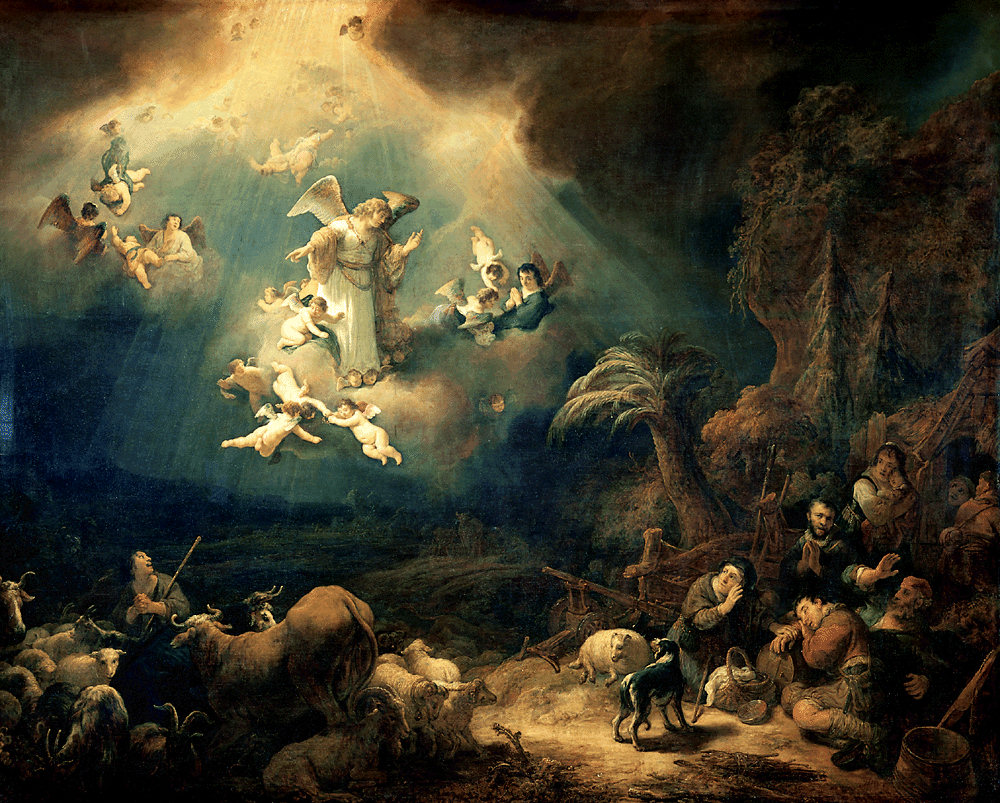
Drei Könige wandern aus Morgenland; Ein Sternlein führt sie zum Jordanstrand. In Juda fragen und forschen die drei, Wo der neugeborene König sei? Sie wollen Weihrauch, Myrrhen und Gold Dem Kinde spenden zum Opfersold.

Und hell erglänzet des Sternes Schein: Zum Stalle gehen die Kön'ge ein; Das Knäblein schaun sie wonniglich, Anbetend neigen die Könige sich; Sie bringen Weihrauch, Myrrhen und Gold Zum Opfer dar dem Knäblein hold.

O Menschenkind! halte treulich Schritt! Die Kön'ge wandern, o wandre mit! Der Stern der Liebe, der Gnade Stern Erhelle dein Ziel, so du suchst den Herrn, Und fehlen Weihrauch, Myrrhen und Gold, Schenke dein Herz dem Knäblein hold!

Rossini La Cenerentola Andermann Xmas

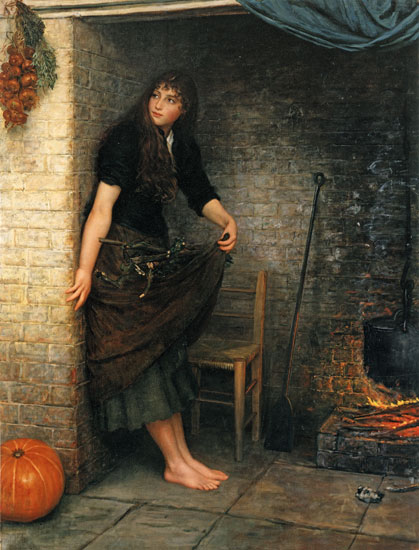
Andrea Andermann's Rossini La Cenerentola (BBC TV2, Xmas Day and now available on the BBC iPlayer)  is interesting because it's a departure from his usual fixation with  exact location and time frame. One of the weaknesses of Andermann's Rigoletto lay in over-reliance on scenery as opposed to drama.  This time, he uses visuals more freely. That's a good thing, because La Cenerentola isn't realism, but fantasy. This time, Andermann dispenses with ultra-realism and frames the story with animations to illustrate the orchestral parts of the opera. Even if they can't read, children look at pictures, and their imaginations are inspired. What child hasn't dreamed?

La Cenerentola is Cinderella, a universal archetype who appears in many forms and many cultures.  As Bruno Betelheim and many others have shown, fairy tales appeal to something deep in the psyche, allowing children to work out their fears in a safe environment. Cinderella's been usurped by her sisters, and is banished to the kitchen. Hence the "cinders", the dirt from the kitchen, and possibly a reference to the death of her mother. These cinders are a theme that runs through the story, whether Cinderella appears as Cendrillon, La cenerentola or Aschenputtel.  Other details change but these are the basics. Rossini would have known the simler Italian version of the story rather than the Walt Disney version we're used to these days. Millions of children have felt badly done by, and dream of being rescued by a handsome prince or some other such magical solution.  In that sense, Elsa in Lohengrin is a distant cousin of Cinderella.

Thus visuals are important in La Cenerentola because they intensify the impact of the story.  In her stepfather's house, La Cenerentola is dressed in ashen rags, like the lowliest menial. But when her sisters taunt her, we see that their dresses are hollow frames. Perhaps Don Magnifico is magnificent, but Rossini sends him up in the "donkey aria" where he dreams he has become an ass. He has, by mistreating his daughter.  When La Cenerentola arrives at the palace, she's overwhelmed by how beautiful it is. Don  Ramiro's overwhelmed by her transformation. Andermann's cameramen pan from the singers to the glorious surroundings, so we feel that sense of wonder and beauty, too. Later, La cenerentola is seen winding a ball of wool. As the six principals sing of their dilemma, the wool is passed from person to person until an elaborate cat's cradle is produced. It's a beautiful image, reflecting the way the voices interweave and intertwine. 

Rossini creates his opera with warm-hearted goodwill. The sister are reunited, everyone lives happily ever after, and the music flows with elegance and charm.  But he doesn't change the basic premise of the story, which isn't cheery. Rossini's resolution is rather like the concluding ensemble in Don Giovanni where Don Giovanni's death is serenely glossed over with a delightful set piece that distances us from the trauma that went before. Nothing is quite so easy in real life, but in art we don't need, sometimes, to look too close.  Because Rossini is so good natured, La cenerentola works even if the singers are not Bartoli-class.  Apart from Regazzo and Lepore, this cast is young and relatively unsophisticated. But then their characters are like that too. A good-natured response to the production is in keeping with Rossini's own good-natured approach to the story..

Monday, 24 December 2012

Santa Claus versus the Devil

After the soppy first ten minutes it gets really good.

Jesus Pequinino - Macau dialect

JESUS PEQUININO (Adeste Fideles)

Jesus pequinino
Justo ja nace
De frio tremido
Na nga cham di Belem
Filo Divino Di Virgem Maria
Vem-ca nos vai azinha
Vem-ca vai azinha adora nosso Rei

NOTE FELIZ (Silent Night)

 Feliz Note di amor
Ja ande Sa Maria-sa
Filo qui vem ilo Santo di
Ceu ja nace
C 'unga mundo di amor
Co-unga mundo di paz
Co-unga mundo di paz!

SINO TA TOCA (Jingle Bells)
Ding, dong, deng, Ding, dong, deng,
Sino ta toca Voz di Ceu ta canta
Tanto gente vem.
Festa di Natal sa pa nos senti
Tanto alegria paz co devosam
Rico, pobre, iqual: tudo logo ouvi
Voz qui vem di Ceu sa voz di corasam.
 Ding, dong, deng, Ding, dong, deng,
Nos quere chapa Nosso voz pa canta
Alegra tamem! Feliz Natal! Alegra!

Poems in the Macanese dialect by Jose de Santos Ferreira

Saturday, 22 December 2012

Ken Russell A House in Bayswater


Ken Russell's A House in Baywater is currently viewable on BBCTV2 iPlayer in a very high quality print. For me it's seminal, a film that encapsulates so much of who Ken was, what he did and what he'd achieved in film thereafter. It also shows how sensitively Ken observed British society around him. A House in Baywater (1960) is a window on a Britain that was fast disappearing. Soon after the cameras stopped filming this house was pulled down  to make way for an anonymous office block.

A House in Baywater isn't true documentary although it's fact-based. in that Ken lived in the house himself and knew. Already, we see the germ of Ken Russell's style where he finds greater truths through art. A House in Bayswater is a precursor to the scene in the Elgar film where Elgar rides a horse through the countryside, true to the spirit of the man even if it's not documented. Thus in A House in Bayswater, we see an eccenrtic housekeeper describe the tenants she watches over from the basement of the huge Victorian house. She climbs 100 steps a day, delivering milk bottles. "And sometimes they want more, and I have to do it again". She doesn't complain, but you realize how self absorbed the tenants are, though the old lady doesn't complain. We see her shopping at the market.  Already, London is changing . There's a Sikh in a turban. The old lady likes looking at antiques in a flea market. "You can find anything here. Maybe I'll even find a husband". Maybe she's an antique herself, a throwback to another era.
She's a tough old soul, but her tenants are even stranger. There's a painter who talks about the joy of solitude. Very posh accent. They all seem to have ultra upper class accents in this film which sets them apart from the rest of society. Maybe that's why they can afford to live bohemian lifestyles beyond the ken of the working class (deliberate pun). For all his pretensions, the painter can't paint, as the camera quietly shows us. Another tenant is a photographer who takes arty nude shots on the roof to make enough money to finance a month of doing other things. It's only 1960, but Ken has picked up the Swinging Sixties vibe, and does so with critical insight. Although much of his later work is Swinging Sixties to a fault, he was not only a man of his time but saw it in ironic context.

Another tenant is a lady who used to be a lady's maid in America. Class-hopping, another Ken Russell theme. Although she's not an artist like the other tenants, she's an artist too, in the sense that she created a life that took her out of the dull and commonplace. There's a former dancer, who used to know famous people. Now she teaches a young girl. in her seedy, overcrowded room.  A scene is shot where the old dancer does her routine once more for the camera. Faded glory, delusion but brave optimism and passionate committment : hallmarks of the Ken Russell style.

Tucked away elsewhere in the house lives a "normal" man and his wife. He's some kind of working class salaryman who works in a "wine cellar". There's no hot water in the morning, he observes, as he shaves before heading off into the world. That's him in the photo above. He's laughing, despite his thankless existence. But look at his unreconstructed teeth! Perhaps this man's descendants live in Essex, long priced out of London. Shabby bedsits in grand old houses: Baywater is still full of them, even now, occupied by people with no money and grim prospects.  Ken Russell had a social conscience and was far more down to earth than he's given credit for. 

Ken Russell was an eccentric outsider, but that's precisely why he was a genius. He wasn't afraid to make mistakes or shock people. He could make painfully sensitive films like the Delius movie and horrors like the Strauss movie so controversial that even now, it's hard to get a handle on.  That's quintessential Ken,  a true artist who could madden, but never bore. Many people still don't understand.  Please look at other things I've written about Ken in the past, some photos not available anywhere else =- do NOT copy, please because I got them from source.

Friday, 21 December 2012

Thursday, 20 December 2012

Unusual English Christmas Music Finzi In terra pax

David Hill conducted a concert of English Christmas music at the chapel of the Old Royal Naval College in Greenwich. It was an imaginative programme, very far removed from the usual fare we get this time of the year.

What an ambitious garland!  Tavener, Ireland, Bax, Howells, Warlock, Frank Bridge, and Vaughan Williams, with a centrepiece of Gerald Finzi. Finzi's  Dies Natalis op 8 and  In terra pax op 39 aren't often heard together as they're both demanding, but David Hill is so assured in this repertoire that he was able to conduct them so convincingly that we were left wondering why we shouldn't be hearing programmes like this more often. This is what the BBC does best and should be doing more of. Listen to the programme again soon through this link .

John Tavener's God is with us : A Christmas Proclamation was a good starting point, for the piece is modern, though rooted in the Greek Orthodox tradition, which long predates the Church of England. . The soloist (Nicky Spence) intones the lines in quasi-plain chant. "The people who walk in Darkness have seen a Great Light" : the contrast between the soloist's firm declamation and the reverential murmur in the chorus reflects the imagery in the text. Arnold Bax Mater ora filium created a gentler mood. Then, a surprise, a setting of John Ireland's The Holy Boy for strings, rather than voice and piano, from which the Intrada to Finzi's Dies Natalis evolved, quite effectively.

Although there are references in Finzi's Dies Natalis to a new born, the piece is far too esoteric for simplistic interpretation.  Dies Natalis isn't necessarily about the Infant Jesus, nor even about a new-born child. Fundamental to this cycle is the sense of wonder, of seeing the world anew through absolutely pure, unbiased eyes.  It's not oratorio. Finzi's approach to Traherne's Being is transcendentalist in spirit, completely unjudgemental, transfixed by the sheer miracle of existence. "A Stranger here, strange things doth meet, strange Glory see......Strange all and new to me, but that they MINE should be ...who Nothing was... yet brought to pass".For a more detailed analysis of Dies Natalis, please read THIS.

Nicky Spence understood the strange mysticism in the piece. He sang the Rapture beautifully, respecting Finzi's strange, unworldly syntax, using just enough vibrato to accentuate key words. "The corn was orient", he sang, making the vowel shimmer. You could visualize wind blowing over a field of ripe corn, making it move. He put so much effort into the rapture that his voice became slightly strained towards the end, but it didn't matter. He's young and will mature. It's far more important that he has the musical nous to understand how the piece expresses meaning.

Finzi's In terra pax is more conventionally religious, to a point. Finzi uses a text that mixes two poems by Robert Bridges that refer specifically to Christmas Eve, 1913, and a "water'd valley" from which the sounds of church bells can be heard. For Finzi, the bells are all-important, for he found his artistic Epiphany in 1925 on Chosen Hill.  At midnight, he came out into sharp frost, the night sky filled with stars, and "heard bells ringing across Gloucestershire from beside the Severn to the hill villages of the Cotswolds". Read more about the background to In terra pax HERE, because it's relevant to interpretation.

In this chamber version, low strings suggest wide vistas and pealing bells, while the harp creates atmospheric "snowfall". The poet describes a 20th century world, but this goes back to "that first Christmas of all"  where shepherds, who knew nothing of Christ, heard angels "si-i-i-ng-ing", as Finzi decorates the word.  In terra pax works on multiple levels. Past and present co-exist. Bridges' poem blends into the Bible, and Finzi mixes Bethlehem with Britain. A soloist sings "Fear not!", set so high it sounds like an angel. This isn't "straight" Nativity though it's inspired by the first Christmas. For Finzi it reflected his own creative birth, and thus his career as composer and all-round Renaissance man.  In terra pax was also written under the shadow of cancer,and was the last piece Finzi conducted.  David Hill conducted the BBC CO and singers beautifully.  The passage where the chorus is divided to suggest the pealing of bells was particularly well done. Hill's  recording is as good as the one conducted years ago by Vernon Handley. Stephen Charlesworth, a BBC Singers veteran, sang the baritone part this time, nicely modulated, high and clear. The timbre of the final phrase "th'eternal silence" is tricky, but reminds us that the poet is human, not angel. 

In comparison to the sublime In terra pax, Herbert Howells' early Three Carol Anthems are more mainstream. The second song, A Spotless Rose, is by far the most distinctive. Although there's a stanza for baritone, the loveliest moment comes when the BBC Singers elide the final line "cold winter's night".  Frank Bridge's Christmas Dance (Sir Roger de Coverley) was brisky witty, almost jazzy. Folk dance for the early 20th century, briskly played by members of the BBC CO. David Hill's arrangement of Peter Warlock's  On Bethlehem Down gives the BBC Singers a chance to show how well their voices blend. It's odd to think of a man like Warlock writing Xmas carols but composers have to make a living.

Ralph Vaughan Williams's Fantasia on Christmas Carols still sounds fresh though it was written exactly 100 years ago. Edward Price sang the baritone part, the BBC Singers joining in merrily. Nice dark cello introduction to a cheerfully blended punch bowl of famous tunes.

Tuesday, 18 December 2012

Spectacular Christmas Opera Broadcast

On Christmas Day, BBCTV2 will be broadcasting Rossini La Cenerentola. This could be big news. This is another of Andreas Andermann's spectacular on-location extravaganas.  It won't be bog standard Xmas panto Cinderella.

Remember Andermann's Rigoletto broadcast live from Mantua (Mantova)? That was an amazing experience, the ultimate "realistic" production. Read this article Unique Rigoletto Mantua to see why it worked  Andermann's La Cenerentola could be a major event, if it's anything like that Rigoletto, broadcast live to millions. It's a RAI production, and RAI has the resources to do things on a grand scale. It's odd that the BBC is giving hardly any background information, such as whether it's live or a premiere. ADDENDUM :  I've just been sent this link. This film was first broadcast in June 2012.

Andermann's Rigoletto was filmed inside the Palazzo Ducale di Mantova. No three dimensional theatre set could hope to replicate the possibilities filming in real space can offer. Real Renaissance staircases and hallways, real marble parquets. Frescoes painted by 15th and 16th century masters. Real antique tapestries and furniture. No opera house workshop would even dream of competing with Mantegna or Corregio. Design doesn’t get more perfect than this. Andermann also created the 1992 Verdi Tosca, filmed in Rome. In its time, that Tosca made opera a prime time TV hit.  Anything that Andermann does is going to be interesting, because it predicates on the idea that an opera is location and time specific.

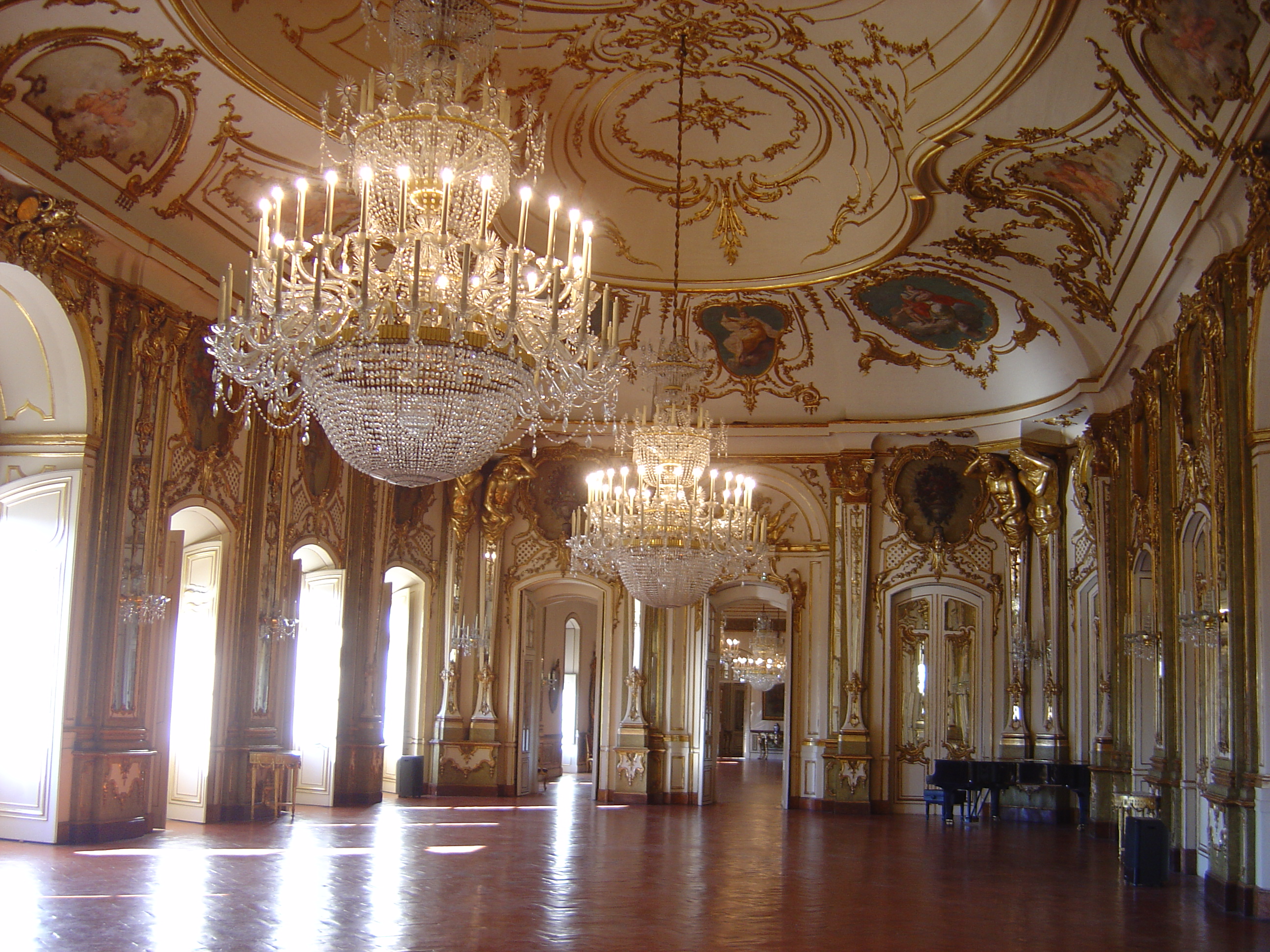
Grand panoramas and works of art certainly do thrill, because they lift us right out of our normal lives. What better way to digest your Xmas dinner ? What better excuse to avoid the in-laws?  Tosca and Rigoletto worked because a sense of place was relevant to the operas as drama. The palace at Mantova is a maze of different buildings connected by alleyways and courtyards. A metaphor for the complex relationships within the Court, where nothing is quite as simple as might seem. But La Cenerentola is a fantasy. Any palace will do. (the photo about is Queluz, near Lisbon).  Remember Massenet's Cendrillon at the Royal Opera House last year ? (review here)

In Rossini, glamour scenery certianly adds to the experience, but whart counts are the arias. No Placido Domingo or Vittorio Grigolo this time. Most of this cast are reasonably well known, some bel canto regulars like Lorenzo Regazzo (Alidoro), and Carlo Lepore (Don Magnifico). The leads are relative newcomers, though, Lena Belkina (La cenerentola) and Edgardo Rocha (Don Ramiro).  Youth and energy could go a long way in an opera like this. 

Monday, 17 December 2012

Florian Boesch Schubert Winterreise Wigmore Hall

Wintery weather for Florian Boesch's  Schubert Winterreise at the Wigmore Hall. But what bliss to hear an austere interpretation that challenged  assumptions! This wasn't "easy listening", for Boesch doesn't do superficial charm. True Lieder  devotees know their Schubert so well that they can  appreciate new perspectives.  Boesch and Roger Vignoles took an original, courageous approach which proved just how much there is yet to find in this well-known cycle.

Boesch made his point from the very first word, "Fremd", projecting it forcefully so there was no mistaking that what was to come would be comfortable. Schubert sets the word twice for emphasis. Boesch and Vignoles separate it from the rest of the phrase with the tiniest pause, so subtle you might miss it, but the chill lingers through the following images of May, love and flowers. "Nun", Boesch continues. But is this just a journey through landscape? "Nicht wählen mit der Zeit, Muß selbst den Weg mir weisen In dieser Dunkelheit". By emphasizing key words, like "Fremd" and "Was", Boesch establishes a thrust that intensifies the chilling, cutting edge in the music, often muffled by the impressionistic "snow"  imagery in the piano part.

Later on the journey, the protagonist addresses crows, trees and metereological phenomena.  In some interpretations, this is a sign of madness. Perhaps even the old beggar is a hallucination.  Boesch, however, is more humanistic, drawing his ideas from psychological theory. Wilhelm Müller, the poet, saw battle in the wars against Napoleon. He'd also overcome an unhappy love affair. A sensitive reading of his texts shows how purposeful this journey might be. "Die Liebe liebt das Wandern, Gott hat sie so gemacht".  It's not an aberration, but natural development.  Boesch's almost conversational style is understated and direct.  Lieder singing turns the listener inward, identifying with the performer rather than observing from outside. For Boesch, there are no histrionics, no exaggerated operatic mad scenes. If the protagonist is indeed insane, then so are we.

Boesch's direct, conversational style suggests a rational, though very intense  man who is working things out  from different angles.  When Boesch sings of the girl he's leaving, the tenderness in his voice suggests that she was a real person with whom he's had a genuine relationship. His anger is quite appropriate.  In "Estarrung" , the numbness the poet feeels is suggested by the quiet desperation in Boesch's voice. He listens to Vignoles play the prelude to  "Der Lindenbaum", and the mood changes. In this performance, Boesch took longer pauses than he does in his recording of Winterreise last year with Malcolm Martineau.  This creates a more contemplative effect, as if the protagonist is actively assessing the world around him and considering his options. Although the music flows between songs, Schubert purposefully changes the mood in each song. The poet cannot wallow but must keep moving forwards, pulled ahead by the piano part.  "Es war zu kalt zum Stehen".

In true Romantic fashion, Boesch's protagonist responds to Nature. "Irrlicht" was taken with such a sense of wonder that you could imagine the unearthly halo that illuminates the marsh spirits. The "Blumen in Winter" shone with deftly defined lyricism.  Because Boesch listens carefully and enunciates his words with deliberation, we too listen to how the images in this text recur, in different guises as the journey progresses. The friendly will o' the wisp reveals itself as delusion, Village dogs bark no less than three times in this text,  but eventually the Leiermann shows that they can be ignored.

Often it's assumed that Winterreise ends in death. But is death the only alternative to the values of the village? The Romantic spirit focussed on the individual, and on personal enlightenment. The protagonist in Winterreise is setting out on a road "die noch Keiner ging zurück" but that could mean that he's not the man he was before he set forth. In "Das Wirthaus" the piano part suggests a tolling death knell, but the wreaths here are for other travellers. This protagonist cannot rest. Boesch sings "Mut" defiantly. Already we hear Vignoles's playing evoke the folksy sound of a hurdy-gurdy, as the poet resolves to mock the wind and weather. The phrase "Will kein Gott auf Erden sein, sind wir selber Götter", was enunciated with deliberation.

The whole winter's journey has been leading to the final song, Der Leiermann. How carefully Boesch describes the old man, barefoot in the snow, "mit starren Fingern dreht er was er kann". Perhaps the Leiermann is an apparition, since few people might survive is such conditions. But the very fact that the Leiermann continues playing against all odds is what makes him a "Wunderlicher Alte".  Boesch intones the words as if they were strange prophecy.  In summer the Leiermann might play at village dances, but in winter he somehow continues to play, as if driven. The instrument itself is simple, droning as its handle is moved in a circular motion. It's music in a very basic form, but music nonetheless.

The protagonist wonders if he should follow. "Willst du meinen Liederen deine Leier drehn?". Boesch articulates so you clearly hear the connection between "Lieder" and "Leier". Perhaps in some circles, outsiders like the Leiermann might seem "mad" because they don't conform to convention.  Romantic period sensibilities would, however, have identified the Leiermann with the image of an artist who persists with what he believes in,  however isolated he is from society.  Boesch and Vignoles gave us at the Wigmore Hall much to contemplate. We cannot dismiss this Leiermann as mad or irrelevant any more than we can dismiss the role of Art itself.
Please also see this interview, where Boesch speaks about his unorthodox approach to Die Schöne Müllerin. Read what he says carefully, because he's extremely perceptive.  His performance at the Oxford Lieder Festival was a great artistic experience.  Boesch's ideas apply even more to Winterreise, and were, at the Wigmore Hall, expressed with great emotional conviction.

Sunday, 16 December 2012

Terfel steals show - Zurich Der Fliegende Holländer London

There are some who believe that opera is "only" about singing, and nothing else. They would have loved this production of Wagner Der Fliegende Holländer at The Royal Festival Hall, a concert performance of the current production at Opernhaus Zürich. Bryn Terfel, Matti Salminen and Anja Kampe, all of them veterans.

This is only Bryn Terfel's third Dutchman, but the part comes so naturally to him that we can already imagine him as one of its great interpreters  "Die Frist ist um", sang Terfel, instantly transforming the atmosphere. Terfel isn't predictable. When he's inspired, his performances are electrifying. When he's unenthusiastic, he coasts. On this occasion, we heard Terfel justify the whole performance.

Terfel knows the Royal Festival Hall, its acoustic and its audience. He gauged his performance to suit. This Dutchman was intimate, even personal, far more complex than the brutish Dutchman he sang in the 2009 Royal Opera House production. The quieter passages were created with delicate balanced mezza voce."Mein Schiff ist fest", he sings, but shapes the second phrase more tellingly.  "... es leidet keinen Schaden". The ship is strong, but its captain is a damaged soul. This Dutchman doesn't bluster. Terfel shapes  phrases with sensitive nuance, sometimes singing with extreme pianissimo. Opera house dynamnics don't often favour this fine gradation, so Terfel uses the auditorium to his advantage. Sometimes it felt like having a one to one connection with the Hollander. Terfel makes us hear the human being behind the demonic persona, and that's where the real drama lies. This is the Dutchman Senta intuits behind the gloomy portrait, whom no-one else can perceive.

The evening started fitfully, the overture interrupted by the arrival of latecomers. Perhaps the conductor,  Alain Altinoglu, was aiming for a vaguely period sound, for this is very early Wagner, premiered twelve years after Meyerbeer's Robert le Diable, and seven years before Robert Schumann's Genoveva. We're so used to hearing full bodied mid 20th century approaches to Wagner that we can lose context. This wasn't a period performance, however, and in any case period performances can be vividly gutsy. At one point I tried to count the number of musicians in the orchestra, to account for the thin textures and lack of overall thrust. There were almost as many singers in the choirs as musicans in the orchestra.  Perhaps the spareness reflected the stark minimalism of Andreas Homoki's staging (see production photos here)  though that staging could support a much more savage interpretation. Orchestrally, things picked up in the second half, but by that stage my ears were tracking little but the singing.

Anja Kampe sang Senta in both the Royal Opera House productions (more here). Then, she was an excellent foil to Terfel's taciturn Dutchman. When Terfel creates an utterly more revealing Dutchman, the balance shifts. Kampe's Senta now has striking big notes, the energy transferred from creating character to creating grand singing.  It's perfectly acceptable, but for me there's always more to opera than voice alone.  More intriguing was Liliana Nitikieanu, whose lusciously warm timbre suggested a Mary with a lot more personality than Senta, possibly even more sensual, but less given to Senta's anguish.

Matti Salminen is a force of nature, always fascinating even when his voice shows strain. He didn't seem well, clinging to the podium, but he still created a convincing Daland. I'd been looking forward to hearing Marco Jentsch's Erik, because he was a very promising Walter in Glyndebourne's 2011 Meistersinger (more here), but he pulled out, replaced in London by Martin Homrich. Homrich was adequate, if dry, suited to more conventional performances than this one, dominated as it was by Terfel's unusually fine characterization. Fabio Trümpy as the Steuermann, was a discovery. He's a Zürich local boy, and sings in the Ensemble there. His clear, bright voice was another revelation of the evening - we must hear more of him.

photo : Nick Step

Saturday, 15 December 2012

The Full Peer Gynt Grieg, Barbican

As soon as the Barbican announced its 2012-13 season I rejoiced. (Full review here)  Edvard Grieg's Peer Gynt op 23 is rarely heard in full: usually we hear the Suites thereon and popular extracts like Morgenstimmung,  the Hall of the Mountain King, and Solveig's Song The version tonight will be based on an edition prepared in the 1990's  which frames the music with pieces of spoken dialogue from Henrik Ibsen's original play. Music with incidental speech, this time, not play with incidental music !


The "full" Grieg Peer Gynt was premiered in UK at the 2001 BBC Proms.  Bo Skovhus, dressed in green and red Norwegian costume, sang Peer Gynt. Until that point I'd never appreciated why Skovhus had such a following. After hearing his superlative performance, I too was hooked. Barbara Bonney sang Solveig. In those days, she was the pre-eminent Scandinavian song specialist. Manfred Honeck conducted the Gothenburg Symphony Orchestra. Three speakers, including Simon Callow.

The performers tonight at the Barbican will be Miah Persson (usually divine), Johannes Weisser, Anita Hallenberg and the BBCSO under Marc Minkowski.Tonight's concert is being reviewed in Opera Today. Part of the charm of this version is that we get to hear the big choral sections. In The Hall of the Mountain King is great fun when you hear the wild Troll chorus! When Peer Gynt meets the Bøyg (a monster) the orchestra recoils in horrror. The chorus screams in alarm, but is calmed by a hymn tune,  complete with organ.

There's an interesting version of Solveig's song by Chinese coloratura Zhou Xiao yuan HERE, which you won't find elsewhere easily. This song is one of Miah Persson's signatures, so  it should be a great experience.  Below an extract from Grieg "full" Peer Gynt op 23. Don 't recognize? that's why it is needed.

.

Friday, 14 December 2012

La Diva delivers, Renée Fleming Barbican

Renée Fleming's recital at the Barbican London focused on composers active in Vienna in the decades spanning the 19th and 20th centuries - that "golden" epoch . And to her credit, she sang Schoenberg, Wolf, Mahler, Korngold and Zemlinsky with Strauss for encores. . Read the full review in Opera Today, it's the kind of musical analysis that's so good to read. But let's face it, many in the audience went for La Diva, who delivered.

"she deserved the adulation and the rapturous standing ovation: it was clear that she could ask her voice to do whatever she willed, confident that the result would be technically masterful yet seem effortlessly articulated. Just one tiny, humble, suggestion: if your feet can’t be seen beneath the taffeta fanfares, there’s no point crippling yourself in tottering, un-walkable Louboutins — when you sing this gloriously, flat pumps will do!"

Terfel speaks : Der fliegende Hollander

On Saturday 15/12, Bryn Terfel sings Der Fliegende Holländer at The Royal Festival Hall, in a non-staged version from Zurich Opera. HERE IS MY REVIEW.  Here is a link to an interview Terfel gave to a Swiss reporter.   "It's young Wagner" says Bryn, "He was like a scientist, finding out new things himself. There are bits of Fidelio in here and Italianate qualities.". Terfel says coyly that  he hopes that in time he'll be considered a great Wagner singer, "a lyric Wagner-based bass baritone but with intensity". But what's even more interesting is to watch Terfel's body language and listen to the way he plays with the interviewer,. He's telling us much more about himself  than his words do.  HERE is another link to a photo gallery on the Zurich Opera site.

Wednesday, 12 December 2012

Kaufmann Lohengrin La Scala Barenboim

Gala nights at Teatro alla Scala Milan are big occasions. There's often a political dimension becaue Italians take opera seriously. In 2010, there were demonstrations and Daniel Bareboim made a passionate speech from the podium .This year the fact that Wagner was chosen instead of Verdi was an issue, and some politicians didn't attend. This year, the performance wasn't screened live in cinemas outside Italy. Perhaps they wanted to preserve the exclusive cachet.  But seat sales aren't the way the market works anymore. Thwarted of the usual cinemas screenings, audiences outside Italy watched the broadcast via arte.tv.

The cast list was stellar: Jonas Kaufmann as Lohengrin, René Pape, Annette Dasch, Evelyn Herlitzius, Tómas Tómasson. Even the Heerfufer (Herald) was tops :Zeljko Lucic. Since Barenboim has been associated with Wagner most of his adult life, the performance was never in any danger of being a disappointment. Surprisingly, though, some of the singing wasn't quite as good as might have been expected. Tómasson's Telramund suffered vocal roughness, particularly in the first act, though he picked up later. Even Kaufmann wasn't quite his usual, luminous, lyrical self.  But it was plenty good enough, we can't expect extreme perfection all the time.

Annette Dasch pretty much stole the show. She sang Elsa at Bayreuth in the Hans Neuenfels production (more here). She was so good that I for one wasn't heartbroken when Anja Harteros pulled out at the last moment. Dasch doesn't fit the cliché of Elsa as passive victim waiting for a handsome prince : she's too strong a personality, and too vivid. A voice with that luscious richness couldn't sound wan. Besides, Elsa is a Wagner heroine. Like Brünnhilde, Isolde and Senta, she finds solutions. Brabant is in chaos because Elsa's brother Gottfried, the rightful heir, has disappeared. Telramund accuses Elsa. If she's eliminated, Ortrud can rule and restore her ancient gods. This isn't merely a struggle for succession but a struggle between cosmic forces

If Ortrud can use magic, Elsa can call on supernatural forces. The libretto refers to her as in ruhiger Verklärung vor sich hinblickend (quietly transfixed, staring ahead of her, as if unaware of the crowds around her). Elsa may not even know it, but she can call on some deep subconscious force to help her survive. The Grail community isn't real, and indeed, goes against Christian theology. Is Lohengrin a kind of instinctive wish fulfillment?

Claus Guth's staging addresses Lohengrin on a psychological level. This Brabant isn't historic. When the real Heinrich der Vogler lived, Ortrud's gods had long been replaced by Christianity. In Wagner's time, though, Germany existed as a collection of small states. If Guth sets this Brabant firmly in the mid 19th century, he's closer to the deeper spirit of the opera than the kitsch pageantry of Moshinksy, where decor replaces drama. The darkness in Guth's production throws focus on the characters.  Telramund and Elsa are buttoned-up power figures. Gottfried is seen with a "young" version of Elsa, reminding us how strongly Elsa and Gottfried were bonded.

In the libretto, Wagner makes a point of referring to Lohengrin's horn, a detail often overlooked by stagings which emphasize the mein lieber Schwan image.  Guth shows that this detail is no accident. What other Wagner hero carries a horn? Siegfried, who saves Brünnhilde from her prison.  Later, when Kaufmann's Lohengrin contemplates the dilemma Elsa puts him in, he cradles it like a child seeks help from a comfort object. In the First Act, there's a piano on stage as Ortrud and Teltramund accuse Elsa. At the end, when Lohengrin departs, the piano appears again among the reeds by the lake. Is it Elsa's equivalent of a horn? Music has the power to lift us out of dilemmas. Imagination is a positive form of magic, with which Ortrud's repressive spells cannot compete.

Heinrich and Telramund are officers, but the Brabanters are decamisados. Lohengrin doesn't need a shining swan suit: he's a Romantic hero, in an open collar shirt, like a poet. When  Kaufmann first materializes, he's curled in a foetal position, twitching like a bird breaking out of its shell.  Later, as he's about to return to Monsalvat, he's barefoot again, splashing in the water around him.  Elsa remains in her finery, albeit dishevelled. She and Lohengrin inhabit different worlds. Essentially, he's a creature of Nature, and she the type he needs to frame him with a name. Lohengrin teeters on a narrow pier above the lake, torn dangerously between earth and water. Later, when Gottfried reappears, he stands on the pier. Elsa reaches out but falls.

Musically, this La Scala Lohengrin is satisying though not quite as great as it could be. Guth's staging may not please the glam and glitter crowd but it's a whole lot more perceptive.