Sunday, 23 June 2013

Gloriana Royal Opera House Britten's Mock Tudor

Claire Seymour's review of Britten Gloriana at the Royal Opera House is HERE in Opera Today. She wrote the book on Britten's operas - literally. "The Operas of Benjamin Britten :  Expression and Evasion is an authoritative reference work anyone interested in Britten needs to know. So what she says about the opera, and about Richard Jones's production, is worth reading.

"Initially we are confronted with the simple exterior of a theatre. A dignitary paces impatiently beneath the royal crest and flag which adorns the façade, anxiously awaiting the arrival of the royal party; Queen and consort enter, slightly bemused by the cultural offering bestowed in their honour. The ‘fourth wall’ is lifted to reveal an unsophisticated platform; prompter, janitor, curtain hoister and bell-ringer loiter with anticipation in the wings. The orchestral prologue commences, visually illustrated by a perfectly choreographed reverse parade through British monarchical history - faultlessly in keeping with current Conservative-party educational policy - until we arrive at the first age of Elizabethan magnificence and mal-contentment. In a brisk sweep - reminiscent of the gallery of ancestral portraits illuminated by the Prologue to Owen Wingrave - Richard Jones makes a virtue of the opera’s potential cause for irritation - its whimsicality and twee ‘Merrie England-ishness’. "

"Henceforth, all sentimental, mawkish, am-dram naff-ness is viewed through a knowingly ironic filter - which, in fact, perfectly complements the parodies and self-parodies of Britten’s score."

Britten's Mock Tudor carries a punch ! read the whole piece here. 

Friday, 21 June 2013

Bite with humour - Britten Gloriana Royal Opera House

Bright Britten Gloriana at the Royal Opera House. What might Britten really have meant when he celebrated the grand public Coronation of a new Queen with an opera which connects power with illusion?  Played straight, Gloriana might seem yet another ceremonial pastiche flattering the Establishment. But clues to Britten's motives lie embedded in the music. Is Britten, like a Court Jester, the man who tell home truths under the guise of charm ?

"Who threw the gauntlet down ?" asks the Earl of Essex, (Toby Spence) hearing the sound of a joust in the background.  Is Britten throwing us a coded challenge? Instead of looking for himself, Essex relies on others to tell him what's going on. He's a a jealous upstart who rises because he can flatter the Queen.(Susan Bullock). Hence his exchanges are oddly repetitive and unoriginal. Britten is drawing character with such subtlety it might easily be missed. And why is an intelligent woman like Elizabeth I so easily fooled? Britten knew Elizabethan music well. So when he makes Essex sing doggerel, he makes a point. "Quick music is best when the heart, the heart is oppressed. Hallaloo, Hallalay, ha-a-a-a lalayah !" In this context, the long masque and dance sequences take on grim significance. They are circuses for kings, escapist pursuits that lull the public into subservience.

At Court, the aristocrats flatter the "Red Rose" that is the Queen, comparing themselves to "green leaves". In prosperous but provincial Norwich, the locals put on rustic pageantry. Maidens and Swains dance to songs so twee they'd be embarrassing, even for yokels. The long scene at the Guildhall in Norwich can drag but conductor Paul Daniel shows how the details are more significant than the showpieces. A sour trombone groans as the elderly Recorder of Norwich (Jeremy White)  falls as he tries to bow. "Tedious!" sneers Essex. But the Queen puts up with the locals because it is shows like this that maintain her authority. Is the Queen really fooled by flattery? The lavolta is charming, and gives the members of the Royal Ballet something more substantial to dance to. But for the Queen, it's a ruse to make her ladies sweat. Grotesque brass passages suggest disgust and menace. When the rabble erupt onto stage, the music sounds vigorous and direct. Bad news in Ireland is announced in the City before it reaches the court by a Blind Ballad Singer (Brindley Sherratt).  His music is hideous, for he suggests disorder and the collapse of the system. Yet he's also Beckmesser, connecting to the jealousy, pettiness and falsehood in the opera and in the background of its genesis.

Benjamin Britten himself haunts this production. Perhaps it's significant that Paul Daniel also conducted Phyllida Lloyd's film Gloriana (reviewed here). Richard Jones takes up the theme of performance and illusion. We see the mechanics of stagecraft.  Boys carry placards that spell out the places scenes are taking place in. Workmen change props on stage. We see singers stumble over badly positioned steps. Arc lights are positioned in the orchestra stalls. Amateur dramatics? The clumsiness is deliberate. Britten grew up in a world where ordinary people made theatre. At Aldeburgh, he probably did more for community opera than anyone has done since the Middle Ages. Gloriana is an infinitely more sophisticated Albert Herring. We see a figure in silhouette who looks and moves as Britten did.

Ultimately, though, Jones connects to perhaps the darkest theme in the opera, that power is the art of illusion. The Norwich scene is crucial because it shows how ordinary people are complicit in power politics. The "green leaves" the courtiers sing of are translated, literally, into "green leaves" in a wonderfully-staged tableau depicting the kind of village vegetable shows that were once so popular when people grew their own food.  In 1953, people still believed in wartime austerity. The good folk of Norwich line up regiments of marrows, battalions of cabbage. How Britain has changed!  One of the amateur dramatics effects shows a giant pot where missionaries are cooked, small boys blacked up to look like comic book figures from the past. Then we catch glimpses of a real, adult Black man looking on from the wings. Empire is no longer an "exotic distant place" Elizabeth dreams of, but our present.

Susan Bullock sang Elizabeth. This is a role that requires, above all, the ability to project personality. Sarah Walker, a mezzo, carried it off  well for Mark Elder (aged 34!) in 1984, but Britten wrote it for soprano, so the higher timbres cut shriller and more sharply. Bullock was saved the indignity in the scene where the Queen is seen exposed, bald and old. In other productions, this can be shattering drama.  Here the full impact is rather muted. Britten reserves his last irony for the end. "Mortua!" sings Bullock, as Elizabeth faces death. At this critical junction, Elizabeth no longer sings. Bullock declaims, as actress.  Toby Spence sang the Earl of Essex and Mark Stone sang his rival the Earl of Mountjoy. Perhaps there's another subtle Britten dig : none of these roles is a "Big Sing", not even Elizabeth, which showcases the singer's acting skills not her vocal technique. The biggest"sing" is the Blind Ballad Singer  where a good singer has to sound bad !.

Claire Seymour has reviewed Gloriana at the Royal Opera House in Opera Today. Read  HERE. That's authoritative. She's the author of The Operas of Benjamin Britten and an extremely perceptive writer.


The performance on 29th June will be broadcast LIVE online on BBC Radio 3. 

photo: Credit Clive Barda, courtesy Royal Opera House

Thursday, 20 June 2013

Britten Gloriana - Politics as Theatre

Before tonight's premiere of Benjamin Britten's Gloriana at the Royal Opera House, some thoughts on the opera and the politics of performance. ( My review is HERE). The odds were stacked against Gloriana even before its premiere. This was an exceptionally high profile commission, the biggest in British opera history. A new Queen was being crowned, and a new era of hope was dawning. And the commission went to Benjamin Britten then still under 40, and a relative outsider in British music circles. If even Peter Pears wasn't keen on taking second place to a soprano, what were the chances that the opera would be appreciated for what it was? Politics plagued the original production just as it plagued Elizabeth I.

The famous Opera North production, directed by Phyllida Lloyd, is intriguing because it 's not a straight film of the opera but presents it as a film about the making of performance.  It's absolutely valid as an interpretation of the opera. Politics is an extreme form of theatre, where image  means power. Elizabeth puts her personal feelings aside to protect her role as Queen.  This film is a work of art built around a work of art.

It's an important contribution to our understanding of Gloriana and the politics that went on about its reception.  I reviewed the DVD in 2007 for Opera Today. 

 "In the first scene, the Earl of Essex sings about a “chess game” in which the goal is to win the queen. This Queen has to keep ahead of the game, constantly, through stratagem and the illusion of invulnerability. Thus the stage action is woven with scenes from “behind the scenes”, creating the effect of illusion within illusion. Like the Queen herself, Barstow the actress is under pressure to perform. In the opening scene, where she looks wearily into the mirror in her dressing room, while listening to the overture. It’s very moving. Not all singers make good actresses. Barstow, though, is exceptionally good. She’s so convincing that you forget, for a moment, that this, too, is illusion and stagecraft. Her whole performance is a masterclass in opera characterization, and worth studying for its own sake. This Elizabeth is no fool, but watchful and tense, like a coiled spring. Hence the sharp delivery and attack, and the bristling, sharp edge to the voice. When the Queen steals her rival’s dress and dances in it, Barstow spits out her lines savagely, bringing out the menace that underpins the elaborate party games at Court."

"Film creates special new opportunities. For example, in the “Mortua”, when the Queen finally faces her mortality, there are long silences which would not work on stage or recording. Here though, the camera dwells on Barstow’s face which registers intense emotion. Sound, as such, is unnecessary. When she does sing, weakly, the song she and Essex had playfully sung long ago, she sing so quietly and tenderly that the impact would otherwise be lost. Similarly when she’d earlier explained her love for her nation, the camera pans the balconies in the opera house, backstage attendants and so on, as if all the world were listening to those noble, ringing words"

"Just as the film draws out the effort the Queen makes to remain in control, the film shows how much work goes on behind the scenes of a production. Recordings alone can sometimes break the link between listener and performer, so sometimes people focus on recording values rather than on artistic creation. This film is an excellent reminder that it is people who make opera and that it isn’t easy work !"

Wednesday, 19 June 2013

Britten Church Parables Aldeburgh The Burning Fiery Furnace

While everyone was at Peter Grimes on the Beach in Aldeburgh, true Britten fans were at the Church Parables at Orford. Curlew River is well established on its own merits but opportunities to hear it together with The Burning Fiery Furnace and The Prodigal Son are rare. The Church Parables will next be heard in Southwark Cathedral in London (tickets from the Barbican) and at the Buxton Festival. But hearing the Parables in Orford is a special experience. They were written to be performed in St Bartholomew's church there. Frederic Wake-Walker's production with Mahogany Opera takes its cue from the design of the building and from the landscape surrounding.

Curlew River (1964) is the most innovative and visionary Parable,  (see my review here) but The Prodigal Son (1968), is much closer to a medieval mystery play. The stylized ritual movements are very much part of this ancient tradition, and relate to the spartan orchestration. The production premiered earlier this month in a chapel in the Hermitage, in front of the very Rembrandt painting Britten and Pears saw when they visited St Petersburg. Hence colours of red, gold and ochre. As Claire Seymour points out in her book, The Operas of Benjamin Britten : Expression and Evasion, The Prodigal Son may have had many extra levels of personal meaning for Britten, so its apparent simplicity is deceptive. Mahogany Opera's production focused more on the church setting.  The father does no violence and understands that the son needs to make mistakes in order to mature.

The Burning Fiery Furnace (1966) stimulated a more inspired response. Frederic Wake-Walker drew on the subtle parallels between this work and Curlew River. The Babylonians are "exotic": gorgeous costumes, elaborate vocal lines, music which mixes pomp with sensuality. The Entertainers are boys dancing in vaguely Balinese costumes, their movements angular and ritualized. .In Indonesia, Britten and Pears watched wayang puppet theatre, where puppets are shown in silhouette. The real "drama" comes from the shadows thrown on the wall behind. It's a brilliant metaphor for Britten's personality.

Britten creates the Fiery Furnace in his music and the players of Mahogany Opera act it out visually. The Babylonians converge over the three exiles, Shadrach, Meshach and Abednego. The Babylonians wear red caps, and gloves. Their head bob up and down, their hands raised in jerky movements like fluttering flames. Again, intelligent lighting design (Ben Payne), this time creating huge shadows that reached way above the stage. Their music roars. Britten has built the image into his orchestration. James Gilchrist sang Nebuchadnezzar and Lukas Jakobski sang an extremely impressive Astrologer, his voice booming with resonance, reaching the deepest recesses of the Church at Orford. The exiles aren't intimidated. Their God doesn't do graven images. They survive because they have faith in purity.

Claire Seymour will be reviewing this production of the Church Parables for Opera Today.

Britten Church Parables Aldeburgh Curlew River

Peter Grimes on the Beach might have attracted gimmicky interest, but the Church Parables were by far the true artistic highlight of this year's Aldeburgh Festival. The Parables were written specifically for Orford Church. It's important to experience them in this context to really understand their spirit. All around Aldeburgh, ruins remind us of a time when abbeys and churches were outposts of learning. Then came the Reformation, and they were destroyed, burned to the ground in a frenzy of hate .The ruins might look peaceful now but once they witnessed howling mobs hell bent on annihilation. Britten wasn't religious but he despised mob rule and barbarism. The Church Parables aren't really Christian. They are a protest against the destruction of civilized values. The stark white-washed walls at the church in Orford bear witness to violence, but their foundations are strong and have lasted a thousand years. Hearing the Church Parables here adds meaning.

Britten's fascination with non-western music had very deep roots. He worked with Colin McPhee, the pioneer of Indonesian music. Here is a clip from a recording made in 1941, where Britten and McPhee play a transcription of Balinese music for two pianos.  By the time he actually visited Asia he was well aware of the new horizons non-western music could offer. Curlew River springs directly  from the Japanese Noh drama, Sumidagawa River, but it was also a vehicle for Britten's own profound sense of alienation. "I can't write Japanesy", he said. Curlew River isn't pastiche, but reflects ideas long germinating in Britten's psyche.The strange keening lines and swooping cadences can be heard throughout his work, from Our Hunting Fathers to Death in Venice.  Read my piece on The Prince of Pagodas here, and many other pieces on Britten and non-western music. Britten was far more radical than we appreciate.


In Curlew River, Britten connected the formalism of Japanese theatre with the rituals of Catholic liturgical music. Neither form was populist, both the esoteric preserve of an educated minority. Yet Britten, with his passionate belief in communication and in the community, also incorporated elements of medieval mystery plays, where complex ideas were expressed in simplified form. The characters in Curlew River are larger than life, almost symbolist archetypes, and the music they have to sing is extreme. Nowadays. we're so used to naturalism in film and theatre that we forget how recently it took hold.  By eschewing naturalism, Britten connects Curlew River to much more ancient traditions.The stylized ritual also serves as a an emotional mask, distancing the artists from his audiences. This reticence can be off-putting, Britten isn't touchy-feely. But his emotions are so intense that they have to be faced obliquely, as if through a mask.

Curlew River is the best known of the three Church Parables, but at Orford, the connections were enhanced by using the same cast - James Gilchrist, Lukas Jakobski, Rodney Earl Clarke, Samuel Evans, and Mahagony Opera, directed by Frederic Wake-Walker, with designs by Kitty Callister and lighting by Ben Payne. Roger Vignoles was Music Director, conducting the Aurora Orchestra from the chamber organ. The musicians played wearing  monastic costume, and barefoot, like the players on stage. That kept them warm on a cold night, but was also part of the meaning. Like the Pilgrims, like the spartan church, the music is deceptively simple: steady percussion, delicately ethereal figures. Curlew River begins and ends with processions, sung by the monks, framing the strange drama within. At Orford, the singers chant in Latin, followed by the orchestral players, holding their instruments. All are barefoot, their feet in contact with the earth.

James Gilchrist sang the Madwoman. His voice curled around the long, wailing syntax, each tiny nuance dripping with purpose. "I come from the Mo-o-o-o-u un-n tains"  Gilchrist's syllables are razor-sharp. His consonants extend like wailing cries  which could carry over great spaces. Britten's lines imitate the call of wild birds, and curlews in particular,  Orford rises from marshland and reedbeds. Nature is embedded into the opera, reinforcing the non-naturalism of the music.

Gilchrist wears a costume vaguely like the hood a Japanese noblewoman might wear, but it also resembles a shroud. Faint pink tones colour the white gauze of mourning. Do they suggest fallen cherry blossoms or blood? The part is ambiguous, for good reason. This isn't a part for singers who can't take risks. Ian Bostridge is singing the part at St Giles Cripplegate (Barbican) on November 14th-16th, definitely something to look forward to. Bostridge is arguably the best Britten singer of our time, and Gilchrist comes very close. Both are intelligent artists, their skills sadly under-valued by those who prefer safe and bland.

The staging was as compact as the music is spare. The stylized gestures exactly follow the notes in the orchestra,  To create the image of a boat, the pilgrims stood together, moving in unison. Bobbing up and down they suggested the movement of a boat on choppy waters. They stand on a small platform above the Madwomen. Their faces are lit from below, so their features take on a surreal cast . How frightening they must have appeared to the Madwoman, the outsider, desperate for news of her son. The spirit of the Boy appears, as a Redeemer. He suffered, but his death serves as inspiration to those who pass by his grave.  At Orford, the boy is visible, backlit by golden light, and more plausibly some kind of Christian holy figure, keeping faith with the monastic context. The monks of Reformation Suffolk may be gone, but their spirit lives on.

This production by Mahogany Opera has been heard at The Hermitage in St Petersburg and will be travelling to London as part of the City of London Festival, and then to the Buxton Festival.

Also please read :
Pink Triangles and Benjamin Britten
Britten, Paul Bunyan and the Idea of America
Britten Prince of Pagodas

Saturday, 15 June 2013

Astonishing Britten Death in Venice - Aldeburgh Festival

Benjamin Britten's Death in Venice at the ENO is revived at the Coliseum. Deborah Warner's production is slick, as glossy as a fashion magazine photoshoot. Aschenbach went to Venice in the first place to escape the comfortable convention he enjoyed with his late wife. Of course Aschenbach in Venice is isolated, an outsider looking in at a strange and alien world. He's a German in Italy, for one thing. Warner's production, however, tips the balance firmly in favour of superficial glamour.. This is the kind of set that gets applause : elaborate costumes to swoon over, vistas that make you gasp at their beauty. But the whole point, to Thomas Mann and to Benjamin Britten, was that surface beauty hides corruption. Venice is lovely but it harbours plague. "All Germans must leave" says the libretto. All non-Germans should be hypnotized by glam, says the staging. Forget the music and meaning.

In 2007, Warner's Death in Venice and Yoshi Oida's Death in Venice premiered within a month of each other. One high budget and glamorous at the ENO and the other at Aldeburgh with a much more humble pedigree. Yet the latter easily eclipsed the former in terms of artistic merit. Oida's staging is powerful, intelligent and absolutely true to the music and spirit of the opera. It's being revived at Aldeburgh this November : the true highlight of the year for those who like their Britten with depth and insight. At the time, I wrote :

"Yoshi Oida knows that the real focus of the plot lies within Aschenbach’s psyche. Nothing here was mere decoration, nothing merely for superficial effect. Everything revolved around the definition of the central character, even the basic imagery of Venice itself. “Ambiguous Venice, where water is married to stone, and passion confuses the senses” sings Aschenbach as he encounters the city built on water where horizons of land, sky and sea blend amorphously. This Venice isn’t about luxury hotels: indeed Aschenbach is repelled by tourist touts and tries to escape. “Ambiguous Venice” is something altogether more sinister. It is a “timeless, legendary world, of dark, lawless errands”, a place of menace and mystery."

"This is an unnatural city, built on water, back into which the city will slowly but inexorably sink. The set designer, Tom Schenk, used the rough-hewn walls behind the stage at the Maltings without adornment, because they resemble the weather-beaten walls of Venice rising straight out of the canals. Only a little clever lighting was needed to convey the impression that we were trapped in an endless Venetian canal, an image that intensifies the claustrophobia that is so much a part of the atmosphere in this opera. Yet, more subtly, the set embeds the opera into the building for which it was conceived, linking this new production to its premiere, when Britten was himself nearing his own demise."

" Even before arriving in Venice, Aschenbach is thinking of death, of “a rectangular hole in the ground”. There’s just such a hole in the middle of the stage, filled with water. It’s a masterstroke. With simple changes of light, it convinces as the sea, or the maze of lagoons and canals through which gondolas ply. Sometimes it evokes the foul-smelling sewers of the city, emptying into canals, spreading disease. Aschenbach’s journeys across water are like journeys across the River Styx, each crossing propelling him towards destiny. Yet water symbolizes life, too. Tadzio and his youthful friends cavort on the beach. They splash carelessly in and out of the water. As Aschenbach tries to draw closer to Tadzio, he, too, tries to approach the water, but can’t bring himself to get wet. Music and staging converge together to amplify Aschenbach’s dilemma. This production has grown from a profound understanding of the score. The music itself portrays character. Tadzio’s music, based on gamelan, is completely alien to Aschenbach’s. It’s bright, percussive sharpness contrasts with the shadows and ambiguity elsewhere in the score. While Aschenbach has lost his faith in life and in his creative powers: Tadzio reminds him of what he was and might have been"

"This production was a wonderful confluence of music, ideas and theatre. Oida says he developed his ideas by asking questions – why does Tadzio unsettle Aschenbach ? Why doesn’t Aschenbach leave when he knows cholera is around ? Is this “passive suicide”, an unconscious death wish ? It is from this curiosity about the human side of the drama that this sensitive interpretation grew. “I am telling the story of the end of a human life”, Oida adds in his programme notes, “All I can do is demonstrate how far the life of every individual is unexpected and mysterious”. 


photo : Amanda Slater from Coventry

Friday, 14 June 2013

L'Aiglon Honegger Ibert RARE broadcast

Unmissable!  The opera L'Aiglon, by Arthur Honegger and Jacques Ibert on BBC Radio 3 online for a week. This is the performance at Opera Lausanne in April 2013, not available as a recording or online. Quite a discovery!

L'Aiglon, "The young Eagle" was the son of Napoléon Bonaparte and carried his father's name. Even before he was born in 1811, the boy was a pawn in a grand dynastic alliance between two empires. Napoléon was at the height of his powers, able to force the Hapsburgs into a showdown. By marrying the daughter of Marie Theresa, Holy Roman Empress, Napoléon could hope to unite all Europe. Yet by the time the child was three, Napoléon had been defeated and sent into exile.  Suddenly the child was a misfit, an embarrassing reminder that power games don't last. The boy was retitled Herzon von Reichstadt and kept in gilded isolation at the Schönbrunn in Vienna. He died, perhaps conveniently for the Hapsburgs, aged only 22. 

What must it have been like to have been L'Aiglon? The opera portrays the boy as a romantic dreamer, inspired by the glory of his father's achievements, even though he was brought up in a hostile atmosphere where his father's memory was reviled. What psychological mind games must the boy have faced ? His story lends itself to dramatic interpretation.

Honegger and Ibert were writing in 1937. The traumas of the First World War were still fresh in memory, but Europe was once again sliding into war. Honegger and his contemporaries re-examined the past as a route to the future.  L'Aiglon is part of a meme that runs from Abel Gance's 1927 epic Napoléon (for which Honegger wrote the music) to Carl Th Dreyer The Passion of Joan of Arc and to Honegger's own Jeanne d'Arc au Bucher, and even to the wartime anti-fascist resemblance to dramas of Braunfels and Hartmann. 

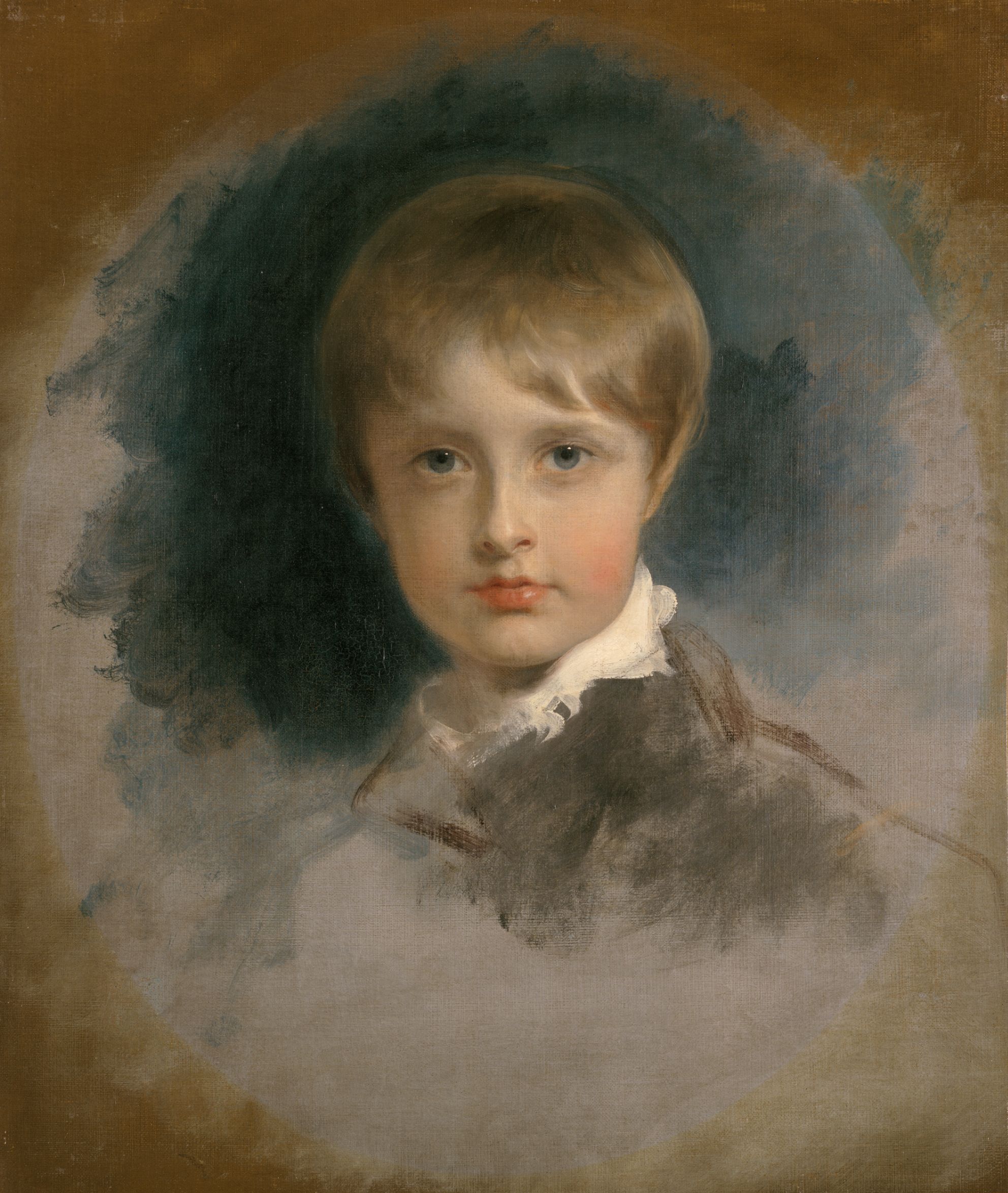
L'Aiglon has an interesting structure. The First and Fifth Acts were written by Ibert and act as decorative frames for the three  darker inner acts written by Honegger.  L'Aiglon (soprano Carine Séchaye) has a young friend Séraphin Flambeau  (Marc Barrard). They're longing to escape the confines of the palace where they're kept in a kind of golden prison. Bonaparte, rose from ignominous origins to glory. Shouldn't his son dream of glory, too?  The picture at right was made in 1830, the period in which the opera is set, and the year before the historical Reichstadt died. How the portrait accentuates his Hapsburg features. The earlier portrait, made in his infancy, accentuates his Bonaparte looks. Political art!
 
In the second act we hear what L'Aiglon is up against. Nearly the whole Act is sung by Prince Metternich (Franco Pomponi). The role is a tour de force, The lines crawl almost bass-like along the lower reach of the register: a snake, slithering quietly but with menace. Metternich was the greatest schemer of his time, and an arch-reactionary who despised everything Napoléon stood for. In 1937, the implications were pretty clear. There's also a parallel with Frederick the Great, who as a young prince tried to escape the Prussian military machine. Honegger softens the portrayal with moments of reflection, and the sound of distant war-horns, but L'Aiglon cannot possibly compete. Séchaye sings wild, almost shrill staccato as L'Aiglon falls crushed.

Act Three is set in a ballroom. Dancers are masked, circulating in neat, formal .rituals. Masked ball as metaphor for power struggle. The orchestral music is elegant, but the voice parts are tense, jerky interjections. L'Aiglon and Flambeau run off into the night to the strains of the Marsellaise. The Fourth Act is as powerful as the Second. Driving, swirling chords, like smoke, wind, storm, suggest the sounds of battle. One "hears" The March on Moscow. L'Aiglon sings of Wagram, his father's decisive victory over the Austrians in 1809, which led to the Hapsburg alliance in the first place.. But Honegger reminds us of defeats to come. Like Frederick the Great's companion, Flambeau dies so L'Aiglon can survive. Trumpet calls, alarums : we can almost see flags flying and horses running into battle. "A Wagram!" cry the chorus, muted as if in fear. L'Aiglon, crazed by his vision, gets carried away. Suddenly, though, the climax ends mid-flow with a few tentative notes. The young man's moment is over.

Carried back to the Schönbrunn, Reichstadt is surrounded by the voices of Maréchals and soldiers and his mother the Duchess of Parma. The sadness in the music is palpable, slow tempi speeding up towards the inevitable conclusion, diminuendos falling like snow. As the young man dies, he hears the song "Sur le Pont d’Avignon". This isn't simply a twee  reference to folk song which a young prince in Austria probably didn't hear too often. The song continues "L'on y danse, l'on y danse". It can be sung as a round, the dancers repeating formal patterns that lead nowhere.

More Written on Skin - broadcasts updates

George Benjamin's Written on Skin  (recorded at the Royal Opera House) will be broadcast by BBC Radio 3 on 22 June 2013 at 6pm and on BBC 4 TV on 28 June 2013 at 7.30 pm. The CD recording made in Aix-en-Provence is available from Nimbus Records (Catalogue Number NI5885), from the Royal Opera House shop and from Amazon. Opus Arte will be releasing Written on Skin on DVD and Blu-ray in January 2014. Just announced (though long rumoured) is a new Benjaimn opera. Kaspar Holten says :

"As a part of our focus on new commissions on all scales over the next years, this will obviously be a key project. It is hard to imagine a better match between a composer and a writer than Benjamin and Crimp, we have enjoyed doing Written on Skin immensely and we are extremely proud that they will be writing a new piece for Covent Garden".


Please see my review of Written on Skin HERE and of Into the Little Hill Here. Lots on George Benjamin on this site, more than anywhere else.

Thursday, 13 June 2013

Britten, Paul Bunyan and the Idea of America

"It is a Spring morning without benefit of young persons. It is a sky that has never registered weeping or rebellion.............It is America. But Not Yet. 

WANTED: Disturbers of Public Order,. men without foresight or fear 

WANTED:  Energetic Madmen, those who have Thought Themselves a body large enough to devour their dreams 

WANTED: The Lost, those Indestructibles whom Defeat can never Change. Poets of the Bottle, Clergymen of a Ridiculous Gospel, Actors who should have been Engineers, and Lawyers who should have been Sea Captains. Saints of Circumstance, Desperados, and Unsuccessful Wanderers and all who can hear The Invitation of The Earth. America, youngest of her daughters, awaits the Barbarians in marriage"

Announces the Narrator in Benjamin Britten's Paul Bunyan, the opera Britten wrote in America. The words ring out with the false theatricality of a "Wanted" poster in the Wild West. The words are framed by a woodwind melody that might evoke birdsong in a virgin forest. But note its sour tone. This is no Wood Dove. Paul Bunyan may not know fear but he's no Siegfried.

Paul Bunyan is a curious beast. Sometimes it sounds like a parody of a Broadway musical, even less rugged than a Hollywood western. The rhyming couplets are deliberately faux-naive. Britten is Tourist in the Redwoods.  He's not even attempting realism. America, or the idea of America symbolized by the Paul Bunyan myth, meant something different to him from the America that surrounded him when he went there in April 1939, before the outbreak of war, when Britons still believed that Chamberlain could hold Hitler at bay. Britten haters use his sojourn in America to attack him for being unpatriotic, ignoring the fact that he returned at some danger to himself and joined the war effort in other ways than by fighting. So what was Britten searching for when he went to America?

Paul Bunyan isn't a very good opera. Indeed, it's perhaps the worst music Britten ever wrote, even taking into account his juvenilia. But it is worth studying to give insight into Britten's creative development.  For years I've been praising Our Hunting Fathers, arguably Britten's first great masterpiece. It's so raw and passionate that it's hardly surprisng that its premiere in 1936 was met with polite incomprehension. The good burghers of Norwich weren't ready for That Sort of Thing. So, in America, Britten tries to engage with the ideal of America as Arcadia The hokiness is artistic licence. Paul Bunyan is a stylized vision of  "a Forest, full of Innocent Beasts. There are none who blush at the memory of an Ancient Farm, None who hide beneath dyed fabrics a Malicious Art ".

Britten didn't find that nirvana in America. He suffered a debilitating illness of some kind, almost certainly connected to creative and psychological turmoil. Almost certainly it was not merely physical, nor, as Paul Kildea suggests, the onset of syphilis. Significantly, Britten resolved the crisis when, in Escondido, California, he read George Crabbe's The Borough, and rushed back to Aldeburgh and to Peter Grimes.

Please see my other pieces on Britten. More Britten on this site than anywhere else, and original stuff too !

Peter Grimes, Aldeburgh Festival

Claire Seymour, author of The Operas of Benjamin Britten,   the essential text on the subject (which you can buy at Snape Maltings), reviews Britten's Peter Grimes at the Aldeburgh Festival in Opera Today.  "....there was nothing ‘conservative’ or ‘run-of-the-mill’ about the performance, led by a dynamic Steuart Bedford, who urged his instrumentalists and singers through an intense, urgent reading of the score; this may have been a concert performance but there was more drama and concentration than is sometimes found on many an opera house stage." 

A CD is in the offing. The Guardian predictably makes more of the novelty of Peter Grimes on the Beach, the open-air performance this weekend, where the singers will be amplified and the orchestra will be a recording. This ought to be fun because you can't get a more "authentic" staging.  Britten drew inspiration from the natural surroundings. We hear the sea in all its moods in this music, so vividly that we can almost feel the rain and salt spray and smell the algae. Britten lived in Crag House, his study window opening straight onto the sea. At Aldeburgh, the fishing boats are launched straight off the beach from ramps. If you walk on the shingle, as Britten did, you are in among the boats and the fishermen. They aren't isolated in quays and harbours. The North Sea howls onto the beach: no barriers, no protection.  For me, this is the essence of Peter Grimes and indeed of Benjamin Britten. Peter Grimes on the Beach may not be best way to hear the music, but it will be a unique experience.

As for me, I'm at Orford for Curlew River and the other Church Parables. These will also be atmospheric as they were conceived for Orford Church, the setting integral to the operas. Britten's Church Parables will also be performed at Southwark Cathedral as part of the City of London Festival (details here).  In September, Stuart Skelton will be singing Peter Grimes at the Royal Festival Hall. Skelton is a consummate Peter Grimes and has done the role many times. This will be a highlight of the year.

I've beenn thinking a lot about the role. There is no reason Grimes "has" to be old and gruff. Troubled souls can be any age. For all we know, Grimes had been abused as an apprentice. Perhaps he's re-enacting the brutality he received as a child. He knows no other way. Given a choice he might not have been a fisherman at all, but comfortably indoors, knitting and embroidering. Which makes one wonder about the dynamic between Grimes and Ellen Orford (note the name). Who would be the man in the house if they marry? Does Ellen really love Grimes or is she projecting her conventions onto him? Grimes is much more isolated and misunderstood than we think. Maybe he realizes that he's better off dead than with her or with society. We're bound by tradition to expect the role to be played in a certain way, but the score itself suggests we should consider more senitive singers  than the usual type. Musically, too, we'd be much better off. 

photo credit Ian Rees

Wednesday, 12 June 2013

Rossini Maometto Secondo Garsington Opera at Wormsley

Rossini's Maometto Secondo is a major coup for Garsington Opera at Wormsley, confirming its status as the leading specialist Rossini house in Britain. Maometto Secondo is a masterpiece, yet rarely performed because it's formidably difficult to sing. It's a saga with some of the most intense music Rossini ever wrote, expressing a drama so powerful that one can understand why early audiences needed "happy endings" to water down its impact. Maometto Secondo has the potential to become one of the great operas in the repertoire. Richard Osborne, the Rossini scholar, describes it as the grandest of Rossini's opera seria, "epic in scale and revolutionary in the seamlessness of its musical structuring". We are fortunate that we saw it first in Britain at Wormsley.

Maometto Secondo, or Mehmet II, Fatih Sultan of the Ottomans, captured Constantinople, and ended the Byzantine Empire. This Turk was no buffo. His next ambitious plan: to conquer Rome, thereby linking Europe and Asia under Islam. Mega geopolitics. Venice was the front line because Venetians traded throughout the Eastern Mediterranean. The  Ottomans  posed a genuine threat to survival of the Italian region. Rossini's audiences knew that Negroponte fell and its occupants were massacred.  Mehmet asnd the garrison commander, Paolo Erissso, existed, but the opera is not based on historical facts. The plot resembles La donna del lago,. Both foreign kings in disguise are called Uberto,  and both offer tokens of safety. Indeed, Rossini simply lifted the aria "Tanti affetti" from La donna del lago straight into the 1823 Venice revision of Maometto Secondo . So much for historical specificity.

It is pertinent that Rossini wrote Maometto Secondo while Naples was occupied by the Carbonari, a volatile, violent secret society dedicated to revolution.  The opera bristles with danger. A confident melody suggests happy memories, but the garrison is under siege. Rossini's vocal lines tear up and down the scale, but the long, difficult runs aren't there for ornamental display. The singers are pushed to the edge, just as the characters they portray. Technically, the musicians are in control, but dotted rhythms and coloratura extremes can suggest palpitating heartbeats, or muscles on alert. Rossini doesn't let the tension subside. Erisso, Anna and Calbo sing a long terzetto which is interrupted by the sound of cannon. Suddenly, Maometto materializes, high above the melée. "Sorgete: in sì bel giorno" is cavatina as theatre.

The melody that opened Act One appears again at the begiining of Act Two. This time, the women of the harem sing of sensuous joys. Anna, having been raised strictly in "tanti affanni d'una rigida virtù"is sorely conflicted. She loves Uberto for what he represents but is duty bound to reject him as Maometto. The struggle between Anna and Maometto is tense because Anna comes very close to surrender. Rossini balances this by giving Calbo the Venetian an aria so stupendous that Anna's decision to marry him seems perfectly plausible. Calbo's "non terrer, d'un basso affecto" is bravura designed to demonstrate bravery.

Rossini prepares us for Anna's sacrifice by introducing a new theme with long brass chords and flurrying woodwinds. Anna's music must seem almost impossible on paper. This is coloratura on a grand scale. It is a compelling reason for using the new Hans Schellevis critical edition of the 1820 Naples original. The best-known recordings conducted by Claudio Scimone both use the 1822 edition, Rossini's sop to Venetian audiences who didn't want suicide on stage.Anna has to sing almost continuously for half an hour with brief respite when she's supported by the female chorus. Each show-stopping section is followed by another. It's hard to imagine going back to the compromise Venice edition after hearing Naples.

David Parry conducted with verve and passion. His musicians are dedicated and carefully chosen, but the orchestra comes together for a short period during the early summer, though perhaps the same could be said of Pesaro.  Parry gets good results from his orchestra, but one wonders how much more thrilling this music would sound with a more sophisticated orchestra.  He's good with voices too, inspiring commitment. On paper, this score must look almost impossible to carry off. Performances all round were good. Just getting the notes is an achievement, but these singers added personality to what they sang.
 
What a role for Siân Davies to make her European debut!  Her "Giusto Ciel" showed the innate colour in her voice, and the final scene showed her stamina. Paul Nilon sang Erisso. As an actor, he's more convincing than Scimone's tenors, both of whom looked too young for the part. Darren Jeffery sang Maometto with a sense of presence.  Caitlin Hulcup's Calbo, however, was outstanding. She has a remarkably flexible voice, particularly lustrous in the lower register, so the extreme range in the part elides gracefully. She also moves with energy, not always a given in trouser roles.  She's very experienced. As I listened, I remembered hearing her before as Arbaces in Thomas Arne's Artaxerxes at the Royal Opera House.

One day, perhaps, a larger and much wealthier house can do Rossini's Maometto Secondo full justice, and we might get Joyce DiDonato or Juan Diego Flórez.. We can but dream. Until then, we can cherish the memory of Garsington Opera at Wormsley's sterling production.

Full review with cast list in Opera Today
Photos credit Mike Hoban, courtesy Garsington Opera at Wormsley

Monday, 10 June 2013

Garsington Opera Die Entführung aus dem Serail

Die Entführung aus dem Serail at Garsington Opera at Wormsley isn't Mozart as you'd expect but it's true to the spirit of Mozart, who loved witty, madcap japes.  The Singspiel is a comedy with an improbable plot. How did a nice girl like Konstanze get mixed up with a Turk? How does a tyrant suddenly turn into Good Guy? Daniel Slater's imaginative invention might not follow the score note by note but it reaches the free-wheeling, zany spirit of the comedy. Audiences should have the maturity to realize that the opera is strong enough to support different perspectives. Beckmesser would explode in a frenzy of fury. Mozart, though, would be cackling with delight. 

Mozart didn't encounter many real-life Pashas. Selim is a man of formidable wealth and power. Men this rich aren't in touch with reality. They're isolated in their places, guarded by paranoid henchmen. They don't do things like normal people. Turning Selim into an oligarch isn't mere updating. It's a perceptive reading of the personality type.This Selim (Aaron Neil) likes football. "I built my house near the stadium. Or did I build the stadium near my house".This deepens the portrayal and is an opportunity for good visual effects. The backdrop suddenly opens and a real Jaguar is driven onstage! This is Wormsley after all, where they do things in grand style. Football also serves as plot device. It makes Selim human. Osmin (Matthew Rose) can see through Belmonte (Norman Reinhardt) and Pedrillo (Mark Wilde), because they know his weak spot. When Selim's team win a match, he drops Konstanze, as easily as a child moves on to a new toy. The contrived ending becomes perfectly logical.

Slater replaces the German spoken dialogue with multi-lingual banter. Why not ? How did the "Turks" communicate with the "foreigners"? When Osmin says "Ich hass Englander!" the audience laughs, but the idea springs from the original libretto. In the Vienna of Joseph II, England represented liberty. Osmin isn't so much a Turk as an agent of repression. Thus Blonde sings "Ich bin eine Engländerin, zur Freiheit geboren". It's doubly funny when we know that Susanna Andersson is Swedish and is cooking up a sokker kaka. Her mistress is being preened in a spa where calories are seditious. The new dialogue is fast-paced and funny even when the jokes are deliberately hammy. Comedy subverts.

"Ein Herz, so in Freiheit geboren
Läßt niemals sich sklavisch behandeln
Bleibt, wenn schon die Freiheit verloren,
Noch stolz auf sie, lachet der Welt!"


Garsington Opera at Wormsley is a good size for Mozart and Douglas Boyd, the new Artistic Director, has spoken of its potential as a house for Mozart. (read the interview here). The musical standards in this Die Entführung aus dem Serail were very high. Matthew Rose's Osmin was so well-defined that his performance would be impressive even in a much larger auditorium. He has been singing with Garsington Opera since the early days of his career. The company prides itself on nurturing young talent and singers remain loyal. Rose and Susanna Andersson made a striking pair. He's very tall, and she's very short, reflecting the imbalance of power. Both are equal as singers. Together they duelled as much as duetted. Although the bigger ensembles usually attract more attention, the conflict between Osmin and Blonde is the critical heart of the opera.

Rebecca Nelsen sang a feisty Konstanze. In the torture scene, she's seen sitting in the same reclining chair she used in the spa. Now it's an instrument of torture, the ideas not unconnected. Mozart writes tension into the music to suggest extremes of pain and screaming. Nelsen's "Marten aller Arten" felt vivid, as if she were shaking with the effect of electric shock, though she maintained the proper flow.
 
Mark Wilde's Pedrillo was as well acted as sung, with sharp control of fast-paced dialogue. Incidentally the speech rhythms in the dialogue mirrored the way Mozart sets the brisk, punchy vocal lines. Norman Reinhardt sang a laconic Belmonte. William Lacey conducted with brio.

Much credit must go to Francis O'Connor who designed the set. There isn't much backstage area at Wormsley, since the pavilion was designed as a temporary structure. O'Connor's simple backdrop suggest an impenetrable wall when Belmonte stands alone before it. Later segments pop in and out through recessed compartments. One becomes a lift which suggests movement beyond the stage, though it's of course illusion. When the conspirators escape the guards, the guards are seen watching football in security control. The torture scene was particularly well executed, though that's perhaps the wrong choice of words.  The same compartment which had served as the lift and the entrance for the Jag became a claustrophobic room in stark black and white.  Stagecraft rarely gets the attention it deserves, but it makes good drama possible.  At Garsington Opera at Wormsley, technical facilities may not be huge, but they are used very effectively.

Please see the full review in Opera  Today with photos and cast details. 
photo credit : John Persson

Saturday, 8 June 2013

Nocturne Britten Tony Palmer new film

Nocturne is a new film about Benjamin Britten from Tony Palmer. Britten's archives are so extensive that it's difficult to mine anything new. So the way ahead is interpretation. Hence  Paul Kildea's sensationalist biography which states that Britten died from syphilis, against all other evidence, including medical opinion. Tony Palmer's angle focuses on Britten's pacifism, which is perfectly valid.

"I believe", says Britten, "that the artist must consciously be a human being. He is part of society and he should not lock himself up in an ivory tower". Palmer traces the origins of Britten's political views to a his childhood. Britten was a strange, singular child,  even then aware of unknown "dark forces"  of foreboding, according to his cousin. Beneath Britten's genteel surface lay complexities  In his last years he was wracked by illnesses, many of which might have been psychosomatic. Someone suggested that he see a psychiatrist. Britten was furious. "Do you expect me to ruin my gift!" he shouted. "I'll never be able to write music again!".

 Britten's relocation to America is often held against him by those who don't understand that there are many ways of fighting fascism. He was making an attempt to connect with wider horizons than Europe. Yet he suffered an illness. There is no proof that this was anything to do with venereal disease, as Kildea suggests. It seems to have been a kind of personal and creative watershed. He resolved it by rushing back to England, to Aldeburgh and the true beginnings of his career. It would be interesting if someone would study this period in depth. It's more than an interlude but has implications on the way Britten's music developed. In 1945, Britten was one of the first  outsiders to enter Belsen. In comparison the bombing of Coventry Cathedral seems minor, but the War Requiem stems from very deep sources.

The general gist of Palmer's film is good, with judicious use of archive footage. On the other hand, the film runs over 130 minutes, and there's a lot of padding. Some of this is music,  well chosen and well presented, but some is rather less relevant. On the other hand, in any film documentary, "talking heads" aren't visually absorbing : we need illustration. The footage of Belsen - in colour - is particularly powerful. One wonders what Ken Russell would have made of this material. In the past,  I've often disliked Tony Palmer's work, but Nocturne is good, and a genuine contribution to Britten's centenary.Recommended ! It's being screened at festivals all round the country this year, and is available on DVD.

.Please also see Britten's Endgame by John Bridcut which focuses on Britten's often misunderstood last works and last years. It's a much better film than Nocturne, and more detailed.

Friday, 7 June 2013

Les Vêpres siciliennes changes at ROH

The Royal Opera House has announced a change of choreographer for next season's Les Vêpres siciliennes. This production would have been a highlight of the season because it would have brought together both the Royal Opera House and the Royal Ballet plus stars from the Danish Ballet, with which Kaspar Holten had connections in Copenhagen. They've been looking for a major collaboration like this for years. It would have been spectacular.

Verdi's Les Vêpres siciliennes would have been an ideal vehicle because it centres round a long ballet which is integral to the opera. The music itself is glorious. Verdi's Four Seasons might not be as famous as Vivaldi's but it's extremely well known - it's even on Youtube.  You can't have half an hour of abstract music in an opera, and the ballet reflects the composer's original intentions. If we care about Verdi, we need to hear more than the usual blockbusters. In this Verdi centenary year it's good to focus on Verdi's music in wider context.  One of the top Proms this summer will be Viva Verdi on 20/7 where Antonio Pappano will conduct an unusual Verdi programme.


"There will still be a strong element of dance in the production, however no longer featuring Artists from The Royal Ballet, The Royal Danish Ballet and students from The Royal Ballet School", says the ROH press release. The new choreographer is André de Jong. 

Being a music person, I don't know much about the dance background but Judith Mackrell, a dance critic does. Read her article here.  The choreographer who is leaving is a well-known dancer Johan Kobborg, the partner  of Alina Cojocaru, who announced recently that she's leaving the Royal Ballet at the end of the season.  Dancers don't have long shelf lives and need to make the most of their careers and good for them.  According to Mackrell,  Kobborg is "about to turn 40 and while still a dancer of intelligence and style, he's at the age when the range of his repertory has inevitably begun to diminish. He's also begun focusing on choreography – with a handful of short ballets to his name and a new production of Giselle" in New Zealand. 

"The Royal haven't ignored Kobborg's skills, commissioning his perfectly pitched production of August Bournonville's La Sylphide back in 2006. But the opportunities for him to create new work for the company are very limited. Already the Royal has its resident choreographic triumvirate (Wayne McGregor, Christopher Wheeldon and Liam Scarlett) to accommodate, along with Alastair Marriott, Kristen McNally, and a new generation of choreographic associates. Faced with such a crowded marketplace, it's not surprising that Kobborg is looking for projects elsewhere, and would ideally like the chance to direct a company."

When the Royal Ballet and the Royal Opera House merged, there were those who said that it would be hard to balance the two halves of the house at Covent Garden. Perhaps they were right.