Sunday, 17 May 2015

Superb new article on Szymanowski King Roger


Wonderful article on Karol Szymaowski King Roger in Soundproof Room HERE.   This is the sort of well-informed, thoughtful writing I love to read. One only has to listen to Szymaowski's music to realize that it isn't "backward looking" or "Germanic". Highly recommended ! .

Numerous articles on Szymanowski on my site too, follow the label on right "Szymanowski"

Saturday, 16 May 2015

Berlioz and Bliss, brothers in arms ? Barbican

Berlioz and Bliss at the Barbican with Andrew Davis and the BBC SO.   Berlioz and Bliss, brothers in arms?  Stylistically, they could be on opposite ends of the spectrum.  Yet this programme worked because Andrew Davis drew a performance from his forces with such flair  that that the very contrasts enhanced the shine. That Andrew Davis should reveal the glories in Bliss is a given. He's one of the finest interpreters of British repertoire. But to reveal the depth in Bliss through the prism of Berlioz is quite some achievement.  Arthur Bliss's Morning Heroes (1930)  isn't completely neglected but performances are rare because it's hard to pull off a symphony on this scale. Much depends on the narrator, who has almost as much to do as the orchestra. Fortunately in Samuel West we had one of the best. Bliss uses a  variety of texts, giving each of the five movements a distinct character.  
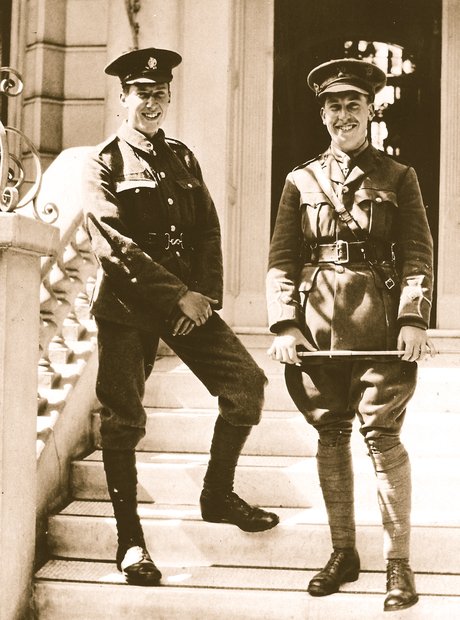
The title "Morning Heroes" comes from  the final movement where three different poems are quoted, Now, Trumpeter, For Thy Close (Robert Nichols), Spring Offensive (Wilfred Owen) and Dawn on the Somme (also Robert Nichols), which graphically describe the landscape of a battlefield, specifically the slaughter of the First World War in which Bliss and his brother Kennard (pictured together above) served. Kennard, like millions of others, East as well as West, perished. Morning Heroes isn't a requiem in the religious sense but describes the experience of war in a direct and unsentimental way. Thus the highest praise for Samuel West, whose down to earth narration captured the spirit of the piece without the histrionic theatricality of Brian Blessed, some years ago, whose performance verged on self indulgent self parody. War isn't a game, it's not "entertainment".   In these poems there's enough inherent drama to make a point without theatrical excess. West's dignified delivery made the words feel personal, and real. 

Yet Morning Heroes starts with Berlioz's source, the Iliad. Perhaps it's not altogether significant that composer and hero shared the same name. though in LesTroyens the hero is Enée. Hector returning mainly as a ghost.  Perhaps for Bliss that held more meaning, for Morning Heroes refers to a mist, rising from the landscape, which is a metaphor for the souls of the dead. rising to heaven. The symphony begins with a long quotation describing Hector taking leave of Andromache, his wife. "Would you leave your children orphans, your wife a widow " the mood isn't quite as ebullient as the "Royal Hunt and Storm" from Les Troyens might suggest.  Enée and Didon have snatched a brief moment of love,  but duty calls.  The refrain in the chorus acts as a whip, goading Enée to sacrifice. Bliss follows this first movement with the turbulent The City Arming. Are the populace so caught up in bloodlust that they forget the human toll ?  The BBC SO Chorus certainly sounded whipped into frenzy.

The third movement, The Vigil, is based on Walt Whitman's  Vigil Strange I Kept of the Field One Night and his By the Bivouac's  Fitful Flame.  Whitman's verse isn't easy to set as its flow doesn't lend itself to music. Wisely,  Bliss uses spoken narration, augmented by chorus. Orchestrally, this is perhaps the most expressive moment. Davis and the BBC SO were in their element, the playing rousing yet dignified and finely detailed, an electrifying approach to Bliss, which respects the originality of his work, and the context of the postwar years, when so much was happening in music, from which those who died were cut off.  The brief return to the Iliad, which follows, is thus put into context, like a look back on values one might no longer share. When the final movement returns to graphic depictions of the Somme, the connection is made between wars long past and more recent. Andrew Davis's interpretation is strongly trenchant (perhaps the wrong term to use).  Bliss understood the reality of war better than most. 

And so, full cycle back to Berlioz, too, confirming the wisdom of placing Bliss and Berlioz together, . the "Royal Hunt and Storm" from Les Troyens serving as an overture so flamboyant that it lit Morning Heroes up with its reflected glow.  In La Mort de Cléopâtre  Berlioz creates a 19th century vision of ancient Egypt painted in  purples and golds,  gloriously over the top, every moment drawn out for theatrical impact. Cleopatra is angry at being rejected – “la fille des Ptolémées” vents her rage in swelling, sonorous lines. Piercing string chords raise the tension, hinting also at the sharp sting of the asp. As the poison seeps through Cleopatra’s veins, the vocal line darkens and slows to funereal pace. “Osiris proscrit ma couronne”,  The soloist was Sarah Connolly.

Thursday, 14 May 2015

Henry Wood rolling in his grave ? Prom Picks 2015


Booking starts Saturday for the 2015 BBC Proms. As always, have your choices in hand before the mad rush starts. Thousands will be logging on for non-classical music events. This season must be the least classical music oriented Proms ever, filled with gimmicks, chat shows, game shows and infomercials. .Sir Henry Wood, who founded the Proms,  believed good music spoke for itself, and that ordinary people could listen and learn without the blare of muzak and fabricated  opinion.  He must now be rolling in his grave. How long before his bust gets replaced ?

Even what remains of classical music seems to have been designed by machine, or perhaps by a committee of bureaucrats who don't really care about music. Wade through the dross and there's gold, though. I've picked out the grains of gold, which will be enhanced by the experience of being heard live at the Royal Albert Hall. Otherwise, a lot more listening on the radio this year.  Further group of picks chosen for unusual repertoire, though the performers aren't ideal. Some I've left out simply because they've been heard so many times.

Top of my list:

Prom 1 : 17/7  Who could miss The First Night of the Proms with choral blockbusters on the theme of Belshazzar's Feast ?

Chamber Music Prom Cadogan Hall 25/7 Frank Ollu conducts the ever exciting Birmingham Contemporary Music group - Boulez Dérive II

Prom 25 4/8  John Eliot Gardiner : Monteverdi Orfeo

Prom 47 : 21/8  Jón Leifs Organ Concerto, truly spectacular with the Royal Albert Hall organ, the second biggest in the world, and in a performance space no ordinary concert hall can  match.  With Beethoven 7, Sibelius Tapiola and an Anders Hillborg premiere, this should be theatre as  much as music. Sakari Oramo, BBC SO

Prom 49 : 22/8  Andris Nelsons, Mahler Symphony no 6. While Nelsons isn't an ideal Mahler conductor, he's very, very good indeed - lots to learn from, even though we may have to endure yet more Brett Dean

Prom 51 : 23/8 . Andris Nelsons AFTERNOON matinee - Shiostakovich 10

Prom 53 : 24/8  Esa-Pekka Salonen Bartók The Miraculous Mandarin  Salonen's Bartók credentials are highly acclaimed, witness the Southbank Bartók year. Plus Shostakovich Orango

Prom 55 : 26/8  François-Xavier Roth,  one of the most fascinating conductors conducts a Boulez tribute, with SWR Symphony Orchestra Baden Baden, where Boulez's conducting career was launched 60 years ago by Hans Rosbaud. In January, Baden Baden gave Boulez, who's lived there ever since, the Freedom of the City

Prom 58 : 29/8 Sibelius Kullervo Three high profile Kullervos this year, Helsinki's choreographed version (more here), another at  the Edinburgh International festival and this, with Sakari Oramo, the BBCSO and Finnish soloists.  Bound to be good !

Prom 73 : 10/9 Semyon Bychkov Vienna Philharmonic Orchestra Brahms and Franz Schmidt

Further picks :

Prom 7 :  22/7 Andrew Davis conducts Hugh Wood premiere

Prom 38 13/8  Messaien Turangalîla Symphony, one of three Turangalîlas this year (top choice is South Bank, Salonen on 28/5) This one will be interesting as it's paired with John Foulds, who also liked experimenting with exotic "oriental" themes.

Prom 69 : 6/9 Carl Orff Carmina Burana,  a piece that "needs" to be experienced live, whoever is doing it

Prom 72 :  9/11 Charles Ives  Symphony no 4 pioneering use of multiple orchestras and layering once considered unplayable, worth seeing as well as hearing

Last Night of The Proms : ideal if you like parties and dressing up ! I love watching on TV instead so I can see friends doing so. Even Kaufmann will be partying too

Wednesday, 13 May 2015

Má vlast and China : Smetana's role in the modernization of China


Smetana's Má vlast was inspired by images of Bohemia, its landscape, and its history. It's much more than a "scenic route" . The original images may be specific to Bohemia, referring to the Hussite uprising, but, translated into abstract music, they convey deep, universal emotions, which transcend place and time.  Thus Má vlast was one of the most popular pieces of music in China.  It expressed the same feelings of national identity that were so critical to the modernization of China. Just as the Vltava flows through Bohemia, the Yellow River (the Huang He) flows through China.  Chinese civilization began on the fertile basin beside the river, rather like Egyptian culture flourished around the Nile. Yet the river twists in a strange course causing catastrophic floods. "China's sorrow", at once the source of prosperity and suffering.  Further south, the Yangtze flows through central China, from the Himalayas to Shanghai, with an equally great impact on the development of China.

The Huang He symbolizes Chinese identity: hard working, enterprising, resilient, undaunted by encroachments and hardship.  So it's perhaps no surprise that Má vlast meant so much to Chinese people. In the early Republic, especially after the May Fourth Movement, education drove modernization.  Chinese intellectuals believed that change came through changing hearts and minds, by education, learning and the arts. Even the Communists espoused this ideal, until the grotesque upheaval of the Cultural Revolution. Considering that China had to break from over 4000 years of feudalism, it's quite amazing how much has changed since 1911.  Although no-one has collected all concert programmes and broadcast data, anecdotally, Má vlast had a huge impact on the modernization of China. Listeners who might have no idea of Prague could connect to its surging emotions and visualize rivers closer to home.  

The popularity of Má vlast  led also to the popularity of other Smetana works.  The Bartered Bride, for example, was allegedly the most performed western opera in China.  When I was a kid, I thought it "was" Chinese though it wasn't Chinese music.  I'm old enough, too,  to remember when arranged marriages were still common, . Such is the universal power of music that it can reach millions of people as long as it captures their imagination. That's what's wrong about current music education in the UK: it doesn't deal with imagination or with the human soul.   

Please read my review of Dalibor at the Barbican HERE 

and my article Yellow River Cantata


Tuesday, 12 May 2015

Black smoke : Latest Berlin Philharmonic election news


Latest on the Berlin Philharmonic's election of a new Music Director. Black smoke signals ! At the Vatican, when cardinals elect a new Pope, white smoke signals indicate a decision has been reached. Black smoke signals signify impasse.  The Berliners haven't decided. Far from that being a problem, in many ways, it's a sign of strength.  There is a lot more at stake than choosing a new conductor. It's a sign of maturity that these musicians are thinking seriously about where they want to be in 10 or 15 years, and can compromise when they can't agree. .Rushing to rash judgement isn't wise in most things in life. Much better that the Berliners take their time to cogitate. The sky won't collapse.

They won't stop playing, for one thing. They'll simply continue working with different conductors and contenders as they've been doing for years. The members of this orchestra are so good, and so well connected that  they can afford to look after themselves. The Berliner Philharmoniker "brand"  will survive.  If anything, the brand will be enhanced because the members of this orchestra are thinking about why they operate.  So hooray for them ! Here's the press release in full :

"Orchestra Board member Peter Riegelbauer said: “After an orchestra assembly which lasted 11 hours, we have unfortunately come to no decision. There were positive and lively discussions and several rounds of voting, but unfortunately we were unable to agree on a conductor.”
123 members of the orchestra who were eligible to vote were present. Riegelbauer continued: “We must continue this process and this election. That will have to take place within one year. We are very confident that we will come to a decision then. The process of this election will be continued, and the orchestra assembly will meet regularly, but we will take the time that is necessary. That can last one year.” The mood during the assembly was described by all participants as very constructive, cooperative and friendly."

Earlier in the day there was a rumour, quickly denied, that Andris Nelsons had been chosen. When, hours later, nothing was confirmed, I thought, either the election's too close to call, or someone's looking into other ramifications.  I don't believe the story that Nelsons turned the offer down of his own accord. Otherwise why run at all ?   A few months ago, he said he was "too young" for the job, which fooled no-one.  Furtwängler was younger than Nelsons is now when he took up the job, and in an era when age was more feted than youth. Delaying the vote gives breathing space for a lot of different parties. Nelsons is probably kicking himself for grabbing a pawn and sacrificing the King. Last week, the British electorate were forced into divisive polarization, resulting into extremism which may not reflect what people really want. Let's hope that the Berliner Philharmoniker won't be pushed into such corners.

Sunday, 10 May 2015

Berlin Philharmonic elects new Chief Conductor


The Berliner Philharmoniker elects its new chief conductor on May 11th.  Just like the UK elections on Thursday, the race is too close to call, and the results might be a surprise. Everyone has an opinion on who should win, but the only opinion that counts will come from the musicians themselves, who know their orchestra better than anyone else, who know the conductors they work with, and have a pretty good idea of where they want to go in the next 10 years or so. Choosing a Chief for an orchestra of this importance is not simply a beauty contest, but a statement of artistic principle. In any case, there are no silly prizes for making the most unlikely guess. The Berliner Philharmoniker "brand" is so important that whoever they choose will have reasonable business sense, and know how the market works.  These musicians, at the heart of Europe, with personal networks beyond the imaginings of armchair experts,  aren't going to choose casually.

Latest update : no result ! So please read my piece :  Black Smoke, evaluating the impasse, more positive than negative.

Guesswork is pointless on its own. Wiser to think in terms of "why" not "who". Furtwängler and those before him established the Berlin Philharmonic's standards of excellence. Whether they liked Karajan or not is irrelevant: he pretty much created the market for recordings at a time when that industry was starting to take off.  Under Abbado, they reached even higher standards of artistic excellence. He built up Lucerne and the network of other orchestras which feed into Berlin, and create the co-operative vibe that makes Berlin the place to be for musicians.  They chose Rattle not because he built CBSO from scratch, but because he's a charismatic communicator. Just as the Berliners pioneered the burgeoning market for LPs , they've pioneered the digital market, which reaches far beyond. All over the world now, the Berliners are the "local band" whose live concerts can be enjoyed everywhere, by anyone. They're at a pinnacle. Where might they be going next?

I predicted the UK election results, not by preference but by rational deduction. So maybe I'll risk a guess on Berlin, though it might well result in an equally shocking upset.  The contenders are conductors way above my league, so I've no delusions that they'll quake in their boots because of my comments.  

Front runners are Andris Nelsons and Christian Thielemann, both regulars at the Philharmonie.  Nelsons would be the absolute cert if he hadn't grabbed a pawn and sacrificed a king. Whether he'll leave Boston as he left Birmingham, who knows? He's a prize racehorse who needs the challenge of being at the top.  Lebrecht did an April Fools spoof knocking Thielemann, which fooled many. But any orchestra that thrived under Karajan is probably aware that you don't have to love a man if he has artistic nous. In any case, the Berliners are strong enough to work with him, as they have done so for years. So what if he has a bust of Frederick the Great  It's not a thought crime.

Semyon Bychkov, whose work in Köln has been infinitely eclipsed by his more recent work, especially in opera,  which the Berliners have started to do more of, with good effect.

Daniel Harding,  who's been a Berliner since he was 19, working with Abbado and his many orchestras. A brilliant musician with very strong interpretive skills, though not the kind of flamboyant personality non-musicians seem to prefer.  But the Berliners are musicians, not armchair pundits.

Vladimir Jurowski, whom we know so well in London. Again, a Berliner since his teens, not connected to Russian circles since his dad left Russia when he was a kid. Intellectual, good at interesting programmes, but rather unworldly for political cut and thrust. Nontheless, he's confirmed til 2020 at the LPO, so he's a survivor.

Alan Gilbert, who possibly knows more what's going on than most outsiders do. He's conducted Berlin more than most (bar Nelsons and Thielemann),  and a much better fit in Europe than in the US.  The Royal Philharmonic Society invited him to give their keynote speech in April (full link here), in which he discussed the changing role of orchestras in the digital age. The Berliners are so good that they don't need a conductor to tell them how to play, but they do need someone with  a perspective on the future. 

I have a much longer list, with some wild cards, (including Volkov)  but the choice isn't up to me but to the Berliners themselves.  Chances are they're not going to go for grotesque but for sensible and musicianly. 

Here's a healthy bit of reasoned analysis in Die Zeit where they tend to have a pretty good feel for what's what.

Saturday, 9 May 2015

Why Opera Europa's Platform matters


Opera Europa, in conjunction with arte.tv, has launched an Opera Platform, streaming live opera from all over Europe. The Berlin Phiharmoniker's Digital Concert Hall has brought Berlin to the world. Is this where the future of classical music lies? Media and funding agency obsessions with crude measures like bums on seats and regional outreach are rendered pretty meaningless.

Opera Europa represents 155 opera houses and festivals in Europe, promoting co-operation and development, mainly between houses,. . Arte.tv, supported by French and German broadcasters, has been streaming opera and music for years, which is one of the reasons why some performances are blocked outside Europe. Arte.tv  operates like a normal online TV channel, with news, sports, pop, movies etc Medici.tv is already the world's biggest collection of classical music: I have no idea why Opera Europa didn't go through medici.tv which already showcases festivals like Lucerne and Aix., and is an indispensable resource.  

HERE is the link to this year's Opera Platform  streams, which will also be broadcast in 15 cinemas.  Quick link here.  For the launch yesterday, La Traviata (with the divine Ermonela Jaho)  from Madrid, but the real coup (on 16th May) might be the Royal Opera House's Szymanowski Król Roger which I've reviewed HERE.  This is a sensationally good production of an opera which holds a crucial place in music history - the equivalent of Debussy Pelléas et Mélisande, Béla Bartók Duke Bluebeard's Castle , Schoenberg Ewartung and Berg Lulu.   While the Nazis, Communists and Catholic Church in Poland didn't like Król Roger, there's absolutely no reason for English-speaking audiences (particularly London music critics) not to be aware of it. Thirty years ago, when Poland was still Communist, Simon Rattle recorded all of Szymanowski's orchestral work, including the opera. There have been numerous productions since. Two books in English on Szymanowski and many more in Polish. Opera Platform will stream in French, German and English  If it does nothing else at least it will break English-language insularity. 

On 24th May, Sibelius Kullervo from Helsinki.This is important, because it's choreographed by Tero Saarinen.  Kullervo isn't an opera so much as a tone poem with voices, so it's rarely dramatized.  In Finland, music, opera and ballet play a much bigger role in ordinary life than in most other places, like the UK.  Sibelius is of course a kind of god. Saarinen's dance company is brilliant: the production enhances the music beautifully. Highly recommended: Please read my review HERE.   Kullervo is being performed at the BBC Proms this year, and also at the Edinburgh International Festival, but I think we can be pretty safe saying that this innovative, creative Kullervo will be the best of the lot. Saraste conducts, also a plus.

To come : Valentina by Arrturs Maskats from Opera Riga, Götterdämmerung from the Vienna State Opera (Simon Rattle),  Die Entführung aus dem Serail from Aix-en-Provence, features on Pesaro and Aldeburgh, on Den Norske Opera and on Teatro Regio Torino.

Although the Opera Platform isn't big enough to compete with Medici.tv, it's a good, new platform (literally) for promoting European opera, particularly from smaller houses which might not have the resources to do so on their own.  By offering quality and variety of choice, the market is developed in a much more organic way.   The BBC has attempted to emulate arte.tv and medici.tv, but its fundamental approach is too limited, too simplistic and too non-musical to be of much use. In a digital era, people can choose and think for themselves. The BBC just doesn't get it.

Tuesday, 5 May 2015

Text sublimated : Pappano, Royal Opera House Orchestra


Ambition achieved ! Antonio Pappano brought the Orchestra of the Royal Opera House out of the pit and onto the stage, the centre of attention in their own right. Concert performances are nothing new at the Royal Opera House . Pappano's been doing them for years. In his capacity as Music Director at the Accademia Nazionale di Santa Cecilia , he conducts orchestral repertoire most of the time. So it makes total sense that the Royal Opera (and Royal Ballet) should inaugurate a new series of concert performances to showcase their orchestra. Even more significantly, though, the experience of opera, or ballet, is much enhanced by an understanding of the musical background and context.

Orchestral concerts can be a richly rewarding extension of the opera and ballet experience. People go out for many different reasons, and combinations thereof. Some go for megastar singers, or dancers, or for colourful costumes (whatever the actual nature of the work being performed). Some may even go for the pleasure of being outraged  Before this concert, Pappano specifically mentioned Karol Szymanowski Król Roger, the sensation of the season, (reviewed HERE)  The opera is so unusual that it's more productive to approach it, not as a stand-alone opera, but through the perspective of the composer's music as a whole.  Its themes run throughout Szymanowski's output.  It's very closely related to his  "The Song of he Night", Szymanowski's Third Symphony in particular. No Szymanowski song symphonies or orchestral songs this time, though, but  works by Ravel, Chausson and Skryabin, his contemporaries and influences.

Opera orchestras, unlike symphony orchestras, play the same piece repeatedly through a run, and don't usually venture far from the basic canon, so it must be refreshing to tackle new repertoire. Yet their experience with drama and dance give them an edge. As soon as they launched into Maurice Ravel's " Une barque sur l'ocean", from Miroirs, we could hear the surge of giant waves, as vividly played as if the music were illustrating some grand piece of theatre. The piece was originally written for solo piano, but orchestrated by Ravel himself. One could almost see the ocean swell, and imagine the tidal surge animating the waters.  In the imagination,  one could envisage the barque sailing towards unknown adventures. Shéhérazade immediately came to mind, an "opera" without words or voices, telling a glorious, dramatic story. "Alborada del gracioso", also based on Miroirs revealed another mood. A guitarist, possibly Spanish, is playing.. Exuberant pizzicato suggest the plucking of strings, and the fast moving feet of dancers. The ROH orchestra is, of course a "dance band" as Pappano has said. Instinctively, they understand the relationship between music and physical movement. 

Anna Caterina Antonacci brought diva glamour to Ernest Chausson's Poème de l'amour et de la mer. Yet again, the orchestra's flair for dramatic colour revealed itself.  Although Antonacci is a star, and sang expressively, this time, I, at least, was paying attention to the interplay between instruments, the abstract "voices" over which the solo voice wafts.  Again, we heard the surge of the seas, reflecting the passion of the love song,  The orchestra describes meaning so vividly that the meaning oif the text is amplified without obscuring the main vocal line.

Perhaps Pappano wanted to inject a bit of comic  relief between the florid intensity of Chausson and Skyriabin. Hence Leonard Bernstein's Fancy Free. There's a Royal Ballet connection, since the piece was conducted by Bernstein himself at Covent Garden in 1946.  It's a chance for the orchestra to demonstrate different styles , eg jazz, big band music and so on, with some lively parts for solo players to "dance", as dancers might, in front of the ensemble.  It's clever and cheerful for the occasion, but one wonders if West Side Story, which I love, might be the closest Bernstein got to the emotional depths of opera. 

And thus to Alexander Skryabin's Le Poème de l'exctase, with which the concert reached its heady climax. Wave after wave of extravagant, impressionistic chromaticism : perhaps such ecstasy is too extreme to be confined within the parameters of text.  In many ways, this, too is a song symphony though the singers are invisible, sublimated into instrumentation.  Skryabin simply supplies titles : "His Soul, in an orgy of love" and "The realization of a fantastic dream".. The listener interprets meaning through imagination. A hundred years after its premiere,  Le Poème de l'exctase, is still so shockingly avant garde that the concept of words abstracted into music still unsettles some.The Szymanowski connection is very strong indeed. King Roger dreams, tantalized by fantasies of sensual discovery.  ends with a cataclysmic blast of aural light,. Has King Roger  found apotheosis  Has he, too, discovered that his god is as beautiful as himself ? Skryabin's  Le Poème de l'exctase, also ends in a blaze of dazzling light, so powerful that I had to cover my ears so as not to be overwhelmed.   The opera and tone poem are very different but very much connected. Skryabin's title for his third movement is "The glory of his own art", a Nietzschean triumph of will, perhaps, or a statement of faith in the transformative power of art. Entirely in tune with the values of Król Roger. 

This article appears also in Opera Today

Sunday, 3 May 2015

Smetana Dalibor Barbican Bělohlávek


Jiří Bělohlávek's annual Czech opera series at the Barbican, London, with the BBC SO continiued  with Bedřich Smetana's Dalibor.  Bělohlávek has done more than anyone to bring authentic Czech music to Britain, and to the BBC Symphony Orchestra, where he was Chief Conductor for many years.  They've got the idiom under their skin, now, and for Bělohlávek they played with expressive vigour. Smetana has been called "The Father of Czech Music", for he was the first to embrace characteristic Czech folk style, fused with the bright, sharp syntax of the Czech language. Dalibor is a particularly important milestone, since it's explicitly nationalistic.  though disguised as folklore. The Hapsburgs ruled Bohemia from Vienna, and after 1848 clamped down on what they saw as sedition.  Dalibor took part in an uprising, destroying a castle and killing the burgrave. Although Smetana downplays the politics (to escape the censors) the message of Dalibor is loud and clear: Czechs love music, and with music they shall triumph over repression.

Dalibor is a hero: "Dalibor! Dalibor" the chorus (the BBC Singers) rings out with fervour, picked up wordlessly by the orchestra throughout the opera. Jitka, a country girl (Alžběta Poláčková) tells us how he saved her as an orphan. Already though, we have a hint of his otherworldly purity. She sings as though she's describing a saint.  Wonderful "processional" music marks the entry of Vladislav, the Czech King (Ivan Kusnjer). Bělohlávek has been bringing the top singers from the Prague  National Theatre, which he's been conducting for years, so these singers are now greeted in London as if they were familiar friends.  Besides, they can sing Czech repertoire better than anyone else. Kusnjer's voice rang with dignity. Like Pontius Pilate, this King doesn't want to kill, but  Milada the Burgrave's sister wants revenge.

Dana Burešova sang Milada. She's another much-loved regular visitor.  She sang the female lead in The Jacobin, The Bartered Bride and most of Bělohlávek's other London performances of Czech opera.  Milada is a forceful lady, and Burešova's magnificent singing does her justice. The part calls for great vocal control, for the lines ring out with the intensity of a trumpet call, though  Milada's femininity is underlined by lustrous harp. Later Milada disguises herself as a harp-playing minstrel to charm her way into the prison.

Dalibor himself (Richard Samek) is more of an enigma. He killed the Burgrave because the Burgrave killed his friend Zdenek, who doesn't appear in the opera, but lingers, ghost-like, in the strings. Zdenek was a violinist, and Dalibor's love for him is so great that he'd rather be dead than live without him. Nonetheless, when he meets Milada, his love suddenly switches to her (on Zdenek's musical messages). Dalibor's a violinist, too. We don't hear him play but we hear the violins in the orchestra surround him in a halo of sound.  The smooth legato in his part suggests a bow gliding over strings.  Beneš the jailer ( Jan Stava), also a violinist, lets him have his old instrument to pass the time, which Milada delivers. The violin is thus the means by which Dalibor could escape from the dungeon. If he wished, of course, because he doesn't. When he's caught by Budivoj (Svatopluc Sem, another regular)  and told he's to be executed, he's meekly accepting. Perhaps he knows that his real secret weapon isn't his life but his music.

"We Czechs love music" the text explicitly states, so the whole opera is a coded protest, though the Hapsburg Empire ended only with the end of the First World War. Dalibor is wildly popular in Czech-speaking areas but the message is universal. When Gustav Mahler conducted Dalibor in Vienna in 1892, he may also have been making a private statement.  Mahler was a boy from small town Bohemia, where his father had followed the same profession as Smetana's father had done nearly 100 years before. Unlike Smetana, Mahler made it to the capital of the Hapsburg empire, chosen and protected by the Emperor himself.  Much is made of Mahler's use of Ländler, reflecting the sounds he would have grown up with in a German-speaking area in the provinces.  Mahler had been writing since his teens on themes connected to Des Knaben Wunderhorn, even writing his own poems. Almost certainly he would have been aware of Smetana  In Dalibor, for example, Jitka and Vitek (Aleš Voráček) sing a love duet which could come straight out of Wunderhorn, though it's clearly Czech. Dalibor is clearly inspired by Beethoven Fidelio, although musically it's very different. But might Mahler have thought of Dalibor when he wrote Das  Lied des Verfolgten im Turm with its passionate refrain,  "Die Gedanken sind frei! "
Photos: Roger Thomas

Saturday, 2 May 2015

Penetrating Szymanowski Król Roger Royal Opera House


Karol Szymanowski Król Roger  at the Royal Opera House, London. Szymanowski originally called it a "mysterium".  What is the key to the mystery that is Król Roger? What does the work mean, and why does it defy  most conventional measures of operatic form?  Yet that's precisely why it fascinates.  Just as dreams don't have boundaries, the secret is to approach it for what it is. Kasper Holten's production is so psychologically and musically astute that it gets very close indeed to the soul of this quirky,and highly original work. 

The burgundy and gold luxury of the Royal Opera House auditorium is hidden in darkness. Strange sound emerge from the pit.  We're propelled straight into the drama without an overture. It's unsettling.  Are we eavesdropping on a secret  religious ritual?  The chorus sing with somnolent torpor, as if hypnotized by orthodox incantation. Yet this music also, oddly, suggests the rhythmic breathing of deep sleep.

A huge head fills the stage. Is it King Roger, sleeping, about to embark on a tantalizing voyage? The head is a masterstroke of stage design (Steffen Aarfing).  For we feel literally close to the man it represents.  It's an inert figure, yet seems to come alive, with subtle lighting (Jon Clark) and video projections (Luke Halls)  that move and change with the music.  King Roger becomes human, the deeper he sinks into sleep. Sleep, dreams, images of night and stars, nebulous illusion - themes that recur throughout the libretto  and in the abstract music in the score. Sudden alarm! The Archbishop and deaconess (Alan Ewing and Agnes Zwierko) intone like Guardians of the psyche. The chorus rage, demanding that King Roger kills the stranger in their midst.

Significantly, Szymanowski gives little background information as to why this Good Shepherd (Saimir Pirgu) might be.  He just "is", plucked from nowhere by his God, who is, uncannily, as beautiful as he is. Pirgu's timbre is golden and seductive, evoking the images of sunshine,smiles and embraces in the text.  The god is Dionysius, of course, the god of wine, intoxication and altered realities. In vino veritas, as in dreams.. There's no need to dress the Shepherd up as bucolic boor or metallic robot (as in productions by Warlikowski and Pountney).  Here, he's a handsome lad in sharp threads, exactly what a King might fall in love with, were he so inclined. One of the joys of Holten's production is that it faces the idea of sexual repression with common sense and dignity. A King and a strict Christian is supposed to marry and reproduce, whatever his basic instincts. As the King's chancellor, Edrisi (Kim Begley), comments, the King hasn't kissed the Queen with passion for quite some time.

The Head turns round, at a leisurely pace, allowing us to exult in orchestral colour and complexity.  Antonio Pappano was in his element, conducting the orchestra so they seem to be enjoying themselves, inspired by the myriad colours and moods with which Szymanowski challenges them.  We hear Moorish themes, pungent and exotic, even an approximation of the ululating calls to prayer that ring across long distances. Indeed, the libretto specifically mentions, several times, that the call of the Shepherd rings out over long distances, arising, even from the waves in the ocean. We hear tambourines tinkle - gypsy calls, maybe, as potent to Eastern European imagination as the "Moorish" elements Szymanowski loved so well. The Shepherd's music is garlanded  by high-pitched violin obbligatos,  so typical of the composer that they're almost his fingerprint. Two harps were positioned in a box in the stalls circle, a stroke of theatre integrating sounds with visuals. 
 . 
In the Second Act, the Head is fully reversed, showing the innards of the King's brain, so to speak. He may live in a palace, but in his head, he's trapped in a maze of steps and corridors, with flimsy--looking handrails. Not much safety or comfort.   Now, King Roger is confronting his fears. Mariusz Kwiecień is the King Roger of choice these days, having done the part so many times  He started well, but was under strain, thoughtfully disguised as part of the characterization. In the interval, Kasper Holten told the audience that Kwiecień was unwell but had bravely agreed to go on anyway. Massive cheer, for the star and also for the way Holten communicated the problem. Dance is very much part of Bacchic practice, so there are dances in the score and references to dance in the text.  Thus it was a very good idea to use dancers to express the sexuality which Roger cannot  directly address.  The dancers (all male) writhed in orgiastic excess, yet were cheerful  and  cheeky (in every sense) . Full body suits, which revealed yet didn't reveal, also very much  in the spirit of the opera.  How could King Roger resist? There's more humour in this opera than one realizes. The business of passwords, for example, which anyone could guess. Part of the Shepherd's appeal is that he smiles a lot . He knows that one doesn't have to be "in control" to be happy.

Queen Roxanne (Georgia Jarman), seemed to have a good time, too.   After all , it was she who sang of mercy, persuading Roger to suppress the Id of Church and State and meet with the Shepherd in secret  Roxanne's part is fearsomely difficult, but Jarman was excellent. She projected well, blending volume with rich tone: a strong, charismatic portrayal, even though the character is a cipher, an alter-ego of the King.  Much of the time she was singing wordless vocalise. . In conventional opera, we're supposed to hear  the words, but in Król Roger, communication comes in many different forms, as in real life. King Roger can't articulate his deepest feelings, so the music does it for him, in abstraction.  Words in this opera are much more impressionistic. Visual images proliferate in the text with such abandon nhat they could not possibly be illustrated in concrete terms. There are references to jasmine petals scenting the breeze, and to lotuses on the Ganges (odd in a story supposedly set in Sicily) . But night-blooming lotuses are botanically impossible. Szymanowski's more interested in the cumulative effect of exotic images than in narrative logic.  In this sonic dreamscape, arias and recitative would go completely against the surreal mystery. Król Roger is the opposite of an oratorio where the message is clear. It's also not so much opera but a dramatic orchestral  tone poem with voices.

In Act Three, King Roger is back in the structure with which the opera began. This time, no Head, but as himself.   A strange theme of sacrifice enters, without explanation. Such is the logic of dream. The Shepherd has gone up in a cloud of smoke to the heavens.  A real fire smoulders on the ROH stage - you can smell the gas that feeds the flames.  Into this pyre, chorus members throw what appear to be books.  "Love, hate, all empty words" sings  Kwiecień   No rule books to follow, no formulaic rituals. What happens to Roger in the end?  We don't know except that he greets the morning sun with delirious joy.  A bright light shines from the roof of the auditorium.  Has Dionysius connected with Apollo?  Or on some more esoteric level, has Roger sensed a new dawn?  Or has he just woken refreshed from a night of subconcious imaginings? Szymanowkski leaves the answers open, and Holten doesn't impose solutions.  In dreams, the subconcious throws up clues,  but it's up to us to intuit the answers. This Royal Opera House Król Roger faithfully respects the composer and the originality of the music.  Would that audiences and critics knew the work so well. So perhaps  this Król Roger will help people start their own journeys into the wonderful world of Szymanowski. !

Please see my article Hashish Dream ? Szymanowski's Król Roger

Thursday, 30 April 2015

Bedřich Smetana Dalibor - and Mahler

"Dalibor ! Dalibor! " sing the impassioned chorus.   Bedřich Smetana: Dalibor at the Barbican on 2/5 conducted by Jiří Bělohlávek promises to be one of the special events of the year. Dalibor marks the beginnings of Czech identity.  Bělohlávek is bringing the pick of singers from the Prague State Opera.  Kenneth Richardson is directing. Bělohlávek and Richardson created magic with Dvořák's The Jacobin, Janáček: The Excursions of Mr Brouček, Smetana's Bartered Bride and much else.

While The Bartered Bride is a good-natured celebration of folk tradition, Dalibor is explicitly political. The original Dalibor was a Bohemian knight, who rose up against foreign invaders and was executed in 1498, but became a symbol of resistance. The relevance to Czech lands under Austrian rule is obvious. Smetana took part in the uprisings of 1848. though he was not prominent enough to have been arrested.  Indeed, he addressed the issue of foreign occupation in his first opera, The Brandenburgs in Bohemia (1862).  He had grown up speaking German because his father had become a successful businessman (though illiterate until middle age!), adopting the German language and German culture because Czech was considered lower class. So the libretto for Dalibor was patriotic, though it was originally written in German by Jozef Wenig, then translated into Czech.

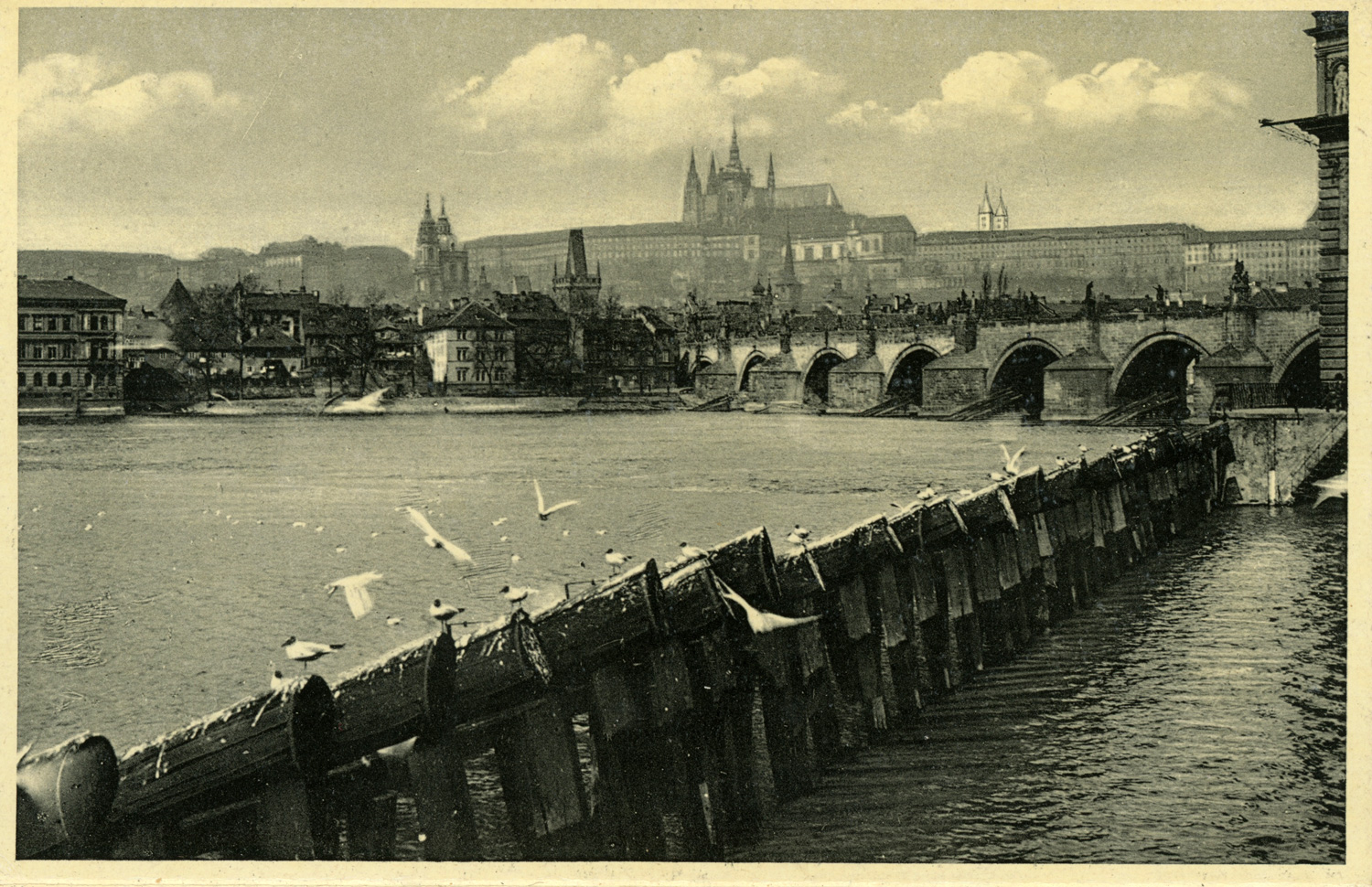
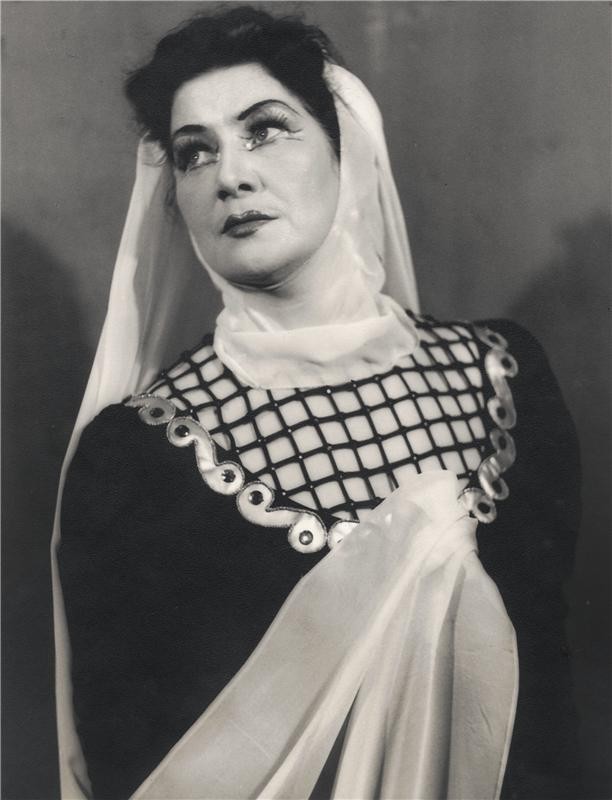
The thematic links between Dalibor and Beethoven Fidelio are fairly obvious. Both Dalibor and Florestan are heroes against oppression. Legend has it that .Dalibor was  imprisoned in the Black Tower at Prague Castle (see photo). Like Florestan, Dalibor is an idealized figure, loosely sketched. Brian Large, author of what is still the key Smetana biography, and the founder of modern filming of music), makes a point about the Italianate "Bellini-esque" music around the character, in contrast to the much more vigorous music around Milada, who sacrifices herself to try to save Dalibor. Milada  is a latter-day Leonore, much stronger and more forceful than the man she loves. Interestingly, Milada, despite her Czech name, would have been one of the oppressors, since Dalibor killed her brother. While Beethoven encases his music with spoken dialogue and philosophy. Smetana, ever a man of the theatre, does straight opera,  As Large noted, the prisoners in Fidelio greet the sun and sing about its redemptive power, while the crowds in Dalibor sing "Dalibor!"  Smetana's ending is also more realistic. Dalibor doesn't save hios country, at least not for 500 years. , Milada dies. Photo above shows Marie Podvalová as  Milada in a 1955 Prague production.

The initial reception of Dalibor was negative, thanks to a hostile press who didn't like new music.  At that time, Wagner was the bogey man of new music, so Dalibor was condemned as being "too Wagnerian" . In fact,  the Wagnerian connections aren't that strong, apart from generic heroism and the idea of a sister mourning the loss of her brother. To modern ears, Dalibor sounds like, well, Smetana, because we've heard so much of him since, and of Dvořák.and Janáček.  When Gustav Mahler introduced Dalibor to Vienna in 1892, eight years after Smetana's death, it was hailed by Wagner's old arch enemy Eduard Hanslick, no less, as innovative new work.  And so the circle turns.....  ,  Mahler was a boy from small town Bohemia, where his father had followed the same profession as Smetana's father had done nearly 100 years before. Unlike Smetana, Mahler made it to the capital of the Hapsburg empire, chosen and protected by the Emperor himself.  Much is made of Mahler's use of Ländler, reflecting the sounds he would have grown up with in a German-speaking area in the provinces. But might he himself , familiar with the modern music of his time, have also imbibed of Smetana?

Wednesday, 29 April 2015

Barbican Boulez Pintscher Ensemble Intercontemporain


A quick glance at this stage - what else but Pierre Boulez sur Incises, with Ensemble Intercontemporain, the orchestra he founded, and Matthias Pintscher, at the Barbican Hall, London, 28tth April 2015, part of the continuing Barbican Boulez at 90 celebrations.  This photo (courtesy Ensemble Intercontemporain) shows the symmetry that underpins so much of Boulez's work.  From strong structural foundations, the music bursts forth arising, ever fresh and organic. That's why Boulez rewrites and revises: ideas don't evaporate with the last stroke of the pen, but grow and proliferate.  Uncreative folk will never understand ! This concert also showed how Boulez's creative thrust continues to thrive, inspiring younger composers. Boulez's legacy lies in Ensemble Intercontemporain, through IRCAM,  through the new Philharmonie de Paris and through the many artists who've absorbed  the spirit of his music.

But first, Claude Debussy, to whom Boulez has paid so much hommage. Sophie Cherrier was the soloist in Syrinx (1913), a particular Boulez favourite.. It's exquisite,  the plaintive, seductive sounds of the flute rising from silence, as if probing and searching the universe. High, delicate Pan-pipes,  yet strong and confident. It felt as though we were in the Garden of Eden, before the fall.  This miniature segued into Boulez's Mémoriale (....explosante-fixe...Originel). From a simple basic sequence of notes, the piece grows in the interaction between flautist and small ensemble.

Yann Robin's Asymétriades (2014), premiered last year by Ensemble Intercontemporain, continued the concept of explosion. There isn't much in the repertoire that showcases the double bass to this extent. Nicolas Crosse demonstrated a dazzling array of bowings, fingerings and other techniques so spectacular that the sheer audacity of his playing mesmerized.  Virtuoso pieces like this can sometimes overwhelm the rest of the music ( I'm thinking of Unsuk Chin's Cello Concerto)  but there's so much energy and inventiveness in Asymétriades that it could stand on its own merits as an invigorating, joyous jaunt. Serious music could do with more good humour!

The first chords of Matthias Pintscher's Choc (Monumento IV)  evoked Boulez so strongly that perhaps this early work, written when Pinstcher was 25, was chosen as a memorial to Boulez, While Robin's Asymétriades rushes along like a cheerful, madcap romp, Pintscher's Choc contrasts shock with sudden, tense breaks, to make listeners listen. 

Highlight of the evening, though, was Boulez sur Incises. Ensemble Intercontemporain was founded by Boulez to specialize in new music, so they have the idiom as second nature.  This was easily the best performance of anything so far in this current Boulez series - sharp, vivid, no falling off or smoothing out (unlike Fischer's  Pli selon Pli with the BBC SO, reviewed here) From this basic formal structure - three harps, three pianos, three percussion parts create elaborate maze-like patterns that proliferate, fragment and reconstitute.  The percussion parts include marimba, vibraphone, tubular bells and glockenspeil, so the soundscape is luminous,  shimmering with light and perpetual motion. As always, Paul Griffiths puts things like a poet. "The effect is of a piano hurtling through a hall of mirrors which copy oir distort its sound. Or perhsps it is a maze of mirrors, since every so often the tumult comes to an end, the tempo slows, and the fast figurations fall apart again, only for the music, after a while, to speed off again in another direction".

Monday, 27 April 2015

Hashish Dream? Szymanowski Król Roger

Karol Szymanowski's Król Roger (King Roger) op 46, at the Royal Opera House, London, from Friday  My review is HERE. . Król Roger is remarkable, and deserves to be appreciated as a key work in 20th century opera.  There are no excuses for claiming that it's obscure. Simon Rattle championed Szymanowski more than 30 years ago. His recording, with Thomas Hampson as King Roger, remains a benchmark.  Indeed, Rattle recorded most of Szymanowski's orchestral output, an achievement for which he deserves respect. Since then, there have been numerous productions and recordings, and two DVDs. So how will London audiences react?  As always, the key to assessing any production lies in knowing the repertoire.

Szymanowski suffers from being stereotyped, pigeonholed into arbitrary categories. Of course he was influenced by Wagner - who wasn't?   It's not enough to repeat the old clichés about Strauss and Wagner  In any case French and Russian influences are much more relevant. Think Debussy and Scraibin, if one must.  Labels are a form of lazy listening. Any decent composer is unique. Szymanowski was quirky, individualistic, non-conformist  and highly original.  It's much wiser to approach Król Roger through an appreciation of his music as a whole than to shoehorn him into artificial categories.. No-one needs to know Szymanowski to appreciate Król Roger, but listening with an open mind, and heart, is a better start.

Szymanowski managed the feat of annoying both the Communist Party and the Catholic Church in Poland, so be warned! Beneath those luscious chromatic colours lies a much more disturbing, uncompromising view of the world.  Król Roger scandalized audiences at its second performance in Duisberg in 1928. Presumably Warsaw audiences at the premiere were more discreet.. What manner of opera was this, that sounded lush but dripped emanations of poison? Quite likely some of the ROH audience and especially the press won't get it at all, since the underlying ideas are still subversive.  Król Roger remains a "mysterium"as the composer originally described it.  Perceiving that mystery is crucial to interpretation.

Although Król Roger is set in medieval Sicily, neither Szymanowski nor his librettist, Jarosław Iwaszkiewicz, had any illusions that it was anything other than a work of the imagination.  A signature of Szymanowski's style is that he blends in alien, exotic elements,, usually Islamic,  as alternatives to conventional Northern European values. and disguise his ideas under a wash of romantic adventure, so their threat will be missed by those who don't get past the surface. Someone once described Szymanowski's fantasies as "a hashish dream", but sometimes, in dreams, as in other altered states, lies wisdom.

It's significant that in Król Roger, Szymanowski makes explicit references to the Orthodox Church. The opera begins without an overture, leading straight into what sounds like church ceremonial   A strange point of entry, but right, since. Król Roger is  very much spiritual contemplation cloaked as drama. The choruses show that the King is very much subject to the power of the Church he serves. He's not really a free agent. The music hangs hypnotically, suggesting a kind of paralysis of the soul, functioning by ritual rather than true belief.   A hashish dream in itself ?  Into this, the Shepherd appears, upsetting certainities.  The music and stage directions imply that he's a manifestation of Dionysius, with culy hair, a "wild man" who comes from the unknown and from a suppressed, ancient past. That he's a shepherd, like Jesus, makes him all the more unsettling for good Christians.

"My God is as beautiful as I am" the Shepherd declares.  Eventually, smiling elusively, he stares directly into King Roger's eyes. The King cannot remain as he was. This homosexual sub-plot runs through much of Szymanowski's work. But the Shepherd unleashes repressed sexual needs in those around him, including the Queen, Roxana, who stands up to the mob demanding his death. Again, the music speaks more strongly than words. At first, Roxana sings words,  but gradually transcends text into abstract vocalise, almost as if she's in a delirium beyond the constraints of articulate expression.   Listen to Roxanna's Song, a tour de force of primal emotion which, in 1926, was very much ahead of its time.  Even Lulu seems tame, .It's significant that Boulez discovered Szymanowski  through scores in his youth but didn't get round to recording until much later.  The germs of Boulez's innovative way with text may well lie not far from Szymanowski and Król Roger.

King Roger undertakes a pilgrimage, ending up in the ruins of an ancient temple, rather like Tannhäuser in reverse, though both reject pure, chaste gods for something more subversive.  Roger doesn't opt to follow the Shepherd, though, but makes his own choice, whatever that might be, as he greets the dawn. The Sun is a powerful, primeval symbol, the emblem of Apollo, of the Incas, of Louis XIV and more.  It's the source of life and light. Again, the music speaks louder than words.  Szymanowski almost certainly would have known of Thomas Mann's Death in Venice (1912). Indeed, he wrote a novel of his own,  Efebos, the manuscript of which is now lost.

 Perhaps the best short introduction to  Król Roger is to listen to his masterpiece, his Symphony No 3 "The Song of the Night".  Read more about that HERE.  In the mist of intoxicatingly deliriious music, a lone voice rises from the orchestra singing about a love that can only be expressed in the darkness of night.  In his non-vocal music, particularly the Violin Concerto, Syzmanowski employs pitches so high they almost escape the human ear, held by legato so extreme they're almost impossible to carry off.  Even in relatively lesser works like The Love Songs of Hafiz, or The Songs of an  Infatuation Muezzin or even Harnasie  the vocal lines see,m to defy gravity and the limitations of voice. . Again and again,  recurring themes of night. stars, love, and repression, that mark Król Roger, clothed in dazzling chromatic colour and stratospheric timbres, designed to seduce and yet, always elusive, to deflect the gaze of insensitive observers from the secret mysteries within.


Above, I've used contemporary images of Szymanowski, which underline the period in which he worked.  Król Roger dates from the 1920's, although its origins begin much earlier, with Szymanowskli's fascination with the mythical East and what it symbolizes. Although a Polish nationalist, Szymanowski's interest in folk music came at a later stage in his life. Like Bartók, Szymanowski looked forward, even with ancient material, like the legend of Dionysius. 

I don't know what Kasper Holten's new production of Król Roger at the Royal Opera House will be like, though a big plus is that he's got the best Roger in the business at the moment, Mariusz Kwiecień, who sang the part in the Opéra Bastille Król Roger a few years ago, directed by Krzysztof Warlikowski and conducted by Kazushi Ono. Musically, that's the best version available,  and stage-wise extremely perceptive.  Warlikowski layers his visuals so  the singers, chorus and film projections are in dream-like reverie, luridly but ambiguously coloured, very much in the spirit of the music and the composer.  There's also a Pountney production for Bregenz which I cannot stand, because everything's reduced to clear outlines and brightly lit, not helped by very average performances. There are others worth seeking out : Piotr Beczala sang The Shepherd fairly early in his career.  Please see my numerous other posts on Szymanowski,  on ROH and on 20th century music.  

Saturday, 25 April 2015

Mikko Franck's Sibelius France Musique


This September, Mikko Franck takes over from Myun-Whun Chung as Chief Conductor of the Orchestre Philharmonique de Radio France, where he's been guesting for the last twelve years. He was only 24 at the time, yet had already been conducting professionally since his teens  At the Sibelius Academy,  he was a young prodigy, widely tipped for international acclaim. Fortunately, early fame didn't go to his head and distort his talent. Instead he built his skills  steadily, By the age of 22, he had become Chief Conductor of Orchestre National de Belgique. He went on to be Music Director of the Finnish National Opera, which is a much bigger deal than opera houses in other countries, because in Finland, opera is so dominant that it's the focus of much new writing. Franck commanded such respect that he was able to regain his position after resigning in protest at the management, not something that can be done lightly. In the early stages of his career, he was plagued  by poor health (injuries and asthma) but that seems to have been resolved. ORF know what they're doing.

France Musique presents a selection of Franck's Sibelius concerts with them over the years  Interesting and unusual choices, such as the Nocturne from King Christian II, Sibelius Violin Concerto with Baiba Skride, En Saga and a magnificent Sibelius Symphony No 7.  Ironically, it must be harder for Finnish conductors to tackle Sibelius, because he carries so much extra musical weight in his home nation that it can be hard to interpret him in purely musical terms.  As Esa-Pekka Salonen said, he couldn't face conducting Sibelius until he had himself matured, much in the way that you can;t really appreciate your father until you've become your own person.

Sibelius used to complain about “distorted” performances of his work, as he told his friend Simon Parmet, whose book about the symphonies was first published in English in 1959 , though written much earlier. It's such a personal, first hand account that it's still a key document in Sibelius interpretation. “Many conductors seem unwilling to allow their impulsive playing to be disturbed by intellectual considerations and sober musical thinking”, he wrote. “A conductor can acquire an authoritative position in relation to a composer’s work equal to that of the composer himself if he possesses an exact knowledge of his logic, a knowledge which must be extracted from the text of the composer’s work.  Then, and only then, can he feel sure of keeping faith with the intentions of the composer. (Only) then will he be entitled to let his own subconscious take over and guide him through those difficult passages which no degree of intellectual effort could help him master”.

Since Sibelius's music is so remarkable, it's easy enough to play safe and wow audiences with something predictably overblown,  but good conductors do more. And Sibelius deserves more. Thus I like Franck's Sibelius, which sounds clean, fresh and vibrant.

Thursday, 23 April 2015

The Writing on the Wall ? BBC Proms 2015 announced


Details of the BBC Proms 2015 season now out! The First Night of the Proms on 17th July features a Feast of  Belshazzars - Sibelius and Walton - kicking the season off with suitable magnificence, though the ominous writing on the wall should not be overlooked, bearing in mind changes to the BBC and the focus of national arts policy. Enjoy, but be vigilant. Will the feat last? Sakari Oramo conducts the BBCSO with Lars Vogt Mozart Piano Concerto no 20. Also the Overture to Carl Nielsen's opera Maskerade, last staged in London years ago at the ROH.

The warning to Belshazzar is apt, because Prom 2 carries out the new diktat "Ten Pieces". The very notion that the vast wealth (feast) of classical music in the canon can be chopped into ten easy bite-sized pieces is just plain nuts. People learn music in lots of different ways : only robots and bureaucrats think in narrow boxes. The Ten Pieces philosophy assumes that listeners are too stupid to listen, learn and make the voyage of discovery in their own way. What are the BBC Proms for, anyway, after all? This nonsense stranglehold  has now become a condition of funding in organizations all over the country. Ultimately, Ten Pieces and the mindset behind it will cripple music appreciation, not enhance it.  It destroys the very idea of music as a creative experience. Few things breed stupidity more than half baked minds trained to think by rote. It's time to rethink the very basis of arts policy in this country. Heed the Writing on the Wall! 

Three  Proms with Leif Ove Andsnes and the Mahler Chamber Orchestra, unfortunately labelled "Classics for Starters". Why diminish good music, good performers and the intelligence of listeners, even those who've never listened before?

Fortunately,hidden away among the gimmicks, pop bits and talks (alas usually not worth the effort), there's some good music. Andrew Davis conducts a hefty British music Prom on 22/7, honouring veteran Hugh Wood, whose music is genuinely good enough to be showcased on its own merits, not simply because he's British. Mark Elder brings the Hallé to Prom 17 on 30/7 with another meaty concert - Elgar Symphony no 2, Debussy Afternoon of the Faun and Vaughan Williams Sancta Civitas,  

The first really out of the ordinary Prom comes on 4/8 , Monteverdi Orfeo, John Eliot Gardiner conducting a great cast, The Monteverdi Choir and the English Baroque Soloists. This is good programming, because it builds on the Orpheus themes which the Royal Opera House and others have been dealing with in depth in the past and in the 2015/16 season coming up.  This kind of "total immersion|" lets listeners go as deeply as they like into the ideas behind music, and the different ways in which such ideas can be expressed, infinitely less superficial than the shallow Ten Pieces mindset. There's absolutely no reason why non-listeners can't be drawn into the magic of music through more solid fare. That's how people have been learning and listening for millennia. More JEG Berlioz and Beethoven on 9/8. 

Several things stand out - Prom 47 Jon Liefs' Organ Concerto which should lift the roof off the Royal Albert Hall, and keynote Nielsen Prom 46 with the Danish Radio Symphony Orchestra.  Two Andris Nelsons Proms with the Boston Symphony Orchestra, who nabbed a prize racehorse when they signed him.  But did he grab a pawn and lose the King?  Another must, François-Xavier Roth conducting the SWR Symphony Orchestra Baden Baden on 26/8 in Boulez, Bartok and Ligeti. Roth is one of the most charismatic conductors on the circuit vtoday. With a rock-solid background in baroque, he's bringing a very original, but perceptive take on new music.

Also not to be missed, Sakari Oramo's Sibelius Kullervo on 29/8.  This is inspired programming too, coming after the magnificent danced Kullervo in Helsinki (more here) and around the same time as the Edinburgh International Festival Kullervo (Edward Gardner). Again, the more you listen, the more you learn.

Recurring themes - Nielsen, Sibelius, James Macillan, Mozart. Big names - Haitink, Maria Joao Pires, Bychkov conducting the Vienna Philharmonic Orchestra, (Brahms, Franz Schmidt), and Simon Rattle Elgar The Dream of Gerontius on 11/8. Generally, though, a formulaic Prom season designed to be as non-demanding as possible, goodies concealed where they won't alarm the Ten Pieces Brigade. Perhaps this season should be re-named the Classic FM Proms, not the BBC Proms.