Friday, 21 August 2015

Prom 46 Carl Nielsen Fabio Luisi, Danish National Symphony Orchestra

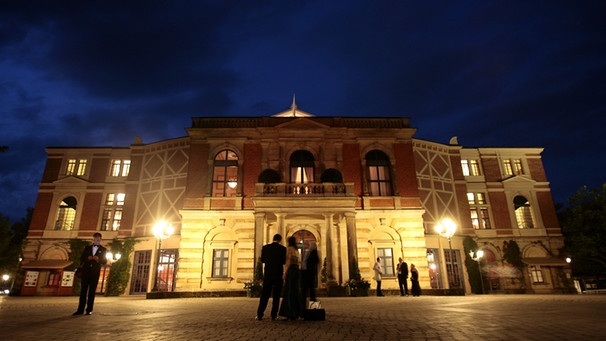
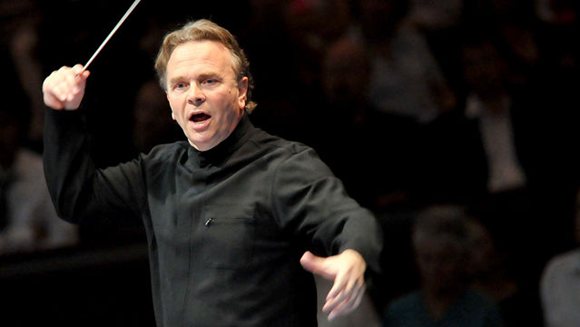
Carl Nielsen Prom 46 at the Royal Albert Hall, London, with Fabio Luisi conducting the Danish National Symphony Orchestra.  Nielsen's no stranger to the Proms : Barbirolli conducted Nielsen's  Symphony no 4 "The Inextinguishable " in 1965, but this programme included relative rarities like Hymnus amoris, and culminated in an outstanding Nielsen Symphony no 2 "The Four Temperaments".

This Prom began with a "golden dawn", Nielsen's Helios Overture, ()p 17, 1903). Nielsen said, "My Overture describes the movement of the sun through the heavens from morning to evening".  It's gloriously atmospheric, yet the composer was careful to add that it was merely titled "Helios" (the God of the Sun) and was more than pictorial. "Light, darkness, Sun and Rain are almost the same as Credo, Crucifixus, Gloria and so on".  The horns inn the first section sounded primeval, suggesting ancient instruments. Shimmering strings,  rising upwards, dissolving into rapturously refined textures. Much more sophisticated than straightforward "pictorial" music.

Helios thus heralded Brahms Violin Concert in D Major with Nikolaj Znaider as soloist. This was exqusitely played, Znaider's virtuosic refinement nicely haloed by the richness in the orchestra.  Luisi doesn't officially take over as Principal Conductor of the Danish National Symphony Orchestra until 2017, but he's worked with them for five years already.  This performance promises great things to come. In my eagerness to hear more Nielsen, I didn't pay enough attention to Brahms at first, but enjoyed it immensely on repeat broadcast.   This was a very long evening, (nearly 3 hours) determined, I think by the practical logistics of bringing in two choirs, including the Danish National Concert Choir, whose Nielsen Three Motets  (Op 55, 1930)  were beautifully nuanced, but the Brahms is a heavyweight piece that needs to be heard without much else around it.

It was good to hear the Three Motets with Nielsen's Hymnus amoris (Op 12, 1897)  Hymnus amoris is ambitious, scored for large orchestra, choir, a childrens' choir (Winchester Cathedral Choristers ) and  four soloists. The four sections are programmatic, tracing a person's life from childhood to old age, though structurally it's cohesive.  Nielsen was thinking in terms of polyphony and counterpoint, as evidenced in the orchestral and choral writing. However, the soprano part is relatively unadorned..  How good it was to hear Anna Lucia Richter, whom I first heard at the Wigmore Hall three and a half years ago. (more here) She's good.  Hymnus amoris was inspired by a Titian painting The Miracle of a Jealous Husband, the "wife" is more dominant. Richter's voice negotiates the sweeping curlicues in the long lines with finesse.  The Three Motets are more sophisticated and better written, but Hymnus amoris has charm.

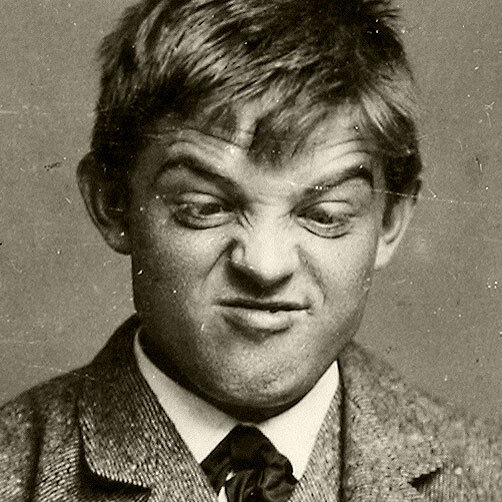
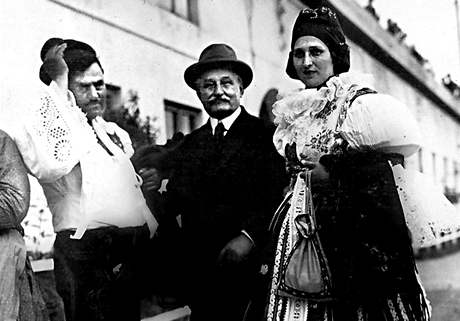
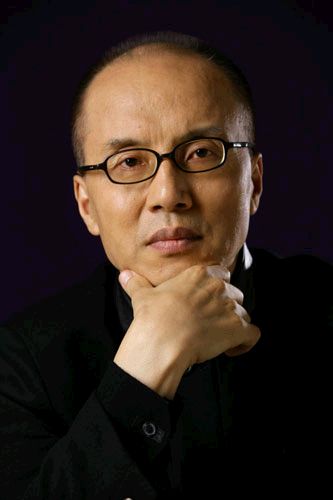
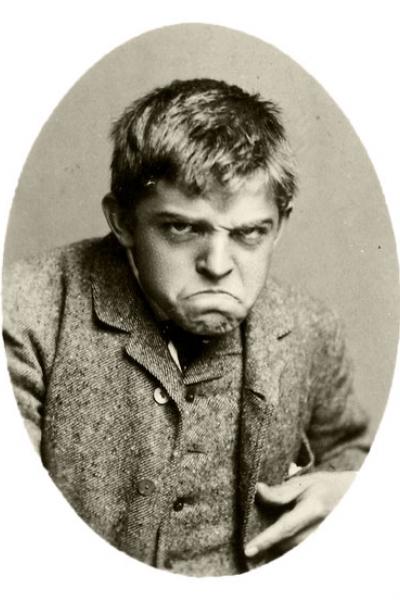
Although I've always liked Nielsen's music, I used to wonder why I couldn't access its darkest depths until I realized that Nielsen is Nielsen, not Mahler, or Sibelius, or Janáček or Debussy, all of them his direct contemporaries. No obvious angst, nor grandeur, nor panoramic vision, but instead  deceptively simple good humour. Few composers could have posed for the comic portraits pictured here.  On the surface, Nielsen doesn't take himself seriously, but his well-balanced humanity  is a much underrated virtue. 

Nielsen's Symphony no 2 "The Four Temperaments" (Op 16, 1902)  is programmatic in that its four movements describe four temperaments - Choleric, Phlegmatic, Melancholic and Sanguine. In "Choleric", the Allegro comodo e flemmatico, for example, lines are drawn out and repeated like a personality who prefers inertia but is nonetheless harried on by the forward thrust of Nielsen's musical logic.  It's interesting how the last movement whips along with great freedom. Perhaps it's Nielsen's own signifier. But it's fun,  psychologically observant, and translated into abstract musical form.  Wonderfully vivacious playing.  The encore was The Dance of the Cockerels from Nielsen's opera Maskarade, about which I've written here).

Thursday, 20 August 2015

Abbado - Music not muzak


Hearing the silence ?  I've been watching the documentary Claudio Abbado: Hearing the Silence, by Paul Smaczny, available through Euroarts.  It's been available for 15 years or so, but still worth revisiting.  Some will be aghast at the very idea of "hearing silence" but I think true  music lovers will understand.  When we "listen to the silence", we're making space in our souls for real music, not muzak.

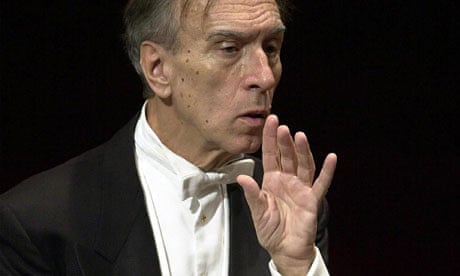
Abbado had "the most beautiful left hand I've ever seen, says" Daniel Harding, who went to work with Abbado aged 19 and was part of Abbado's elite Mahler Chamber Orchestra. "It's like (he was) massaging something that already exists, ..he's almost not 'making' it but allowing it to happen and then moulding it..... you get the feeling that the music is a physical presence you can actually touch and manipulate."  Albrecht Mayer, principal oboe at the Berliner Philharmoniker says "You see a movement of the hands, and you change automatically - you change yourself, not just the way you play".

That phrase "changing yourself" is critical. Abbado inspired his players to listen to something other than themselves. Abbado is quoted as saying he liked audiences that didn't rush to applaud. These days long silences have become a silly cliché, but I think what Abbado meant was the genuine silence that comes when an audience is really listening and thinking about what they've hearD. Nowadays, we've become locked into the idea of like/not like, as if the world were a Facebook meme. But great art exists in an altogether more rarefied place, something eternal that stretches the depth of human experience. Like/dislike is irrelevant: what matters is what you've learned from the experience.

"What  drives me is the love of my job" says Abbado. "and the passion for things I find inspiring, when I get a chance to immerse myself , to deepen my knowledge of a score, or a book". Abbado, who knows scores better than most, still learning? "If I can deepen that knowledge, I will always do so...  the starting point is always love". .

There's a clip from a rehearsal of the famous Lucerne Festival concert in 2003, which Abbado conducted after his near fatal bout with cancer. He looked  gaunt, since his half his insides were gone.  But he was conducting Mahler Symphony no 2., truly  a heartfelt resurrection.  No-one who heard it could ever forget. Even without knowing the background, this was a shattering performance.  One of  the secrets of Abbado's genius, especially in later years, was that he didn't take things for granted but aimed for the highest possible standards of excellence. That excellence came from choosng the finest players, and players who could work together so well that even in large ensemble, they functioned like chamber players, listening to each other. "Hearing the cross currents", as Mayer says, "not cobbled together like patchwork".

"There are no limits", Abbado is heard saying "(music)  is an ongoing process, a constant quest, a quest for new forms of music-making, a permanent state of enrichment. You arrive at a certain point and you have to go on from there"  .These days when hate, wilful ignorance and intolerant egotism seem to be taking over the world, I think we need Abbado's ideals more than ever.  As Elly Ameling once told a masterclass, "We are here for the music, and not the other way round".  

Tuesday, 18 August 2015

Thielemann's Tristan und Isolde, Bayreuth


Christian Thielemann's Tristan und Isolde is powerfully demonic. When I heard it broadcast audio-only, the orchestral playing mesmerized: so stunningly deep and expressive that  visuals were hardly relevant. Thankfully, the production supports Thielemann's interpretive insight. Read Philip Henscher's article The old-fashioned greatness of Christian Thielemann, a review of the conductor's book, My Life with Wagner. Not many conductors are good writers - it's not their job - but Thielemann's commitment seems to come through. Good stagings illuminate music and meaning, not external incidentals. Was this a production led by the conductor, not the director, Katharina Wagner?  It's not for nothing that Thielemann has been named the first non-family Music Director at Bayreuth. 

The Prelude to Act One unfolds with a pulse as strong as the tides.  The camera pans over abstract shapes, darkness interspersed by light. The Young Sailor's voice calls out from the darkness "Westwärts schweift der Blick".  Shrouded in mystery,we have to find our bearings. Listen to the orchestra, and hear the ocean heave and surge.  This gives  tension to the contrast with the mechanical, maze-like structure on stage, which may represent the inner workings of the human mind. Isolde (Evelyn Herlitzius) bristles with rage at her predicament: a powerful, healing queen reduced to a trophy of war. Tristan (Stephen Gould) appears in the network of metallic bridges and stairs. His presence reminds of the circumstances in which Tristan and Isolde met, explaining the intensity of Isolde's agony. If Herlitzius's timbre is squally in this Act, this fits the situation. At the end, her Liebestod is a triumph of steely resolve, tempered by anguish.  Christa Mayer's Brangäne is a softer more conventional figure, but again, this is a valid characterization. Isolde wants death and murder, but Brangäne represents a gentler ethos. I thought of wise old Hans Sachs, and "Wahn! Wahn! Überall Wahn!"

The orchestral playing is, again, a key to the interpretation of the Second Act. We don't see the ocean, but we hear it swirling invisibly, all the more malevolent for that. The tides are controlled by the moon, an impersonal, sinister force, but one which gives Tristan and Isolde the cover of nightfall in which to proclaim their feelings. Gould and Herlitizius sit under a tent (a bit like a canopy over a bed) and play with star shapes sparkling with electrical light. We know that Tristan never felt free as a child, and quite possibly neither did Isolde. So if they marvel at fragile tricks of light with the innocence of children, who are we to sneer? For me, this enhanced the overall tragedy.  There aren't all that many good Tristans around, so we should cherish Stephen Gould, who sang the part last year in London, and has Tannhäuser, Siegfried and Erik in his repertoire, plus an extremely sympathetic Paul in Die tote Stadt. He's a big man with the heft in his voice to create these roles, yet also the ability to express the vulnerability integral to their true portrayal. Tristan is a hero to everyone around him, but not to himself.  Like so many ultra-macho action men, he hides self-destructive urges. Perhaps Death by Melot isn't an accident. The orchestra hovers over the love scenes like a demonic presence, haunting  the lyrical raptures. Gould and Herlitzius can play with stars but the stars will control their fate. 

In Kareol, almost absolute darkness reigns. The Shepherd's Flute sings its mournful yet oddly seductive song. Wagner defines the different stages of Tristan's delirium. Gould and Thielemann mark the changes sensitively. Gould's voice glows heroically. This is Tristan's greatest battle, and Gould's singing is well up to the challenge. Very impressive. Yet we know he's dying, for he "sees" a vision of Isolde before him as he sings. At the end, blood pours from the mannequin, but by then Tristan is too far gone to notice. Iain Paterson's Kurnewal is firmly sung and characterized, emphasizing by contrast the Wahn that overtakes Tristan. The rapport between Gould and Paterson is musically crucial, for Tristan quietly begins to expire as Kurnewal's voice strengthens. Tristan rallies as he hears the ship in the orchestra, which Thielemann conducts with such fervour that we can almost see it too. When the surge subsides, Gould sings that last "Isolde!" and dies, wreathed in the gentle sounds of the harp. 

This tenderness is important. In this staging, Kurnewal covers Tristan's body with a cross and lilies, a beautiful moment, throwing Isolde's heart-rending grief into even higher profile. Yet again, the contrast between two spheres of reality is painfully poignant. King Marke (Georg Zeppenfeld) and his knights arrive, in glowing shades of gold.  Tristan's dead, Kurnewal is dying and Isolde's overwhelmed.  "Tod denn, alles. Alles tod" Zeppenfeld sings. "Wahn, Wahn, uberall Wahn!" all over again, and so sad. As the Liebestod begins, Herlitzius moves towards Gould's inert body, and tries to raise him, literally, from the dead.  In the music, we hear transfiguration, for in Isolde's mind she is again one with Tristan, on a different plane of existence, no longer "of this world".  "Mild and Liese", the happiness of release and transformation.  In an act of kindness, Marke takes the "living" Isolde by the hand, much as one comforts the grieving at a time of trauma, and leads her away. Will she ever return to the "real" world? Will she live on or die? Maybe she'll whip up other potions, but one thing's for sure. She's not baking cupcakes in domestic bliss. Brangäne stands over Tristan's body, thinking "Why?" As so should we. This ending made me think of the ending in Parsifal, with its message of compassion. "Gesegnet sei dein Leiden, das Mitleids höchste Kraft und reinsten Wissens Macht dem zagen Toren gab"

In the film, Thielemann is seen wearing a red polo shirt. At first I thought, it's been mighty hot in Europe this year, but now I wonder if the choice of colour might not have been deliberate. Although the set is dark, the singers are clothed in luminous jewel-like colours, blue, green and gold. (He switches to a black shirt for his bows.) Perhaps Thielemann's red shirt brings him into the picture, so to speak, for this is very much "his" production. He has always been a brilliant Wagner conductor but this Tristan und Isolde is extraordinarily strong musically, and accesses the infernal, demonic depths of the drama. If Thielemann's politics aren't acceptable, it's also not acceptable to destroy a person because you don't like what he thinks. Heed the music.

Sunday, 16 August 2015

Janácek Glagolitic Mass Eternal Gospel Tomáš Netopil


Now on BBC Radio 3 the 2013 recording by Tomáš Netopil of Janácek, The  Glagolitic Mass and The Eternal Gospel. Listen for free on the radio. This is interesting because it  makes connections between the Glagolitic Mass and the Eternal Gospel, or, Mša glagolskaja and Věčné evangelium 

The Eternal Gospel was written in the period around the First World War, when the destruction of the old order did seem apocalyptic. When it was published in 1917, Janáček was poised between his "old" style of writing and the breakthroughs he'd reach with The Diary of One Who Disappeared and what was to follow. The link to  the Glagolitic Mass is obvious, but perhaps without the incendiary  The Eternal Gospel we might not have the major operas, either. The composer's infatuation for Kamila Stösslová is usually cited as the source of his late-age blooming, but why shouldn't the inspiration go deeper than that?  Janácek was a passionate nationalist and Pan-Slavist at a time when national identity was a matter of life-or-death struggle. Based on a poem by Jaroslav Vrchlický, itself based on The Book of Revelation (and the end of the world)  it describes a vision in which an angel appears to a monk, foretelling a New Age of universal love. This "eternal gospel" isn't about personal love but the love of higher, impersonal ideals. The “Allelujahs!” here aren’t religious, but political. 

The Eternal Gospel isn't a rarity: Vladimir Jurowski conducted it in London in 2010   with Adrian Thompson, who also recorded it with Volkov for Hyperion.  Netopil perhaps doesn't quite have the finesse of Jurowski, but his soloist, Pavel Černoch, sings with the pungent punch of a native speaker. The recording with Beno Blachut (conductor Jiri Pinkas) remains, I think, the benchmark, though  I've just discovered Nikolaus Harnoncourt, of all people. Harnoncourt's violin soloist is superb, and the strings glorious. Netopil's violinist is very good, though not as accomplished as Harnoncourt's (who may be the Leader of the Vienna Philharmonic Orchestra). Netopil's account is more vigorous, and his choir infinitely more idiomatic, as one would expect from the Prague Philharmonic Choir, who have Janácek in their DNA. What a heroic epilogue - the female chorus like a chorus of angels.

Netopil conducts the original September 1927 version of Janácek's Glagolitic Mass not the version adapted for practical reasons of performance. Janácek's revision is easier to perform and probably more popular for that reason. When Pierre Boulez conducted the original version, in the then brand-new Paul Wingfield edition, at the BBC Proms in 2008,  the performance was so intense, and so convincing that, when Jiri Belohlavek conducted the "standard" version at the first Night of the Proms in 2011, some listeners went ballistic, blaming the conductor, not realizing that it was the composer's "fault". There's absolutely no reason why both versions aren't valid - the earlier version has a delightfully rough-and ready-quality which fits well with the idea of period performance. Until relatively recently,Janácek's music was often heard in adaptation and works fine.

The original Glagolitic Mass, though, reveals its true glory.  For one thing, it begins with an Intrada, with which the piece ends. The two Intradas aren't mirror images, but form a magnifcent frame  for the piece. As Janácek said: "My cathedral " was “the enormous grandeur of mountains beyond which stretched the open sky…...the scent of moist forests my incense”. These masses were held in the open air, with trees instead of stone as buttresses. Hence the idea of freedom and liberation, which is closer to Janácek's intentions than to a religious interpretation.  As "abstract art" it's amazingly lively and inventive. Janácek's creative imagination years ahead of his time. If we care about the composer, we need to care about his vision.  The original  Glagolitic Mass is craggier, more dissonant and more abrasive, but it's also closer to the composer's singularly individual vision. It's also more dramatic, harking towards the much underrated From the House of the Dead.  Janácek loved folk tradition but he wasn't "folksy".

Although the original version has been recorded several times, (Mackerras and Boulez in his 2000 recording ) Netopil is not using the 2011 edition. Please see my review of the Gergiev 2014 Prom here.  Netopil, who's 40, hasn't quite the audacious flair of Boulez and Gergiev, both of whom had enough experience to rise to Janácek's risk-taking challenges. The crazy exhilaration of the final Intrada doesn't levitate in quite the same way.  Nonetheless, this version of the Glagolitic Mass is so compelling that it's a joy to listen to. But I'd really like to hear the brilliant  Jakub Hrůša (age 34) do this: he'd be amazing.

Friday, 14 August 2015

Fidelio Salzburg : depressing, provocative but not wrong


Beethoven's  Fidelio is an opera designed to provoke outrage. Any production that doesn't provoke is a betrayal of the composer. Salzburg's new Fidelio is provocative, but that's exactly how it should be. Fidelio is an opera about ideas.  Like it or not, Claus Guth's production does engage with the ideas and ideals central to any genuine engagement with the opera. He presents an unusual take on the piece, but nonetheless one which is valid and thoughtful.  If we dismiss ideas because they don't fit our own, we're no better than the Don Pizarros of this world.

Leonore (Adrianna Pieczonka) is ogled by Marzelline  (Olga Beszmertna)   Perhaps the scene was written to show that Leonore's impersonation of a man can convince a woman. But one wonders just how much Leonore is a symbol rather than a character. Beethoven related to concepts, rather than to real women.  Thus the minimalist set, where the singers cast huge shadows that take on a life of their own, depending on the angle of lighting and shadow. The dynamic between Rocco (Hans-Peter Kõnig), Jaquino (Norbert Ernst) and the two female roles is interesting. Kõnig's a big man, who literally overshadows Jacquino: even at this stage one wonders if Marzelline could ever commit to marriage the way Leonore commits to Florestan. The music in these scenes is charming, in Singspiele style, but one wonders about the irony.  Like The Magic Flute, charm masks darker undertones.

Guth dispenses with bantering dialogue. Audiences know (or should know) the story well enough to follow the action as drama for its own sake. I liked the shadows, and the costumes of the choruses because they reminded me of Scherenschnitte, so popular in Beethoven's time - black silhouettes against white backgrounds that depict figures in stylized relief, deliberately evading realism.  Period detail does exist in this production, you just have to look closely.  Leonore and Don Pizarro have non-singing "shadows" acting behind them. There's a kind of rationale to this but it confuses things.

Instead of dialogue,  Guth employs strange sound effects. When I first heard this, audio-only, the sounds seemed disruptive because there weren't any visuals to explain what was going on. The sounds made more sense on stage because they suggested whirring and the movement of vast, cumbersome equipment.  Indeed, during the all-important Leonore Overture, we see stage hands changing the scenery. At first I couldn't understand, but then it occurred to me that we were seeing depicted before us the Deus ex machina resolution. Without the sudden appearance of Don Fernando (Sebastien Holecek) how might the story end ?  Hence the Overture which separates the main part of the opera with the elegantly-written postlude, like the Moral in Don Giovanni. But in Fidelio, the loose ends aren't tidied up.  We hear the music, but do we really know what happens next?  In real life political oppression, the bad guys usually win.  Happy endings don't happen unless there are major "scene changes" in society. 

It's quite possible that  the opera is happening in Florestan's head. Can he really only escape the dungeon through ideas and ideals? It's a provocative concept, but certainly not invalid.  In the opera, Florestan does nothing heroic, though we know he's been a hero in the past. Leonore is the protagonist,  the action man/woman who can defy the entire prison system and do what Florestan, trapped in prison, cannot do.  Florestan is an intellectual, a man who uses his mind, so why shouldn't he use his mind to contemplate his dilemma? Florestan (Jonas Kaufmann) doesn't even appear until the Seciond Act, but when he does, it's significant that he's alone, without hope, singing his amazing monologue. 

Thus Pieczonka "sings" without sound during the Prisoners Chorus and gesticulates frantically without saying a word, towards the conclusion.  The giant chandelier hangs oppressively over the stage. The prisoners have glimpsed artificial light but they have not been released.  The minimalism in this staging (designs by Christian Schmidt) support the idea that the drama is happening in Florestan's head, but like the strange mechanical sound effects, the scenes don't translate well audio-only.  In the radio broadcast, Kaufmann had to sing across a vast, empty void, which placed his voice under unnatural strain. Perhaps that's logical, given that he's been starved and deprived of light for two years, but I'd rather hear him do what he does best.  Fortunately, he sang gloriously in his dialogues with Pieczonka and the rest of the ensemble. Then, basking in the illumination of his imagination, Kaufmann's Florestan become a true hero, liberated by his art. 

Franz Welser-Möst conducted. Twenty-five years ago, in London, he dared to upset some entrenched interests, and was given the nickname "Worse than Most".  That was a vicious act of bullying and unfair, yet the abuse continues, perpetuated by many who don't know the original circumstances but repeat things on autopilot. Welser-Möst isn't worse than most and a lot better than many. So he's not demonstrative and doesn't court popularity, but he's a solid musician, who deserves respect. In Fidelio, clear-sighted commitment and dignity are more important than flamboyance.  Furthermore, he has guts.  Last September he quit the Vienna State Opera right at the start of  the season, discreetly not giving reasons. It was a job he loved, and filled for longer than most, but he wasn't alone in being discomforted by Dominique Meyer and the likes of  Sven-Erik Bertolf. 

Please also read my pieces on Claus Guth's soulless  Salzburg Don Giovanni and on his Strauss Die Frau ohne Schatten at the Royal Opera House which everyone seemed to love but I hated. Read Follow the Falcon here. In Fidelio, the action might conceivably be in Florestan's mind, but the action in DFoSch almost certainly isn't.  For a really good Die Frau Ohne Schatten, go to the Salzburg production directed by Christof  Loy. Read my analysis here.  That did seem provocative, but it was infinitely more profound and musically sensitive. Guth's Fidelio works, but it's depressing and doesn't have the ferocious, hard-hitting bite of Calixto Bieito's Fidelio which really engaged with the issues - and the politics of the opera (read my analysis here). Now THAT was so provocative that it was met with near hysteria. But it was a lot closer to Beethoven's intentions than its detractors realized.

Thursday, 13 August 2015

Prom 36 Boulez Ravel Stravinsky FX Roth


Perhaps the best Prom of the season so far - BBC Prom 36 Boulez, Ravel, Stravinsky with Francois-Xavier Roth and the BBCSO.  Roth, like Boulez himself, understands the fundamentals of the French aesthetic. Please read my article on the connections between French baroque and contemporary music, and the wider cultural context.

The BBCSO played  Boulez's Figures-Doubles-Prismes (1964-8) with Boulez himself in the 1970's. Individual layers may have changed but Boulez conducted the orchestra until fairly recently. They know his idiom. Roth nonetheless drew from them an exceptionally vivid performance which stands up to their recording with the composer himself.  Listen again here on BBC Radio 3 - this is a performance to remember.

Figures-Doubles-Prismes  runs just under 25 minutes but it's formidably hard to conduct, since there are, effectively, three orchestras operating in relation with each other, not easy to programme given its scale and short duration.. Spatial relationships matter, but it's more intense and concise than Stockhausen's Gruppen which Boulez conducted at the Royal Albert Hall in 1967 and 1974. (Read my review of the 2008 Prom Gruppen here

The title Figures-Doubles-Prismes refers to the way ideas are set forth, "doubled" and refracted as if through a prism. sparking off intricate patterns and variations.  Far from being a dry composer, Boulez's piece vibrates as if it were organic, like a life form endlessly refreshing and proliferating in new directions.  Listen to those oscillating, shimmering arcs of sound, which seem to reach out into infinity, and the playful twists of percussion, turning round like throws of dice. How it flies! — and then intriguingly, it stops. With a smile, I imagine, as it sparkled  wth wit and whimsy. Appropriately, Roth followed it with a miniature, Boulez's cheery arrangement of Ravel's miniature Frontispice [sic].

Marc-André Hamelin was the soloist in Ravel's Concerto for the Left Hand, written for Paul Wittgenstein, who'd lost his right arm in the 1914-18 war. This too is witty, celebrating the triumph of creative invention over disaster. A good pianist can do with one hand what some couldn't do with two. 

Abundant life and wit, too, in Roth's account of Stravinsky The Firebird (another Boulez favourite). The Firebird is a magical figure which materializes out of the air, leading the Prince to Kashchey’s secret garden. Unlike the ogre, the Prince is kind and sets the bird free. He’s rewarded with a magic feather. The Princess and other captives are saved by altruistic love. The solo part for horn plays a role in the music like that of a solo dancer. Hushed pizzicato celli and basses, building  to crescendi that shone vividly like fireballs. The joyous tolling of great bells, and trombones and trumpets hailing  the moment of liberation.

Monday, 10 August 2015

Prom 33 Fantastique Berlioz, Beethoven, JE Gardiner

Revolution in the Air!  Beethoven Symphony no 5 and Berlioz Symphonie fantastique, each of them explosive works that would change the course of music history  John Eliot Gardiner and the Orchestre Révolutionnaire et Romantique use period instruments for a purpose. Period instruments aren't mere novelty; we can hear sound worlds as the composers might have imagined them. Lighter, brighter textures make the music move, recapturing a sense of danger  that more orchestras can learn from.

Gardiner's approach paid huge dividends in Berlioz. The  theatricality of the Symphonie fantastique  (1830) inspires excess. As Hollywood extravaganza it's grand indulgence. How Berlioz would have loved the movies!  But  Gardiner's approach liberates its sheer craziness in the piece and connects to Felix Mendelssohn's Die erstes Walpurgisnacht (1831)  and to Goethe's Faust , in which Mephistopheles flies through the air and witches cavort in satanic orgies. Gardiner's wind-swept tempi and flying textures are interpretively perceptive. Faust helped change the world, too, ushering in the Romantic (not romantic) fascination with dangerous emotions.

Written in a neurotic frenzy, which may have been exacerbated by the use of opiates, the Symphonie fantastique is a nightmare that breaks rules. The relatively lyrical Rêveries – Passions fade to the deceptive waltz in Un bal. The brass shines, the lively to and fro suggests frantic turbulence. Superlative playing from the cor anglais and the distant off-stage oboe, and the solo violin, the flute and oboe: figures stalking each other. This pastoral isn't peaceful.  Like Beethoven's Pastoral, it ends in thunderstorm. The timpani here discreet (as far as timpani can be) for the real storm is yet to come.

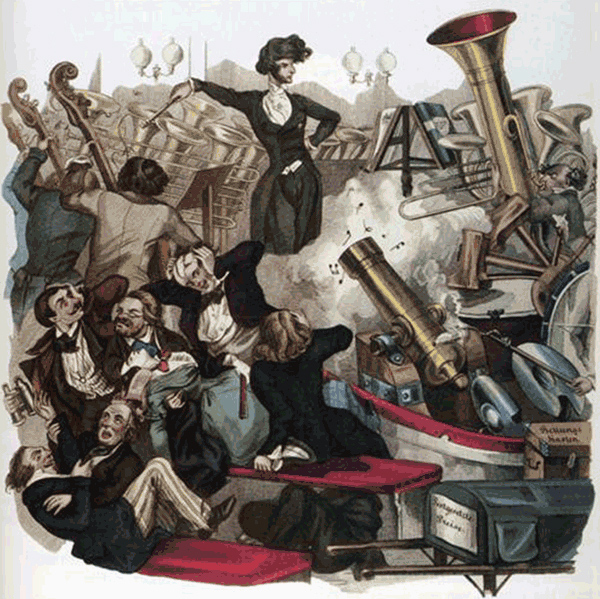
The ophicleides and untuned percussion in the March to the Scaffold felt wickedly wayward. These aren't instruments that can be played with precision, just holding them upright must be quite a feat. But they're infinitely more interesting for that, adding an element of risk and quirky distortion, anarchically undercutting the dominance of the brass and the regularity of the march.  Perhaps subconscious feelings, and the Id, are breaking through. Ophicleides were military instruments : imagine marching into battle behind an intimidating Serpent or a Monstre. They were associated with death, and used in funerals. Mendelssohn used them in Elijah to suggest the Prophet's raw, untamed nature. Berlioz knew  exactly what he was doing. His Grand Traité d'Instrumentation et d'Orchestration Modernes was extremely influential, stimulating later composers to experiment with new sounds and forms. Mahler and Richard Strauss consulted it frequently and discussed it together. The audacious inventiveness in their work owes much to Berlioz's Treatise, and to Symphonie fantastique (though not to the operas).  

Gardiner and the OR et R's Songe d'une nuit du sabbat, however, brought out the connections with Meyerbeer's Robert le Diable (1830) , another seminally influential work,  completely misunderstood by London critics when it was heard at the Royal Opera House (Read more here).  Another reason why historically informed performance practice is vitally important.  The waltz in Un Bal now becomes the orgiastic dance of the witches sabbath, a truly subversive image in an era when the Church and authoritarian values still held sway. Sulphurous rumbles from the bowels from the orchestra, magical will o' the wisps. Wonderully manic flute, and then the masterstroke, the massive tolling bells Berlioz dreamed about but probably never heard realized.  Pointedly anti-clerical and demonic. So what if they were electronic? Berlioz believed in using all forms of instrumental colour, where possible. His treatise was not subtitled "modernes" for nothing.  I don't remember if Berlioz heard the Parsifal bells, twenty years later. What might he have thought?

Beethoven's Symphony no 5 premiered in the same year that Goethe's Faust was published. Coincidence, perhaps, but telling. Gardiner and the OR et R bring out the fleet-footed verve in the symphony. Can we hear in the rushing figures the ticking of time or the footsteps suggested in Symphonie fantastiqueBeethoven 5 can be grand, but it was refreshing to hear it conducted with the subversive verve Gardiner brought to it. 

Sunday, 9 August 2015

Martyrs of Nagasaki

Seventy years ago today, on August 9th 1945, an atom bomb fell on Nagasaki.Why Nagasaki ? The most westernized city in Japan, the centre of Christianity and of foreign trade, which for centuries had been Japan's window on the world?  Perhaps the man in the photo, staring at the ruins of the Catholic Cathedral, might have pondered the irony. The people of Hiroshima and Nagasaki weren't combatants, but they've fought a greater battle by reminding the world that nuclear war is not a good thing. Nuclear weapons may have proliferated, but - thank God - no nation has been crazy enough to use them.

Thus we should think of the selflessness of the 26 Martyrs of Nagasaki, crucified , like Jesus Christ himself,  in February 1597. Christianity had reached Japan barely 50 years before, when Francis Xavier "Apostle to the Indies" arrived at Kagoshima in 1549. Within a very short time, the Jesuits had made hundreds of thousands of converts, helped in no small part by long-standing  inter-daimyo rivalries.  But the very growth of Christianity posed a threat to stability, so it was suppressed. Thousands escaped to Macau. Japanese craftsmen built Macau's Church of St Paul's (read more here). Quite probably Japanese DNA features in the Macanese community since officially the Chinese government didn't allow Chinese people to remain in Macau overnight.  After the Japanese invasion of China, millions of refugees poured into Macau, a tiny enclave with hardly any resources. The Bishop said God would provide, no-one should be turned away.  Some of the 16th century cannons in the Monte Fort were supposedly sold. Weapons turned, not to plough shares, but to rice.

The Martyrs of Nagasaki were killed to send a political message. Huge crowds were forced to watch their sufferings. Yet they weren't silenced. From their crosses, they sang psalms. Three of the martyrs were Japanese. One was Paul Miki, scion of a samurai family, fearless in the face of death. He's quoted as calling out to the crowd "“I am a Japanese and a brother of the Society of Jesus. I have committed no crime. The only reason I am condemned to die is that I have taught the Gospel of our Lord Jesus Christ. I am happy to die for that and accept death as a great gift from my Lord.”  He asked the crowd if they saw fear on the faces of his companions. He said they didn't fear because they believed in a higher level of existence.

True Christians, like Buddhists, and indeed any people with a moral base, don't hate. They break the vicious cycle. The people of Hiroshima and Nagasaki, by campaigning against nuclear weapons, serve a higher cause.  On 29th October 1943, in Hong Kong, 32 men and one extraordinarily brave woman were beheaded. Reverend Wong Shui Poon was among them. He was 65, a Cambridge graduate and head of the Chinese Christian community. He prayed with all the prisoners, Anglican or not, and stood by them as they were executed. He was the last to die, by which time the swords were blunt. The first cuts didn't sever his head, and he continued to pray.
 

Friday, 7 August 2015

Why western opera audiences need to know Lam Kar Sing

Lam Kar Sing has died. Imagine if dozens of big names in the western opera, film, drama, popular music,  historians, athletes and arts names all dropped dead at the same time? That's how significant Lam was to Cantonese culture. Western audiences assume that high art and popular entertainment don't mix, reinforcing the myth that high arts are "elitist". Eventually that mindset will kill the arts, because dumbing down destroys the very excellence that makes high art great. So Cantonese opera represents an alternative to perceived ideas on the integration of "high art" into society.

Lam Kar Sing began his formal training at the age of 8. Cantonese opera isn't just about singing.  Physical and mental discipline are part of the craft,  since movement and gesture are integral to the expressiveness of the art. Hence the connection to martial arts, which aren't about fighting per se but themselves connect to spiritual values like justice, support for the oppressed (a typical theme inn martial arts movies, for example).  And to good physical health!  The moves opera singers use reflect the moves of qigung, with its emphasis on the harmonies of the body. Not for nothing kung fu masters often practised herbal medicine. Chinese opera doesn't need ballet interludes, it "is" dance in its deepest form.

From these foundations, the "art" side of opera grew. Chinese opera wasn't notated. People learned by watching masters, absorbing the spirit of the art. Although the genre may seem stylized, it thrives on improvisation. A basis of percussion holds the music together, from which the singers can use familiar tunes. Much of the delight lies in the way great performers individualize their work, and adapt what they sing to new situations. Hence the development of new forms of the genre, like opera adapted for the movies, where the rhythmic spoken recitative that's so much a part of  Cantonese opera comes into its own as drama. A good basic plot is acted, like in any drama, but the singers develop their own words, within reason, sometimes alluding to things way outside the plot. Tunes are borrowed from all over. Jingle bells, for example, pops up even in "formal" opera  the spoken parts, as much as the singing, reflect the beauties of a dialect that has nine tones, which can be coloured in subtle ways. There's lots on Chinese opera on this site, please use the labels below to explore.

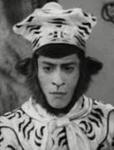
Chinese opera .long  pre-dates western opera. its origins lie with the literati, the educated scholar class. Kunqu operas quoted huge chunks of classical literature and history, which audiences got  because that was part of the cultural vocabulary. Obviously, not everyone was educated, or even literate. Thus the proliferation of regional adaptations, built on a background of familiar basic stories and styles.  Opera thus became part of "popular" culture. Read more on this site about traditional "pop up" houses and communal celebrations.  No question of "dumbing down" though.  Different troupes competed, and great stars were (and are) idolized because they did good, innovative work. (Photo shows Lam Kar Sing as Monkey.)

And thus back to Lam Kar Sing. He was uncommonly good at all aspects of his art. He could sing, and act, brilliantly, the merest tic of a muscle infinitely moving. He sang formal traditional opera, but also variants and "straight" theatre, including modern drama.  His martial arts movies are "high art" with their historical and literary allusions,  a far cry from the crude violence that kung fu movies sometimes descend to. But even those connect to Chinese history and culture and to modern life. For more details on Lam Kar Sing's life and art, please read these articles HERE and HERE   A friend, who followed Lam's career since they were both young men, told me what Lam was like away from the camera. genuinely personable, kind and humble, who loved his art and culture. That's why he was so much loved in return.

Thursday, 6 August 2015

Hiroshima 70 years on, in art and music


Seventy years ago today, Hiroshima was destroyed. Never must we ever forget. Today, we are in danger of taking  Hiroshima for granted but in 1950,  Japan was still under military occupation and Japanese people weren't allowed official news of the bombing. News leaked out as small horrible hints : people who knew people who knew first hand. And the Japanese were still reeling from the shock of defeat, total carpet bombing, firestorms in cities of wooden houses. Hard news was hard to come by, but information spread by word of mouth, and by art. Novels were written, films were made, music was written. 

Above, Ghosts,  the first of the  fifteen "Hiroshima Panels " Genbaku no zu, made over the course of 32 years by Maruki Iri and Maruki Toshi. Read more about them HERE. .The artists wrote "It was a procession of ghosts . In an instant, all clothing burned off of hands, faces. breasts swelled. The purple blisters on the victims soon burst and peeled off, hanging down like pieces of rags. With hands lifted half up, the victims appeared as ghosts in procession, dragging their ragged skin behind them  exhausted , rthey fell down moaning in heaps and died, one after another". Click on photo to enlarge.

In 1953, Masao Ohki (1901-1971) composed his fifth symphony, the Hiroshima Symphony, based on the first six of the panels, which were completed between 1950 and 1952. The symphony is a  carefully constructed meditation on the images, which reflects the idea of self contained panels, as if "boxes within boxes" can make sense of the chaos, the totality too hard to absorb at once. .The Prelude starts with unsettling calm, tense cello and bass pizzicatos gradually adding a sense of time ticking away urgently. Ohki is too subtle to "depict" the actual impact. Instead, the second part is a meditation in the lowest registers of winds and strings, a solo trumpet adding a sort of cry of anguished disbelief. He titles it Ghosts – it was a procession of ghosts, referring to the Maruki panel above. 

The third section of the symphony refers to the second Maruki panel, Fire, (pictured above) of which the Marukis wrote "In an instant, everything burst into flames. Even the ruins were ablaze. The dead silence of a vast desert broke. Some fell senseless under fallen debris, others  desperately tried digging out.  Everything was consumed by a crimson light. People fell and were taken by the fire".  Ohki expresses this with rapid chromatic runs and trills, tremolos and glissandi. This is the imagery of wind, and transformation for in those moments, the world  was changed forever. Another darkly meditative section Water,  develops the themes in Ghosts, before the strange and disturbing fifth section, Rainbow. Ohki quotes the description "All of a sudden black rain poured over them and then appeared a beautiful rainbow". A plaintive solo violin, then a solo clarinet evoke the unworldly half light. Ohki isn’t depicting an ordinary rainbow as such, but perhaps a surreal, inchoate response to the idea of beauty in the midst of horror. The sixth section, Boys and Girls is even more poignant.

The seventh section is Atomic desert: boundless desert with skulls. Against a background of "flat-lining" strings, keening and wailing, the disembodied sounds of flute, piccolo and clarinet rise tentatively. It’s a bizarrely abstract piece, strikingly modern, particularly when considering how Ohki had been cut off from western mainstream music for a good fifteen years since the Japanese regime, allied to the Nazis, suppressed "modern" music. The final movement, Elegy, draws in themes from the earlier sections, yet also develops them with deeper emphasis. As Morihide Katayama writes in the booklet of the CD (Takuo Yuasa, New Japan Philharmonic Orchestra): "the conflict is unresolved, and whether the terror is broken down or not depends on subsequent human conscience".
Below an excellent blend of music and illustrations:  

Hiroshima - never forget. Follow the label "Hiroshima" to see all the other pieces I've written about Hiroshima, Nagasaki, related films, history and music about war.Later I'll write about Ikura Dan.


Wednesday, 5 August 2015

The full Monty : Prom 25 Monteverdi L'Orfeo Gardiner


The full Monty! Prom 25, MonteVerdi L'Orfeo with John Eliot Gardiner.  Utterly outstanding, vibrant with life and energy. Eurydice dies on her wedding day and Orfeo descends to Hades to bring her back from the dead.  He fails, but in music, he finds life, and the eternal source of creative power that it represents. Monteverdi didn't look back, as Orpheus did, but looked forward, and is generally credited for creating the amazing art form that is opera in the western classical tradition.  Gardiner has this music in his soul, but seems to re-live, and revive afresh. This is what music should be about - a life force channeled by creative adventure.

L'Orfeo was written for small, semi-private places, but the verve which Gardiner and his forces brought to it in the vast empty acoustic of the Royal Albert Hall was astonishing. Defying the laws of physics, Gardiner's English Baroque Soloists created sounds that seem to vibrate around the building, not by the force of volume but by vigorous joie de vivre.  And with period instruments, too !  Of course they were aided by modern technology, but why not ? We don't need to eat baroque food and wear baroque clothes to be "authentick". It's the spirit of the music that really counts. Given a choice, Monteverdi and his audiences would, I think,  have been thrilled. Nothing is "dead" in this music, except to ears that prefer to be dead.

Hardly anything about the baroque period was timid. Rather, it was an explosion of audacious imagination, when the very idea of an insular Old World  was being blown away by discoveries of other, exotic new worlds, and horizons. Kings with absolute power, and upper class audiences,  didn't give a toss about "pleasing the public". Hence the passion and intensity of this music, and its inventiveness   The English Baroque Soloists are thus named because they're highly individual, each instrument distinctive, and played with great technique. Even clapping hands make music ! In Act One, the pastoral sounds evoke ancient Arcadia, neither Greece nor early 17th century Europe but somehow more elusive. When Eurydice enters Hades, the orchestra responds with a striking range of colours. When Orfeo returns to the world, we hear his harp singing. Eventually he will be torn apart by  demonic spirits, but for the moment, he's creating art, and life, with his music.

The Monteverdi Choir were  glorious : this is their forte, and how! Great soloists, too - Krystian Adam sang Orpheus, Marina Florez sang Eurydice. Full cast and listening link HERE

The Orpheus myth is so potent that it has been reborn many times in art, literature and in music.  The Royal Opera House is doing Gluck's Orphée et Eurydice in September.  This kind of value-enhanced immersion lets listeners go as deeply as they like into the ideas behind music, and the different ways in which such ideas can be expressed, infinitely less superficial than the shallow Ten Pieces mindset. There's absolutely no reason why non-listeners can't be drawn into the magic of music through more solid fare.Let's pray that ROH or the ENO will do Harrison Birtwistle The Mask of Orpheus, which was so successful at the Proms (unstaged) in 2009. (Read more here)  Luckily we had his The Corridor and The Cure,  (a good piece of music marred by a stupid production)  Read more here.  Monteverdi to Harrison Birtwistle - that's a thought ! But one which proves the universal relevance of music.

Monday, 3 August 2015

Bayreuth Festival FULL Broadcast schedule


HERE is the schedule for BR Klassik's 2015 Bayreuth Festival broadcasts

Highest recommendation Christian Thielemann's devastating Tristan und Isolde, which gets deeper with each rehearing. That is what good performance should do, challenge and stretch the soul.  . Read my first impressions here.  NB the 7th August broadcast will be VIDEO

The other broadcasts are revivals , some with different conductors eg Lohengrin with Alain Altinoglu instead of Andris Nelsons who was brilliant when it was new. Altinoglu's good, anyway, but Nelsons is just so strikingly brilliant that his absence is a loss to art, and to the world. Luckily, he's so good that his career will survive. Please read my review of the original Hans Neuenfels production, Klaus Florian Vogt, again, superb.

The notorious  Castorf Ring is revived again. Please see what I wrote when it was new : Rheingold Die Walküre   Siegfried and Gotterdammerung


Saturday, 1 August 2015

Manon Lescaut Munich Kaufmann Opolais


Puccini Manon Lescaut at the Bayerische Staatsoper, Munich. Some will scream in rage but in its austerity it reaches to the heart of the opera. What is Manon Lescaut really about? The Abbé Prévost's 1731 narrative was a moral discourse. Unlike many modern novels, it wasn't a potboiler but a philosphical tract in which the protagonists face moral dilemmas. In this production,  key excerpts from Prévost are shown at critical points, not just during the Intermezzo. These are important because they underline the origin of the opera, and its deepest values. The staging is black and white, lit like an interrogation room, for such is its fundamental rationale. It's not a potboiler, not sentimental. but an uncompromising warning against the seduction by false values like wealth, glitz and short term shallowness.  It says much about some audiences that they'd prefer things the other way round.

 Hans Neuenfels's  production, with designs by Stefan Meyer, captures the spiritual state of flux that is so much part of Puccini's opera. The action moves from place to place but the underlying theme is bleak. The journey starts at Amiens, a faceless place where everyone's en route to somewhere else. One characteristic of Neuenfels's style is the way he uses crowds.. In his Lohengrin for Bayreuth (read more here), the people of Brabant were shown as rats, since rats conform, but Neunefels treated them not as vermin but with sympathy and warmth.  In Manon Lescaut, the townsfolk have garish makeup suggesting Georg Grosz-like malevolence beneath their well-padded uniforms. Anonymous figures appear, zipped up in body bags.  Not "belle, brune et blonde" but dehumanized creatures, being trafficked, presumably to America. Suddenly, the casual, flirtatious bantering feels dangerous.

Neunfels's use of crowds also serves to highlight the central characters. Des Grieux (Jonas Kaufmann), Manon (Kristine Opolais) and Lescaut (Marcus Eiche) stand out, in sharp black and white, in full focus. This is absolute luxury casting, and so they should shine. Kaufmann and Opolais "own" these roles these days  If anything, they were singing with even greater intensity than they did at the Royal Opera House production last year (read more here).  Kaufmann's portrayal was exceptionally deep, enhanced by Neuenfels's emphasis on the moral and philosophical basis of Des Grieux's dilemmas, which are inherently dramatic in themselves. 

In most productions, Manon's beauty steals the show. When Anna Netrebko pulled out of the part, many sighed with relief, since Opolais has the artistic courage not to need to be seen at her finest. When she sings, she creates a real Manon with all her insecurities and complexities. She dares depict Manon's inner ugliness, because she can also show her true beauty. Opolais may look tense in the first act and ravaged in the last, but that's all the more reason to admire her integrity. As she lies on the hard, bare stage that depicts the spiritual desert that is New Orleans, (where physical deserts don't exist), with her face gaunt and the dark roots in her hair showing, Opolais's voice transcends her surroundings. Manon is a true hero because she changes, develops and learns true meaning.

The staging of the Paris Act makes or breaks any production, since it confronts the obscenity of Manon's situation as, frankly,  a one-man prostitute. The stage shrinks, lit by a frame of light suggesting a prison without bars, with cut glass objets de luxe symbolizing hard but fragile transparency.  All is delusion, the makeup, the madrigals, the dancing. Geronte (Roland Bracht) fancies himself an artist. His friends and Abbé's aren't fooled. They've come to perve at Manon's body.  In London, many in the audience were aghast that the scene was shown as live porm, but that's exactly what it is, a rich man showing off to dirty old men like himself. It's not meant to be pretty, as any reading of Puccini's score makes clear (Read more here). Neuenfels shows Geronte kissing Manon's naked leg. The Dancing Master is depicted as an ape, which adds even more horror. Yet Neuenfels also shows that the Dancing Master and Manon have much in common, both reduced to performing animals by the corruption of wealth. Geronte's friends and, signifcantly, Abbés, supposedly celibate holy men, are dressed as cardinals in fuschia pink. This is not casual detail, for it connects the brutality of a society that reveres woman as virgins, but objectifies them as sexual creatures to be abused and disposed of. 

At Le Havre, Manon is seen in anonymous grey. The gloating crowd with their red wigs now seem demonic,as they are indeed, since they've come to enjoy seeing the degradation of women as prisoners. In contrast, the Sergeant seems more human, since he lets Des Grieux slip aboard, no doubt breaking rules. By the time we reach the all-important final act, all external trappings are disposed of, too.  Manon and Des Grieux are alone, in almost cosmic isolation. All distractions stripped away, Kaufmann and Opolais can release emotions through the sheer power of their singing. Divested of material things  they transcend the world itself.

Superlative conducting from Alain Altinoglu, too,  leaner than Pappano, but more suited to this elegant, austere conception.  Of the three Manon Lescauts in the last two years London, Baden Baden and Munich, this new production is by far the most incisive and intelligent. Good opera goes far beyond the first line in a synopsis. As Manon learns, life isn't about glitzy trappings, but about human emotion.

Friday, 31 July 2015

Prom 17 Uncomfortable Englishmen RVW Elgar Elder


Prom 17 at the Royal Albert Hall, London, Sir Mark Elder conducting Vaughan Williams and Elgar, with the Hallé, an orchestra with a golden Elgar pedigree.  No safe complacency in this programme though, because the two main pieces confront an uncompromising aspect of the English psyche.

Starting the Prom with Debussy Prélude à l'après-midi d'un faune was a clue. Debussy, even before Schoenberg, was experimenting with tonality  and duality, breaking down the barriers of convention. The flute represents Pan,  and his disciple the faun. The flute solo was wonderful, but much of the beauty of the piece lies in its mysterious ambiguity and the multi-level interaction between the flutes and lower-voiced winds, strings and harps. The undergrowth in the forest sings, too, so to speak.

A good prelude to Ralph Vaughan Williams' Sancta Civitas (The Holy City). RVW called it an oratorio, but it harks back to the doughty non-conformism of William Blake and John Bunyan  and the militant idealism of the early Victorian age. In spirit it's akin to The Pilgrim's Progress ,which occupied RVW's mind most of his adult life. (Read more about that HERE.) The texts are drawn from the Book of Revelation, not from the Gospels, and it taps into millenialist Low Church concepts quite alien to Establishment Anglicanism. Outsider theology, which Vaughan Williams recognized, with his knowledge of High Church values and hymnal.  Down Ampney is very far away.

 From mysterious low rumblings in the orchestra, the baritone, Iain Paterson called out forcefully,  "I was in the Spirit and I heard the great voice of the people praising God and singing Alleluia". The voices of four choirs rang out, the Hallé Choir, the London Philharmonic Choir, the Trinity Boys Choir and the Hallé Youth Choir, in glorious tumult.  Note the word "spirit" for in Revelation, there are seven Spirits of God.  Yet man is mortal - what gives? The mood is apocalyptic. Heralded by trumpets the massed voices sang "King of Kings, Lord of Lords".  Heavens open, and an Angel appears. The swaying cross-harmonies in the voices, and the back and forth antiphonal exchange, emphasized chaos and disruption.  The kings of the earth are displaced and evn th great city of Babylon is no more.

The middle section, the Allegro Moderato, is defined by a solo violin, whose lines soar up the register, heavenwards, a clear reference to A Lark Ascending.   Here the violin serves an extra purpose, uniting the faithful on earth (the darkly undulating choirs) with Heaven. The choirs sang "Glo-o-ory", the legato swerving with  carefully judged  waywardness. The textures are dense, but Elder and the choirmasters ensured that the intricate cross-patterns were kept distinct,  Spatial textures were well executed, too. The Distant Choir of young voices floated across the vast distances of the Royal Albert Hall. The violin leads, like an angel, towards a grand climax, a blaze of trumpets and the booming of the organ led to temporary.detumescence. From near silence, the voice of the tenor, Robin Tritschler rose, from the balcony far above the huge auditorium. "Fear not" he sang. He's an angel, reassuring the faithful that they're at one with God. But listen to that ending, where a simple, tentative line  recurs and recedes,, suggesting that, for Vaughan Williams, the agnostic, there would be no easy resolution.

More Spirits followed in Elgar's Symphony no 2 in E flat major. The composer quoted Shelley "Rarely. rarely comest Thou, O Spirit of Delight" which might sound optimistic, but the poem continues with self-doubt. "Wherefore hast thou left me now/ Many a day and night? "Was Elgar intuiting the loss of creative powers, or expressing the anxieties  that may have been part of his outwardly peaceful life? He called this symphony "the passionate pilgrimage of a soul".  Elder defined the big opening outburst with assurance, the "spirit of delight" motif descending elegantly, leading  into confident expanses of sound, suggesting open horizons and open vistas. But the brass flared up, creating a jagged air of alarm,  Trying to explain, Elgar wrote that it was "a sort of malign influence wandering through a summer night in a garden."   Perceptively, Elder conducted the ending of the first movement so it bristled, the line ripping along with haunting, almost jazz liike tension.

The Larghetto began with the expansiveness with which Elgar's music is so often associated, but the emotional temperature dropped as the tempo slowed.  Elder shaped the measured pace of the recurrent waves of sound, building up to  a crescendo which, to me, felt like a last, fond looking back on the past. The colours darkened, as if night were falling . The  Rondo has connotations of Venice,  Elgar having written, enigmatically, "Venice and Tintagel" . Elder and the Hallé created the deceptively bright spirit: one could imagine a busy city with tourists on holiday. Elgar wasn't aware of Thomas Mann when the symphony was being written, but we, inescapably, cannot miss the imagery.  The bustle and wild, whipping lines with which the movement ends certainly suggest hurried departure, which may well fit in with the idea of the death of the King to whom the piece was dedicated, and to the idea of the creative despondency Elgar was to encounter.  Moderato e Maestoso, the final movement,  was played with beautiful richness, so when its dying embers faded, the sense of loss was profound.

Elgar told the orchestra who played at the premiere: "Some of you will know that dreadful beating that goes on in the brain which seems to drive out every coherent thought.....Percussion, you must give me all you are worth!" Certainly Mark Elder and the Hallé gave all they were worth, which was a lot. The percussion didn't need to crudely drown out the orchestra, but the sense of tension and foreboding Elgar wanted was most certainly part of this superb performance. Seriously idiomatic Elgar from Elder, one of the great Elgarians of our time, and from the Hallé who've been doing Elgar since he was "new music".

Listen to this Prom again HERE

The Elgar Symphony will be broadcast on BBC TV 4 on 2nd August.
Thursday, 30 July 2015

Prom 15 Transformations Xian Zhang Prokofiev, Qigang Chen, Rachmaninoiv


At BBC Prom 15, Xian Zhang did wonders with the BBC National Orchestra of Wales . Tonight, they seemed transformed, totally energized. electrified with dynamic purpose. They haven't sounded this inspired in recent years. Something good is happening in Cardiff.

Prokofiev's Symphony no 1 in D major burst into vivacious life. The capricious high jinks in the music were expressed with athletic verve, the orchestra so together that they sounded like a single organism.  Zhang is unassuming and down to earth, totally focused on music, rather than on  persona. When the media made a big fuss about the first female conductor to lead the Last Night of the Proms, Zhang quietly said that real equality would be reached when gender isn't a novelty. In any case, we must not forget that millions of women around the world suffer far worse problems than being on a podium. Zhang clearly loves making music. and has the personality and technique to do what she does extremely well.

More transformation came in Qigang Chen's Iris dévoilée (2001), the composer's best-known work, receiving its much belated UK premiere.  Chen's Joie Eternelle, a trumpet concerto commissioned by the BBC for Alison Balcom featured at last year's Proms (read more here).  Iris dévoilée is a far more substantial piece and deserves its reputation as Chen's masterpiece. Unlike so much music written to bridge Chinese and Western music, Iris dévoilée fully integrates the diverse aesthetics so they work together  especially for audiences familiar with Chinese music other than pastiche. Iris dévoilée is real music that stands on its own terms. The 45-minute work evolves over nine sections, each of which describes an aspect of feminity. It's Frauenliebe und -Leben for much grander forces, though Chen is able to recognize that he's a man, observing from the outside. 

The first movement, "Ingenue", describes a very young woman. The pipa, guzheng and erhu predominate, creating a sound world that suggests the purity and intimacy of  Chinese chamber music, traditionally played in private scholarly circles. This young girl is sheltered,  nurtured in purity. "Chaste" describes a slightly older woman, probably married, but still following the virtues of her class and status. Meng Meng sings a manifestation of the Jing role type in kunqu opera, the most refined and ancient of Chinese opera genres (which are all quite distinct).  Hence the elaborate makeup and costume. Chen, however, doesn't write Meng's music in true kunqu style.  Her lines  float and stretch freely, without the underpinning of percussion that gives Chinese opera its characteristic grounding. Instead we hear harps and western strings. Perhaps the "chaste" woman, here, living the life society expects of her, is inwardly trying to fly beyond ?  

 Meng's lines jump away from traditional form. She's still singing in Putonghau while the other two sopranos sang abstract vocalize, which might sound Chinese to westerners but sounds western to Chinese ears. Piia and Anu Komsi (Mrs Sakari Oramo) are highly sought after because they can both reach surreally high tessitura, and sustain lines almost beyond human endurance. Their presence in this performance is luxury casting, for few ordinary singers can do the vocal gymnastics they are capable of.  Meng, good as she is, is outclassed, but that perhaps is the inner meaning of this piece: the transformation of a virtuous  Chinese girl into a diva who transcends cultural boundaries. The Komsi twins make "Libertine" sound positively joyful.

The three inner movements , "Sensitive", "Tender" and " Jealous" are more serene, allowing Chen to write rather beautiful music, in a style that shows his total integration in French style, which has long embraced orientalisme. Chen was Messiaen's last pupil, and the influence shows. Long strident sounds introduce a complete change. A violin plays maddeningly high lines, matched by the Komsis' gravity-defying tessitura. Meng sang again, in a quite un-Chinese wail, while the plaintive sounds of erhu reawaken a sense of melancholy for a lost past. The Erhu is the most "vocal" of Chinese instruments, which when well played sounds like an ethereal singing voice. Here, the soloist, Nan Wang, was very much the fourth voice in the section.  In "Hysterical" , Meng's part becomes an aural tantrum, a manic parody of Chinese opera, 

The final movement , "Voluptuous", enters with high, sensuous violin, the winds and strings creating sensual textures. Meng now sings on her own, in languid, measured vocalise. It's exotic and deliciously alien.She's become one with the Komsis, and it suits her well. They now sang what might be described as caterwauling  fake Chinese. Humourous and gaily subversive. The erhu, pipa and guzheng return, blending Chinese and western elements seamlessly together in perfect, magical integration.

Rachmaninov Symphony no 2 in E minor Op 27 followed. Gloriously played, full of colour and incident, executed with remarkable vif by Zhang and BBC NOW. A superb performasnce to which I can't do justice. Anyone can write about Rachmaninov, so I won't. Besides very few can write reasonably well about both Chinese and western music and their differing vocal values. So that's what I've tried to do.  Lots more on Chinese music, Chinese stereotypes, Chinese opera and unusual instruments on my site. Please explore.

Listen online to this Prom HERE